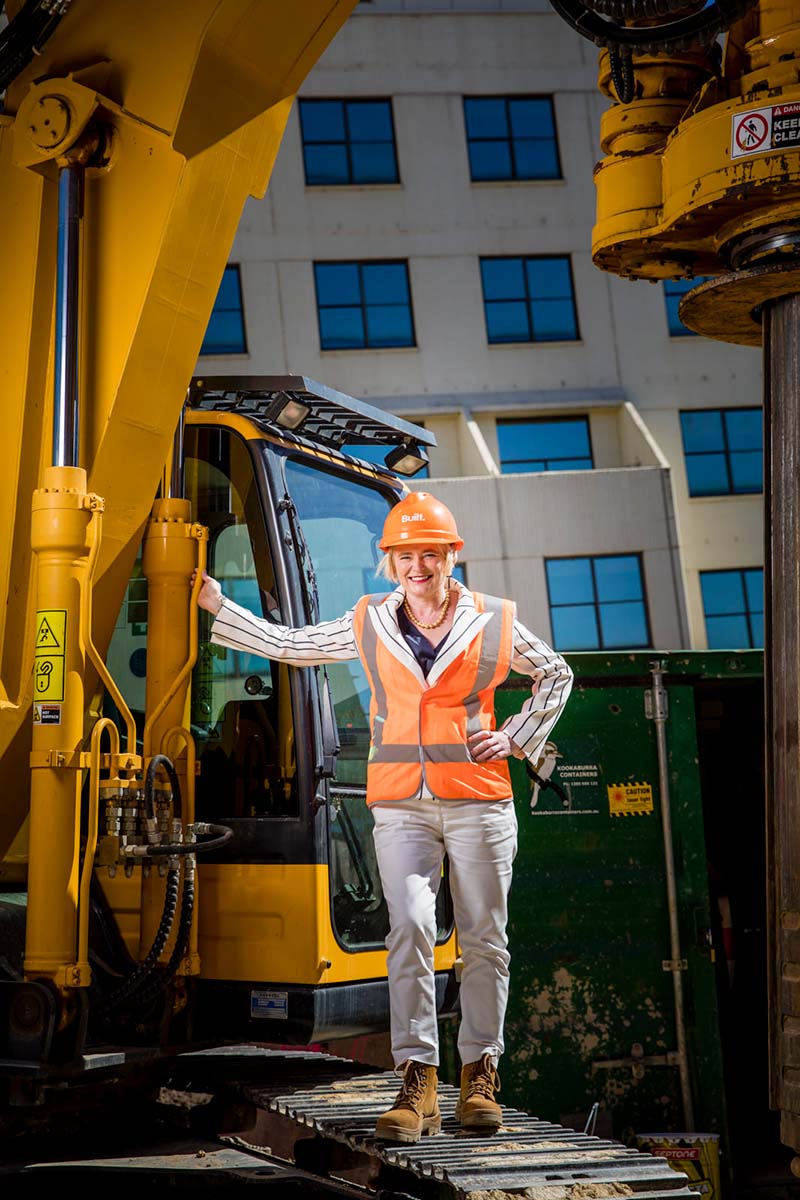
Dr. Collette Burke is a distinguished RMIT alum, having graduated with a PhD in Civil Engineering in 2004. She is a pre-eminent leader in Australia's infrastructure sector.
With over 25 years of experience spanning from site engineering to executive leadership, she served as the first Chief Engineer of Victoria, where she provided expert advice on mega-projects such as the Metro Tunnel. Currently, Dr. Burke serves as the Chair of Inland Rail, Deputy Chair of ARTC, and Director of Marinus Link and NTRO. An internationally acknowledged researcher and Managing Director of Exner Group, her career exemplifies the powerful synergy between academic rigour and the strategic delivery of Australia’s most critical infrastructure assets.
We asked Dr. Burke about her career and achievements over the past 25 years and how her journey through RMIT has influenced her life’s work.
Q: Looking back at your time at RMIT, what aspect of the experience had the greatest influence on your career path?
A: "My PhD at RMIT in risk management over the lifecycle of construction projects gave me a framework I still use every day, whether as Victoria's inaugural Chief Engineer or now as Deputy Chair of ARTC and Chair of Inland Rail, as well as a Director of Marinus Link and National Transport Research Organisation. It taught me that risk must be understood end-to-end, not in isolation, and that principle has guided my approach on projects worth billions."
Q: How have you maintained your connections with RMIT since graduating and have you found any benefit in doing so?
A: "RMIT has been more than my alma mater – it has been a genuine partner. I have continued to lecture, collaborate on research, and advocate for stronger links between industry and academia. The best infrastructure outcomes happen when universities, government and industry work together, and RMIT exemplifies that. I strongly recommend RMIT to young people, and was proud when my two children graduated in Engineering from RMIT."
Q: The construction and infrastructure landscape in Australia is rapidly evolving—what skills or mindsets do you believe today’s engineering graduates from RMIT University need to succeed in the next decade?
A: “I feel that the key skill set for Engineering Graduates is problem solving. Employers don't expect you to know everything, but they need you to have the confidence and the capability to take on new problems and find a way to solve them. Tackling the problem, doing the research, getting information from people, and collaborating to come up with a way forward, remain the critical skill regardless of changes in digital or technical capabilities.