From a childhood marked by illness and learning challenges, to studying screen and media at RMIT
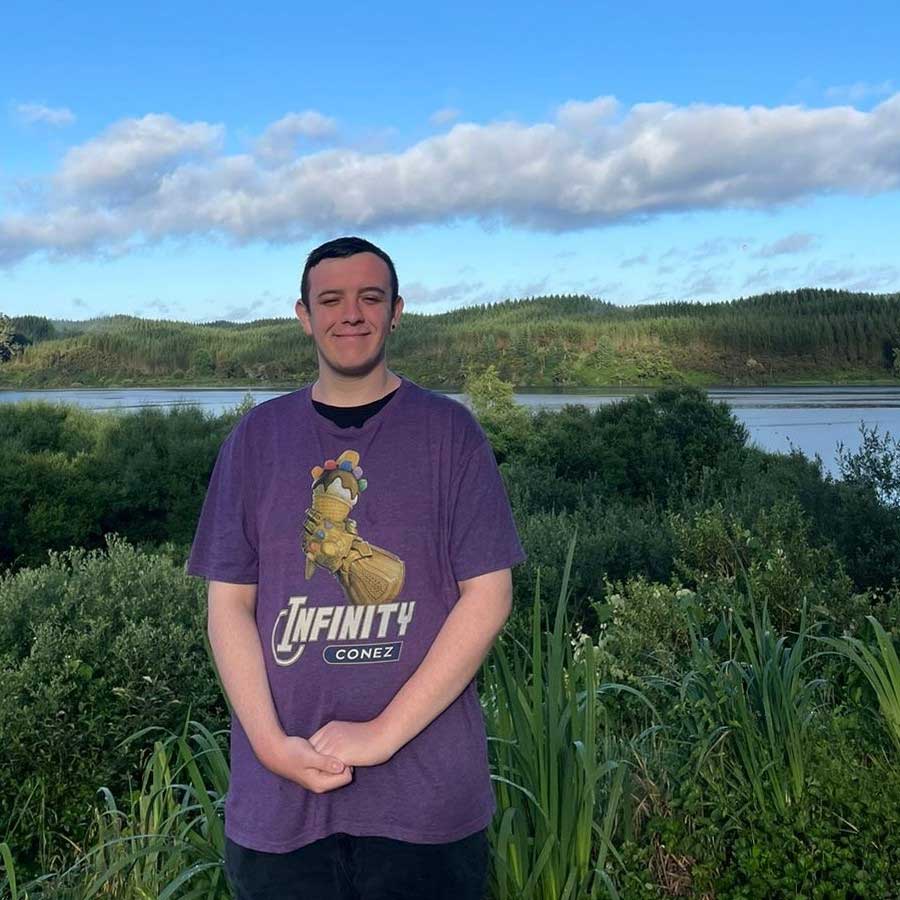
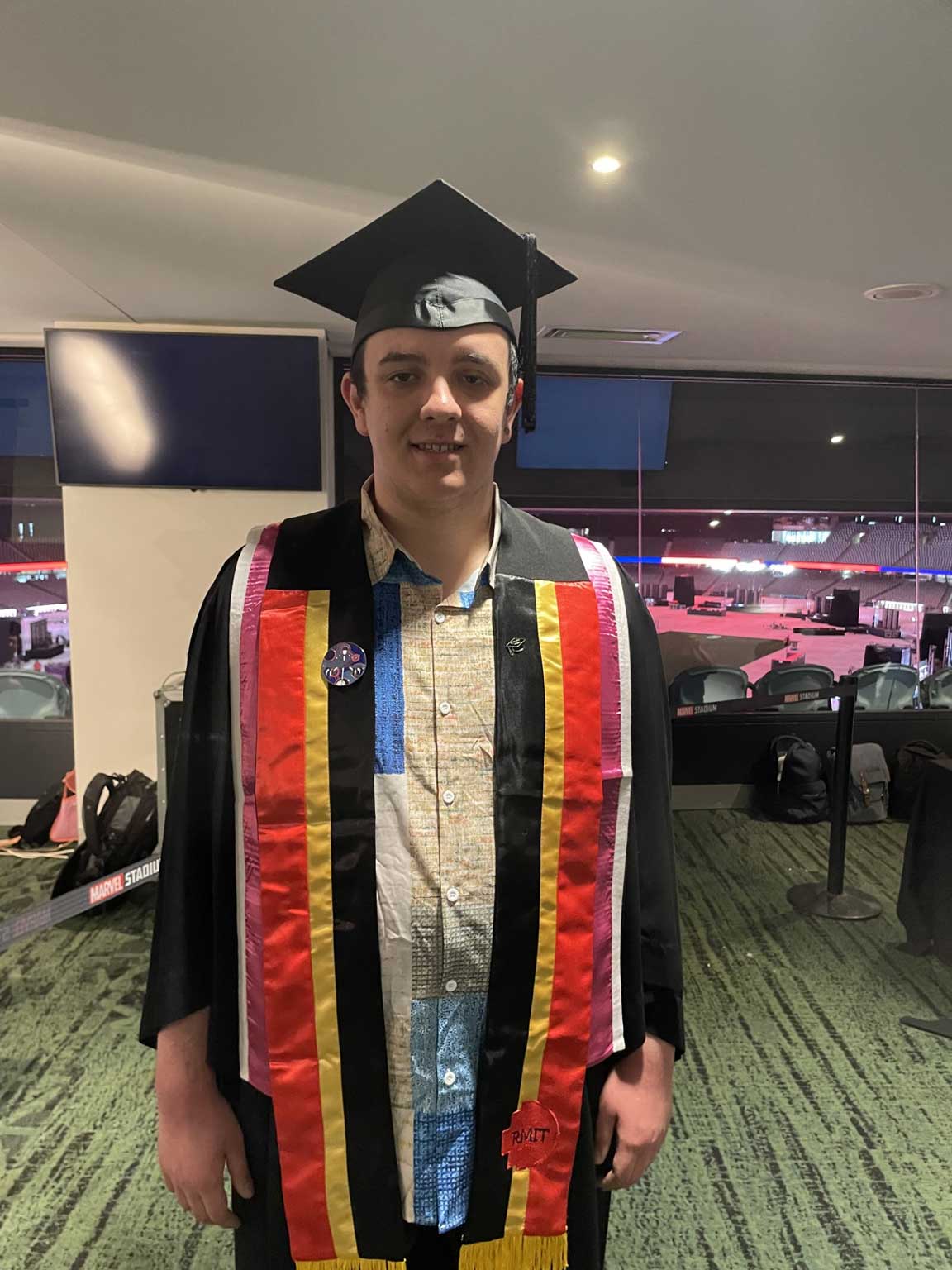
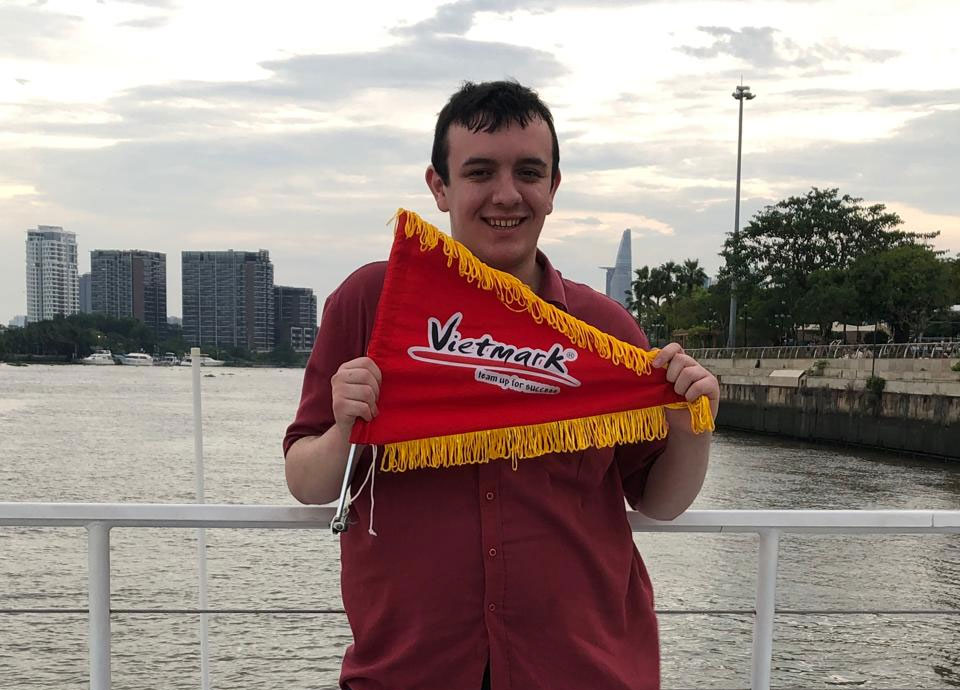
To read the full image descriptions, please click on the individual image above.
When Tobias Ward-Boas talks about his life, he doesn’t hold back. “I was non-verbal as a kid,” he says. “I didn’t talk until I was seven. I spent years going in and out of hospital with pneumonia and ear infections. I was diagnosed with Autism, ADHD, anxiety, and something called macro encephalitis as well as having an intellectual disability. Doctors said I would never have empathy or be able to love.”
Tobias's parents were determined to prove the doctors wrong. “Mum homeschooled me for years and I also attended Jacana School for Autism from primary to secondary. Dad taught me more physical things because I needed help with hand-eye coordination. I loved gym, swimming, soccer, and I did taekwondo for a couple of years and received my Cho Dan Bo belt.”
At Jacana School for Autism his parents helped introduce a new VCAL program. It gave students like him a chance to finish high school. Tobias became one of the first to graduate. “That was the first time I really thought, maybe I can do this,” he says.
But life threw him more challenges. During the COVID lockdowns, he injured his ankle badly and his mental health went downhill. “It was hard to stay positive,” he says. “There were days I thought I couldn’t keep going.”
Tobias went on to study at Kangan Institute and Victoria University before making his way to RMIT. “At first, I didn’t know what I wanted to do,” he says. “Mum really wanted me to go to RMIT because it was one of the top five universities.”
As a dual-sector university, RMIT’s certificates, diplomas and advanced diplomas provide the skills and knowledge to follow pathways into a degree or allow students to graduate with an internationally recognised, career-ready qualification.
Tobias began with a Certificate IV in Screen and Media, then moved into a Diploma in Animation, Gaming and Visual Effects. Now he’s finishing an Advanced Diploma in Screen and Media (Content Creation and Design) and is set to start a Bachelor of Design (Games).
“I’ve always loved storytelling through pictures and animation,” Tobias says. “It’s how I express myself.”
When Tobias first walked into the Ngarara Willim Centre, he was nervous and unsure of what to expect. “I was pretty much in my own shell,” he says. “But then this lovely guy, DJ, opened the door and said, ‘Hey, welcome,’ and suddenly it just felt warm. Everyone was chatting, and the place felt like home.”
The team at Ngarara Willim explained the learning supports available at RMIT and even provided him with resources like a one-terabyte hard drive to help with his studies. “I’d never seen that kind of support before,” Tobias says. They also helped him access a Commonwealth-subsidised place, reducing his course fees from a full amount to just $1000.
“I got the Indigenous Study Support Scholarship and the Equity Notebook Grant,” Tobias says. “It meant I could buy a laptop and an iPad. Without that help, I don’t think I would still be studying. It took so much pressure off. I didn’t have to get another job just to get by.”
Tobias is part of the Parademe mob from Tasmania, from the Oyster Bay Cove tribe and the Tyredeme clan. His grandmother was part of the Stolen Generation, and most of the family’s cultural knowledge was lost. “Through Ngarara Willim, I’ve been able to reconnect with my heritage,” he says. “I’ve been to cultural retreats and learned traditional practices. It’s helped me understand who I am more.”
With encouragement from Ngarara Willim staff, Tobias became an Indigenous culture tour guide and student mentor at the Ngarara Willim Centre. He’s shared his knowledge and pride in Aboriginal and Torres Strait Islander culture with students and visitors from all over the world. He’s also travelled to New Zealand on a study tour and to Vietnam on an RMIT Global Experience Grant.
“Those trips really changed my life,” he says. “I’d never been overseas before, and I learned about leadership, community and culture. It made me so proud of where I come from.”
Now Tobias is resolved to give back. “I want to show younger mob that no matter where you start, you can do something great,” he says. “Theres a motto in my family that I love to say: ‘Hard work gets you very far. Living a life of fear is a life half lived, so live your life to the fullest, because if you don't, opportunities will slip by.’”
His dream is to work in animation and game design, create a makerspace for young people who don’t have access to technology, and keep advocating for mental health and community support.
“I just want to say thank you so much for everything” says Tobias. “No matter what happens next, I will be forever grateful to these amazing scholarship donors that give the resources that they do and to the Ngarara Willim Centre for changing my life”.
Life-changing scholarships
Give to scholarships and help create life-changing opportunities for students facing barriers to education.




