A decade long partnership has given emerging architects international experience and brought new ideas home to Melbourne.
Academics and alumni from RMIT University’s School of Architecture and Urban Design gathered with representatives from FK Australia on the rooftop of RMIT’s iconic Design Hub to celebrate the Fender Katsalidis Travel Award in Architecture’s significant impact over the past ten years.
Speaking at the event, Associate Professor John Doyle, Associate Dean of Architecture at RMIT, said that since 2016, the Fender Katsalidis Travel Award in Architecture had supported nearly 30 students in collaborating with renowned international industry figures.
“The scholarship has enabled students to work with some of the world's most innovative and interesting architecture practices and people,” he said.
“For example, we have Professor Winy Maas here with us tonight, and he's going to give a talk based on his practice MVRDV (a Rotterdam-based architecture studio known for bold, experimental design and a strong focus on how cities evolve) and the work of The Why Factory, of which he is also the director.
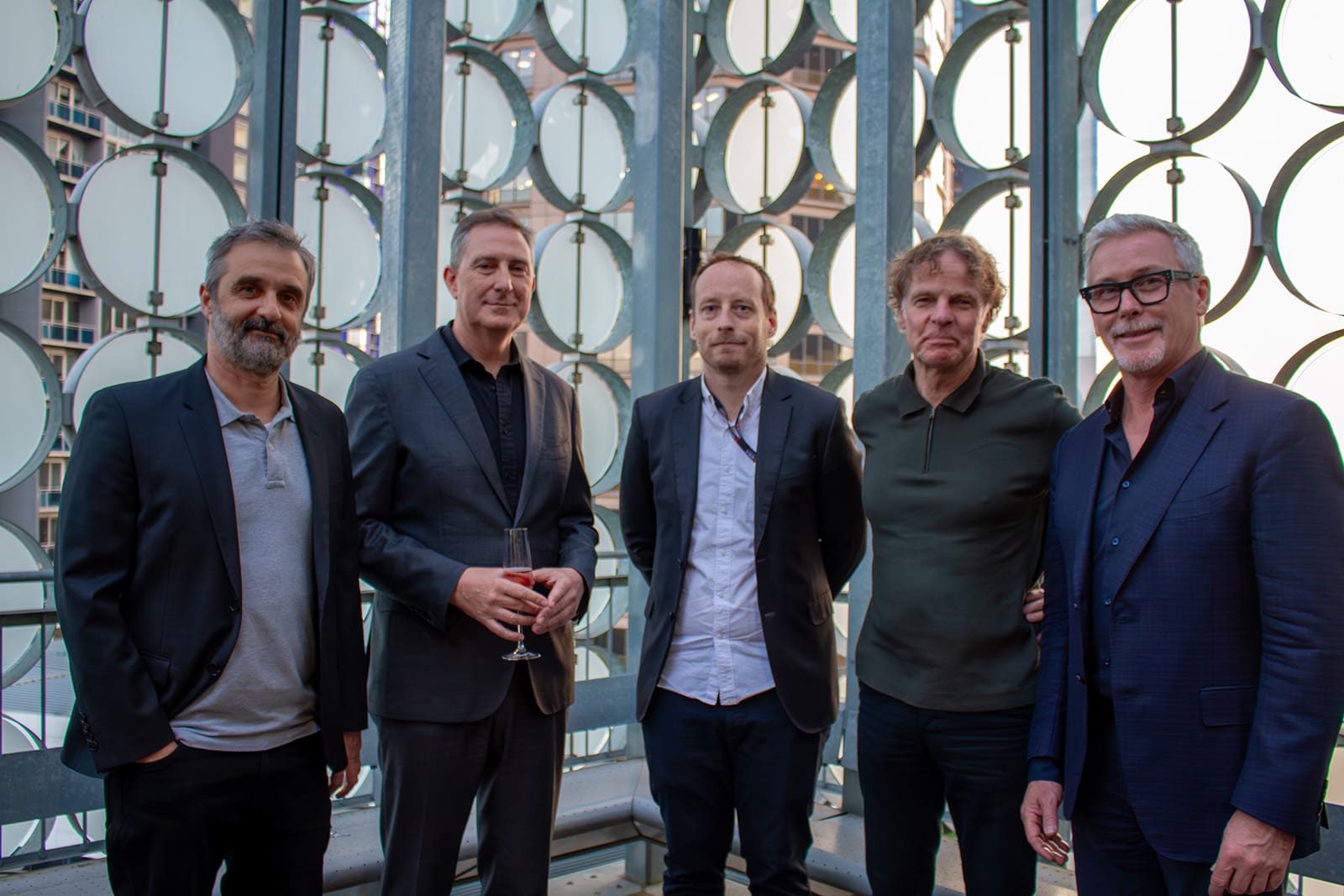 From left FK Principal Falk Peuser, FK Partner James Pearce, RMIT Associate Professor John Doyle, Professor Winy Maas from MVRDV and FK Chief Executive Officer Mark Murphy at the FK and RMIT ten-year partnership celebration.
“Many of the students who have been involved in the program have been able to go to the Netherlands and to work really closely with him on things that they just wouldn't otherwise be able to do here in the Australian context.”
Laura Szyman, a 2019 graduate of the Master of Architecture, now runs her own practice and works as a sessional studio leader at RMIT. She participated in a design studio with Professor Maas at Delft University of Technology in The Netherlands in 2017 which significantly influenced her career.
“I was already interested in the work of MVRDV and The Why Factory. They were quite formative to how I was understanding architecture,” she said.
"When I went to Delft my interests were shifting towards simulations of economies and spaces, and how these things could be animated. Through the design studio I was able to see how these interests could fit into a design research project that foregrounds the design question, which was helpful for my PhD later on."
FK – formerly known as Fender Katsalidis – is a Melbourne architecture practice with deep ties to RMIT. The practice was co-founded in 1988 by Karl Fender and Nonda Katsalidis, both RMIT alumni. Known for bold, sculptural buildings and a willingness to push ideas further, FK has helped reshape inner city living and left a mark on the Melbourne skyline through projects such as the Eureka Tower, the Sidney Myer Asia Centre and the Ian Potter Museum of Art.
FK Partner James Pearce said he took a year off to travel the world during his studies, which benefited him enormously. “We have these wonderful, talented students and providing them with the opportunity to travel and come back with all that new knowledge and experience to put into practice can only make our cities better.”
William Ly, a 2024 graduate of the Master of Architecture program, is a perfect example of James’s sentiment. “I participated in the studio program in the Netherlands in 2024. It was my first trip to Europe and my first major international trip by myself. I used the funds to help see things beyond the program, like a trip to Belgium, to figure out exactly what I was interested in,” he said.
“I looked closely at the way that innovative, experimental architecture was coexisting alongside these beautiful old buildings, which instilled within me this really exciting urge to see more of that in Melbourne.”
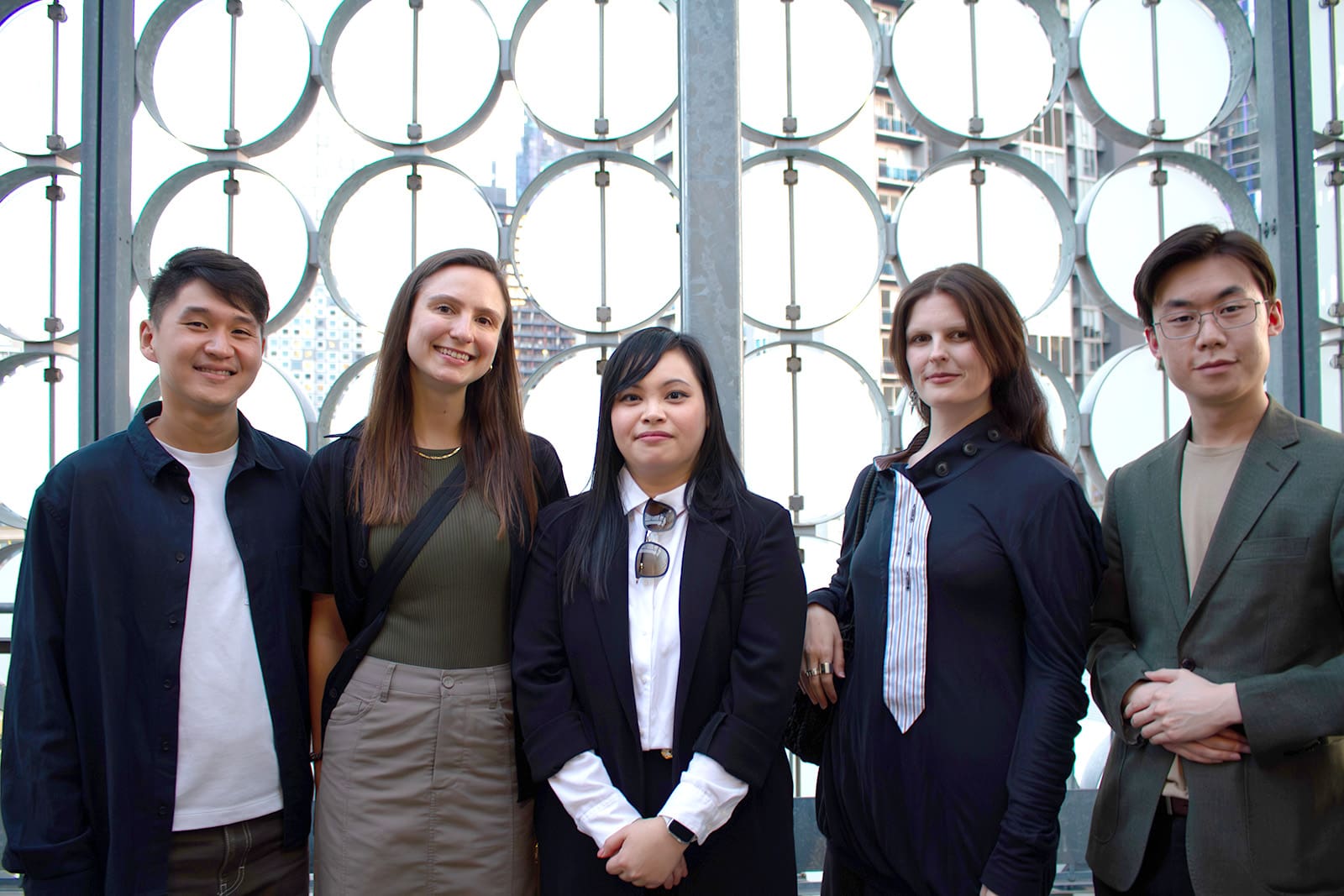 FK Travel Award alumni from left to right, Shao Tian Teo, Kari Vitalich, Vi Thi Hong Nguyen, Laura Szyman and William Ly
FK Chief Executive Officer, Mark Murphy, said their hope was to have a profound impact on the lives and careers of emerging professionals entering the architecture and design profession.
“When they work with teams like us and share their stories, it adds real value to the cultural experience of our people at FK,” he said. “Those experiences also flow through to our clients and stakeholders. These graduates are more worldly, shaped by what they’ve seen and learned, especially through the international studios and the knowledge they bring back. It’s a really important program for our firm, and we hope to keep it going for many years to come.”