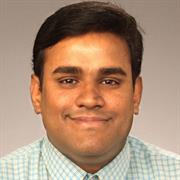
Professor Raj Das
Details
 College: School of Engineering
 Department: School of Engineering
 Campus: Bundoora East Australia
 raj.das@rmit.edu.au


Open to
- Masters Research or PhD student supervision
- Media enquiries
- Collaborative projects
- Industry Projects
About
Professor Raj Das is the Full Professor of 'Structures and Materials' and leads the ‘Simulation of Advanced Materials and Structures (SAMS)’ research group in the ‘Sir Lawrence Wackett Research Centre’ of RMIT University. He is the ‘Program Director’ in the Aerospace Engineering and Aviation discipline of the School of Engineering. He is also an honorary academic in the University of Auckland, New Zealand and the University of Quebec, Canada.
Professor Das has nearly 20 years of experience in the design, analysis and optimisation of engineering materials and structures with a focus on computational mechanics, structural optimisation, composite structures, failure analysis, and damage tolerance design.
Professor Das has published more than 400 papers in international journals and conferences in collaboration with several universities, institutes and industries. He has a PhD from Monash University, Australia, in Applied Mechanics, and has previously worked in the University of Auckland (New Zealand), the Commonwealth Scientific and Industrial Research Organisation (Australia), and the University of Manchester (UK).
Professor Das is associated with various scientific and technical societies broadly related to Theoretical and Applied Mechanics. He is currently the President of the 'International Congress on Mechanical Behaviour of Materials (ICM)' and represents Australia as a ‘Director’ in the Executive Committee of the 'International Congress on Fracture (ICF)'. Within Australia, Professor Das has previously served as the Chair of the ‘National Committee on Applied Mechanics’ of Engineers Australia. He has chaired/co-chaired several well-known conferences (e.g., ICM-13, ACAM-8, ACCM-3, ICCM-6).
Professor Das has been granted several national and international awards and fellowships, including the 'Sir George Julius Medal' by Engineers Australia, ‘Computational Methods Award’ by ICCM, ‘Jim & Hazel D. Lord Emerging Faculty Fellowship’, ‘Research Excellence Award’, and ‘AUEA Emerging Researcher Award’ by the University of Auckland. He has received the ‘CONICYT Award’ from the Government of Chile, ‘Certificate of Merit Award’ from the International Association of Engineers, Hong Kong, ‘UQAC Visiting Fellowship’ from the University of Quebec, Canada, and ‘Visiting Researcher Fellowship’ from the University of Cape Town, South Africa.
Reserach topics
Computational Mechanics, Finite Element Methods, Multi-scale Modelling, Structural Optimisation, Composite Materials, Failure Analysis, Fracture Mechanics, Fatigue, Impact Mechanics, Metamaterials, Architected Materials.
Awards/Distinctions
- Best Paper Award in Additive Manufacturing, by the European Structural Integrity Society (ESIS), presented at the 24th European Conference on Fracture (ECF-24), 26 - 30 August, 2024. Zagreb, Croatia.
- Adjunct Professor, Department of Mechanical Engineering, Faculty of Engineering, University of Canterbury, New Zealand, July 2024 - June 2027.
- Erskine Fellowship, University of Canterbury, New Zealand, February-May, 2024.
- Sir George Julius Medal, Mechanical College of Engineers Australia, Best nominated publication in the field of Mechanical Engineering in Australia, 2023.
- Science Award, International Sustainable Aviation and Energy Research Society (SARES) for contributions to sustainable materials and composite research, 2021.
- RMIT Award for Impact and Collaboration, Multifunctional Materials and Composites Group, 2020
- Visiting Professor Fellowship, King Mongkut's University of Technology Thonburi, Bangkok, Thailand, 2019-.
- Visiting Researcher Fellowship, University of Sapienza, Rome, Italy, 2019.
- International Computational Method Award, 9th International Conference on Computational Methods, Rome, Italy, 2018.
- Adjunct Faculty, Auckland Bioengineering Institute, University of Auckland, New Zealand, January, 2017-2022.
- Invited Foreign Faculty in the GIAN program, Ministry of Education, India, 2017.
- Visiting Scholars Fellowship (VSF), University of Cape Town, South Africa, 2014.
- Early Career Research Excellence Award, University of Auckland, New Zealand, 2013.
- AUEA Emerging Researcher Award, Auckland University Engineers Association (AUEA), New Zealand, 2013.
- Visiting Fellowship (Professeur Associé), Department of Applied Sciences, University of Quebec, Canada, 2012.
- CONICYT Award, Ministry of Education, Government of Chile, Chile, 2011-2012 (out of 28 worldwide awardees).
- Jim & Hazel D. Lord Emerging Faculty Fellowship, University of Auckland, New Zealand, 2011.
- Faculty Top Teachers Award, University of Auckland, New Zealand, 2010.
- Adjunct Faculty (Professeur Associé), Department of Applied Sciences, University of Quebec (Université du Québec) at Chicoutimi, Canada, September, 2010- September, 2013.
- Certificate of Merit Award (Five Best Papers Award) in World Congress in Engineering, International Association of Engineers, Hong Kong, 2008.
- S.K. Basu Memorial Award for Academic Excellence, Jadavpur University Alumni Association, 1999: Awarded in recognition for academic accomplishments in Bachelor of Engineering.
Media Statements / Interviews
- Herald Sun, 21 March 2024, “Call for overhaul after Ballarat Gold Mine tragedy”, https://www.heraldsun.com.au/subscribe/news/1/?sourceCode=HSWEB_WRE170_a_GGL&dest=https%3A%2F%2Fwww.heraldsun.com.au%2Ftruecrimeaustralia%2Fpolice-courts-victoria%2Fcall-for-site-general-manager-of-the-mine-to-be-immediately-stood-down-after-fatal-tragedy%2Fnews-story%2F80a7f2b07cf2290170af9f9f4b66d6b5&memtype=anonymous&mode=premium&v21=GROUPA-Segment-2-NOSCORE
- Manufacturers’ Monthly, 2023, “Australia’s first moon rover unveiled”, https://www.manmonthly.com.au/first-australian-moon-rover-unveiled/
- Au-Manufacturing (Australian Manufacturing Forum), 2021, “Fibres and composites transforming industry: Supporting research and development for composite advancement”, https://www.aumanufacturing.com.au/fibres-and-composites-transforming-industry-supporting-research-and-development-for-composite-advancement
- Joyce Foam Limited, 2019, “RMIT research proves Hygroflex provides more comfort and is more effective in reducing pressure sores than traditional memory foams”, https://www.joyce.com.au/news/hygroflex, (accessed 15/8/2019).
- Advances in Engineering, 2019, “Inspiration from nature: Functionally Graded Structure; from design to manufacture Numerical and experimental study on deformation of 3D-printed polymeric functionally graded plates” by Madeh Amirpour, 27 July, 2019 (accessed 15/8/2019), https://advanceseng.com/functionally-graded-structure-deformation-3d-printed-polymeric-functionally-graded-plates/
- Advanced Science News, 2016, “Three Decades of Auxetics Research – Materials with Negative Poisson’s ratio: A Review”, by Sandra Kalveram, 30 June, 2016 (accessed 15/8/2019), https://www.advancedsciencenews.com/three-decades-auxetics-research-materials-negative-poissons-ratio-review/
Professional Appointments/Service
International Committees and Organisations
- Visiting Professor, Department of Mechanical Engineering, Faculty of Engineering, Indian Institute of Technology Madras (IITM), Chennai, India, January 2024 - January 2026.
- Adjunct Professor, Department of Mechanical Engineering, Faculty of Engineering, University of Canterbury, New Zealand, July 2024 - June 2027.
- Vice President, International Congress (Committee) on Fracture, June, 2023 -.
- SPHERIC Steering Committee (Elected), SPH rEsearch and engineeRing International Community (SPHERIC), 2023 -.
- Elected Member of the FWO Review College, Research Foundation Flanders (FWO), Belgium, January 2023- December 2025.
- IUTAM Congress Committee Member (Elected), International Union of Theoretical and Applied Mechanics (IUTAM), November 2022 – October 2026. https://iutam.org/a-propos/iutams-congress-committee-executive-committee/
- Chair (Elected), American Society of Mechanical Engineers (ASME), Australian Section, July, 2022 -
- Vice-Chair (Elected), American Society of Mechanical Engineers (ASME), Australian Section, July, 2021 – June, 2022 -.( https://community.asme.org/australia_section/groupleadership.aspx).
- Treasure (Elected), American Society of Mechanical Engineers (ASME), Australian section, July, 2020 - June, 2021.
- International Panel Member, Vaishwik Bharatiya Vaigyanik Summit (Global Summit of Overseas and Resident Indian Scientist and Academicians), organised by the Government of India, 2–31 October, 2020.
- President (Elected), International Congress on Mechanical Behaviour of Materials (ICM), June, 2019 – (Affiliated Organisation of IUTAM).
- Executive Committee Member (Elected) and Council Member, International Congress (Committee) on Fracture (one of the Directors in the 15 member ExCo), June, 2017 -.
- Adjunct Faculty, Auckland Bioengineering Institute, University of Auckland, New Zealand, 2017-2021.
- Adjunct Faculty (Professeur Associé), Department of Applied Sciences, University of Quebec, Canada, September, 2010- September, 2013.
- Council Member (Elected), European Society for Experimental Mechanics (EURASEM), July, 2022 -.
- Curriculum Review Committee, Faculty of Engineering, University of Pretoria, South Africa, 2015-.
National Committees and Organisations
- Member of Standards Australia Committees and Joint Standards Australia/Standards New Zealand Committees, BD-059 Demolition of Structure, 2022 -
- Engineers Australia, Member of the National Congress, Engineers Australia, 2022
- Engineers Australia Award Panel, Mechanical College Awards (Sir George Julius Medal, AGM Michell Medal), Engineers Australia, 2022-2023
- Accreditation Panel for Engineering, Engineers Australia, January 2022 –.
- College National Committees Congress Delegate (Elected), National Committees of the Engineers Australia (EA), 1 January 2022 – 31 December 2025.
- Executive Committee Member (Elected), National Committee on Space Engineering, Electrical College, Engineers Australia (EA), January 2022 –.
- Executive Committee Member (Elected), Mechanical College Victoria Branch Committee, Engineers Australia, January 2022 –.
- Chair (Elected), National Committee on Applied Mechanics, Mechanical College of the Engineers Australia (EA), June, 2018 – December, 2024.
- Deputy Chair (Elected), National Committee on Applied Mechanics, Mechanical College of the Engineers Australia (EA), November, 2014 - May, 2018.
- National Panel Member, ‘Theo Murphy High Flyers Think Tank Program’, Shine Dome, Canberra, Australian Academy of Science, 2010 (14 researchers from across Australia were selected for the “Innovation and New Technology” theme).
- Elected Committee Member, National Committee on Applied Mechanics, Mechanical College of Engineers Australia (EA), November, 2009-.
Plenary/Keynotes/Invited Speakers
- Plenary Speaker, 24th European Conference on Fracture (ECF24), 26 June – 30 August, 2024, Zagreb, Croatia.
- Plenary Speaker, 11th Australasian Congress on Applied Mechanics (ACAM-11), 7-9 February, 2024, Brisbane, Australia.
- Keynote Speaker, 6th Australasian Conference on Computational Mechanics (ACCM6), 6-8 December, 2023, Melbourne, Australia.
- Plenary Speaker, 7th International Conference on Structural Integrity and Durability, 19 - 22 September 2023, Dubrovnik, Croatia.
- Keynote Speaker, 12th Asian-Australasian Conference on Composite Materials (ACCM12), 25-28 April, 2023, Hangzhou, China.
- Plenary Speaker, 19th International Conference of Experimental Mechanics (ICEM2022), 17-21 July, 2022, Krakow, Poland.
- Keynote Speaker, International Symposium on Sustainable Aviation (ISSA), 26-28 July, 2023, Tainan, Taiwan.
- Keynote Speaker, 5th International Conference on Applications of Fluid Dynamics (ICAFD-2020), 13-15 December, 2020, VIT-AP University, Vijayawada, India, December.
- Plenary Speaker, 6th Asia-Pacific International Conference on Computational Methods in Engineering (ICOE2019), 27-30 September, 2019, Dalian, China
- Keynote Speaker, 8th International Conference on Structural Integrity and Fracture (SIF2013), 11 - 12 July, 2013, Melbourne, Australia (organised by Australian Fracture Society).
- Keynote Speaker, 5th International Conference on Structural Analysis of Advanced Materials (ICSAAM-2013), 23 – 26 September, 2013, Island of Kos, Greece.
- Invited Speaker, International Conference on Global Challenges and Prospects of Jute and Allied Fibres, Kolkata, India, 4-6 December, 2013.
- Invited Speaker, 6th International Conference on CFD in Oil & Gas, Metallurgical and Process Industries, Trondheim, Norway, 10-12 June, 2008.
- Conference Program Chairs, 3rd International Conference on Nanomaterials and Electronics Engineering (ICNEE), 5-6 October, 2013, Melaka, Malaysia.

Research fields
- 460207 Modelling and simulation
- 401401 Additive manufacturing
- 401602 Composite and hybrid materials
- 401607 Metals and alloy materials
- 400102 Aerospace structures
- 400101 Aerospace materials

UN sustainable development goals
- 4 Quality Education
- 11 Sustainable Cities and Communities
- 9 Industry, Innovation and Infrastructure
- 12 Responsible Consumption and Production
- 10 Reduced Inequalities
- 3 Good Health and Well Being

Supervisor projects
- Integrated Alloy and Process Design for Additively Manufactured Titanium Alloys
- 14 Jul 2026
- Manufacturing Alloys with Refined Microstructure through Severe Plastic Deformation (SPD) for High strength and Radiation Resistance
- 26 May 2026
- Development of Engineered Bio-nanocomposites for Packaging Application: An Indo-Australian Study
- 25 Mar 2026
- Development of Fire-resistant and Lightweight Composite Structures for Fire-safe Structural Applications
- 22 Jan 2026
- Novel technologies for composite aircraft structures
- 17 Dec 2025
- Design of strong and ductile titanium alloys for laser additive manufacturing
- 8 Dec 2025
- A Digital Twin-Driven Model for Mapping Part Quality in Multi Jet Fusion of Automotive Parts
- 27 Feb 2025
- Development and Characterization of Microwave-Sintered Light Weight High Entropy Alloys for High Strength Applications
- 26 Feb 2025
- Damage Tolerant 3D Printed Composite Materials for Engineering Applications
- 7 Jan 2025
- Developing Metamaterials for Thermal and Flow Control
- 30 Aug 2024
- Development of two-dimensional heterostructures as electrode materials for metal ion batteries
- 20 May 2024
- Development of an oxide dispersion strengthened (ODS) steel using laser-based 3D printing including prior Phase Field/ Finite Element modelling
- 9 Feb 2024
- Understanding fatigue resistance of AM parts from processing parameters and material properties
- 29 Jan 2024
- Maintenance decision support for predicted composite impact damage events
- 10 Jan 2024
- Cryogenic Rolling Induced Microstructural Evolution, Mechanical Behaviour, and Phase Stability in Ti-6Al-4V and CP-Ti Alloys
- 14 Dec 2023
- Failure Behavior of Thermoplastic Fiber Metal Laminates
- 1 Nov 2023
- Large-Scale Composite Systems under Flight Representative Multi-Axial Loading States
- 1 Nov 2023
- Microstructure-Property Correlation of Graphene Reinforced Stainless Steel Composites via Additive Manufacturing
- 16 Aug 2023
- Design of titanium alloys with locally tailored properties by additive manufacturing lattice structures by selective laser melting
- 14 Aug 2023
- Granular Metamaterials for Wave Control
- 24 Jul 2023
- Integrated Topology Optimisation Tool for Additive Manufacturing
- 8 May 2023
- Modelling of multi-material additive manufacturing using laser-based powder bed fusion
- 20 Feb 2023
- Design, manufacture, and characterisation of advanced materials for ultrahigh temperature application
- 17 Mar 2022
- Programmable Mechanical Metamaterials based on Spinodal Architectures
- 11 Jan 2022
- Biomimetic and Lightweight Additive Structures for Aerospace Design Applications
- 10 Dec 2021
- Fire Behaviour and Smoke Generation Flame Retarded Polymer Nanocomposites
- 12 Aug 2021
- Residual Strength of Composites Subject to Environmental and Fatigue Loading
- 12 May 2021
- Progressive Damage Analysis for Aerospace Composite Structures Subjected to Impact Loads
- 10 May 2021
- Design of Additively Manufactured Ti-xFe Alloys – A Micro Segregation (β flecks) Study
- 12 Apr 2021
- Numerical modelling of additive manufacturing process-induced defects and their influence on fatigue and fracture properties
- 15 Dec 2020
- The Enhancement of Crack Growth Predictions in an Aerospace Aluminium Alloy with Novel Short Crack Growth Data Combined with a Machine Learning Optimisation Methodology
- 16 Jan 2020
- Advancements in Multifunctional Syntactic Foam Through the Integration of Sustainable Rubber Fillers
- 25 Nov 2019
- Non-destructive Evaluation of Self-piercing Riveted Joints
- 4 Oct 2019
- Understanding Cranial Injury – Virtual Forensics
- 5 Jun 2019
- Mechanics by Design: Evolutionary Design Optimization of Multiscale Mechanical Metamaterials
- 7 Mar 2019
- Design and Characterisation of Acoustic Metamaterials in Air and Water-like Media
- 13 Feb 2019
- Data-Driven Reduced Order Modelling for the Analysis and Prediction of Transonic Buffet and Flutter
- 13 Feb 2019
- Complex Aviation Systems Equipment Evaluation and Selection: Case Study of Airport Outbound Hold-Baggage Processing Systems
- 13 Nov 2018
- Fatigue Characterisation of Additively Manufactured Aluminium Alloy
- 7 Sep 2018
- Silver Nano-Architectured Metal-Composite Interface for Enhanced Hybrid Laminate Fracture Toughness
- 1 Jan 2018
- Metal-to-Composite Structural Joining
- 12 May 2017
- Explosive Blast Damage Resistance of Fibre-Polymer Composites
- 5 Apr 2017

Teaching interests
Member of the 'Structures and Materials' teaching group
‘Teaching Group Convener’, Mechanics of Materials teaching group, 2014–2015
‘Course director’ of Dynamics (MECHENG 222, 2012), Design-3M (MECHENG 334, 2014–2015) and Composite Materials (MECHENG 743, 2012–)
‘Undergraduate Course Advisor (Part II/III)’, Department of Mechanical Engineering, University of Auckland, New Zealand, 2013–2014.
‘Postgraduate Course (Taught Masters) Advisor’, Department of Mechanical Engineering, University of Auckland, New Zealand, 2015–.
Course Delivery
RMIT University
- Design for Manufacture and Assembly (AERO 2252): Year II.
- Aerospace Finite Element Methods (AERO 2357): Year III.
- Computational Engineering Analysis (AERO 2463): Year III.
- Composite Materials and Structures (AERO 2289): Year IV.
University of Auckland - Mechanics of Materials 1 (MECHENG 242): Year II.
- Dynamics (MECHENG 222): Year II
- System Dynamics Modelling (MECHENG 224): Year II.
- Engineering Design 3M (MECHENG 334): Year III.
- Composite Materials (MECHENG 743): Year IV.
- Manufacturing and Industrial Processes (MECHENG 747): Year IV.
- Materials and Yacht Structures (MECHENG 772): Postgraduate.
Supervisor interests
Computational Mechanics, Finite Element Methods, Multi-scale Modelling, Structural Optimisation, Composite Materials, Failure Analysis, Fracture Mechanics, Fatigue, Impact Mechanics, Metamaterials, Architected Materials.

Research interests
• Novel multifunctional and new hybrid materials and structures for lightweight engineering structures for aerospace, automotive and marine applications
• Finite element and mesh-free SPH modelling for a range of engineering applications involving extreme deformation and discontinuous processes, including dynamic fracture, fragmentation, impact, biomechanics, bioforensics, material forming, welding, and geomechanics
• Structural integrity, damage tolerance, and durability analysis, i.e. fracture strength and fatigue life assessments, of engineering structures for aerospace, transport and marine applications
• Design and optimisation of biomechanical systems and medical implants
• Simulation and modelling of metal additive manufacturing processes, including multi-scale and multi-physics modelling of AM thermo-mechanical processes
• Fracture and fatigue analysis, including multi-scale modelling of nano-, micro-, and macro-fracture processes
• Multiscale and multifunctional materials design, including architected materials, meta-materials, auxetic materials, functionally graded materials for lightweight aerospace structures
• Damage tolerance, fracture and fatigue assessment of additive manufactured metal alloys and components
• Structural optimisation of additive manufactured components, based on manufacturing and property constraints
Availability of PhD projects
The following PhD projects are available for both domestic and international applicants. Further details are outlined here. You are welcome to contact me for more information.
Project 1: Damage-Tolerant Hybrid Composite Materials for Applications in Critical Aerospace Structures
Project 2: Damage-Tolerant 3D-Printed Composite Materials for Engineering Applications
Project 3: Multifunctional Auxetic Materials for Critical Engineering Structures
Project 4: Development of Fire-Resistant and Lightweight Composite Structures for Fire-Safe Structural Applications
Project 5: Integrated Topology Optimisation Tool for Additive Manufacturing
Project 6: Structural Shape and Topology Optimisation for Fracture Strength and Fatigue Life Improvement
Project 7: Novel Energy Storage Technology using Multifunctional Textiles
Project 8: Understanding Cranial Injury: Virtual Forensic Laboratory




