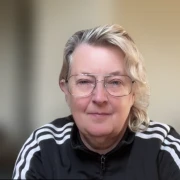
Elroy Dearn
Details
 College: School of GUSS
 Department: School of GUSS
 Campus: City Campus Australia
 elroy.dearn@rmit.edu.au
 ORCID: 0000-0002-7308-9283
About
Dr Elroy Dearn is an interdisciplinary researcher specialising in disability, housing, mental health, and social inclusion. Their research examines how social, physical, and policy environments impact on the lives of people with disability, with a strong focus on translating research into policy and practice. Combining experience across academia, government, statutory agencies, and the community sector, they bring an applied perspective that bridges research, policy, and implementation.
As a Research Fellow at RMIT University's Social Equity Research Centre, Dr Dearn has contributed to national research programs spanning disability, housing, and wellbeing. Their research includes institutional and congregate settings, individualised living arrangements, and the experiences of people with psychosocial disability. They have expertise in qualitative and participatory research methods, and are committed to codesigned, creative methods e.g. photovoice, picture mapping, and innovative LEGO-based approaches with children. Their work is grounded in supported decision-making, meaningful participation, and inclusive research methods.
Dr Dearn's specialist research area is housing, institutionalisation, and the right of people with disability to live independently and be included in the community, consistent with Article 19 of the United Nations Convention on the Rights of Persons with Disabilities (CRPD). Their work explores housing pathways across the life course, including individualised living arrangements under the NDIS, transitions from supported residential services and residential aged care, and the impact of housing policy on choice, control, and community inclusion. Through peer-reviewed publications, policy briefs, and collaborative research with governments and community organisations, they generate evidence to inform housing policy, support deinstitutionalisation, and advance more inclusive communities.

Research fields
- 440712 Social policy

UN sustainable development goals
- 10 Reduced Inequalities
- 3 Good Health and Well Being

Academic positions
- Research Fellow
- UNSW Canberra
- School of Business
- Canberra, Australia
- 1 Dec 2025 – Present
- Research Fellow
- RMIT University
- Global Urban and Social Studies
- Melbourne, Australia
- 3 Jul 2023 – Present

Non-academic positions
- Research Fellow
- Summer Foundation
- Melbourne, Australia
- 1 Mar 2022 – 20 Dec 2024
- Senior Research and Policy Officer
- Office of the Public Advocate
- Policy and research
- Melbourne, Australia
- 1 Mar 2008 – 1 Dec 2017

Research interests
·
· Social inclusion
· Equity and social justice
· Housing and home environments
· Psychosocial disability
· NDIS
· Participatory research methods
· Qualitative research
· Co-design and lived experience research
· Cross-sector policy and practice



