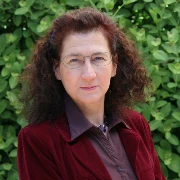
Professor Kim Dowling
Details
 College: School of Science
 Department: School of Science
 Campus: City Campus Australia
 kim.dowling@rmit.edu.au
 ORCID: 0000-0002-7542-5359
Open to
- Masters Research or PhD student supervision
About
Kim completed her undergraduate studies in geology at UNSW. After working in Meekatharra, Western Australia in gold exploration, she completed a PhD at James Cook University focusing on geochemical characterization of gold bearing quartz vein systems. Subsequently, Kim worked at the University of Papua New Guinea teaching applied geochemistry and mineral deposit geology after which she moved to the University of Melbourne and University of Adelaide to investigate meteorite impacts and geochemistry. Kim then moved to University of Ballarat (now Federation University) where she held numerous leadership roles, before joining RMIT.
During this time her ongoing engagement to the mining sector exposed her to some of the best as well as worst environmental practice, and she developed a desire to contribute to sustainable mining and best environmental practice. She then completed further studies in Environmental Management at Deakin University before taking up a position at University of Ballarat teaching a variety of geological, environmental, and field based subjects.
Her research interests – focused strongly on the broad field of Medical Geology – extend into environmental and human health and the meaningful dissemination of environmental information. She is an executive member of the International Medical Geology Association.

UN sustainable development goals
- 3 Good Health and Well Being
- 6 Clean Water and Sanitation
- 15 Life on Land

Supervisor projects
- Uranium bioremediation in mining site environment towards uranium long-term stability
- 4 Jun 2025
- Biotransformation mechanisms of uranium species and stability in mining site environment
- 15 May 2024
- Mineralogical, Petrographic and Geochemical Studies on Syenite Rocks of Rairakhol Alkaline Complex, Western Odisha, India With Special Reference to Their Rare Earth Element (REE) Potential
- 8 May 2024
- Arsenic mobility mechanism in Bangladesh ground water
- 28 Sep 2023
- Arsenic detection and verification for drinking water in Bangladesh
- 19 Jun 2023

Teaching interests
Kim teaches into the following courses:
- STEM for Sustainable Development ONPS2702 (and other codes)
- The Hydrosphere ENVI1008
- Environmenatl Sampling and Analysis ENVI1145
- Environmental Policy, Perspectives and Priorities ENVI1236
- Environmenatl Pollution, Management and Sustainability ENVI1237
- The Changing Environment ENVI1146

Research interests
Research interests include the complex relationship between the modified environment (current and historical industrial, urban, and mining sites), metal contamination, environmental outcomes and the implications for human health. Kim's specific interest is in modes of mobility and health effects of heavy metals such as arsenic and mercury. Contaminated sites are a global reality and there is a need to understand these sites, particularly in a time of climatic fluctuation where metal mobility is exacerbated. The World Health Organisation estimated in 2016 that 12.6 million human deaths were attributable to unhealthy (contaminated) environments. This work is significant for humans and all biodiversity on our planet.
Recent and highlighted work includes metal mobility following fire, the significance pm10 in contaminated dust, gauging human impacts of arsenic mobility using children’s toenail arsenic as a biomarker, and fungi in contaminated mining environments.




