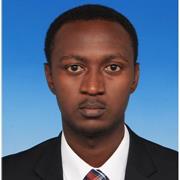
Dr. Jean Pierre Ndabakuranye
Details
 College: School of Engineering
 Department: School of Engineering
 Campus: City Campus Australia
 jean.pierre.ndabakuranye@rmit.edu.au
 ORCID: 0000-0001-7657-0542
Open to
- Industry Projects
- Collaborative projects
- Join a web conference as a panellist or speaker
- Masters Research or PhD student supervision
About
Jean Pierre (JP) earned an M.S. in Electronics Engineering from Hallym University (2016) and a PhD in Electrical and Biomedical Engineering from the University of Melbourne (2023). He is an expert in biomedical optics, optoelectronics, biosensing, electronic circuits and systems, embedded programming, and bio-photochemistry. His research harnesses photonics and low-noise electronics to build miniaturised point-of-care diagnostics across portable, wearable, and implantable devices.
During his PhD, JP established a strong track record in bilirubin sensing, developing novel strategies for monitoring in cirrhosis and neonatal hyperbilirubinemia. In 2022 he completed two applied R&D internships: at BrainConnect, contributing a low-power wireless telemetry module for an implantable neural-recording device; and at the Royal Children’s Hospital, engineering an optical sensor to detect bilirubin in neonatal urine.
Since 2023, JP has been a postdoctoral researcher at RMIT University, where he advances miniaturised optical–electronic sensing platforms for bedside, surgical, and remote monitoring. His work spans system architecture, low-noise analog front-ends, light–tissue interaction modelling, embedded firmware, and pathway-to-clinic validation. Across projects he emphasises rigorous measurement science, manufacturable design, and clinically relevant workflows to translate sensing from benchtop to bedside.

Research fields
- 4003 Biomedical engineering
- 4009 Electronics, sensors and digital hardware
- 4605 Data management and data science
- 4008 Electrical engineering
- 3213 Paediatrics
- 400308 Medical devices
- 510204 Photonics, optoelectronics and optical communications

UN sustainable development goals
- 9 Industry, Innovation and Infrastructure

Academic positions
- Postdoctoral researcher
- RMIT University
- Electrical and Biomedical Engineering
- Melbourne, Australia
- 1 Jan 2023 – 31 Dec 2023

Supervisor projects
- Point-of-Care Bilimeter for Neonatal Jaundice Management in African Healthcare Settings
- 20 Apr 2026
- Multi-stimuli thin films for tomorrow's electronics and optics
- 2 Mar 2026
- Precision biosensors for chronic disease management
- 15 Sep 2025
- Advancing Wearable and Flexible Electronics with On-Chip Spectrometers
- 1 Sep 2025

Teaching interests

Research interests
JP is mainly interested in developing miniaturised point-of-care medical devices.



