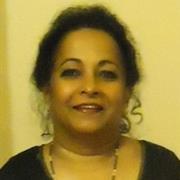
Associate Professor Yaso Nadarajah
Details
 College: School of GUSS
 Department: School of GUSS
 Campus: City Campus Australia
 yaso.nadarajah@rmit.edu.au
 ORCID: 0000-0003-2839-0621
Open to
- Masters Research or PhD student supervision
About
I am a Senior Research Fellow of the Social Equity Research Centre (SERC) and an Associate Professor at RMIT's School of Global, Urban and Social Studies (GUSS).
I am a thought-leading scholar and immersive field researcher in the emergent and increasingly significant field of Intercultural Studies fieldworker, engaged at the intersection of critical and provocative social inquiry, marginalised lifeworlds, and place-based realities within intercultural praxis, community-embedded knowledge systems, and transformative change. Building from this foundation, my work engages deeply with human ingenuity, community-embedded practices, sacred investment logics, and processes of transformative change.
I have established an internationally recognised and field-defining cross-sector portfolio grounded in long-term, relational engagement with remote, predominantly Indigenous and tribal communities. These communities, institutions and government bodies are located across Papua New Guinea, Malaysia, India, Sri Lanka; and connected to networks and community groups in China (Guangzhou) , Africa (South Africa, Malawi), Greenland (Nuuk) and Norway (Svalbard). This commitment is realised through an immersive, field-embedded methodology, with the majority of my work conducted in situ through sustained partnership and inquiry. Within this praxis, I engage complex, shifting terrains shaped by the resurgence of customary law and cultural protocol, while interrogating the intersecting forces of national policy regimes and global market economies.
My scholarship occupies a distinctively interdisciplinary space at the forefront of intercultural and decolonial studies, integrating Sociology, Human Geography, Island and Ocean Studies, Global Ethnography, Political Geography, and Cultural Sociology. Across diverse geographical and cultural contexts, my work interrogates how social, political, and cultural formations are produced, contested, and transformed. Since 2016, I have consolidated my research around two overarching questions: the ongoing project of being and becoming an academic as a reflective, evolving practice, and how this positionality enables the centring of marginalized voices and the forging of coalitions across cultural, epistemic, and disciplinary boundaries. This dual focus situates my work at the intersection of theory and praxis, highlighting the ethical and political responsibilities of scholarship in a globalized world.
My fieldwork is committed to building enduring alliances of trust with remote and historically underrepresented communities, fostering spaces where people can come together to acknowledge difference, co-create knowledge, and form mutually enriching coalitions against interwoven systems of violence and oppression. At the heart of this work is a central question: how can we embrace deep cultural and epistemic difference, drawing creatively and joyfully from the diverse places, histories, and lifeworlds that shape our sensibilities and perspectives? Through sustained engagement, I cultivate reciprocal, collaborative relationships across communities and regions, expanding not only the scope of global and intercultural studies but also the core disciplinary frameworks of my teaching, research, and public scholarship. My work foregrounds locally grounded, ‘from-the-ground-up’ approaches to social transformation, engaging with questions of the sacred, ethics, and collective action, while demonstrating the power of co-work and intercultural solidarity in addressing structural inequities.
Since 2012, I have integrated these principles into postgraduate teaching, redesigning curricula to immerse students in the complexity and creativity of intercultural encounters. Courses such as Theories & Global Development, Fieldwork as Method, Intercultural Knowledges & Practices, and Global Health: Philosophies, Priorities & Politics engage students with field-based learning, critical reflection, and collaborative practice. I have also developed study and fieldwork programs across Europe, the Indo-Pacific, Latin America, China, Malaysia, and Australia, allowing students to confront the cultural, political, and environmental challenges of the 21st century first-hand.
My research continues to focus on how ethnography and fieldwork can create spaces for dialogue, reconciliation, and transformative understanding. Decolonial frameworks guide my work, drawing on philosophical, ancestral, and customary knowledge to generate theoretical and practical insights. Collaborations with Indigenous and tribal Elders, youth, and scholars enable research that is locally grounded, globally informed, and attentive to multiple ways of knowing, addressing challenges shaped by reclaimed customary practices, national agendas, and global pressures. I have extensive experience in social and economic development, contributing to projects at international, national, and local levels in Malaysia, Australia, Sri Lanka, India, and Papua New Guinea. My work has informed public policy and practice in areas including health, community arts, integrated community development, and post-disaster recovery, bridging scholarship, applied research, and community engagement.
My publications and creative outputs focus on the sociological consequences of social change, rebuilding, and resilience, reflecting my ongoing commitment to intercultural scholarship that is ethically engaged, socially transformative, and globally impactful.Through my sustained work with the Center for Social Equity and with my research networks across especially the Indo-Pacific; , I continue to consolidate and expand both my own research and the University’s reputation as a leader in global, interdisciplinary, and decolonial scholarship.
My publications (single, co-authored or edited) co-authored include Family, Gender, and Religion at the Crossroads: A National Study of Polygamous Marriages in Malaysia (2024 – in press), Locating Theory in the Social Sciences - self, the Other and difference (in progress – 2024); Rethinking Development through Study Tours: Interpreting the Field and Negotiating Different Viewpoints (2016), Montfort Media, Malawi (with J. Makuwira et al.); Searching for Community - Melbourne to Delhi (2015) Manohar; New Delhi (with S. Singh et al.); Rebuilding Communities in the Wake of Disaster: Social Recovery in Sri Lanka and India (2012) Routledge, New Delhi (with M. Mulligan); Sustainable Communities, Sustainable Development – Other Paths for Papua New Guinea, (2012), University of Hawaii Press (2012), (with P. James et al.) and Unexpected Sources of Hope: Climate change, community and the future', (2009). I have two books under contract Rage of the Kumalu River, tears of the rainforest- across oceans to place and spirit (2025); and a third edited book Decolonising Learning – Epistemic Disobedience, Incompleteness of Being and the Sensuous (2025) (where the contributors include 12 PhD and master’s students and 8 colleagues).
My recent non-textual work (Culture Maps) includes With the Kukukuku of Papua New Guinea – A Ground-Up Response to Development in a Remote Region (documentary, 2014)); Penpipe, Voice of the Kukukuku (Visual Cultural Recovery Map, 2013), and A Memorandum of Relationship – The Tribal Community and the University (Visual Culture Map, 2012); and the Kukukuku Tribal Clans - a Contemporary History (ongoing). The idea of “culture map’ makes clear that a decolonial concept of historical documentation is performative - embracing ancient data as new artforms to reanimate old stories and tribal life ways for the 21st century and beyond.
I am currently Co-Editor-in-Chief, of Folk, Knowledge, Place; Adjunct Professor at Centurion University (India); Affiliate Professor at Research Center for Indian Ocean Island Countries, School of Foreign Languages, South China University of Technology (China); Island Studies Foundation/Trust Board member - Fróðskaparsetur Føroya/ University of the Faroe Islands; Visiting Professor, University Malaya (Malaysia); Visiting Professor, Taylors University, Malaysia; Tribal Elder, Kukukuku Tribal Elders Council, Papua New Guinea; Committee Member, Lake Bolac Eel festival, Victoria, Australia; and a member of GUSS Responsible Practice Committee. Previously, I was an Executive Member of the Centre for Global Research (2005–2009) & Research Program Manager of the Community Sustainability Program in RMIT Global Cities Institute (2009–2017). I was Head, Intercultural Projects & Resources Unit (IPRU) 1997–2005, and an alumna of the Committee for Melbourne Future Focus Group Leadership program.

Research fields
- 4410 Sociology
- 4406 Human geography
- 440606 Political geography
- 441006 Sociological methodology and research methods
- 4519 Other Indigenous data, methodologies and global Indigenous studies

UN sustainable development goals
- 11 Sustainable Cities and Communities
- 15 Life on Land
- 3 Good Health and Well Being
- 1 No Poverty
- 10 Reduced Inequalities

Academic positions
- Research Associate
- Metropolitan University
- South Africa
- 2025 – Present
- Research Associate
- Coleraine Regional Community Enterprise
- Australia
- 2025 – Present
- Visiting Associate Professor
- Taylor's International University
- Kuala Lumpur, Malaysia
- 1 Mar 2024 – 2 Mar 2009
- Adjunct Professor
- Taylors University
- School of Media & Communication
- Kuala Lumpur, Malaysia
- 1 Oct 2024 – 30 Sep 2026
- Member - Research Committee
- RMIT University
- GUSS
- Melbourne, Australia
- 1 Jan 2023 – 31 Dec 2024
- Editor -in-Chief
- South China University of Technology
- Folk, Place & Knowledge
- Guangzhou, China
- 1 Mar 2022 – 31 Dec 2028
- Visiting Professor
- University of Malaya
- Faculty of Social Science
- Kuala Lumpur, Malaysia
- 1 Feb 2022 – Present
- Professor
- South China University of Technology
- Research
- Guangzhou, China
- 1 Jan 2022 – 31 Dec 2027
- Adjunct Professor
- Centurion University of Technology and Management
- University wide
- Bhubaneswar, India
- 1 Jan 2021 – 1 Jan 2027
- Foundation/Trust Member
- University of the Faroe Islands
- Island Studies
- Tórshavn, Faroe Islands
- 1 Jan 2021 – 31 Dec 2028
- Deputy Editor
- University of Prince Edward Island
- Island Studies Journal
- Charlottetown, Canada
- 1 Feb 2017 – 1 May 2023
- Senior Research Associate
- Nelson Mandela University
- International Development
- Port Elizabeth, South Africa
- 1 Jan 2015 – Present
- Committee Member/Research Partner
- Victoria Police
- Victoria Police, Hamilton Region Secondary Schools
- Hamilton, Australia
- 1 May 2012 – 1 May 2028
- Elder
- Elders Council
- Kukukuku Tribal Community
- Morobe Province, Papua New Guinea
- 2 Apr 2012 – 31 Dec 2034
- Committee Member/Research Partner
- Lake Bolac Eel Festival Australia
- Lake Bolac
- Lake Bolac, Australia
- 1 May 2008 – 1 May 2028
- Senior Research Associate
- Sisters-in-Islam NGO Forum, Malaysia
- Research
- Kuala Lumpur, Malaysia
- 1 Jan 2007 – 31 Dec 2029

Supervisor projects
- Mangrove World and Mekong: Envisioning pluriversal futures of education and critical epistemic difference in Northern Laos.
- 8 Jan 2026
- Contribution of libraries for the cultural sustainability through Community driven ICH Collection development: Development of a framework for ICH safeguarding policies in libraries.
- 9 Dec 2025
- ‘Juntas’: Collective resistance strategies of Black women in Cali, Colombia to economic oppressions (working title)
- 18 Dec 2024
- Are eological crisis and existential crisis synonymous? Exploring the impacts of an absence of ecological identity in Western culture, and how one might find its presence through decolonial and spiritual practices.
- 20 Nov 2023
- Public inquiries and the bureaucracy of colonial violence and control in nineteenth century Victoria
- 9 Jun 2023
- US-China Arms Race in Space: Implications for Global Security
- 1 Mar 2023
- Rethinking Remoteness and the Meaning of Land: the Role of Contemporary Indigenous Oceanian Literature.
- 12 Jul 2021
- Mental Health Literacy in the Arabic-speaking Community of Victoria
- 19 May 2017
- Patterns of Belief: Examining the Epistemologies of International Development Workers in Timor-Leste
- 2 Mar 2015
- Indigenous women and gender roles: migrant Orang Asli women in the Klang Valley, Malaysia
- 4 Mar 2013
- The Chameleonic Governance of NGOs in Cambodia: A Story of Learning
- 27 Feb 2012
- Shifting Boundaries of Self, Religion and Ethnicity: Cultural Adaptation of Bangladeshi Muslim Migrant Women in Australia
- 28 Feb 2011

Teaching interests
Yaso teaches in both the Undergraduate and Postgraduate programs. In the Postgraduate programs, she teaches Theories & Global Development; ), Fieldwork as Method; Intercultural Knowledges & Practices and Global Health- Philosophies, Priorities & Politics.
Supervisor interest areas:
Study of communities as both conscious and unconscious search for wellbeing, identity and belonging, local–global sustainability, community engaged and qualitative research methodologies in cross-cultural environments (PNG, Sri Lanka, Malaysia).
Geographical Focus
Malaysia, India, Papua New Guinea, Australia, Greenland, Svalbard, Sri Lanka and Columbia





