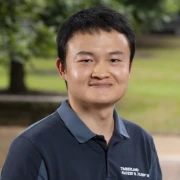
Dr. Wei Wang
Details
 College: School of Engineering
 Department: School of Engineering
 Campus: City Campus Australia
 wei.wang@rmit.edu.au


Open to
- Masters Research or PhD student supervision
About
Dr. Wei Wang is a Lecturer and ARC DECRA Fellow at the Department of Civil and Infrastructure Engineering, School of Engineering, RMIT University. His research focuses on sustainable and smart materials, energy storage safety, infrastructure resilience, and advanced manufacturing. With over a decade of experience in fire safety engineering and materials science, he aims to develop next-generation fire-resistant, energy-efficient, and environmentally sustainable technologies. Dr. Wang earned dual PhDs in Fire Safety Engineering and Civil Engineering from the State Key Laboratory of Fire Science, University of Science & Technology of China (USTC) and Department of Architecture and Civil Engineering, City University of Hong Kong (CityU) in 2019. That same year, he joined the School of Mechanical and Manufacturing Engineering at UNSW, where he expanded his research into bio-inspired flame retardants, fire-resistant polymer composites, and fire safety in new energy battery materials. Then, in 2023, he was promoted to lecturer. His work bridges fundamental research with real-world applications, as evidenced by his active collaborations with industry partners in fire-resistant polymer foams and government agencies such as Fire and Rescue NSW (FRNSW) on electric vehicle fire safety. Dr. Wang has published over 190 peer-reviewed journal articles, 2 book chapters, and 3 granted patents, accumulating over 7,000 citations (Google Scholar H-index: 51). His research impact is recognised globally, earning him a place among Stanford University’s Top 2% Highly Cited Scientists (2021–now). In 2022, he was awarded the prestigious ARC Discovery Early Career Researcher Award (DECRA 2023) for his project "Multifunctional Biomass Coatings for Electrostatic Induced Fire Hazards”. Beyond fire safety, his research vision extends to infrastructure resilience, net-zero energy solutions, energy-efficient materials, and smart sensing technologies. His interdisciplinary expertise includes: Sustainable and smart materials for energy storage, green manufacturing, and resilient infrastructure; Net-zero energy solutions, including thermal insulation, waste heat recovery, and energy-efficient composites; Smart and adaptive materials with self-healing, self-cleaning, and multifunctional properties; Energy storage safety, particularly in fire-safe lithium-ion batteries and hydrogen fuel applications; Advanced materials modelling and AI-driven simulation for optimising material properties.

Research fields
- 400507 Fire safety engineering
- 401609 Polymers and plastics
- 401602 Composite and hybrid materials
- 401605 Functional materials

Academic positions
- Lecturer
- RMIT University
- Civil and Infrastructure Engineering
- Melbourne, Australia
- Aug 2025 – Present
- Lecturer
- UNSW Sydney
- School of Mechanical and Manufacturing Engineering
- Sydney, Australia
- Jan 2024 – Aug 2025
- ARC DECRA Fellow
- UNSW Sydney
- School of Mechanical and Manufacturing Engineering
- Sydney, Australia
- Jan 2023 – Aug 2025
- Research Associate
- UNSW Sydney
- School of Mechanical and Manufacturing Engineering
- Sydney, Australia
- Dec 2019 – Dec 2022

Non-academic positions
- Early-Career Editorial Board
- Materials Futures
- United Kingdom
- 1 Mar 2025 – Present
- Young Editorial Board
- EcoMat
- United States
- 1 Feb 2025 – Present
- Editorial Board
- Fire
- Switzerland
- 21 Jul 2024 – Present
- Young Editorial Board
- Energy Materials
- United States
- 2 Apr 2024 – Present

Supervisor projects
- High-Performance Fire-Resistant Engineered Wood
- 5 Aug 2026
- Fire-Safe Coatings & Multi-Scale Modelling
- 31 Jul 2026

Teaching interests
1. RMIT: OENG1189 - Structural Optimization and 3D Printing
2. RMIT: OENG1167 Engineering Capstone Project Part A.
3. UNSW: MMAN4010 and MMAN4020. Undergraduate thesis projects - School of Mechanical Engineering.
4. UNSW: Course Code and Title: ENGG2600/3600/4600, Course "Fighting Fires with Science”.

Research interests
Dr Wang’s research focuses on the following areas:
- Sustainable and Smart Materials: Development of biomass-based, recyclable, and multifunctional materials for applications in energy storage, construction, and advanced manufacturing.
- Infrastructure Resilience and Sustainability: Designing high-performance, durable, and low-carbon materials to enhance climate resilience, energy efficiency, and circular economy adoption in infrastructure.
- Net-Zero Energy Solutions: Advancing energy-efficient coatings, thermal insulation materials, and waste heat recovery technologies to contribute to net-zero carbon goals.
- Smart and Adaptive Composites: Engineering self-healing, self-cleaning, and intelligent materials with real-time sensing and actuation for enhanced safety and durability.
- Energy Storage and Battery Safety: Innovating fire-safe and high-performance battery materials to improve the safety, efficiency, and sustainability of electric vehicles and grid storage.
- Advanced Materials Modelling and Simulation: Utilising molecular dynamics, density functional theory (DFT), and AI-driven modelling to optimise material design and performance at multiple scales.
- Thermal Management and Energy Efficiency: Enhancing heat transfer, phase change materials, and passive cooling strategies for smart buildings, EVs, and industrial applications.
- AI-Driven Material Engineering: Integrating machine learning, IoT, and digital twins to predict material behaviour, optimise manufacturing, and improve infrastructure monitoring.
- Green Manufacturing and Circular Economy: Developing low-carbon, biodegradable, and recyclable materials to minimise waste, reduce environmental impact, and promote sustainable production.
- Multifunctional Protective Systems: Designing fire-resistant, EMI-shielding, antibacterial, and high-strength composites for aerospace, defence, and advanced engineering applications.



