Climate Resilient Urbanisation in the Asia Pacific Region (CRU-AP)

Urbanisation and global environmental change are two of the most significant challenges facing cities and societies in the Global South.

Project dates: 2022 (ongoing)

Latest News: RMIT strengthen relationship with Solomon Islands National University (SINU)

Cyril Rachman, designated to represent SINU by the Vice Chancellor, spent a week in Melbourne in March participating in roundtables held with different RMIT schools. The purpose of the mission, organised by Prof. Darryn McEvoy and funded by DSC college, was to identify key areas where RMIT can support course development at SINU, as well as exploring the opportunities for greater collaboration and staff and student exchanges. This information will be used to inform a second MoU between the universities to be signed in 2024. Prof. McEvoy says, “this is a great opportunity to translate 10 years of research collaboration in Solomon Islands into meaningful and sustainable teaching and learning relationships that last beyond the life of applied research projects”.

Cyril’s first day of engagement involved meeting with senior members of Property, Construction, and Project Management led by Prof. Ron Wakefield and Prof. Usha Iyer-Raniga. Discussions with Dr Melissa Tinetti (Director, Built Environment & Sustainability) on vocational education were particularly fruitful. Prof. Iyer-Raniga says “this is a great opportunity for expanding our teaching and learning experiences in construction management in China, Hong Kong, Singapore, and Vietnam, into the Pacific. Linking vocational education to higher degrees highlight the importance of quality and flexibility with teaching and learning to support not only professional membership through formal accreditation of built environment programs such as building and construction and project management, but also ensure grounded responses to the local context in Solomon Islands”. Day one ended with an Indigenous tour of RMIT’s CBD campus.
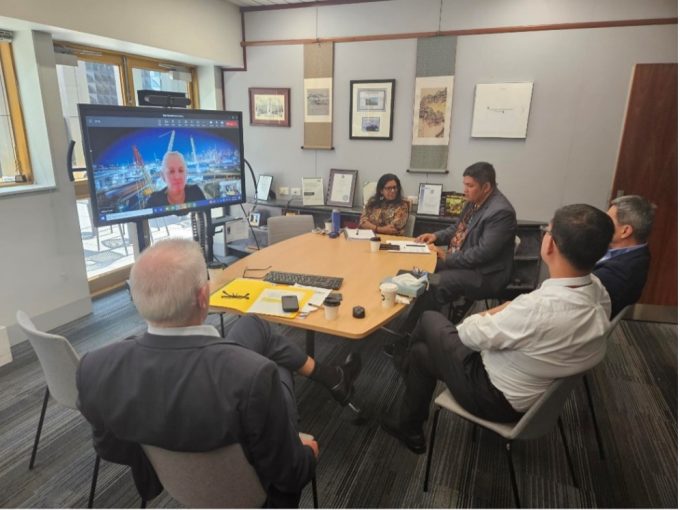
Five people sitting around a table in a meeting with a screen showing another participant. Round table discussion with PCPM staff

The hosts of the morning meeting on day 2, were Prof. Andrew Butt and Dr. Mittul Vahanvati, representing Sustainability and Urban Planning in the School of Globalisation, Urbanisation, and Social Studies. The Directors of the Centre for Urban Research and the Urban Futures Enabling Impact Platform joined the lunch to continue discussions. The afternoon session was dedicated to Engineering, with representatives from Civil (Prof. Dilan Robert) and Humanitarian Engineering (Dr Nick Brown and Dr Spyros Schismenos). Both disciplines are highly relevant to the development and climate resilience context in the Solomon Islands.

Prof. Jago Dodson, Director of the Urban Futures Enabling Impact Platform, says, “The Pacific is one of the most important regions to Australia, with intertwined histories and ambitions. By working with SINU to support capacity building for Pacific communities to achieve direct improvements at the local level RMIT is contributing to real world impact on our shared challenges.”

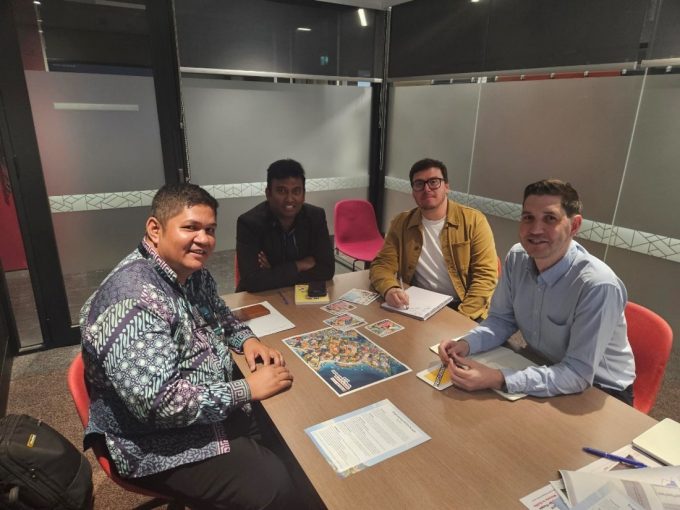
Four people sitting around a table in a meeting, looking at the camera and smiling. Discussions with Engineering staff

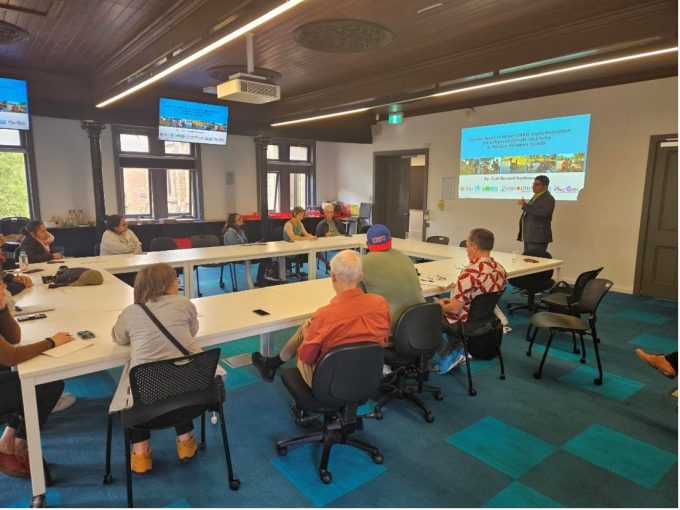
The University of Melbourne then took over as Cyril’s host on day 3 of the mission. The morning was dedicated to meetings with senior staff at the School of Infrastructure Engineering and colleagues from the Faculty of Arts and Science, arranged by Dr. Serene Ho, before Cyril presented a seminar on ‘nature-based solutions in informal settlements’ at the Oceania Institute in the afternoon. Assoc. Prof. Debra McDougall, Deputy Director of the Institute, gave the welcoming speech whilst conversations with the audience, including students from the Pacific, were led by Dr Alexei Trundle, Melbourne Centre for Cities.

A man standing before a screen at the front of a room presenting to a medium sized group who around a large rectangular table. Cyril presenting at the Oceania Institute, University of Melbourne

About the Project

Climate change will aggravate the significant risks already posed by natural hazards, impacting towns and cities that are also rapidly urbanising. In the Pacific, geographical isolation places further stress on the resilience of communities in Small Island States (SIDS). Rapid urban growth often overwhelms local Government response, in some cases leading to unplanned informal settlements and a significant growth in the numbers of ‘urban poor’, a group considered the most vulnerable to the impacts of climate change.

Responding to this critical urban resilience agenda in the Global South, the Centre for Urban Research houses CRU-AP; a group of researchers drawn from across different schools and disciplines to collaborate on projects that offer scientific, technical, and capacity strengthening solutions to some of the most critical challenges facing fast-growing towns and cities in the Asia Pacific region. This geographic focus closely complements the Climate Change Transformations group, which predominantly focuses on the Australian context, allowing for a sharing of people and knowledge between the two climate adaptation groups.

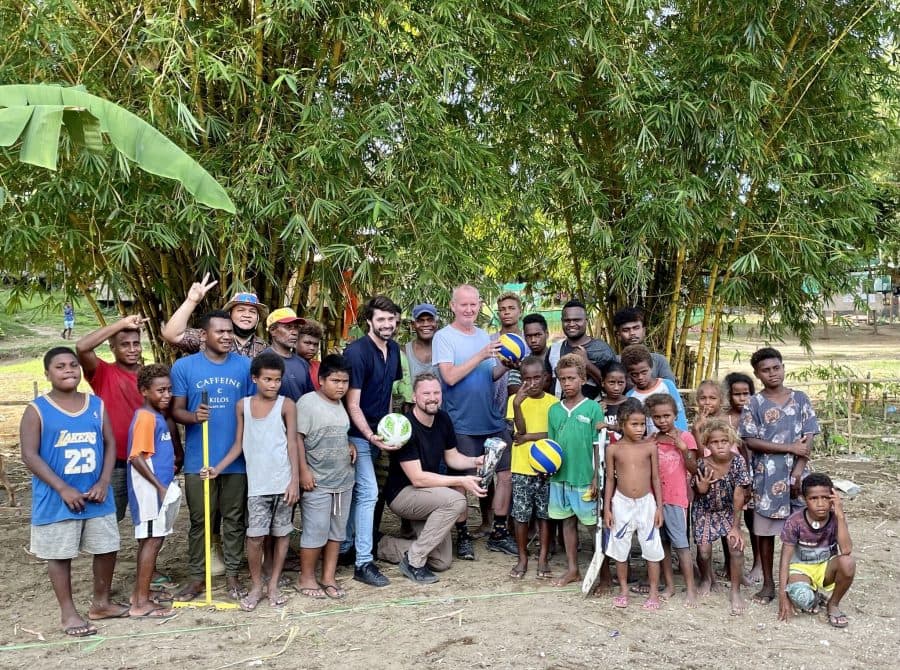
A group of men and children with sporting equipment.

Partners and regional engagement:

UN-Habitat (Nairobi and the Asia Pacific regional office)

UN Global Land Tool Network

UN 10YFP Sustainable Building & Construction Programme

Habitat for Humanity 

DFAT

MFAT

ACFID Urban

Community of Practice

SIDA

SPC Pacific Community

Solomon Islands Government

Honiara City Council

Solomon Islands National University

Honiara City Youth Council.

Projects:

Climate Resilient Honiara, phase 2: funded by UNFCCC Adaptation Fund and administered by UN-Habitat (2022-2023).

Inclusive and Disaster Resilient Shelter Guide: Urban Informal Settlements, Honiara, Solomon Islands: funded by the AHP Disaster Ready programme and administered by Habitat for Humanity (2021 – 22)

Unlocking the potential of urban gardens as a mechanism for sustainable, climate resilient, livelihoods in Greater Honiara: funded by SPC (Pacific Community) (2021 – 22)

Climate Resilient Honiara, phase 1: funded by UNFCCC Adaptation Fund and administered by UN-Habitat (2019 – 2022).

Nature-based solutions (NbS) for enhanced climate resilience of informal settlements (SIDA)

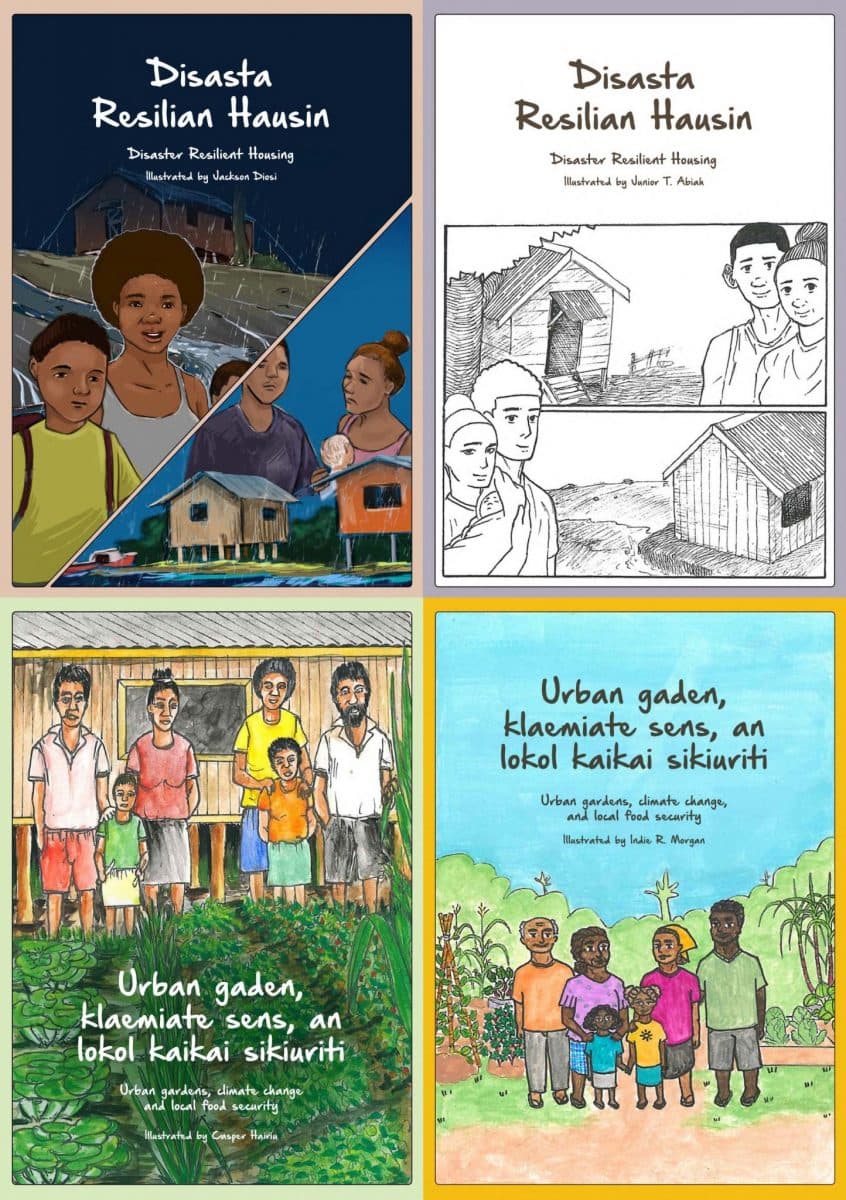
Four comic book covers about disaster resilient housing

Selected publications:

Journal articles
Reports
Climate risk comics (Pidgin)
A group of men and children with sporting equipment.

Key people

Researchers

  • Dr Nick Brown  
  • Dr Spyros Schismenos 
  • Dr Tariq Maqsood  
  • Dr Muhammed Bhuiyan  
  • Dr Erica Kuligowski 
  • Dr Qian (Chayn) Sun  
  • Dr Ata Tara 
  • Dr Mittul Vahanavati  
  • Prof. Andrew Butt 
  • Prof. Usha Iyer-Raniga 
  • Dr Kim Gordon 
  • Dr Pirjo Haikola  

Affiliates

  • Dr Alexei Trundle 
  • Honorary A/Prof. David Mitchell  
  • Dr Serene Ho  
  • Dr Gemma Sou 
  • Dr Yazid Ninsalam

Related content

aboriginal flag float-start torres strait flag float-start

Acknowledgement of Country

RMIT University acknowledges the people of the Woi wurrung and Boon wurrung language groups of the eastern Kulin Nation on whose unceded lands we conduct the business of the University. RMIT University respectfully acknowledges their Ancestors and Elders, past and present. RMIT also acknowledges the Traditional Custodians and their Ancestors of the lands and waters across Australia where we conduct our business - Artwork 'Sentient' by Hollie Johnson, Gunaikurnai and Monero Ngarigo.

More information