This project has a particular focus on pro-poor adaptation actions that involve and benefit the most vulnerable communities in the city and a special emphasis on youths, women, girls, the elderly, and people with disabilities.
The ‘Climate Resilient Honiara’ Project (CRH) is a four-year project funded by the UNFCCC Adaptation Fund and administered by UN-Habitat. RMIT University provides scientific support to a range of different urban climate resilience activities (actions and capacity building). Professor Darryn McEvoy leads the project and a large multi-disciplinary team of lecturers and researchers from six different schools at RMIT. The project also engages with multiple local partners, NGOs and consultants. The project is implemented locally by the Solomon Islands Ministry for the Environment, Climate Change and Disaster Management (MECCDM), the Ministry of Lands, Housing and Survey (MLHS), and Honiara City Council (HCC).
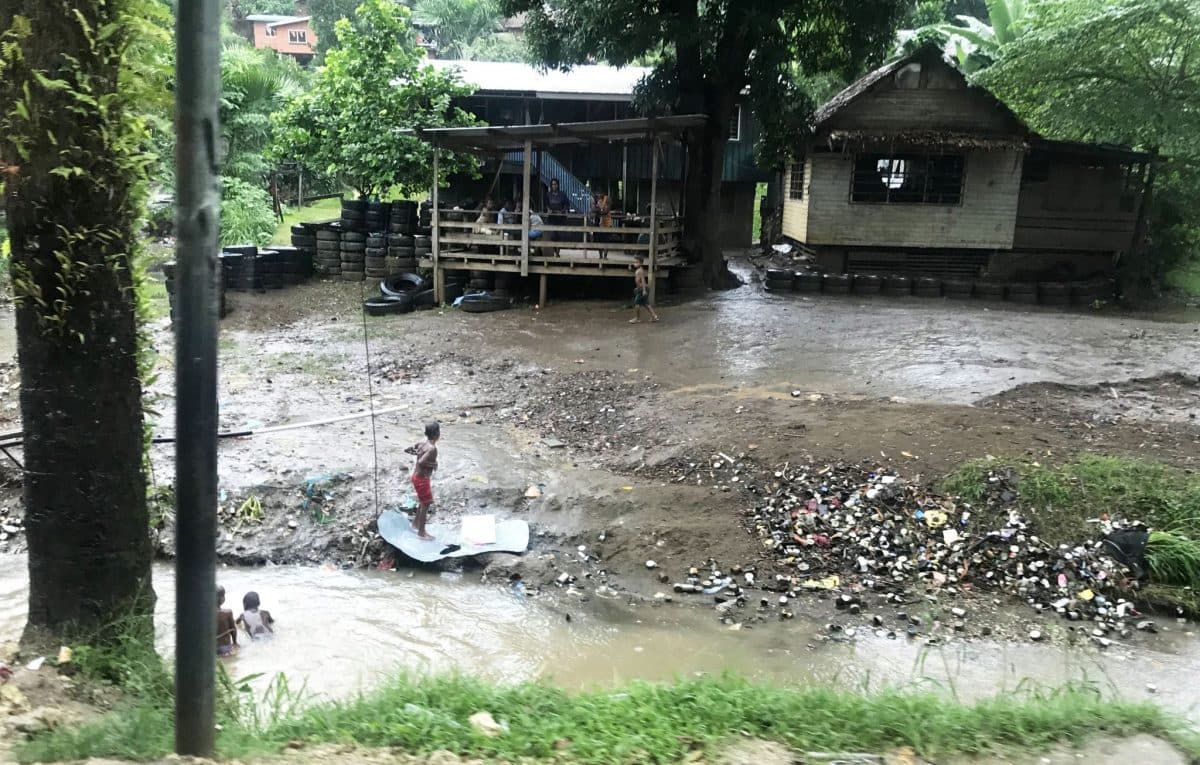
A team of RMIT University engineers, planners and designers are developing Nature-based solutions for adaptability and resilience of five highly vulnerable informal settlements in Honiara, since the project’s commencement in 2019. The team is developing solutions for urban environment based on spatial mappings of disaster risk and, co-design workshops with community during field visits and in consultation with local stakeholders. The team is also developing a professional training course curriculum for land managers from the Solomon Islands.
The report on Work Package 7b: Climate Resilient Spaces – Nature based Solutions (NbS) will be available soon.
Work Package 10: Professional training course