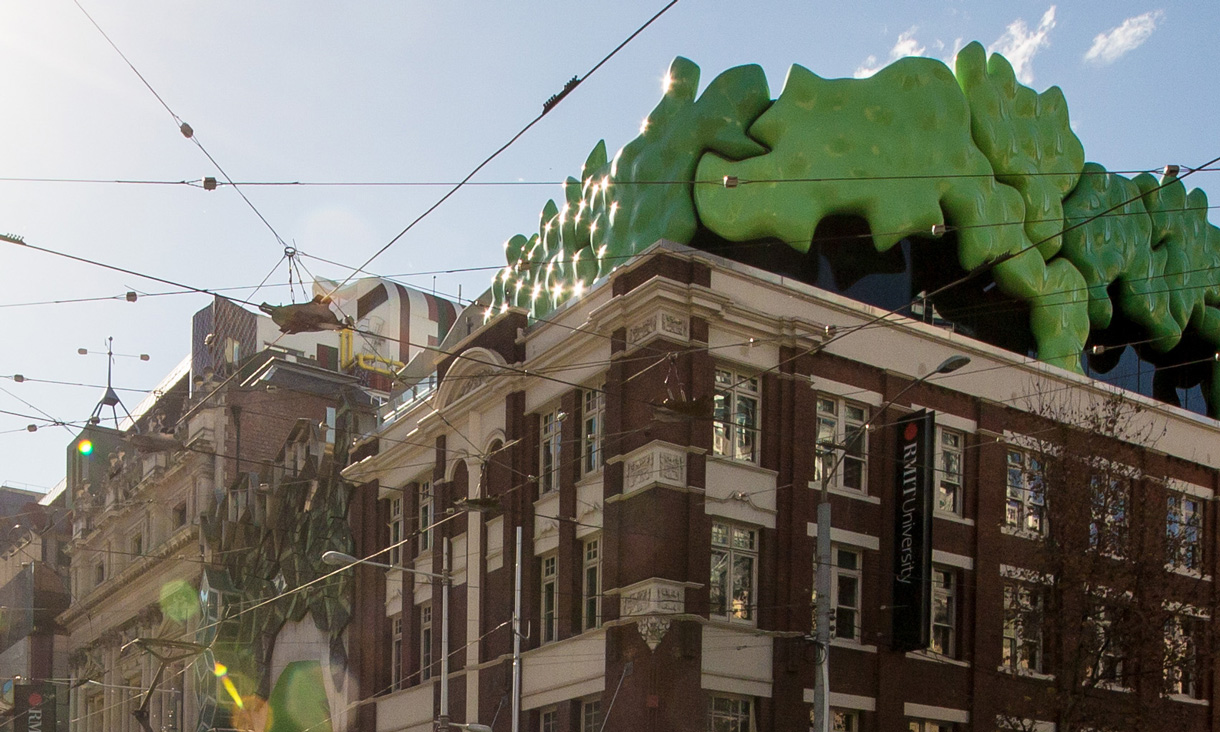

Postgraduate study: Engineering

Find your specialty and work with industry to be a leader in the fields of civil, mechanical, automotive, and environmental engineering, and more.

Why study postgraduate engineering at RMIT

Study at a top ranked university for Engineering & Technology

RMIT is ranked #9 in Australia and the top 150 universities globally for engineering.*

Industry-connected learning

Connect with industry through work-integrated learning experiences, research projects and industry-sponsored student design projects.

Graduate job ready

Gain hands-on experience via laboratory work, work-integrated learning, research projects, consulting and design projects.

*QS World University Rankings by Subject 2026

Engineering courses

Filters
Filter by level of study

No courses match your current filters

Try adjusting them or reset all filters to see more options

Graduate certificate

Graduate Certificate in Energy Efficient and Sustainable Building

  • next intake February, July, October
  • learning mode On campus
  • location Melbourne City
  • duration Full-time 6 months, Part-time 1 year

Graduate certificate

Graduate Certificate in Transport Safety Investigation

  • next intake See Apply for details
  • learning mode On campus
  • location Melbourne City
  • duration Full-time 6 months, Part-time 1 year
Graduate diploma

Graduate Diploma in Energy Efficient and Sustainable Building

  • next intake February, July, October
  • learning mode On campus
  • location Melbourne City
  • duration Full-time 1 year, Part-time 2 years
Graduate diploma

Graduate Diploma in Transport Safety Investigation

  • next intake See Apply for details
  • learning mode On campus
  • location Melbourne City
  • duration Full-time 1 year, Part-time 2 years
Masters by coursework

Master of Energy Efficient and Sustainable Building

  • next intake February, July, October
  • learning mode On campus
  • location Melbourne City
  • duration Full-time 2 years, Part-time 4 years
Masters by coursework

Master of Engineering (Aerospace)

  • next intake February, July
  • learning mode On campus
  • location Melbourne City, Bundoora
  • duration Full-time 2 years, Part-time 4 years
Masters by coursework

Master of Engineering (Civil Engineering)

  • next intake February, July
  • learning mode On campus
  • location Melbourne City
  • duration Full-time 2 years, Part-time 4 years
Masters by coursework

Master of Engineering (Electrical and Electronic Engineering)

  • next intake February, July
  • learning mode On campus
  • location Melbourne City
  • duration Full-time 2 years, Part-time 4 years
Masters by coursework

Master of Engineering (Electrical Engineering)

  • next intake February, July
  • learning mode On campus
  • location Melbourne City
  • duration Full-time 2 years, Part-time 4 years
Masters by coursework

Master of Engineering (Environmental Engineering)

  • next intake No upcoming intakes
  • learning mode On campus
  • location Melbourne City
  • duration Full-time 2 years, Part-time 4 years
Masters by coursework

Master of Engineering (International Automotive Engineering)

  • next intake No upcoming intakes
  • learning mode On campus
  • location Melbourne City, Bundoora
  • duration Full-time 2 years, Part-time 4 years
Masters by coursework

Master of Engineering (Management)

  • next intake February, July
  • learning mode On campus
  • location Melbourne City, Bundoora
  • duration Full-time 2 years, Part-time 4 years
Masters by coursework

Master of Engineering (Mechanical Engineering)

  • next intake February, July
  • learning mode On campus
  • location Melbourne City
  • duration Full-time 2 years, Part-time 4 years
Masters by coursework

Master of Engineering (Robotics and Mechatronics Engineering)

  • next intake February, July
  • learning mode On campus
  • location Melbourne City
  • duration Full-time 2 years, Part-time 4 years
Masters by coursework

Master of Engineering (Sustainable Energy)

  • next intake February, July
  • learning mode On campus
  • location Bundoora, Melbourne City
  • duration Full-time 2 years, Part-time 4 years
Masters by coursework

Master of Engineering (Telecommunication and Network Engineering)

  • next intake February, July
  • learning mode On campus
  • location Melbourne City
  • duration Full-time 2 years, Part-time 4 years

Filters
Filter by level of study

No courses match your current filters

Try adjusting them or reset all filters to see more options

Masters by research

Master of Engineering (Aerospace Engineering and Aviation)

  • next intake Continuous (scholarship application closing dates apply)
  • learning mode On campus
  • location Bundoora, Melbourne City
  • duration Full-time 2 years, Part-time 4 years
Masters by research

Master of Engineering (Biomedical Engineering)

  • next intake Continuous (scholarship application closing dates apply)
  • learning mode On campus
  • location Melbourne City
  • duration Full-time 2 years, Part-time 4 years
Masters by research

Master of Engineering (Chemical Engineering)

  • next intake Continuous (scholarship application closing dates apply)
  • learning mode On campus
  • location Melbourne City
  • duration Full-time 2 years, Part-time 4 years
Masters by research

Master of Engineering (Civil Engineering)

  • next intake Continuous (scholarship application closing dates apply)
  • learning mode On campus
  • location Bundoora, Melbourne City
  • duration Full-time 2 years, Part-time 4 years
Masters by research

Master of Engineering (Electrical & Electronic Engineering)

  • next intake Continuous (scholarship application closing dates apply)
  • learning mode On campus
  • location Melbourne City
  • duration Full-time 2 years, Part-time 4 years
Masters by research

Master of Engineering (Environmental Engineering)

  • next intake Continuous (scholarship application closing dates apply)
  • learning mode On campus
  • location Melbourne City, Bundoora
  • duration Full-time 2 years, Part-time 4 years
Masters by research

Master of Engineering (Mechanical, Manufacturing and Mechatronic Engineering)

  • next intake Continuous (scholarship application closing dates apply)
  • learning mode On campus
  • location Bundoora, Melbourne City
  • duration Full-time 2 years, Part-time 4 years
Phd

PhD (Aerospace Engineering and Aviation)

  • next intake Continuous (scholarship application closing dates apply)
  • learning mode On campus
  • location Bundoora, Melbourne City
  • duration Full-time 3-4 years, Part-time 6-8 years
Phd

PhD (Biomedical Engineering)

  • next intake Continuous (scholarship application closing dates apply)
  • learning mode On campus
  • location Melbourne City
  • duration Full-time 3-4 years, Part-time 6-8 years
Phd

PhD (Chemical Engineering)

  • next intake Continuous (scholarship application closing dates apply)
  • learning mode On campus
  • location Melbourne City
  • duration Full-time 3-4 years, Part-time 6-8 years
Phd

PhD (Civil Engineering)

  • next intake Continuous (scholarship application closing dates apply)
  • learning mode On campus
  • location Bundoora, Melbourne City
  • duration Full-time 3-4 years, Part-time 6-8 years
Phd

PhD (Electrical & Electronic Engineering)

  • next intake Continuous (scholarship application closing dates apply)
  • learning mode On campus
  • location Melbourne City
  • duration Full-time 3-4 years, Part-time 6-8 years
Phd

PhD (Environmental Engineering)

  • next intake Continuous (scholarship application closing dates apply)
  • learning mode On campus
  • location Bundoora, Melbourne City
  • duration Full-time 3-4 years, Part-time 6-8 years
Phd

PhD (Mechanical, Manufacturing and Mechatronic Engineering)

  • next intake Continuous (scholarship application closing dates apply)
  • learning mode On campus
  • location Bundoora
  • duration Full-time 3-4 years, Part-time 6-8 years

Your postgraduate study options

An Engineering Master's degree allows you to develop the practical skills needed to solve complex, real-world problems. These degrees are designed for engineers looking to specialise and step into more senior roles and expand their career opportunites.

You’ll gain a mix of technical knowledge and hands-on experience, including:

  • Advanced coursework in areas like sustainability, engineering analysis, and project management
  • Industry-linked projects and real-world problem solving
  • Collaborative work that builds leadership and communication skills
  • A final research or capstone project

You can tailor your studies to suit your interests through specialisations.

For example, a Civil Engineering master’s degree may help prepare you for leadership roles in construction and infrastructure projects, while advanced study in Electrical Engineering can support careers in energy systems, renewable technologies and power networks.

A PhD or research degree is is suited to engineers who want to contribute to new knowledge and solve complex challenges. They allow you to develop deep expertise in a specialised area while working on projects that can have real-world impact.

Research programs typically involve:

  • Independent, in-depth research on a specific engineering problem
  • Supervision by experienced academics and researchers
  • Collaboration with industry or research partners
  • Producing a thesis or major research outcome

Graduates can pursue careers in education, research and development, or leadership positions in highly specialised fields.

Research candidates may investigate challenges such as sustainable chemical processes, advanced materials or future aviation technologies through programs like the Master of Engineering (Chemical Engineering) or a PhD (Aerospace Engineering and Aviation).

Quickly advance your career or explore new directions within engineering with a Graduate certificate or a diploma.

They are ideal for professionals looking to enhance their qualifications without committing to a full master’s degree.

These programs provide practical, targeted learning, including:

  • Shorter study durations with focused subject areas
  • Opportunities to build skills in specific engineering disciplines
  • Pathways to further study, including progression into a master’s degree
  • Industry-relevant knowledge that can be applied immediately in the workplace

For example, the Graduate Certificate in Transport Safety Investigation can help you build the theoretical skills needed to investigate incidents across the aviation, rail and marine sectors - all within six months of study.

Career outcomes

Your options after graduating

Postgraduate engineering study can accelerate your career progression and open pathways into specialised and leadership roles. By deepening your technical expertise and strengthening skills in project management, innovation and strategic thinking, you’ll be well placed to move into roles such as:

  • senior engineer
  • lead designer
  • project manager
  • engineering consultant
  • technical specialist
  • systems engineer

Many graduates use further study to transition into management, policy, or emerging fields such as smart manufacturing, renewable energy and advanced technologies.

Where can you work?

Postgraduate engineering graduates have gone on to work across leading engineering consultancies, infrastructure and construction firms, government agencies, and emerging technology sectors. Alumni have built careers with organisations including:

  • Arup
  • Aurecon
  • Jacobs
  • GHD
  • WSP
  • John Holland
  • Metro Trains Melbourne
  • Deloite Consulting
  • Tilt Renewables

More information

Find the right course for you

With over 350 qualifications to choose from, it's never been easier to find the right fit.

aboriginal flag float-starttorres strait flag float-start

Acknowledgement of Country

RMIT University acknowledges the people of the Woi wurrung and Boon wurrung language groups of the eastern Kulin Nation on whose unceded lands we conduct the business of the University. RMIT University respectfully acknowledges their Ancestors and Elders, past and present. RMIT also acknowledges the Traditional Custodians and their Ancestors of the lands and waters across Australia where we conduct our business - Artwork 'Sentient' by Hollie Johnson, Gunaikurnai and Monero Ngarigo.

Learn more about our commitment to Indigenous cultures