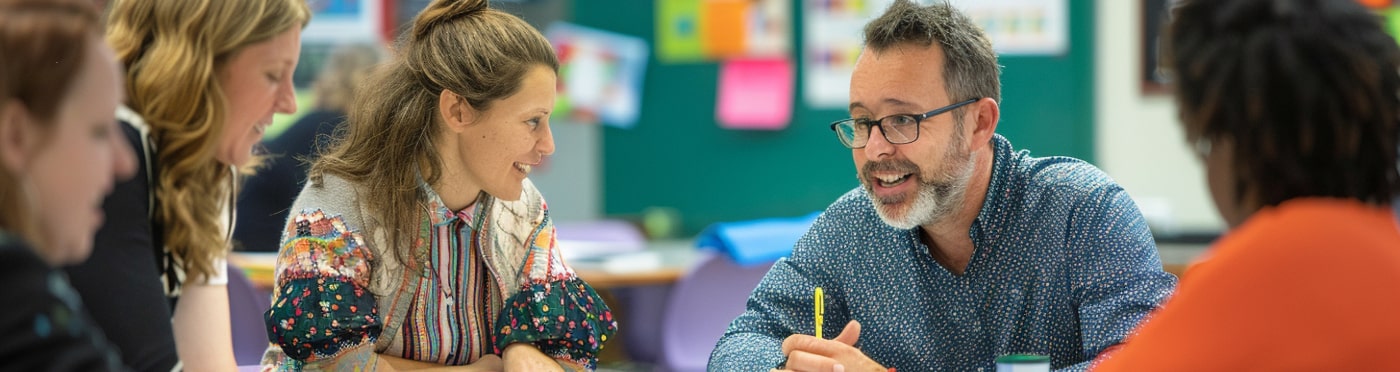
Mentoring a pre-service teacher (PST) is a rewarding role, particularly in rural and regional schools. These online resources are designed to help mentor teachers learn more about RMIT’s initial teacher education programs, including program information, placement course outlines, and specific expectations for pre-service teachers during their placement. These materials aim to support mentor teachers in understanding each pre-service teacher’s academic progression within their program and the requirements of their placement experience.
Pre-service teachers from RMIT bring diverse backgrounds and perspectives; while some are familiar with rural life, for others, these placements offer their first immersive experience in a regional educational setting. Rural schools often have unique routines, multi-age classrooms, and strong community involvement, which may be new for some preservice teachers.
Mentor teachers play a vital role in shaping this learning experience. Building a strong professional relationship beginning with a warm introduction, a school tour, and conversations about the local area helps new teachers feel welcome and can ease early anxieties, especially for those from metropolitan backgrounds. By fostering connection and inclusion, mentors empower pre-service teachers to further develop their professional identity and enhance their teaching skills. Through practical engagement and relationship-building with students and the wider school community, mentors help preservice teachers grow as educators and make meaningful contributions during their placement.
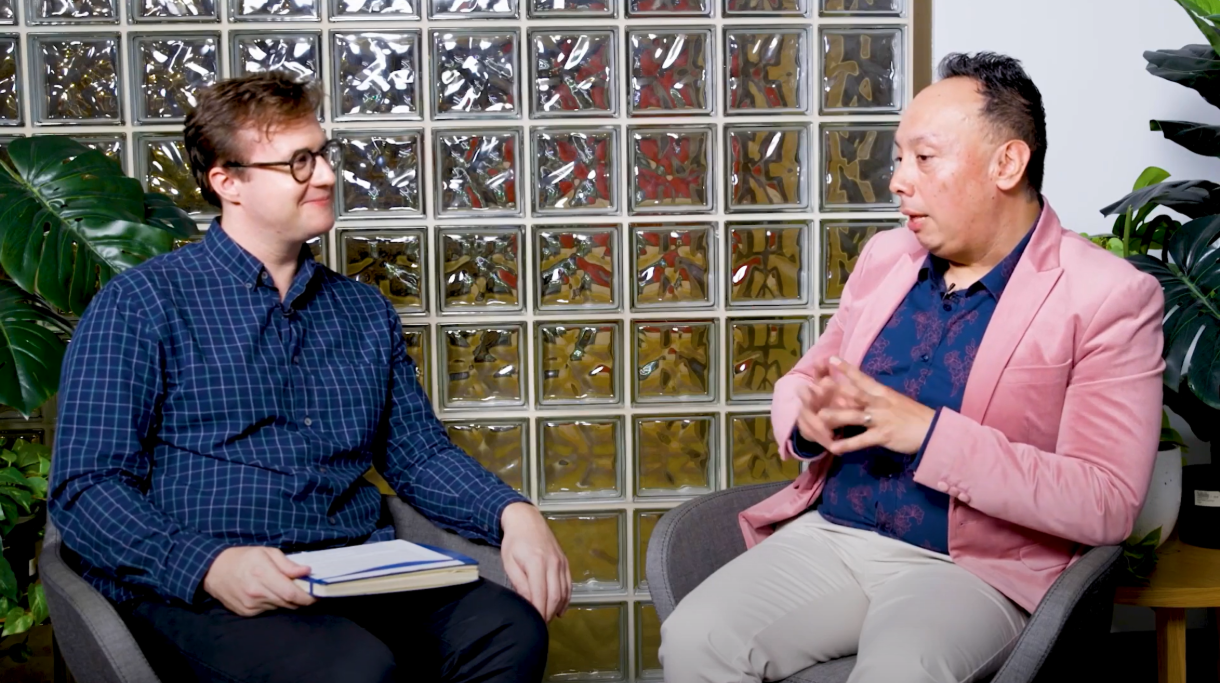
Dr Phil Poulton and Mr Cesar Rifo-Inzunza, PST Coordinator, outline behaviour management strategies mentors can adapt across contexts.
Dr Phil Poulton and Mr Cesar Rifo-Inzunza, PST Coordinator, outline behaviour management strategies mentors can adapt across contexts.
0:05
My name is Doctor Phil Poulton.
0:06
I'm a teacher, educator and curriculum researcher here
0:09
at the School of Education at RMIT University.
0:13
Join with me here today is Cesar Rifo.
0:15
He's a science area learning leader and pre-service
0:18
teacher coordinator at Epping Secondary College.
0:22
Today we're going to discuss a really important topic,
0:25
and one that all early career teachers seem to be a little bit nervous about.
0:29
Behavior management.
0:31
So is going to share some of his experiences and strategies
0:35
about how you can build, some positive behavior management
0:39
strategies as part of your emerging teacher toolkit.
0:43
Cesar, thanks for joining me.
0:45
No worries. Thank you for having me.
0:46
It's a pleasure to be here with you.
0:48
We'll start with our first question.
0:50
What are some of the most common student behaviors
0:53
you experience in a secondary classroom,
0:55
and how have you started to approach those kinds of behaviors?
0:59
All right.
0:59
So to give you a bit of a context, I've been teaching for 25 years now.
1:03
And across all these many years
1:06
I have seen that, the behavior is quite repetitive.
1:10
And we get to see for example, that the students get usually distracted
1:14
by their peers.
1:16
They are
1:16
constantly talking because they believe that
1:20
what they have to say is more important than what the teacher have to say.
1:23
So, you know, also, they are
1:26
well before the Victorian government
1:29
have the policy that this student couldn't have the funds.
1:32
Then they were constantly on the funds.
1:34
That was also another issue because they were texting
1:37
each other, recording each other without their permission.
1:40
So then they will have some fights even within the class,
1:43
because that's recording me without me wanting to.
1:48
So that's been quite,
1:50
a bit of their issues across the years
1:53
and also the, the constant talking
1:57
because they keep talking, among themselves and, they get easily
2:02
distracted and fly, pass by pass, and then they just not listening anymore.
2:08
Or they take too long in writing, they easily get off task.
2:13
And then the other part of the question that you were saying
2:17
is, how do I deal with that?
2:20
Do I, so what do we do with that
2:24
is, I try to come closer to the person that is off task
2:28
just by walking towards them, maybe in person next to them.
2:33
They quickly get the pen and start writing.
2:36
If that doesn't work, then we go with the warnings.
2:40
Okay, so, at my current school now, we give them three warnings
2:45
and we clearly state the warnings and then we move them to another spot.
2:50
If that doesn't work, then we proceed to exit them.
2:54
It's part of the core
2:56
contents in and teacher education, but also quite a priority
3:00
in the Department of Education is this idea of using routines? Yes.
3:04
In a classroom.
3:05
What are some routines that you use in your secondary classroom
3:09
that help build, positive learning environments?
3:12
So, in my classroom, my I used to have quite a big set of routines,
3:17
but over the years, I learned that quite a few of them,
3:21
when not applicable or they were not relevant anymore.
3:25
And then the school, took a general approach to the routines.
3:30
So, what is happening now?
3:32
We have five for focus and five for finale.
3:35
So five for focus is when we line them up outside the classroom,
3:38
then they need to have one hand distance from each other.
3:41
Wow. And then we need to check for four things,
3:44
which is the materials their laptop, their charger,
3:47
the pen and their writing book or exercise book.
3:51
Then while we there, we also greet them
3:54
and we're super happy to have you here, you guys.
3:57
And now we're going to go into the classroom.
3:59
Please be seated straight away and write down the title and the learning
4:03
intentions and success criteria where when they get into the classroom.
4:08
So that's across the whole school.
4:11
That's the five four focus.
4:13
Then we have the five four finale where we need to recap the whole class.
4:18
Then we go over the success criteria and then also,
4:22
we need to make sure that the student have, left the place nice and clean
4:27
and tidy for the next class, that it's going to come into that room.
4:30
And then we say the goodbyes and hopefully if we have time,
4:34
we will be able to tell them what's happening next class as a preview.
4:38
Yeah. So I really like those, titles.
4:42
Would it be an expectation, say,
4:43
in your school, that a pre-service teacher needs to follow those routines as well?
4:47
It's so interesting that you say that because this is actually I also do
4:50
the induction for the pre-service teachers,
4:52
and I give them, a handbook that I have prepared.
4:57
And I keep changing over and over again and adding different things.
5:01
And, in spite of that, it's actually invalid.
5:04
If I focus on for five for finale, we even have a diagram.
5:08
Now is to the point that we have learning works
5:12
and all the, principal team and the leadership teams
5:17
go across to school checking that all this is happening,
5:20
and then we get like a rating across the school how well we're performing,
5:25
you know, regardless of these five for focus of five for finale.
5:28
So I think as a pre-service teacher,
5:30
they might be very excited to try out, say, these kinds of routines.
5:35
What would happen if the pre-service teacher tries
5:37
to retain the children going into the class,
5:39
but they don't actually follow that routine?
5:41
What would you recommend?
5:42
The pre-service teacher then? Does?
5:45
What I would say usually is to all the pre-service teachers
5:49
to observe for the first few days, especially when into first placements.
5:53
You know, that can be a bit overwhelming and any placement is overwhelming,
5:56
but especially the first one.
5:57
So what I say to them is observe for the first two three days,
6:02
pay attention to what you mentor is doing.
6:05
Take notes of what's happening so then you can replicate it.
6:09
And for the first couple of times that you're doing it,
6:12
make sure that you mentor is next to you, so they can give you
6:16
this day of required support until you by by the second week
6:21
or the third week, they can feel that they can do it by themselves.
6:24
One of the probably most challenging behaviors
6:27
that that we as teachers experience is, task
6:31
refusal, where a student will say to us, I don't want to do this.
6:34
This is boring.
6:35
You know, what are some strategies that you've used to address
6:38
a student who refuses to do any of their work?
6:42
So, at the school, we have a pedagogical model that is linked to the hits.
6:47
And why.
6:49
What I always say
6:50
to the pre-service teachers, pay attention to the link and the hook.
6:54
So as soon as you start your class, as soon as you have done your learning
6:57
intentions and success criteria, make sure that you're justifying
7:01
why we're doing and why we're learning this.
7:04
Because a lot of the times, and I say this to them,
7:08
how many times
7:08
have you gone into class and you don't know where the teacher is going?
7:12
Whereas if you have the learning intentions,
7:14
you went through the success criteria, then you you linked it
7:18
all to the topic and why this is relevant for them.
7:22
Then you're already diminished.
7:24
Why do I need to do this?
7:25
Can you see?
7:26
But in case that that that wasn't still not enough,
7:30
then I do what I was telling you before.
7:33
Come closer. Closer to them.
7:35
Not super close, but keep normal distance and make sure that they go back on task.
7:40
If they are not back on task, then you start giving them warnings.
7:44
Make sure that the warnings are explicit.
7:46
So you say feel this is your first warning because you're not writing
7:50
still or says I will, okay?
7:53
Please no.
7:55
And then if you feel still doesn't do it, then I go with my second warning
7:59
and I encourage the pre-service teachers to use the warning system and
8:04
to say to feel this is your second warning because you're still not writing.
8:08
I need you to to start now writing because I'm going to change the slide or we're
8:12
going to move into the next activity soon so they know why things are happening.
8:18
And they also, I like to believe
8:21
that the pre-service teachers feel that they can do it.
8:25
So I've
8:26
I've heard you talk about, proximity
8:29
to students and probably the importance of eye contact as well. Yes.
8:33
Is there anything else that a pre-service teacher,
8:35
particularly in a secondary classroom, needs to think about in terms of their,
8:38
gesture, in terms of the way that they hold themselves in a classroom?
8:43
What would you suggest?
8:44
Yes, presence is is very important within the classroom.
8:47
So I will always say stand up,
8:50
you know, you need to own the space.
8:53
You need to protect your voice because the last person from that room
8:57
need to hear you.
8:58
And even if you need to elevate your voice quite a bit in order
9:02
for the last person to hear you well, you need to do it.
9:05
And when you have the whole attention, then you can diminish the voice again
9:08
and go with the normal tone and then go back again if you need.
9:13
So it's always these,
9:14
we always say, and I'm and I'm sure that you're aware of that.
9:17
We're always borderline, before performing,
9:20
before going into the classroom.
9:21
So yes.
9:23
So and I remember my, not my mentor teacher talking to me about that
9:27
sometimes the classroom is a little bit like a stage. Yes.
9:30
So you are often thinking about how that kind of variance might be.
9:33
My last question would be if if you're an early career teacher
9:37
and you're struggling with behavior management in your class,
9:40
what are some of the next steps you should take?
9:43
Well, also, we haven't mentioned yet to develop positive relationships.
9:48
As we know, we are humans.
9:51
We all feel as soon as we go into space, we feel if the space is cold,
9:56
is warm, smells good or not really.
10:00
And for the students, it's even more
10:02
because they still haven't developed the prefrontal cortex.
10:05
So they are a bit more dysregulated, they are more impulsive,
10:08
and we need to be the one that helps them to do all this regulation.
10:15
So what I would
10:15
say they try to get to know your students as soon as you can.
10:18
So I will encourage I usually encourage all the mentors to give the service
10:22
teachers their class list, with the photos in it.
10:26
And the first homework for the service teachers is to memorize the names.
10:31
And as you're well aware, pre-service
10:35
teachers will know, quite a few names really quickly.
10:39
Which one do you think that those ones feel?
10:41
Always. I know. Okay.
10:43
And also the first one that we learned straight away. So.
10:46
And then the ones that behave, we get to learn them a bit down the track.
10:50
We have no pressure for it.
10:51
But as long as you know, you 3 or 4,
10:55
that are going to need your attention, then it's fine.
10:58
So it's not a very arduous task.
11:00
So thanks so much,
11:01
Cesar, for sharing your knowledge and experience with us.
11:05
And I know that we look forward to hearing more
11:08
from you, as our semester progresses any time.
11:11
Thank you so much for the invitation. Thank you.
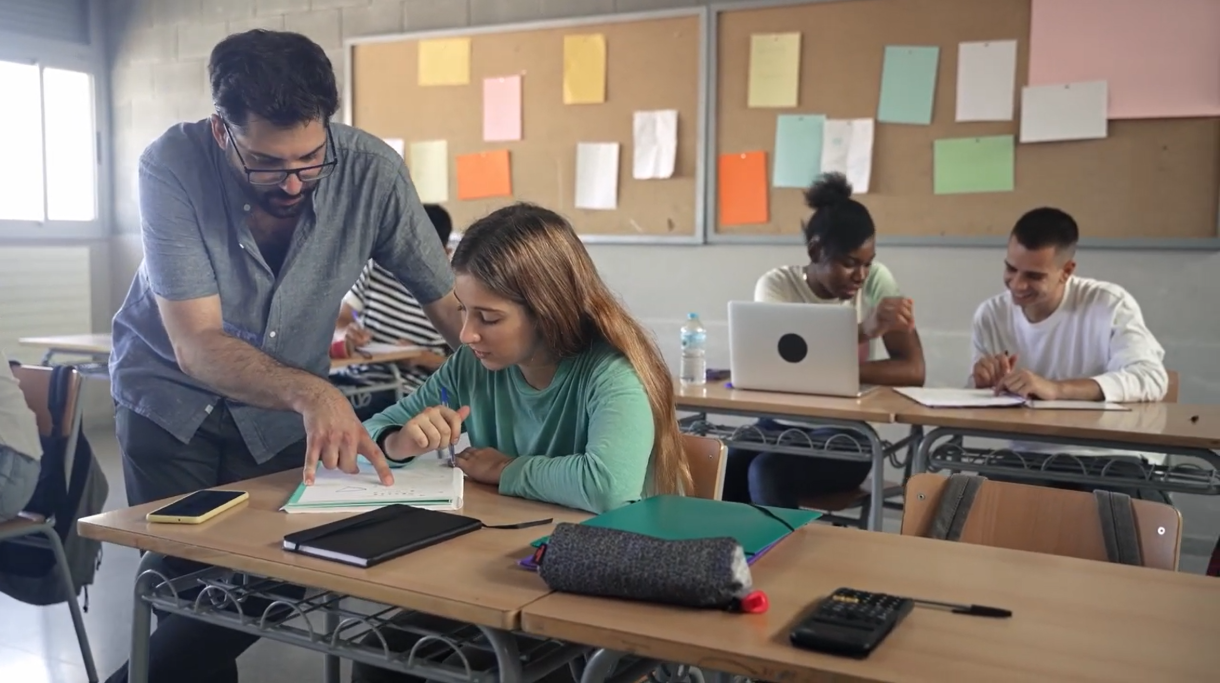
Dr Phil Poulton outlines course objectives, mentor responsibilities and the weekly learning milestones pre-service teachers complete during placement.
Dr Phil Poulton outlines course objectives, mentor responsibilities and the weekly learning milestones pre-service teachers complete during placement.
0:04
TCHE 2679.
0:06
Professional experience.
0:08
Thinking About Learning is the second professional experience
0:11
course for our Master of Teaching Practice students.
0:15
In this course, our students explore key learning theories, including recent
0:19
research and policy advice regarding cognitive load theory
0:23
and high impact teaching strategies like explicit instruction,
0:27
scaffolding, deep questioning, and collaborative learning approaches.
0:32
As students are introduced to a small range
0:34
of classroom management techniques and are starting to develop
0:37
an understanding of sequential lesson planning.
0:42
Placement overview.
0:45
This is how students second professional experience placements.
0:48
Having already completed a ten day placement in their first semester.
0:53
That first placement, they focused on making high quality
0:56
observations of classroom practice
0:58
and had some opportunities to engage in small group teaching.
1:02
In this second placement, students are starting to focus more on
1:06
recognizing the diversity of student needs and the different types of learning
1:10
experiences in a classroom.
1:13
The placement
1:14
adopts a gradual release of responsibility approach,
1:17
where pre-service teachers are supported to move from teaching segments
1:21
of a lesson and building up to teaching a sequence of whole lessons.
1:25
In their final week.
1:28
Mentor teacher responsibilities.
1:31
In this placement, you play a valuable role
1:33
in supporting our pre-service teachers confidence in a classroom.
1:37
This support ranges from modeling how to plan for engaging small group
1:41
activities and whole class lessons, demonstrating classroom management
1:45
techniques, and providing oral and written feedback on how pre-service teachers
1:49
design and enactment of similar activities and lessons during their placements.
1:55
As always, the scope of opportunities provided to our pre-service
1:59
teachers is dependent on local school context.
2:02
Student needs in class scheduling.
2:06
Pre-Service teacher responsibilities.
2:09
In this second placement, our pre-service teachers
2:12
starting to move beyond observations of classrooms to more guided opportunities
2:17
to plan for and enact small group activities and whole class lessons.
2:22
The visual on the screen provides an outline of a sequence
2:26
of learning opportunities for students over their 15 day placement.
2:30
This is a suggested sequence only and should be adjusted
2:34
to suit your context and your classroom schedule.
2:38
In week one, students should focus on building relationships
2:42
and building an understanding of the diversity in the classroom.
2:46
The first stage should focus on observations of classroom
2:49
routines and behavior management strategies
2:52
throughout week one.
2:54
Our pre-service teachers should start to teach segments of whole class lessons
2:58
before ending the first week.
3:00
Teaching an entire whole class lesson
3:03
in week two.
3:05
Our pre-service teachers should aim to plan for and teach
3:08
for whole class lessons across the week.
3:11
There should be some attempts made by our pre-service teachers
3:14
to use strategies that respond to student needs and engagement,
3:19
if possible.
3:21
Two of these lessons should be sequential.
3:24
In week three, our pre-service
3:26
teachers should be refining their teaching strategies
3:29
and starting to take more control of behavior management in the classroom.
3:33
It is expected that they start to plan for
3:36
and teach two lessons per day in this final week.
3:40
If possible, these lessons should be sequential in nature,
3:44
so that students start to experience how lessons build on each other over a week.
3:50
Reporting requirements.
3:53
There are two reports that need to be completed during this placement.
3:57
The first is the interim reports,
4:00
which should be completed at the end of the first week and provides
4:04
an opportunity for some initial feedback to the pre-service teacher
4:07
on their professionalism, preparation and engagement in the classroom.
4:13
This report
4:14
only needs to be emailed to the Will team in the School of Education.
4:18
If there are two or more areas that are identified as needs improvement,
4:23
the second report is the Professional Experience Report.
4:27
This should be completed at the end of the placement.
4:30
It requires you to make judgments about the student's progress
4:33
in relation to identified standards from the Australian Professional Standards
4:37
for teachers.
4:39
It should be returned to the pre-service teacher to sign
4:42
and add a reflective comment to.
4:44
It is the pre-service teachers responsibility to collect this
4:48
and upload it to the necessary digital platforms.
4:51
Back at the University.
4:54
Support from RMIT.
4:57
As always, the Will team are here to support you
4:59
as you provide valuable mentoring for our students.
5:03
If you have any concerns or questions about the placement,
5:06
please first contact the Will team by their email address.
5:10
Education placements at RMIT or EIU,
5:15
based on the
5:16
needs of the pre-service teacher and their situation.
5:19
Support will be provided through the Will Academic
5:22
mentor assigns to this course.
5:25
Thank you for your support of our program and our pre-service teachers.
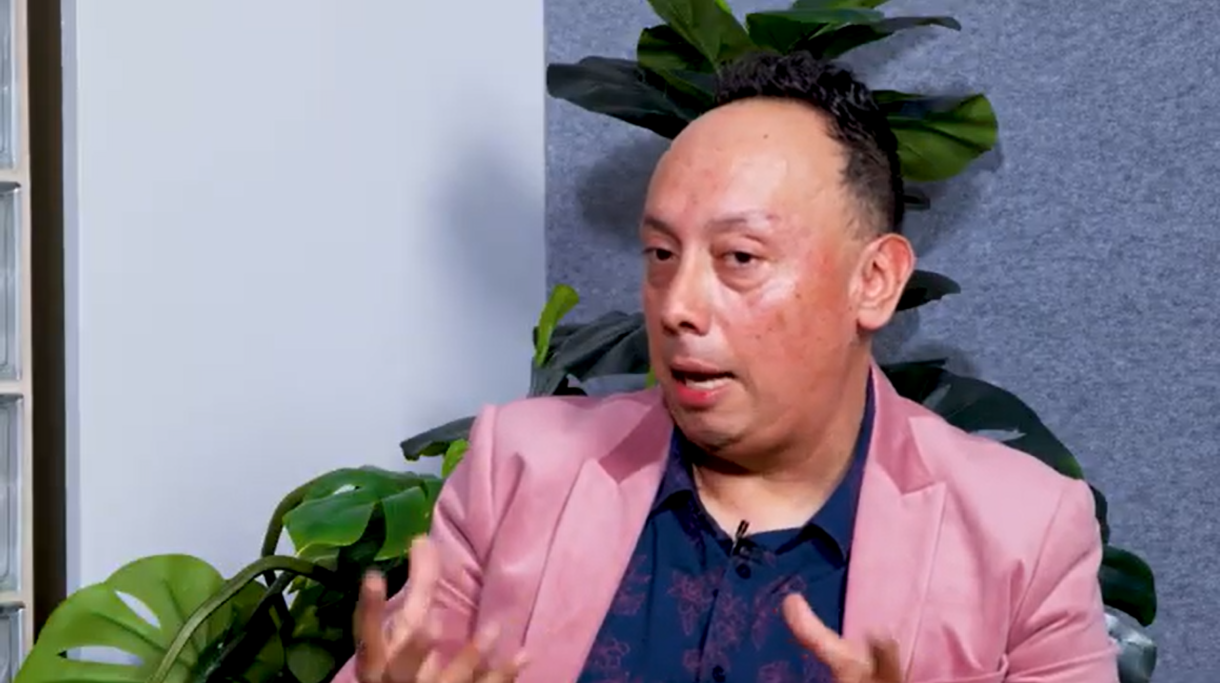
Mr Cesar Rifo-Inzunza joins Dr Phil Poulton to explore trauma-informed approaches that support mentors and pre-service teachers.
Mr Cesar Rifo-Inzunza joins Dr Phil Poulton to explore trauma-informed approaches that support mentors and pre-service teachers.
0:04
My name is Doctor Phil Poulton
0:06
I'm a teacher, educator, and curriculum researcher in the School
0:09
of Education at RMIT University.
0:12
Today I have Cesar Rifo.
0:15
He's a science hero, learning leader and pre-service teacher
0:17
coordinator at Epping Secondary College.
0:21
Today we're going to be talking about a really important topic and a topic
0:25
that's become much more prevalent in conversations between educators
0:29
in the last ten years and that's the idea of trauma informed practice.
0:34
When we're trauma informed, we're very mindful of the effects
0:38
of trauma on student learning, their wellbeing and engagement in classrooms.
0:44
Today, CS is going to share some of his experiences and strategies
0:48
that will support you as an early career teacher
0:51
in adopting a more trauma informed approach to classroom management.
0:56
When you're in your own classrooms next year, Cesar,
1:00
what are some of the behaviors that you typically see a student
1:04
with, trauma background present when they're in your classroom?
1:09
First of all, thank you for having me.
1:11
And, just to give a bit of context, I've been teaching now for 25 years,
1:17
and it's so important what you just said there
1:20
that for the last ten years is that we just focus now on trauma.
1:25
And, because I remember clearly when we have to,
1:29
I lead through that changed and and everything makes so much sense
1:34
after that because, I used to take quite a few things very personal
1:39
and think that maybe my teaching wasn't good enough until I came across
1:44
all this knowledge and then realize,
1:47
oh, okay, so it's not me.
1:50
I can still do it.
1:52
And what a what a then start seeing clearly.
1:56
To answer your question, is all those kids aware, distracted
2:02
that they were not engaged, that were very easy to jump?
2:06
I will last something and the student will jump straight away,
2:10
or give me a very abrupt, response,
2:14
or throw the chair completely disregulated.
2:18
And at the time, I didn't know any of that language.
2:21
So finding finding
2:23
all these and realizing that is research about it
2:26
and that now we can actually actively use it in the classroom.
2:30
It's been amazing.
2:32
How the student look, the student looks.
2:35
I quite a few of them distressed.
2:38
And you don't know why they just come like that into the class like that.
2:43
Very reactive.
2:44
Or some of them completely.
2:48
Up into the space.
2:50
You don't know where they are to call them.
2:52
They might give love to you.
2:54
Then they disappear again.
2:56
So, it's been quite interesting.
2:59
That way, if it's finding all this, it's been amazing.
3:03
So in our course, where we're starting to learn a little bit more about the,
3:07
the kind of, mechanics behind us, the neuroscience behind it.
3:11
And that's been really interesting for us.
3:13
I'm thinking a little bit about, how a school is going
3:17
to approach, practices in a much more trauma informed way.
3:22
Can you tell me a little bit about what structures exist within a school
3:25
that would help a teacher, support a student with a trauma background?
3:30
Very good.
3:30
So, at our school, we have,
3:34
a very big team, in wellbeing.
3:37
So we have two psychologists, three social workers.
3:41
And they are always fully booked.
3:43
And the kids usually just want to go because I'm not feeling good.
3:47
So now I want to go because I know that they can help me,
3:50
and they can explain why I'm feeling in the way that I'm feeling.
3:54
So a lot of the time, it's difficult to get an appointment with them.
3:59
So we have now a school, develop a referral process.
4:04
With this referral process, the teacher need to fill out a form, justify why,
4:09
the student should be allocated some time
4:13
for them to have, the session.
4:16
But usually need to be at least 2 or 3 teachers addressing the issue.
4:22
It can be just one because as you know, resources are limited.
4:26
So even though the team is big but still they are always finding of fit.
4:30
So that's the main, help us.
4:34
We have within the school.
4:36
And also we usually have also PDS done by the psychologists
4:41
or an external organization that comes and talk to us about trauma informed.
4:46
So we can actually be aware of everything.
4:50
And one of those organizations is the very straight,
4:53
approach or the very straight model,
4:55
which we're going to learn a little bit more about in our course as well.
4:58
I'm wondering if you might reflect on,
5:01
any kind of particular student experiences here.
5:04
We know that students, who have trauma backgrounds
5:08
can present, typically in two ways.
5:12
The first way they can become quite, aggressive,
5:16
in a very quick manner of time jumping from 0 to 100 very, very rapidly.
5:21
So I'm wondering if you could give us an example of how you might approach
5:26
a student who goes from 0 to 100 very quickly in a classroom?
5:30
Yes, for sure.
5:32
I had really early on when I just
5:36
started, in one of the schools that I was working at,
5:39
I came across the student that as soon as I started to talk,
5:43
he will call la la la la la la on top of me.
5:47
So as soon as I went to try to say something, he would do, this will be
5:51
and and because I was, teaching maths and science.
5:55
So the amount of time that I will see this group of students will be quite a lot,
6:00
and especially this student that was part of this class.
6:03
So to condense the story a little,
6:07
the traditional way didn't work when I was giving the warnings
6:11
when I was exiting him because he was exhausted within the first
6:14
five minutes, sometimes he didn't even make it into the class.
6:18
He couldn't line up nothing.
6:19
He couldn't follow any instructions.
6:21
So then I decided that this wasn't working, and it was clearly wasn't.
6:27
So I went and talked to the coordinator.
6:29
Then I went and talked to their wellbeing team,
6:31
and then they end up telling me a whole background that these student had
6:35
that was very, very sad and also traumatic.
6:41
So then
6:42
I decided to go to give him a little bit of leeway,
6:46
and I wasn't giving him warning straight away.
6:49
I was bringing him on task, but I was trying to develop the positive
6:53
relationship with him quite heavily next to what I would normally do,
6:58
in order to get him on site, on, on, on my side.
7:02
And he did work.
7:03
So after a couple of months, because this is something
7:06
that we also need to be aware of is it's not one off you take.
7:10
What a few takes in order for this to then realize
7:14
that you're actually on their side, that you want something for their best
7:19
because they are not used to to have adults, that they are willing
7:22
to help them.
7:23
And so realizing, oh, he's actually on my side.
7:27
Okay, so and the penny dropped eventually
7:30
and he started to do the activities that I was asking him, not fully,
7:35
but I didn't get any more of the la la la la la la land on top of me.
7:39
And, in that mid year,
7:44
he was doing maybe 60% of the work.
7:47
And I
7:49
would proudly say that only literally I know for any of the other subjects.
7:52
So then in that time, we would just go into this,
7:57
finding out all the content about the trauma.
8:03
So that was that's why I could see the difference
8:07
as soon as I was starting to use it and implementing it.
8:11
Then his change was quite a lot.
8:13
I think it I think it speaks a lot to we often talk to our students about,
8:17
the power of relationships.
8:21
And they they hear that from every lecturer. Yes.
8:23
So it's great to hear that in practice.
8:25
This is this is very true, but also that idea of being flexible.
8:30
And I remember when I first started teaching the idea of pick your battle.
8:34
Oh, and be flexible.
8:35
Yes. And, it's a, it's a slow it's a marathon. Yes.
8:39
When you're working with some children, it's not going to be a sprint.
8:42
So I think, the strategies that you've given us here are a really powerful.
8:47
What about, on the other end of the continuum,
8:50
we can have students who completely, disassociate.
8:55
They become, we might call it like, a freeze, essentially.
8:59
So rather than becoming aggressive, they might start to become very inwards.
9:03
You might be talking to them.
9:05
They're not responding.
9:06
They're about to head down on the desk.
9:08
Have you ever had to deal with a student who experienced those kinds of behaviors?
9:12
Many times.
9:14
And, you know, usually those students fly under the radar
9:18
because they are not an issue.
9:21
Behaviorally.
9:23
And no one is succeeding them.
9:24
They are not arguing with anyone.
9:26
And I had a few of those that
9:29
as soon as they walk into the class, they will just they
9:34
will not do anything, but they will just quiet.
9:36
I will try to direct them into something and they will pretend to do it
9:41
and then drop off.
9:43
And then after a few lessons, I could see them instead.
9:47
Instead of staring at the walls or the ceiling,
9:51
they will just go and slip
9:53
in on top of the table.
9:56
And I thought in the beginning
9:58
I thought, I'm going to go on waking up because it's not possible.
10:01
This is my class.
10:03
So how you know you're not respecting me,
10:06
but then again, with with this knowledge,
10:10
then I realized maybe something else happening.
10:12
So maybe he's feeling so comfortable
10:16
and so safe in the class that he's finally able to actually sleep.
10:22
I don't know what happened the night before.
10:24
Maybe the parents were violent at home.
10:28
Maybe he didn't feel safe.
10:30
We don't know, because every student is,
10:33
their own worlds.
10:35
They bring their own, experiences.
10:39
And until we start finding out and we talk to.
10:42
And this is what I did, I went to talk to the coordinator,
10:45
and I said so-and-so was sleeping in my class.
10:48
And then the coordinator said straight away, let them.
10:52
He can't sleep.
10:53
Why?
10:54
Because it's a lot more happening, we can tell you right now.
10:57
But we were working with wellbeing, so don't go to wellbeing
11:00
because that's another thing we believe that we can go.
11:03
He's finding out all the information and sometimes that's what we need to do.
11:08
In another time we don't because it's a lot more in the background.
11:12
Sometimes people got issues with the law that we don't know,
11:16
and because of privacy we can't disclose it.
11:18
So we just need to take that information as minimal as it might be
11:23
and try to apply it for the best outcome in the class for the student.
11:28
If they need to sleep in the classroom, they will sleep
11:31
because this is what they need a current moment.
11:35
So you might have a pre-service teacher going, oh, what?
11:38
So we just kind of let them sleep the whole year in my class.
11:41
Is that what happens?
11:42
This is what happened actually last time last year.
11:46
And one of you beautiful students from here,
11:48
you know, from RMIT, said to me, but look, this one slipping.
11:52
And I said, that's fine, let him sleep.
11:55
And then what we will do at the end of the session,
11:58
we will try to talk to him and see what's happening.
12:02
If we are able to get any information, from the student,
12:05
because sometimes they don't feel like talking. And that's okay.
12:08
We need to respect them.
12:10
Their time usually is not our time, and we need to let them go,
12:14
but they know that they will be safe next time anyway, and eventually
12:18
we will get the information out of them if if this is what they want
12:22
or if this is what they able to do, and if not, as long as they are safe.
12:26
Because that's the paramount from us as teachers to keep our students safe,
12:31
to keep all the basic, level of,
12:35
humanity intact
12:39
so everyone feel safe, all the basic needs are covered,
12:44
and after that, we can build into knowledge
12:47
and we can try to make them to to succeed and excel.
12:52
But if they are having all these many other issues, it can be very difficult.
12:57
You know, it makes me think about, hierarchy of needs.
12:59
Sometimes if we if we don't feel safe, we don't have a sense of belonging.
13:03
Maslow. Yes.
13:04
So obviously some people will rush and think,
13:08
oh, I have to get all the contents, delivered.
13:11
Yes, but,
13:13
there's no point doing that kind of work unless the student feels safe enough.
13:16
And that might take a long process, which is okay.
13:19
It's the complexity of the world that we live in.
13:22
As educators.
13:23
So thank you so much for joining, joining me and sharing your ideas.
13:28
And I look forward to hearing more about your practice any time.
13:32
Thanks, Susan. Thank you. Thank you.
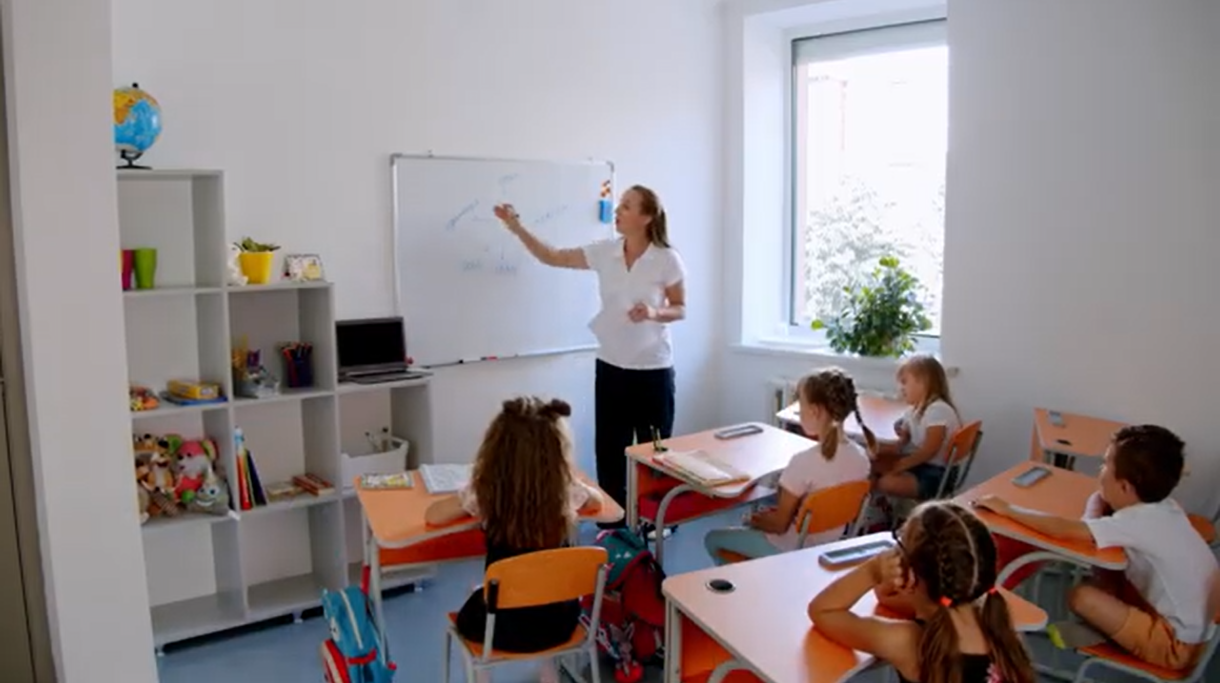
Dr Phil Poulton presents an overview of the course, outlining mentor expectations, roles, and resources to support preservice teachers.
Dr Phil Poulton presents an overview of the course, outlining mentor expectations, roles, and resources to support preservice teachers.
0:05
TCHE 2733.
0:07
Professional experience.
0:09
Connecting theory to practice A, is the first professional experience
0:13
course for our Bachelor of Education students.
0:16
In this course, our students start to explore learning theories
0:19
related to the brain and working memory alongside foundational strategies
0:24
and ideas related to student motivation and engagement.
0:28
This includes basic questioning techniques and an introduction to the skills
0:33
necessary in making high quality classroom observations.
0:41
This is our students first professional experience placement,
0:44
and they are typically placed
0:45
in a classroom with another pre-service teacher from RMIT.
0:50
This is designed so that they have a peer with whom they can reflect together
0:54
and build confidence together
0:55
in engaging responsibly in a professional environment.
1:00
During the placement, as students are encouraged to ask their mentor
1:03
teacher questions about classroom routines, student diversity,
1:08
and the very types of learning activities planned and enacted for in lessons.
1:17
In this placement,
1:19
you play a valuable role in introducing our students
1:22
to the daily routines and activities that make up a teacher's work day.
1:27
Please find opportunities to explain to students how you have
1:30
established classroom routines and expectations in your classroom,
1:34
along with how you prepare and organize learning activities for students.
1:39
Our pre-service teachers are encouraged to ask you questions
1:42
about the diversity of your class and the best approaches in building
1:46
positive and respectful relationships in a classroom.
1:50
Please ask the pre-service teacher to explain the university's
1:53
expectations for their observations in this placement,
1:57
including the need for them to show you their written observations
2:00
each day.
2:06
The focus of this first five day placement
2:09
is to engage in high quality observations of teacher practice,
2:13
and start to build confidence in engaging with students in a classroom.
2:18
Our pre-service teachers will
2:19
not be planning or enacting whole class lessons in this placement.
2:23
Rather, they should focus on observations and participating in small teaching
2:28
and learning group activities as requested by you, the mentor teacher.
2:33
They are expected to take daily observation notes on the types of learning
2:37
they see in action, and should share these notes with you to ask
2:40
clarifying questions about routines, student behavior, and teaching strategies.
2:46
They have observed.
2:48
To help focus their observations.
2:50
It is suggested that they have a specific focus for each day of this placement.
2:55
This might include day one.
2:57
How is the mentor teacher building relationships with the students?
3:02
Day two.
3:03
How is the mentor teacher establishing clear
3:06
and consistent classroom routines?
3:09
Day three and four.
3:10
What are the varied types of learning activities the students are engaging in
3:15
and day five.
3:17
How are students being encouraged to draw back on prior learning and knowledge?
3:22
Our pre-service teachers
3:23
are also encouraged to support you in classroom activities,
3:27
including working with small groups of students when asked or helping
3:31
to set up activities and other resources when required.
3:35
If appropriate, we encourage our pre-service teachers
3:38
to attend team planning sessions and hold staff meetings
3:42
so they can start to build a clear picture of the daily
3:45
lives of teachers.
3:51
There is only one report
3:52
that needs to be completed at the end of this five day placement.
3:56
This report focuses on the pre-service teachers
3:59
professional conduct and engagement in your classroom.
4:03
In the report, there is space provided
4:06
that enables you to provide written feedback about their professionalism
4:10
and the way that you see them.
4:11
Engaging with staff and students during the placement.
4:16
You will also need to sign
4:17
off their attendance across five days
4:21
in this report.
4:22
There is a section that relates to professional learning conversations.
4:27
Our pre-service teachers have been asked in this placement
4:30
to engage in two short, professional learning conversations with you
4:34
that help demonstrates their growing understanding
4:37
of what it means to be a teacher.
4:40
The first conversation focuses on the pre-service teacher
4:43
sharing their understanding with you about the diversity of student need
4:47
and experience in your classroom.
4:50
The second conversation focuses on the pre-service teacher
4:53
sharing their observations of specific teaching strategies and asking questions
4:58
about why these strategies have been used in your classroom.
5:02
Please sign off on the reports that both conversations
5:05
have taken place prior to the end of the placements.
5:13
As always, the Will team are
5:15
here to support you as you provide valuable mentoring for our students.
5:19
If you have any concerns or questions about the placement, please
5:23
first make contact with the Will team via their email address.
5:27
Education top placements at RMIT to educate you
5:32
based on the need of the pre-service teacher and their situation.
5:36
Support will be provided through the Will Academic mentor assigned to this course.
5:42
Thank you for your support of our program and our pre-service teachers.
The Professional Experience Guidelines provide an overview of the course and outline of requirements. This guide is designed to clearly outline the PST and the mentor’s scope of responsibilities during placements.
Additionally, the Professional Experience (PX) Reports provide a mechanism for reporting on preservice teachers’ (PST) development while completing the professional experience components of their initial teacher education program (ITE program).
The reporting template references the Australian Professional Standards for Teachers (APST) including highlighted descriptors most relevant to development expectations at different stages of in an ITE program.
The APSTs descriptors have been organised into five key areas within this report to support supervising teacher’s assessment and judgement of PSTs’ progress in relation to:
The report has been developed as a collaboration between Victorian Universities and the Victorian Department of Education to provide a consistent reporting framework for professional experience placements.


RMIT University acknowledges the people of the Woi wurrung and Boon wurrung language groups of the eastern Kulin Nation on whose unceded lands we conduct the business of the University. RMIT University respectfully acknowledges their Ancestors and Elders, past and present. RMIT also acknowledges the Traditional Custodians and their Ancestors of the lands and waters across Australia where we conduct our business - Artwork 'Sentient' by Hollie Johnson, Gunaikurnai and Monero Ngarigo.
Learn more about our commitment to Aboriginal and Torres Strait Islander peoples
