Graduate Diploma in Data Science and Artificial Intelligence

Graduate Diploma in Data Science and Artificial Intelligence

POSTGRADUATE

Build practical data science and AI skills in one year, applying them in your field, moving towards a new career or progressing to a master's degree.

Student type:
Learning mode:
On campus
Entry score:

Not applicable

Duration:
Full-time 1 year
Part-time 2 years
Next intake:
February, July
Location:
Melbourne City
Learning mode:
On campus
Entry score:

Not applicable

Duration:
Not applicable
Next intake:
Not applicable
Location:
Not applicable

Overview

Designed for graduates from any discipline, this one-year diploma builds practical foundations in programming, data science and AI for career change, professional upskilling or further study.

#7 in Australia and top #100 universities globally for Data Science & Artificial Intelligence*.

*QS World University Rankings by Subject 2026

Data science and AI are changing how organisations understand complex problems, make decisions and design products and services. The strongest solutions often come from people who can combine these methods with deep knowledge of a professional field.

The Graduate Diploma in Data Science and Artificial Intelligence is a one-year conversion qualification for graduates and professionals lacking prior study experience in computing, data science or AI. You don't need to arrive as a programmer: we start with structured foundations in programming, databases, data science (Python) and professional practice.

Why study data science and AI at RMIT?

Built for transition

Start without a computing degree. Structured foundations in programming, data, analytics and AI support your transition into this fast-changing field.

Learn by doing

Coding labs, real datasets and industry style projects. You finish the year with work you can show an employer, not just a transcript.

One year, clear pathway

Finish in one year with a postgraduate qualification, or continue into the Master of Data Science and Artificial Intelligence with credit.

Expand your professional options

This course supports 2 directions. It can help you:

  • Move towards entry-level and associate roles in data-driven and AI-enabled work
  • Become a hybrid professional who uses data science and AI in the field you already know.

You'll develop technical capability alongside professional judgement. This means considering privacy, bias, fairness, transparency, governance and accountability, as well as learning to explain your methods and results to technical and non-technical audiences.

After a year of full-time study, you can graduate with the standalone qualification or consider a pathway into the Master of Data Science and Artificial Intelligence.

Details

How you will learn

Learn through workshops, coding laboratories, tutorials, collaborative problem-solving and guided independent practice. Activities include writing code, designing databases, exploring datasets, experimenting with AI tools, analysing cases, and developing technical and professional artefacts.

Learning is scaffolded for students entering from non-computing backgrounds. The first semester builds core technical foundations, before we move into applied analytics, AI application, professional judgement and integrated project work. On-campus learning is supported by online resources, programming environments, cloud-based tools, feedback, and collaborative spaces.

Assessment is active, applied and authentic. You'll complete coding tasks, database designs, data modelling and analytics projects, AI case analyses, professional reports, project proposals, presentations, portfolios, and reflective work.

Early assessments are structured to build skills and confidence. Later tasks ask you to choose methods, justify decisions, apply tools to less familiar problems and communicate your results. Process documentation and oral explanation may also be used to demonstrate your reasoning and authorship.
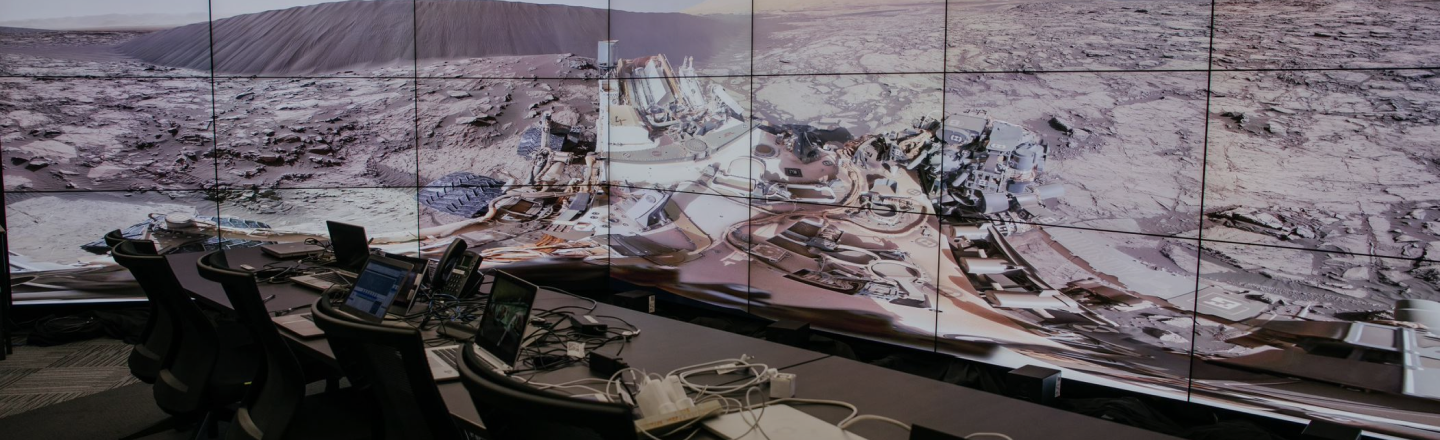

Industry connections

Industry practice is built into the curriculum rather than added at the end. The subject Professional Practice and Case Studies in Data Science and AI works through organisational problems, governance issues, ethical trade-offs and stakeholder communication. Applied Analytics develops analytical practice through scenario-based projects. Data Science and AI in Practice is the culminating subject of the year, where you work on an industry-simulated data and AI workflow, and produce both technical and professional outputs.

Career development learning is embedded in Introduction to AI Tools and Applications, where you propose, develop and present an AI-enabled solution, reflecting on your tool choices and their limitations.

Curriculum currency is reviewed with our Industry Advisory Committee, so the tools, methods and expectations taught remain aligned with best practice.

The types of classes you have will depend on the course you’re studying. Classes are offered in various formats designed to provide meaningful engagement with staff, industry and peers and provide for access and use of spaces where learning can be applied and active, including an array of specialised equipment.

Most RMIT courses do not include passive large-scale classes such as lectures, instead the content traditionally provided in lectures is made available online. This may be in the form of readings, videos or other on-demand learning materials. This content will also support the basis of interactive learning that takes place in on-campus classes.

The world is constantly changing, and there are universal skills that can help you adapt to the evolving nature of work and global engagement.

As part of your study experience at RMIT, we provide 6 future-focused RMIT Capabilities:

  • Ethical Global Citizens
  • Connected
  • Adaptive
  • Digitally Adept
  • Expert
  • Critically Engaged.

RMIT Capabilities are built into your course as well as some of our extracurricular experiences. They inform the design and delivery of your learning activities and assessments, so by the time you graduate, you’ll be ready to apply these capabilities in your life and work.

Full-time students are expected to attend approximately 16 hours of classes and undertake approximately 24 hours of independent study and research weekly with the majority of classes are delivered during the day. 

Full- or part-time study is determined by how many credit points you are enrolled in during the semester. A postgraduate study load is considered part-time if you are enrolled in 24 credit points or fewer (approximately 2 subjects). 

Once you're enrolled, you can choose to switch to a part-time study load. This may impact your course duration and tuition fees.

Important information for international students

International student visa holders can only study full-time.

Course structure and plan

What you will study

This course follows the first year of the Master of Data Science and Artificial Intelligence. It moves from structured foundations to applied and integrated practice across 2 semesters.

Semester 1 – Build your foundations

In the first semester, you’ll develop the programming, data management, analytical, and professional foundations needed for postgraduate data science and AI study. You’ll study applied analytics, the foundations of AI and contemporary AI tools.

Semester 2 – Apply and integrate

In the second semester, you’ll apply methods and tools to more complex problems, evaluate outcomes, communicate your decisions, and integrate data science and AI in an industry-simulated workflow. You’ll learn by writing code, exploring data, analysing cases and developing solutions to real or realistic problems.

Learning outcomes

By the end of the course you will be able to write, test and adapt programs to work with data, using appropriate tools and environments. You'll have the ability to apply statistical and analytical methods to interpret data, and carry out a data and AI workflow from problem framing through to a professional outcome.

In addition, you'll be able to communicate technical work clearly to both technical and non-technical audiences, as well as explain the foundations of artificial intelligence. 

You'll select AI tools and techniques suited to a given problem, while applying responsible practice, including privacy, bias, transparency, accountability, and academic and professional integrity.

Choose a plan below to find out more about the subjects you will study and the course structure.

Graduate Diploma in Data Science and Artificial Intelligence
Program code: GD218

Title
Location
Duration
Plan code
CRICOS
Graduate Diploma in Data Science and Artificial Intelligence
City Campus
Full-time 1 Years, Part-time 2 Years
GD218
Location
City Campus
Duration
Full-time 1 Years, Part-time 2 Years
Plan code
GD218
CRICOS

Career

Depending on your prior background and experience, this qualification can support entry-level and associate roles in data-driven and AI-enabled work. It can also help you add data science and AI capability to your current profession. Typical directions include:

  • Data analyst or junior data scientist
  • Business intelligence analyst or associate analytics consultant
  • AI tools specialist, data operations assistant, or junior AI/ML project officer
  • Digital transformation analyst or data and AI-enabled roles within your existing field.

Many graduates will take data and AI capability back into the field they already work in, whether that's business, health, science, engineering, education, government or the social sector. Organisations across all these areas need people who can apply these methods within their own professional context.

Entry requirements and admissions

You need to satisfy all of the following entry requirements to be considered for entry into this degree.

  • Successful completion of an Australian bachelor's degree (or international equivalent) in any discipline; or

  • A minimum of 5 years (full-time equivalent) of professional experience in an ICT-related role. 

International qualifications are assessed for comparability to Australian qualifications according to the Australian Qualifications Framework (AQF). For information on international qualifications and corresponding entry requirements that are equivalent to Australian academic entry requirements, see the Country equivalents web page.

There are no prerequisite subjects required for entry into this qualification.

A selection task is not required for entry into this qualification.

You must meet the University's minimum English language requirements to be eligible for a place in this course.

You need to satisfy all of the following requirements to be considered for entry into this course.

You must have successfully completed a qualification recognised by RMIT as equivalent to the Victorian Certificate of Education (VCE) with a minimum average of 65% (see calculator below).

Equivalent qualifications may also include completion of the RMIT Foundation Studies course or a recognised post secondary diploma in the relevant discipline with the required grades.

Meeting the minimum academic requirements does not guarantee entry. Your application will still need to be assessed and accepted.

There are no prerequisite subjects required for entry into this qualification.

A selection task is not required for entry into this qualification.

To study this course you will need to complete one of the following English proficiency tests:

  • IELTS (Academic): minimum overall band of 6.5 (with no individual band below 6.0)
  • TOEFL (Internet Based Test - IBT) for Australia: minimum overall score of 79 (with minimum of 13 in Reading, 12 in Listening, 18 in Speaking and 21 in Writing)
  • Pearson Test of English (Academic) (PTE (A)): minimum score of 58 (with no communication band less than 50)
  • Cambridge English: Advanced (CAE): minimum of 176 with no less than 169 in any component.

Note: RMIT does not accept scores from 'at-home' or 'online' testing.

For detailed information on English language requirements and other proficiency tests recognised by RMIT, visit English language requirements and equivalency information.

Don't meet the English language test scores? Complete an English Language Pathways (Academic English) Advanced at RMIT University Pathways (RMIT UP).

Additional information

Non-academic abilities you'll need to complete this course

The following information outlines the tasks you will be required to undertake during professional experience placement and on-campus learning activities.

The non-academic abilities listed are provided for your information only and are not entry requirements.

By understanding the types of activities you'll participate in, you can:

  • understand more about the course
  • determine if you may need support during your studies
  • make an informed decision about whether the course is suitable for you.

Adjustments

If there are any activities outlined which may be difficult for you to undertake, there is a range of adjustments to your study conditions available to enable and support you to demonstrate these abilities.

Please contact the Equitable Learning Services (ELS) team to discuss any adjustments you may require. To receive learning adjustments, you need to register with ELS.

If you are living with disability, long-term illness and/or a mental health condition, we can support you by making adjustments to activities in your course so that you can participate fully in your studies.

The University considers the wellbeing and safety of all students, staff and the community to be a priority in academic and professional experience placement settings.

Pathways and further study

You can gain entry to this graduate diploma from a range of RMIT undergraduate degrees, if you meet the entry requirements.

Credit, recognition of prior learning, professional experience and accreditation from a professional body can reduce the duration of your study by acknowledging your earlier, relevant experience.

Credit and exemptions will be assessed consistent with the principles of the RMIT Credit Policy.

As a successful graduate of this course, you may (upon application) be eligible to proceed to the Master of Data Science and Artificial Intelligence, subject to the entry requirements.

You can gain entry into this graduate diploma from a range of RMIT undergraduate degrees.

Credit

Credit may reduce the duration of your study by acknowledging your earlier, relevant study experience.

When you are submitting an application, please indicate that you want to be considered for credit and provide detailed course syllabus (also known as course outline), outlining volume of learning, course content and weekly topics, learning objectives/outcomes, assessment types and their weightings, and reference to the learning resources such as prescribed textbooks and recommended readings.

Credit and exemptions will be assessed consistent with the principles of the RMIT Credit Policy.

Upon successful completion of this graduate diploma, you may be eligible for entry into a range of postgraduate programs at RMIT University.

Fees

2027 indicative fees

  • Full-fee places: AU$38,400 (2027 total)

Additional expenses

  • Student services and amenities fee (SSAF): AU$386 maximum fee for 2027*.
  • Other items related to your program, including field trips, textbooks and equipment.

Annual fee adjustment*

Amounts quoted are indicative fees per annum, and are based on a standard year of full-time study (96 credit points). A proportionate fee applies for more or less than the full-time study load.

*Fees are adjusted on an annual basis and these fees should only be used as a guide.

Defer your payment

This course is offered on a full-fee paying basis only. If you are offered a place, you will need to pay the full tuition costs of your course. However, eligible students (such as Australian citizens or holders of an Australian permanent humanitarian visa) may apply to defer payment of some or all of their tuition fees via the Commonwealth Government’s FEE-HELP loan scheme.

Paying your fees and applying for refunds

For information on how to pay your fees or how to apply for a refund, please see Paying your fees and applying for refunds.

In addition to tuition fees, you will be charged an annual student services and amenities fee (SSAF), which is used to maintain and enhance services and amenities that improve your experience as an RMIT student.

The SSAF is calculated based on your enrolment load and the maximum fee for 2027 is $386.

You may also be required to purchase other items related to your course, including field trips, textbooks and equipment. These additional fees and expenses vary from course to course.

FEE-HELP loans

Eligible students (such as Australian citizens or holders of an Australian permanent humanitarian visa) may apply to defer payment of some or all of their tuition fees via the Commonwealth Government’s FEE-HELP loan scheme.

SA-HELP Loans

You may be eligible to apply to defer payment of the Student services and amenities fee (SSAF) through the SA-HELP loan scheme. If you use SA-HELP, the amount will be added to your accumulated HELP debt.

How does a HELP loan work?

If your FEE-HELP and/or SA-HELP loan application is successful, the Australian Government will pay RMIT, on your behalf, up to 100% of your fees. This amount will become part of your accumulated HELP debt.

You only start repaying your accumulated HELP debt to the Australian Government once you earn above the minimum income threshold for repayment, which is set each year by the Australian Government (this also applies if you are still studying). The Australian Taxation Office (ATO) will calculate your compulsory repayment for the year and include this on your income tax notice.

For more information about loan repayment options see Commonwealth assistance (HELP loans) or Study Assist.

You may be eligible for student income support payments from the Australian Government if you are undertaking a graduate certificate, graduate diploma or an approved professionally oriented masters by coursework program. For more information see Income support for Masters students.

If you are enrolled in an eligible program you will also need to satisfy all other student payment eligibility requirements. You can contact Centrelink or Services Australia for further information about student income support entitlements, your eligibility and how to apply.

You may be eligible to apply for income tax deductions for education expenses linked to your employment.

See the Australian Taxation Office (ATO) for more information.

RMIT awards more than 2000 scholarships every year to recognise academic achievement and assist students from a variety of backgrounds.

Additional costs

In addition to tuition fees you also need to pay for:

You also need to account for your living expenses. Estimate the cost of living in Melbourne.

Student Services and Amenities Fee (SSAF)

In addition to tuition fees, you will be charged an annual student services and amenities fee (SSAF), which is used to maintain and enhance services and amenities that improve your experience as an RMIT student. The SSAF is calculated based on your enrolment load and the maximum fee for 2027 is $386. 

How your fees are calculated

Find out more details about how fees are calculated and the expected annual increase.

Applying for refunds

Find information on how to apply for a refund as a continuing international student.

RMIT awards more than 2000 scholarships every year to recognise academic achievement and assist students from a variety of backgrounds.

Frequently Asked Questions (FAQs)

Looking for answers or more general information? Use our Frequently Asked Questions to learn about the application process and its equity access schemes, find out how to accept or defer your offer or request a leave of absence, discover information about your fees, refunds and scholarships, and explore the various student support and advocacy services, as well as how to find out more about your preferred course, and more.

This course is not available for international students intending to study on a student visa.

Information for international students

Sorry, this course is not available for international students intending to study on a student visa. If you hold a different visa type, you may be eligible. Please contact Study@RMIT for more information.


Information for local students

If you are a local student please select 'switch to local' below to view the full course information.

aboriginal flag float-starttorres strait flag float-start

Acknowledgement of Country

RMIT University acknowledges the people of the Woi wurrung and Boon wurrung language groups of the eastern Kulin Nation on whose unceded lands we conduct the business of the University. RMIT University respectfully acknowledges their Ancestors and Elders, past and present. RMIT also acknowledges the Traditional Custodians and their Ancestors of the lands and waters across Australia where we conduct our business - Artwork 'Sentient' by Hollie Johnson, Gunaikurnai and Monero Ngarigo.

Learn more about our commitment to Aboriginal and Torres Strait Islander peoples