Academic English

Academic English

PRE-UNIVERSITY STUDY

Reach the level of English you need to gain direct entry to RMIT with the Academic English course.

Student type:
Learning mode:
On campus
Duration:
Not applicable
Next intake:
Not applicable
Location:
Not applicable
Learning mode:
On campus
Entry score:

See admissions

Duration:
10 weeks per course level, except Beginner level, 5 weeks
Next intake:
Every 5 weeks
Location:
Melbourne City

Overview

This course gives you the academic English skills you need to succeed in your studies at RMIT University or other learning institutes.

This English language course teaches you academic language using materials relevant to academic coursework. You'll develop English language skills in reading, writing, listening and speaking. You'll also learn university-level study skills.

The Academic English course:

  • promotes the development of your language skills
  • teaches the skills you need to successfully study at university
  • contains materials relevant to academic coursework and professional goals
  • creates opportunities to enrich your international experience.

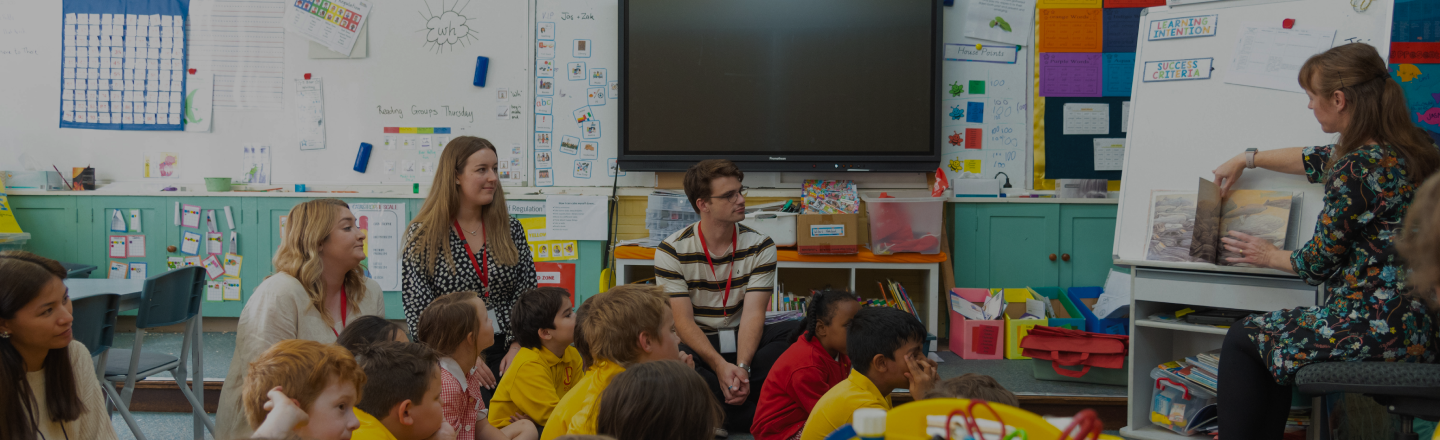
One of the unique features of our courses is that we teach using a task-centred approach, which provides you with opportunities to practise what you learn in the real world. To get the most out of your experience, you need to actively participate in class and we encourage you to develop and express your own ideas and perspectives.

Successful completion can give you direct entry to university or TAFE without the need to take a formal English test.*

*Entry requirements and eligibility vary by institution and course. Please check individual institution and/or course requirements before applying.

Course features

7 course levels

Beginner to Advanced (more details below)

10 weeks per level

Each level delivered over 10 weeks, except for Beginner Level (5 weeks).

20 hours per week

20 hours of scheduled classes per week (plus independent learning)

Small class sizes

For improved learning, average 15 per class, maximum 18

About Academic English

Academic English is one of 3 English language courses delivered by RMIT UP (CRICOS Provider No. 01912G).

The other 2 courses are our General English course, which is tailored for students learning general English skills for everyday life, work and travel, and IELTS Preparation. (Academic English and General English are accredited under English Language Pathways (CRICOS course code 120098J) while IELTS Preparation is accredited under CRICOS course code 120099H.)

In Academic English, there are 7 levels, from Beginner to Advanced. In the first 4 levels (Beginner to Intermediate), Academic English and General English students learn together, creating a diverse and engaging classroom experience with classmates from around the world and with a range of learning goals. From Upper Intermediate level onwards, students move into separate Academic English and General English streams.

The length of your Academic English course will be determined by your current level of English, the level of English you wish to reach, and how well you progress. Each level of Academic English at RMIT UP is taught over 10 weeks, except for Beginner Level (5 weeks).

Our courses use face-to-face, learning and diverse assessments tasks to set our students up for English excellence in study, work and life.
Academic English levels

Beginner

Learn basic English phrases and expressions for simple interactions.

Course overview

Learn basic grammar and vocabulary for everyday topics and practise pronunciation.

You will also learn about Melbourne and Australian culture.

Delivery

You will work in pairs, small groups and independently to complete class activities and tasks.

Classes are delivered in person.

Assessments

You must complete a number of assessment tasks (including tests) to complete this course level successfully. Your teachers will provide more information.

What you will learn
Skill Learning outcomes
Reading
  • Find main ideas and key information in short, simple texts
  • Recognise familiar names, words, and phrases
Listening
  • Understand main points in simple spoken texts
  • Identify familiar words and phrases
Writing
  • Write simple texts
  • Give basic information on familiar topics
Speaking
  • Use basic phrases to share information
  • Talk about people, places, and personal topics

Elementary

Learn English to communicate in familiar and routine situations.

Course overview

You will practise listening, speaking, reading and writing about the weather, activities, feelings, routines, giving directions and instructions, likes and dislikes.

You will practise exchanging basic information and giving simple directions and instructions.

You will also learn about Melbourne and Australian culture.

Delivery

You will work in pairs, small groups and independently to complete class activities and tasks.

Classes are delivered in person.

Assessments

You must complete a number of assessment tasks (including tests) to complete this course level successfully. Your teachers will provide more information.

What you will learn
Skill Learning outcomes
Reading
  • Identify everyday words and familiar phrases in short texts.
  • Understand the main points in simple texts
Listening
  • Understand key points in a short, simple spoken texts
  • Follow short conversations about familiar topics
Writing
  • Write short texts on everyday topics using simple sentences and linking words
Speaking
  • Speak simple English about familiar topics and situations
  • Use short, connected phrases and sentences

Pre-intermediate

Learn how to communicate in English about the present, past and future.

Course overview

You will learn how to describe objects, places and people. You will practise making arrangements and suggestions and giving instructions. You will read and write different types of text and practise listening and speaking. You will also learn about Melbourne and Australian culture through immersive activities.

Delivery

Classes are delivered in person.

Assessments

You must complete a number of assessment tasks (including tests) to complete this course level successfully. Your teachers will provide more information.

What you will learn
Skill Learning outcomes
Reading
  • Identify main ideas and key details in short, simple texts
  • Recognise common every day and course related words and phrases
Listening
  • Identify main ideas and specific details in simple, slow speech
  • Follow descriptions and explanations about familiar topics
Writing
  • Write simple, structured written texts on familiar topics
  • Learn to organise ideas in a clear order using linking words and phrases
Speaking
  • Learn to talk about familiar topics and situations
  • Describe people, places and daily routines
  • Learn to add extra detail to make spoken descriptions clearer

Intermediate

Learn grammar and vocabulary to use in study, work and everyday life, and improve your confidence in speaking and listening.

Course overview

You will practise reading, listening, writing and speaking for work, study or social purposes. You will build on your grammar and vocabulary knowledge in order to give opinions, describe experiences and discuss future plans. You will also learn about Melbourne and Australian culture through immersive activities.

Delivery

Classes are face to face. You will work in small groups and independently to complete class activities and tasks.

Assessments

You must complete a number of assessment tasks (including tests) to complete this course level successfully. Your teachers will provide more information.

What you will learn
Skill Learning outcomes
Reading
  • Identify purpose, main ideas and specific information in straightforward texts
  • Recognise clear viewpoints in straightforward texts
Listening
  • Understand the main ideas and specific details in simple spoken texts
  • Follow spoken descriptions and explanations in sequence
Writing
  • Write simple connected texts on familiar topics
  • Organise and link ideas in logical order
Speaking
  • Speak about familiar topics or situations in a simple, clear way
  • Give descriptions in a logical order
  • Hold a conversation with some fluency

Upper Intermediate

Build your academic English by practising all 4 language skills, learn core study strategies, participate in academic discussions and prepare for university study in an English-speaking environment.

Course overview

In this level, you will learn introductory academic skills in addition to English language skills in reading, writing, listening and speaking. You will develop strategies to understand and produce written and spoken texts and extend your vocabulary to a range of familiar and academic topics. You will develop skills to support future study in an English-speaking environment, including notetaking, participating in academic discussions and preparing simple spoken and written academic texts.

Delivery

Classes are delivered in person.

Assessments

You must complete a number of assessment tasks (including tests) to complete this course level successfully. Your teachers will provide more information.

What you will learn
Skill Learning outcomes
Reading
  • Identify main ideas, specific information and viewpoints to understand a range of straightforward written texts
Listening
  • Identify main ideas and specific details and distinguish supporting information to understand straightforward spoken texts
Writing
  • Produce clear and connected written texts on familiar topics for a range of audiences, linking ideas in a structured sequence, with some expansion on main points, appropriate use of conventions, and a logical flow
Speaking
  • Produce clear and straightforward spoken language on familiar topics, presenting ideas in a logical sequence with some supporting details, maintaining interaction, and expressing opinions, explanations, and simple arguments

Pre-advanced

Build the academic English skills you need to manage complex and extended texts and develop your critical thinking, paraphrasing and citation skills.

Course overview

In this level, you will build academic skills alongside English language skills in reading, writing, listening and speaking. You will develop skills and strategies to manage extended and more linguistically complex text types, and practise using a range of simple and complex language structures and vocabulary to read, listen, write and speak about a range of topics relevant to everyday life and academic study. You will also learn about academic conventions and develop skills in critical thinking, paraphrasing and citation.

Delivery

Classes are delivered in person. 

Assessments

You must complete a number of assessment tasks (including tests) to complete this course level successfully. Your teachers will provide more information.

What you will learn
Skill Learning outcomes
Reading
  • Identify and analyse main ideas, key details, viewpoints and organisation of ideas to understand a range of written texts
Listening
  • Identify and interpret main ideas and details to comprehend spoken texts, follow complex arguments and distinguish viewpoints from facts
Writing
  • Produce clear and structured written texts that develop arguments, express opinions, draw conclusions and convey information with coherence using appropriate register, conventions, and supporting details
Speaking
  • Produce clear, detailed, and structured spoken language, expanding and supporting ideas with relevant examples, maintaining coherence and fluency, and adapting communication to different contexts, purposes, and audiences

Advanced

Develop advanced academic English skills to successfully navigate complex texts and lectures, participate in academic discussions and presentations and produce well-structured, correctly referenced academic writing.

Course overview

In this level, you will build academic skills alongside English language skills in reading, writing, listening and speaking. You will develop skills and strategies to navigate academic sources, lectures and linguistically complex texts from a range of genres. You will practise using a range of complex language structures and vocabulary to participate in academic discussions and produce a range of written and spoken texts. You will also learn about academic conventions and develop skills in critical thinking, paraphrasing and citation.

Delivery

Classes are delivered in person.

Assessments

You must complete a number of assessment tasks (including tests) to complete this course level successfully. Your teachers will provide more information.

What you will learn
Skill Learning outcomes
Reading
  • Identify and analyse main ideas, key details and viewpoints to understand a range of complex written texts, inferring meaning from context and evaluating relevance across multiple sources where required
Listening
  • Identify and interpret main ideas, details, and viewpoints to understand complex or extended spoken texts and follow discussions and lines of argument
Writing
  • Produce clear, detailed and structured written texts that develop arguments, evaluate ideas, maintain coherence, and use appropriate register, conventions, and supporting details
Speaking
  • Produce clear, detailed, and fluent spoken language, effectively communicating complex ideas, arguments, and information while adapting language to different contexts, purposes, and audiences

Details

To assist our growing learning community in Australia, we offer classes in 2 ‘shifts’. Which shift you will study in depends on your English level and class.

Classes are held from Monday to Friday. Your class may be scheduled on either Shift 1 or Shift 2, depending on your language level.

  Shift 1 Shift 2
Session 1 8.20am – 10.20am 1.00pm – 3.00pm
Break – 30 minutes
Session 2 10.50am – 12.50pm 3.30pm – 5.30pm

For every 4 hours in the classroom, we recommend you do at least one hour of independent study every day.

Each level is delivered over 10 weeks, except for Beginner Level (5 weeks). 

You can access your timetable via Canvas, RMIT's online Learning Management System. All class times are listed in Melbourne time.

2026 important dates

Intake Orientation Course start date Course end date
5 Friday, 29 May Monday, 1 June Friday, 3 July
6 Thursday, 9 July Monday, 13 July Friday, 14 August
7 Friday, 14 August Monday, 17 August Friday, 18 September
8 Friday, 25 September Monday, 28 September Friday, 30 October
9 Friday, 30 October Monday, 2 November Friday, 4 December
10* Friday, 4 December Monday, 7 December Friday, 26 February 2027

*This is a special 10-week summer course for students starting on an award course pathway who require only 10 weeks of English before commencing in Semester 1, 2027.

Once you apply to study at RMIT, you will be sent a letter of offer. After you have accepted the offer and paid for your course, you will be issued with a Confirmation of Enrolment (COE). You will then be contacted on the enrolment date to complete the enrolment process.

Public holidays

RMIT Melbourne is closed on public holidays. Plan ahead by checking when these take place at the Business Victoria website. RMIT UP is also closed on the Tuesday following Easter, and the period between Christmas and New Year's Day.

We offer face-to-face English language teaching in the CBD of Melbourne, Australia.

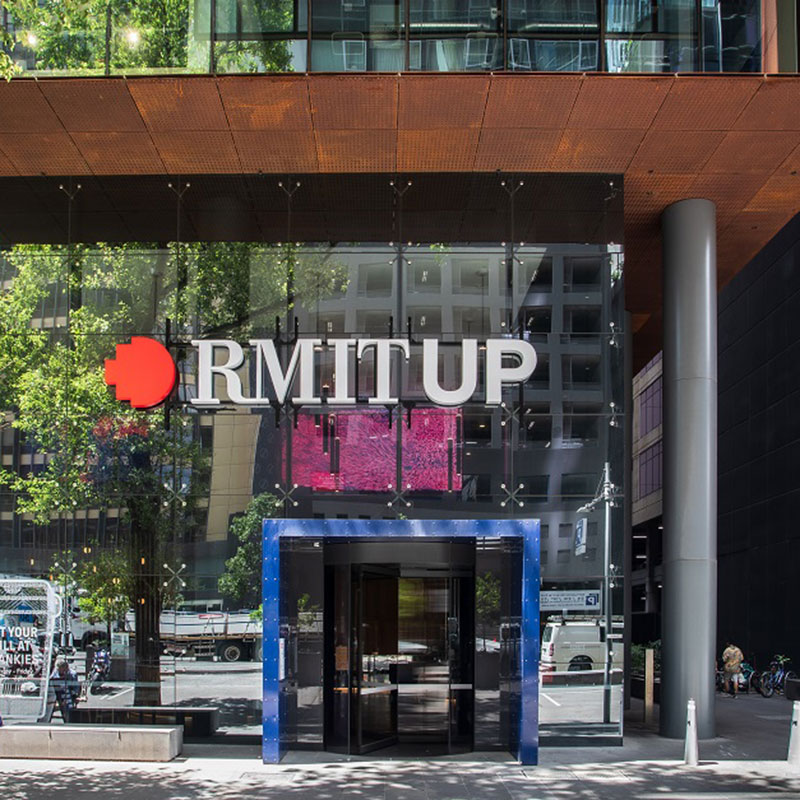
RMIT UP is located at: 

RMIT Building 85, Level 1, 97-99 Franklin Street.

RMIT UP is located at RMIT’s Melbourne City campus, in the heart of Melbourne. We are conveniently located between Swanston Street and Elizabeth street, just a short walk from Melbourne Central Station.

The campus has easy access to the city’s many trams and train stations including Melbourne Central train station, Elizabeth Street and Swanston Street trams and the new State Library Station, part of the Metro Tunnel project (open in 2025).

Airport pick-ups

RMIT offers a free* service that collects you from the airport and takes you to your pre-arranged accommodation. Please refer to Prepare to arrive webpage for more information.

Otherwise, you can catch a taxi or take the Skybus into the city centre.

*Conditions apply

Why study English with us?

Over 55 years of experience

In English Language teaching

Centrally located

Within the Melbourne CBD

Tailored academic support

For students at all academic levels

Professional recognition and accreditation

NEAS Accredited logoRMIT UP's English Language Program is quality endorsed by NEAS.

How to apply

Step 1 – Determine your English level

For this course, you can either complete an RMIT UP placement test, or one of the recognised English language proficiency tests in the table below. Based on your test results (which can be no more than 24 months old), we will determine your course entry level.

Please note: RMIT UP placement test results are only valid for 6 months from the test date. Students applying to study in our English Language courses need to have a valid RMIT UP placement test result or will be asked to re-sit a test before enrolment or on arrival for the start of class.

For information on minimum English language requirements for Student Visa holders, please visit the Department of Home Affairs website.

English language proficiency test equivalencies for placement in RMIT UP Academic English course levels

Select a level to see the test score required.

Beginner

English proficiency test Score required
IELTS (Academic) / IELTS (Academic) One Skill Retake Not accepted for entry to this level*
TOEFL IBT (Internet Based Test) Not accepted for entry to this level*
Pearson Test of English (Academic) (PTE-A) Not accepted for entry to this level*
B2 First (formerly known as Cambridge English: First (FCE)) Not accepted for entry to this level*
C1 Advanced (formerly known as Cambridge English: Advanced (CAE)) Not accepted for entry to this level*
C2 Proficiency (formerly known as Cambridge English: Proficiency (CPE)) Not accepted for entry to this level*

Elementary

English proficiency test Score required
IELTS (Academic) / IELTS (Academic) One Skill Retake Not accepted for entry to this level*
TOEFL IBT (Internet Based Test) Not accepted for entry to this level*
Pearson Test of English (Academic) (PTE-A) Not accepted for entry to this level*
B2 First (formerly known as Cambridge English: First (FCE)) Not accepted for entry to this level*
C1 Advanced (formerly known as Cambridge English: Advanced (CAE)) Not accepted for entry to this level*
C2 Proficiency (formerly known as Cambridge English: Proficiency (CPE)) Not accepted for entry to this level*

Pre-intermediate

English proficiency test Score required
IELTS (Academic) / IELTS (Academic) One Skill Retake Not accepted for entry to this level*
TOEFL IBT (Internet Based Test) Not accepted for entry to this level*
Pearson Test of English (Academic) (PTE-A) Not accepted for entry to this level*
B2 First (formerly known as Cambridge English: First (FCE)) Not accepted for entry to this level*
C1 Advanced (formerly known as Cambridge English: Advanced (CAE)) Not accepted for entry to this level*
C2 Proficiency (formerly known as Cambridge English: Proficiency (CPE)) Not accepted for entry to this level*

Intermediate

English proficiency test Score required
IELTS (Academic) / IELTS (Academic) One Skill Retake 4.5 with no band below 4.0
TOEFL IBT (Internet Based Test) 33 overall
Pearson Test of English (Academic) (PTE-A) 34 overall with no communicative skill below 32**
B2 First (formerly known as Cambridge English: First (FCE)) Not accepted for entry to this level
C1 Advanced (formerly known as Cambridge English: Advanced (CAE)) Not accepted for entry to this level
C2 Proficiency (formerly known as Cambridge English: Proficiency (CPE)) Not accepted for entry to this level

Upper Intermediate

English proficiency test Score required
IELTS (Academic) / IELTS (Academic) One Skill Retake 5.0 with no band below 4.5
TOEFL IBT (Internet Based Test) 40 overall (minimum: Listening 3, Reading 3, Speaking 12, Writing 12)
Pearson Test of English (Academic) (PTE-A) 36 overall with no communicative skill below 34**
B2 First (formerly known as Cambridge English: First (FCE)) Not accepted for entry to this level
C1 Advanced (formerly known as Cambridge English: Advanced (CAE)) Not accepted for entry to this level
C2 Proficiency (formerly known as Cambridge English: Proficiency (CPE)) Not accepted for entry to this level

Pre-advanced

English proficiency test Score required
IELTS (Academic) / IELTS (Academic) One Skill Retake 5.5 with no band below 5.0
TOEFL IBT (Internet Based Test) 50 overall (minimum: Listening 5, Reading 5, Speaking 14, Writing 15)
Pearson Test of English (Academic) (PTE-A) 42 overall with no communicative skill below 36**
B2 First (formerly known as Cambridge English: First (FCE)) 162 overall with no less than 154 in any component
C1 Advanced (formerly known as Cambridge English: Advanced (CAE)) 162 overall with no less than 154 in any component
C2 Proficiency (formerly known as Cambridge English: Proficiency (CPE)) Not accepted for entry to this level

Advanced

English proficiency test Score required
IELTS (Academic) / IELTS (Academic) One Skill Retake 6.0 with no band below 5.5
TOEFL IBT (Internet Based Test) 60 overall (minimum: Listening 9, Reading 10, Speaking 16, Writing 19)
Pearson Test of English (Academic) (PTE-A) 50 overall with no communicative skill below 42**
B2 First (formerly known as Cambridge English: First (FCE)) Not accepted for entry to this level
C1 Advanced (formerly known as Cambridge English: Advanced (CAE)) 169 overall with no less than 162 in any component
C2 Proficiency (formerly known as Cambridge English: Proficiency (CPE)) 169 overall with no less than 162 in any component

We may also test you when you arrive to confirm your level of English. If we assess you at a different level than the one provided in your application, you may need to study more (or fewer) weeks than originally offered. This may affect when you can start the next program you had planned to study.

* The RMIT UP English Placement Test is accepted for placement into all course levels, including the Beginner, Elementary and Pre-intermediate levels.

** In cases where there is a variance of more than 5 between one or more PTE-A communicative skills scores, RMIT UP will either advise on which course level applies or require students to do the RMIT UP English Placement Test.

Step 2 – Apply via your chosen method

You can apply for an English Language course at the same time you apply for further study at RMIT. 

For example, you might apply for Academic English leading to a bachelor's degree. This is called a 'package' and allows you to apply for a single visa for the full duration of your studies.

Apply as an international student

Apply direct to RMIT via the online Application Portal.

Apply through an agent

Apply to RMIT via an international agent.

Pathway to further study

If you successfully complete an Academic English Upper Intermediate, Academic English Pre-advanced or Academic English Advanced language course, you can pathway straight into many RMIT courses without having to complete a further English language test.

Your completed English level Your next possible level/course
Elementary Pre-intermediate
Pre Intermediate Intermediate
Intermediate Upper Intermediate
Upper Intermediate Advanced or RMIT Foundation Studies and Vocational Education courses
Pre-advanced Advanced Plus or RMIT Associate Degrees
Advanced RMIT Higher Education degrees

Fees and charges

2026 fees

  • Tuition fees per week of study: AU$545
  • Enrolment fee: AU$260

Each level of study in the English courses is 10 weeks in duration, with the exception of the Beginner course level, which is 5 weeks.

In addition to tuition fees, you need to pay for Overseas Student Health Cover (OSHC)Student visa holders must have cover for the total duration of their visa.

You also need to account for your living expenses. Estimate the cost of living in Melbourne.

You do not need to pay the Student Services and Amenities Fee (SSAF) for the Academic English course. (The SSAF fee applies to other RMIT courses, including Foundation Studies and Fast Track.) 

Replacement certificate or statement

If you request a replacement certificate or statement for your Academic English course, this will incur additional charges.

Replacment document Fee
Academic English replacement Statement of Attendance AU$10
Academic English replacement Statement of Course Results (final results for one level studied) AU$10
Academic English replacement completed set of Statement of Course Results (final results for each level studied) AU$20

Find out more about how fees are calculated and the expected annual increase.

Applying for refunds

For information about circumstances in which you might be eligible for fee refunds and the amounts refundable, please read the RMIT UP ELICOS Refund Procedure.

To apply for a refund for your Academic English course, please complete the online refund application form.

Scholarships

The following bursary discounts may be available for eligible English students studying at RMIT:

Check your eligibility for a scholarship

RMIT awards more than 2000 scholarships every year to recognise academic achievement and assist students from a variety of backgrounds.

Enrolment and orientation

RMIT UP Student Services will contact all new students via email with important information about enrolment and orientation. Please refer to the English Language student enrolment guide for more information.

Enrolment

Enrolment opens 2 weeks prior to the start of each intake. New students will receive an email from Student Services with:

  • The enrolment form – complete the form to enrol
  • Information about how to access your RMIT student email and Canvas account

Orientation

Orientation is compulsory for all new students. It takes place on the Friday before the start of each intake.

The orientation program covers:

  • Academic support: Find out about the assessment and academic support available.
  • Student experience: Learn about the activities and events at RMIT UP. It's a great way to meet other students.
  • Wellbeing: Find out how to access confidential support services available to guide you through your studies.
  • Student services: Learn more about your tuition fees, attendance, and policies/procedures.
Need help?

Contact the RMIT UP Student Services team at rmit.up.studentservices@rmit.edu.au

Information for new students

Everything you need to know for your first few weeks at RMIT including enrolment information, timetables and orientation.

Student services

Explore the services, activities and support available to you as a student.

Campus tour

Do you want to see where you could be studying? We have put together a virtual campus tour.

Get in touch with RMIT UP

Contact us to enquire about this course.

Sorry, this qualification is not available for local (domestic) students.

Information for local students

Sorry, this qualification is not available for local (domestic) students. Please contact Study@RMIT for more information or to discuss your study options.


Information for international students

If you are an international student, please select 'switch to international' below to view the full course information.

aboriginal flag float-starttorres strait flag float-start

Acknowledgement of Country

RMIT University acknowledges the people of the Woi wurrung and Boon wurrung language groups of the eastern Kulin Nation on whose unceded lands we conduct the business of the University. RMIT University respectfully acknowledges their Ancestors and Elders, past and present. RMIT also acknowledges the Traditional Custodians and their Ancestors of the lands and waters across Australia where we conduct our business - Artwork 'Sentient' by Hollie Johnson, Gunaikurnai and Monero Ngarigo.

Learn more about our commitment to Indigenous cultures