Certificate II in Electrotechnology (Pre-vocational)

Certificate II in Electrotechnology (Pre-vocational) - 22682VIC

VOCATIONAL

Gain the competitive advantage to stand out when vying for an
apprenticeship as an electrician or air-conditioning and refrigeration
mechanic.

Student type:
Learning mode:
On campus
Entry score:

Not applicable

Duration:
Full-time 16 weeks
Next intake:
See Apply for details
Location:
Melbourne City
Bundoora
Trades Innovation Centre
Entry score:

Not applicable

Duration:
Not applicable

Overview

Pre-apprenticeships are crafted to give you a competitive advantage when pursuing an apprenticeship in electrical, instrumentation, and air conditioning/refrigeration fields.

This is a pre-vocational course.

The electrotechnology pre-apprenticeship provides you with an introduction to two industries: electrical and refrigeration/air-conditioning. Taught full-time at RMIT, it mixes theory with the practical skills required across these industries.

This certificate allows you to develop a broad range of skills and knowledge to help you make informed decisions about your career path. It can lead to an apprenticeship as an electrician or air-conditioning and refrigeration mechanic.

Why study electrotechnology at RMIT?

Linked to industry

Guest speakers enhance your learning experience, and an industry engagement day builds your network.

Pathway to apprenticeships

We'll help you, through industry associations and RMIT Skills and Jobs Centre, in securing a full-time apprenticeship.

Accredited qualification

Recognised by the Electrical Trades Union (ETU) and National Electrical and Communications Association (NECA).

State-of-the-art facilities

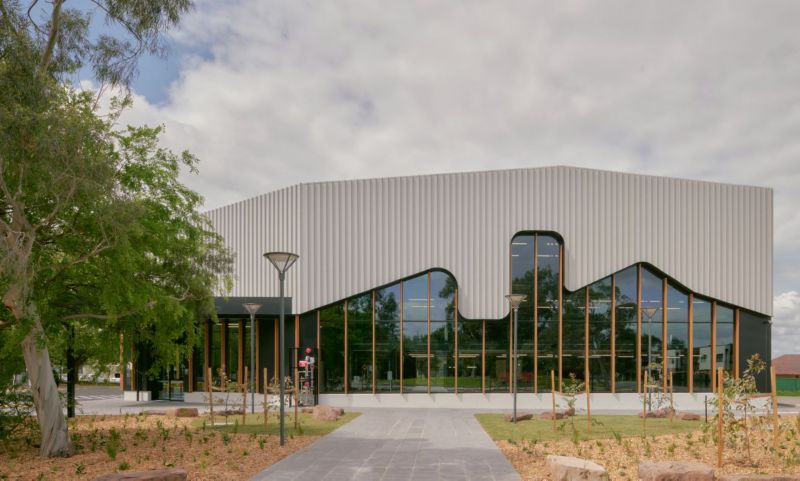
RMIT Trades Innovation Centre

RMIT’s Trades Innovation Centre is a cutting-edge facility offering the latest in skills training and technology for students and industry.

The centre features adaptable spaces, including a 2.5-metre-deep sand pit, double-height workshop ceilings, and a three-storey training rig that mimics building construction for real-world experience.

Divided into ‘trade zones’, this allows students to gain hands-on experience while observing other trades.

This training is delivered with Victorian and Commonwealth Government funding.
*This is a Free TAFE priority course. Check your eligibility.

Details

Learning and teaching

This certificate combines classroom-based activities with a range of hands-on practical tasks that will prepare you for employment as an apprentice in your chosen field.

You will have access to online resources through the student portal.

Assessment methods

Assessment methods include exams, assignments, projects and practicals.

Learning at RMIT

The types of classes you have will depend on the course you’re studying. Classes are offered in various formats designed to provide meaningful engagement with staff, industry and peers and provide for access and use of spaces where learning can be applied and active, including an array of specialised equipment.

Most RMIT courses do not include passive large-scale classes such as lectures, instead the content traditionally provided in lectures is made available online. This may be in the form of readings, videos or other on-demand learning materials. This content will also support the basis of interactive learning that takes place in on-campus classes.

RMIT Capabilities

The world is constantly changing, and there are universal skills that can help you adapt to the evolving nature of work and global engagement.

As part of your study experience at RMIT, we provide 6 future-focused RMIT Capabilities:

  • Ethical Global Citizens
  • Connected
  • Adaptive
  • Digitally Adept
  • Expert
  • Critically Engaged.

RMIT Capabilities are built into your course as well as some of our extracurricular experiences. They inform the design and delivery of your learning activities and assessments, so by the time you graduate, you’ll be ready to apply these capabilities in your life and work.

Guest speakers from industry will enhance your learning experiences.

An industry engagement day is organised near the end of your course to provide you with relevant information on regulations, key employers and employment opportunities.

Students are also connected through industry associations and RMIT Skills and Jobs Centre to assist with securing a full-time apprenticeship.

This course is competency-based and has been designed to help you develop the practical skills and knowledge necessary to work effectively in your chosen field. You will learn and be assessed by practising and demonstrating your capabilities, all of which can be readily applied in the workplace.

In addition to the specific vocational skills you build throughout this course, you will also develop a set of essential employability skills, including communication, planning, organising, and problem solving, self-management, initiative and teamwork. These foundational skills will enable you to navigate the world of work, collaborate effectively with others, and successfully get the job done.

You’ll develop industry specific skills including:

  • extra-low voltage circuits
  • fabrication of utilities and components
  • solving electrotechnology problems
  • providing reports for the energy sector.

You’ll also gain basic knowledge about the refrigeration and air-conditioning industry by completing learning experiences in:

  • single phase 230v
  • refrigeration tubing and fitting
  • basic vapour compression systems
  • basic operating conditions of air-conditioning systems.

You’ll also gain knowledge and experience on work health and safety in the construction industry and the general electrical and refrigeration industries.

At the end of this certificate, you’ll enhance your opportunities for employment as an apprentice electrician, refrigeration/air-conditioning mechanic or electrical/instrumentation technician.

Subjects may change as training packages are updated.

Course structure

Choose a plan below to find out more about the subjects you will study and the course structure.

Certificate II in Electrotechnology (Pre-vocational)
Program code: C2229
National curriculum code: 22682VIC

Title
Location
Duration
Plan code
CRICOS
Certificate II in Electrotechnology (Pre-vocational)
City Campus
Full Time 6 Years, Part Time 1 Years
C2229
Location
City Campus
Duration
Full Time 6 Years, Part Time 1 Years
Plan code
C2229
CRICOS
Certificate II in Electrotechnology (Pre-vocational)
Bundoora Campus
Full Time 6 Years, Part Time 1 Years
C2229BU
Location
Bundoora Campus
Duration
Full Time 6 Years, Part Time 1 Years
Plan code
C2229BU
CRICOS

Please note: this certificate is not available for international students intending to study on a student visa.

If you are holding a temporary visa (other than a student visa) and your visa has a full study entitlement, you may be eligible to apply. For more information, see the international students with other temporary (non-student) visas.

Career

Completion of this certificate will provide you with skills suitable to enhance your opportunities for apprenticeships as either an electrician or an air-conditioning and refrigeration mechanic. Both areas continue to see strong growth within Australia.

After completing your apprenticeship, you can choose to work for a company or for yourself.

Electricians install, maintain, repair, test and commission electrical and electronic equipment and systems for industrial, commercial and domestic purposes. Electricians also work on electrical transmission and distribution equipment.

Tradespeople in these fields can be employed as:

  • systems electricians on domestic, residential and heavy industrial buildings
  • instrument technicians on measuring, process control and scientific instruments
  • electronic tradespeople providing electrical installation, repair maintenance, modification and testing of electrical/electronic systems.

Refrigeration and air-conditioning tradespeople work in a range of sector and locations including as a commercial refrigeration mechanic:

  • on shipping containers
  • with trucks and transportation
  • with industrial installations including supermarkets and bars
  • within air-conditioning firms doing domestic or industrial air flow solutions.

This qualification is recognised by the Electrical Trades Union (ETU) and the National Electrical and Communications Association (NECA).

Entry requirements and admissions

You need to satisfy all of the following academic (entry) requirements to be considered for entry into this course.

There are no minimum academic entry requirements for this course. Applicants must meet the minimum university entry requirements.

Offers and acceptance for high-demand courses

This qualification experiences high demand with limited places. Therefore, Direct offer rounds will take place fortnightly, in which eligible applicants will be given 3 days to accept and a further 10 days to enrol and secure their place.

There are no prerequisite subjects required for entry into this qualification.

A selection task is not required for entry into this qualification.

Pathways and further study

A pathway is an alternative way to get into a course. RMIT's pathways can help you move through different levels of study to reach the qualification you're aiming for, even if you don't meet the requirements for your destination course.

Pathways into the Certificate II in Building and Construction Pre-apprenticeship

Unfortunately we are currently unable to offer formal pathways into this course. Contact Study@RMIT to discuss your options.

Further study

When you successfully complete this certificate, you may be eligible to apply for further studies at RMIT such as a diploma, advanced diploma or associate degree.

Credit and recognition of prior learning

Credit, recognition of prior learning, professional experience and accreditation from a professional body can reduce the duration of your study by acknowledging your earlier, relevant experience.

Credit and exemptions will be assessed consistent with the principles of the RMIT Credit Policy.

Credit may reduce the duration of your study by acknowledging your earlier, relevant study experience.

When you are submitting an application, please indicate that you want to be considered for credit and provide detailed course syllabus (also known as course outline), outlining volume of learning, course content and weekly topics, learning objectives/outcomes, assessment types and their weightings, and reference to the learning resources such as prescribed textbooks and recommended readings.

Fees

Fee Type

The tuition fees you will pay depends on your eligibility for government subsidies.

If you are not eligible for a government subsidised place, you are considered a full fee paying student.

Government-subsidised training for citizens, permanent residents and some visa holders.

Tuition fees fully covered for eligible students by the Victorian Government.

Tuition fees fully covered for Aboriginal or Torres Strait Islander students and Youth Justice referrals in a government subsidised place..

Not sure which fee type applies to you? Learn more and check your eligibility.

Full fee fee summary

Course nameCertificate II in Electrotechnology (Pre-vocational)
Plan codeC2229
National Curriculum code 22682VIC
Duration0.5year(s)
Nominal hours414Nominal hours tooltip

Fees shown are indicative only based on 2026 commencement, and subject to change given individual circumstances at the time of enrolment.

Fees are adjusted on an annual basis and these fees should only be used as a guide.

You may be eligible for a fee concession if you hold a valid Commonwealth Health Care Card, Pensioner Card, or Veteran's Gold Card, or are enrolled in the Asylum Seeker VET program. Find out more about fee concessions.

Fee details table
Item Description Cost (AUD)
Tuition fee student paystuition fee tooltip
The total tuition fee you will be charged for a full-fee place
$9,850.00
Student services and amenities fee (SSAF)Student services and amenities fee
Based on 2026 cap of $373 per calendar year
$215.28
Material feesmaterial fees tooltip
Total cost of material fees associated with this course
N/A
Estimated total cost to youEstimated total cost tooltip
Includes all fees listed above
$10,065.28

The tuition fees shown include the Victorian Government contribution. This amount is reflected in your fees and is paid directly to RMIT by the Government: $ per nominal hour ($ total).

Fee details table
Item Description Cost (AUD)
Tuition fee student paystuition fee tooltip
Tuition fees after government subsidy
$3,350.00
Student services and amenities fee (SSAF)Student services and amenities fee
Based on 2026 cap of $373 per calendar year
$215.28
Material feesmaterial fees tooltip
Total cost of material fees associated with this course
N/A
Estimated total cost to youEstimated total cost tooltip
Includes all fees listed above
$3,565.28

The tuition fees shown include the Victorian Government contribution. This amount is reflected in your fees and is paid directly to RMIT by the Government: $11.55 per nominal hour ($4,781.70 total).

Fee details table
Item Description Cost (AUD)
Tuition fee student paystuition fee tooltip
Concession rate applied
$670.00
Student services and amenities fee (SSAF)Student services and amenities fee
Concession rate applied
$41.40
Material feesmaterial fees tooltip
N/A
Estimated total cost to youEstimated total cost tooltip
Includes all fees listed above
$711.40

The tuition fees shown include the Victorian Government contribution. This amount is reflected in your fees and is paid directly to RMIT by the Government: $14.75 per nominal hour ($6,106.50 total).

Fee details table
Item Description Cost (AUD)
Tuition fee student paystuition fee tooltip
Tuition fees fully subsidised under Free TAFE scheme
$0.00
Student services and amenities fee (SSAF)Student services and amenities fee
Based on 2026 cap of $373 per calendar year
$215.28
Material feesmaterial fees tooltip
Total cost of material fees associated with this course
N/A
Estimated total cost to youEstimated total cost tooltip
Includes all fees listed above
$215.28

The tuition fees shown include the Victorian Government contribution. This amount is reflected in your fees and is paid directly to RMIT by the Government: $18.74 per nominal hour ($7,758.36 total).

Fee details table
Item Description Cost (AUD)
Tuition fee student paystuition fee tooltip
Concession rate applied
$0.00
Student services and amenities fee (SSAF)Student services and amenities fee
Concession rate applied
$41.40
Material feesmaterial fees tooltip
N/A
Estimated total cost to youEstimated total cost tooltip
Includes all fees listed above
$41.40

The tuition fees shown include the Victorian Government contribution. This amount is reflected in your fees and is paid directly to RMIT by the Government: $18.74 per nominal hour ($7,758.36 total).

Fee details table
Item Description Cost (AUD)
Tuition fee student paystuition fee tooltip
Tuition fees exempt for eligible students in a government subsidised place
$0.00
Student services and amenities fee (SSAF)Student services and amenities fee
Based on 2026 cap of $373 per calendar year
$0.00
Material feesmaterial fees tooltip
Total cost of material fees associated with this course
N/A
Estimated total cost to youEstimated total cost tooltip
Includes all fees listed above
$0.00

The tuition fees shown include the Victorian Government contribution. This amount is reflected in your fees and is paid directly to RMIT by the Government: $11.55 per nominal hour ($4,781.70 total).

Generated on 25 June 2026 | RMIT University's Registered Training Organisation (RTO) Code is 3046 | Payment and refund information

If eligible, you may be able to defer your tuition fees for this course through a VET Student Loan (VSL)

VET Student Loan cap for Certificate II in Electrotechnology (Pre-vocational) (C2229): $

Any tuition fees above the cap must be paid upfront to RMIT by their due date. Caps are indexed annually by the Commonwealth Government. Eligibility applies.

Learn about eligibility for VSL

Scholarships

Check your eligibility for a scholarship

RMIT awards more than 2000 scholarships every year to recognise academic achievement and assist students from a variety of backgrounds.

Check your eligibility for a scholarship

RMIT awards more than 2000 scholarships every year to recognise academic achievement and assist students from a variety of backgrounds.

Frequently Asked Questions (FAQs)

Looking for answers or more general information?

Use our Frequently Asked Questions to learn about the application process and its equity access schemes, find out how to accept or defer your offer or request a leave of absence, discover information about your fees, refunds and scholarships, and explore the various student support and advocacy services, as well as how to find out more about your preferred program, and more.

This course is not available for international students intending to study on a student visa.

Information for international students

Sorry, this course is not available for international students intending to study on a student visa. If you hold a different visa type, you may be eligible. Please contact Study@RMIT for more information.


Information for local students

If you are a local student please select 'switch to local' below to view the full course information.

aboriginal flag float-starttorres strait flag float-start

Acknowledgement of Country

RMIT University acknowledges the people of the Woi wurrung and Boon wurrung language groups of the eastern Kulin Nation on whose unceded lands we conduct the business of the University. RMIT University respectfully acknowledges their Ancestors and Elders, past and present. RMIT also acknowledges the Traditional Custodians and their Ancestors of the lands and waters across Australia where we conduct our business - Artwork 'Sentient' by Hollie Johnson, Gunaikurnai and Monero Ngarigo.

Learn more about our commitment to Indigenous cultures