With the support of the Ngarara Willim Centre and RMIT scholarships, Harrison is rebuilding his life and future, proving how care, culture and community can help a young person believe in themselves.
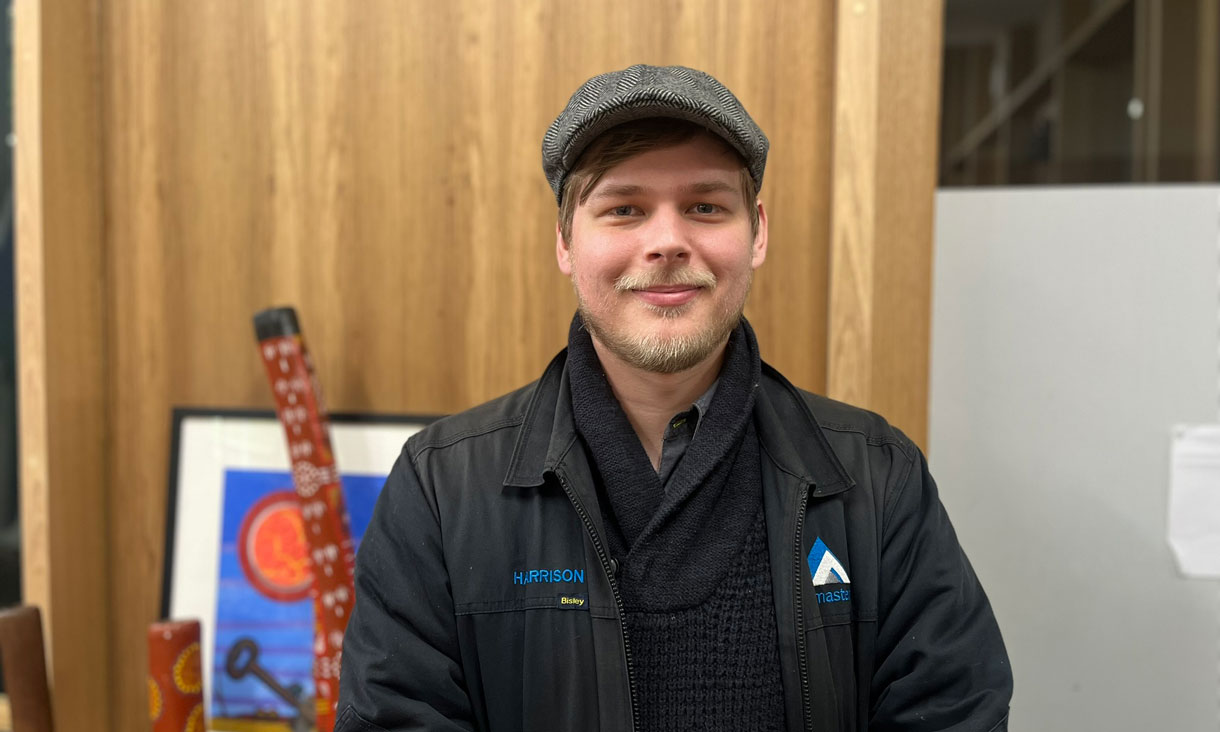
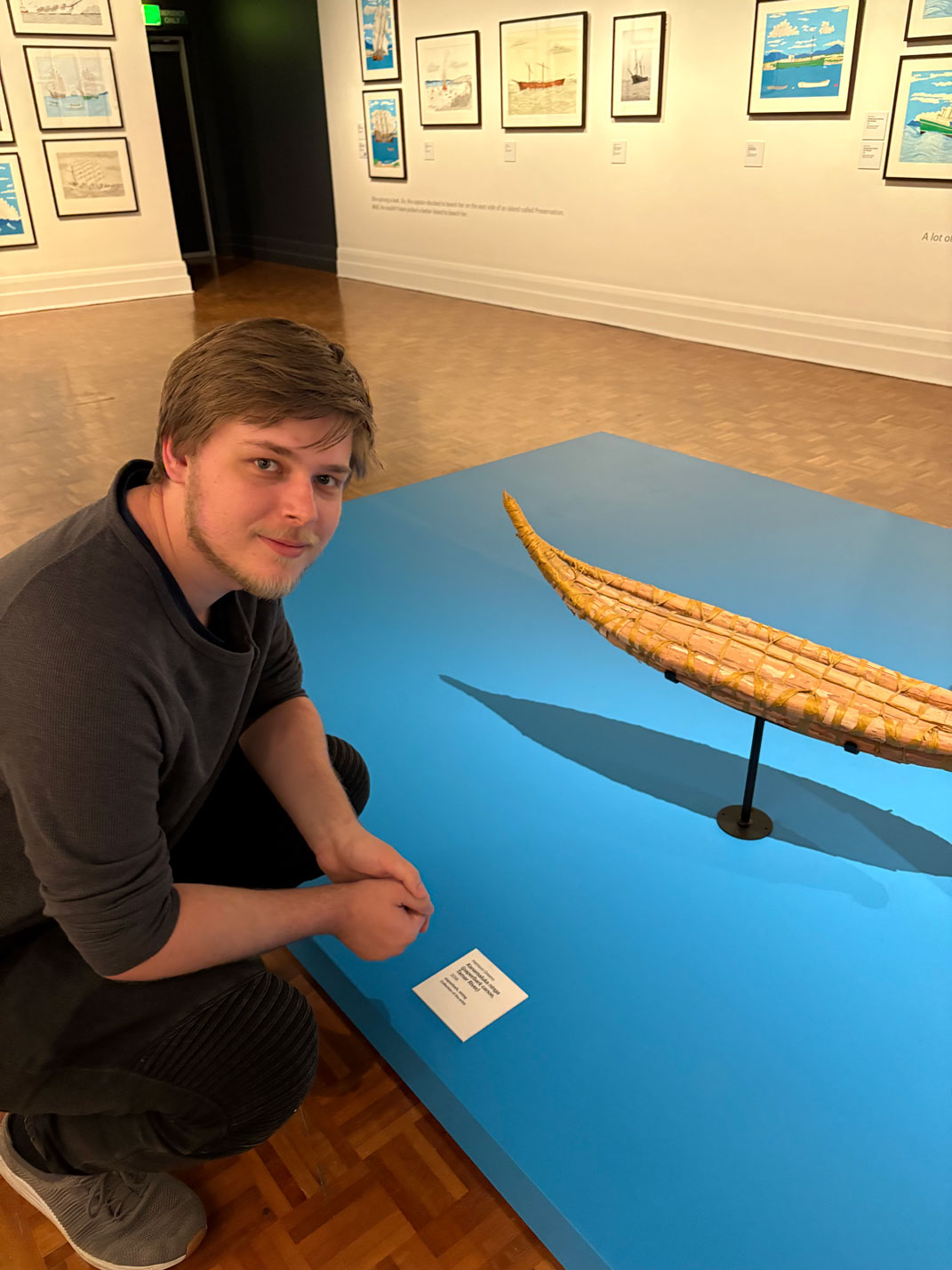
To read the full image descriptions, please click on the individual image above.
Harrison Greeno is a proud Palawa man who was born in Victoria and has faced more than his fair share of challenges. But through his own hard work and support from RMIT’s Ngarara Willim Centre, he’s now building a strong future for himself.
“I grew up in Wandong, outside of Melbourne. I’m the middle of five children,” Harrison says. “Growing up was a struggle, but it was interesting. We had to move schools a lot due to the Black Saturday fires and a lot of other stuff going on. I ended up moving to Tassie to live with Dad and do year 11 and 12.”
He finished high school in Tasmania but says it wasn’t easy. “Some of the teachers weren’t the best. One art teacher was more interested because she found out I was Aboriginal and that my grandparents were well-known Aboriginal artists. She wouldn’t help me unless I did Aboriginal artwork. I was like ‘no, I want to do whatever I want’. When I finally agreed to do Aboriginal art, she suddenly started to help. It was a bit messy.”
Harrison’s paternal grandmother Lola Greeno is a respected traditional Palawa necklace maker whose work is displayed in the National Art Gallery. “I often go around and help her collect shells and things that she uses to make her necklaces,” he says. “It’s something I learned ever since I was little. I would go to beaches with my Nan and Pop.”
His grandfather, Rex Greeno, also passed down cultural knowledge. “He taught me a lot. He was really good. He taught me how to carve and make bark canoes,” Harrison says. “It was very special. There are moments where I wish I could learn more, but he was diagnosed with cancer, so I tried to learn as much as I could while he was still alive. I even made a video of him talking about our culture.”
After high school, Harrison tried several different courses before finding his path. “I tried to apply for engineering at UTAS, but it didn’t work out. Then I did graphic design for a year, and then screen and media at RMIT, which I really enjoyed. But a lot happened. My grandfather died, my family got robbed and I had to deal with many other hardships. I just couldn’t finish it.”
He says the Ngarara Willim Centre has been a lifesaver and huge part of his journey. When he didn’t have a safe place to stay, the Centre helped him find accommodation and financial support. “They got me scholarships to pay for my rent at UniLodge, and they also helped me get a job at the Pullman Hotel,” Harrison says. “It helped me build my life back up. I made some amazing friends at UniLodge. I’m grateful for what the scholarships and Ngarara Willim have done for me.”
After taking a year off he decided to start again. “I came back with a fully fresh, open mind,” he says. At the suggestion of his father, Harrison decided to enrol in the Certificate II in Electrotechnology (Pre-vocational) at RMIT. This full-time program introduces students to two industries, electrical and refrigeration/air-conditioning, and mixes theory with the practical skills required to get an apprenticeship.
Harrison was enjoying the course so much he approached Nicole Shanahan at Ngarara Willim and asked for help securing an apprenticeship. Nicole arranged for Harrison to meet with a representative from Airmaster, which provides a range of campus facilities management services to RMIT, and supports students through initiatives including food security programs and engineering scholarships.
Thanks to that introduction, Harrison is now employed as an apprentice with Airmaster and doing his Certificate III in Electrotechnology through RMIT. “I’m really enjoying it,” he says. “I’m hoping once I finish the apprenticeship, I can move on to the next level and maybe go back to study engineering.”
Harrison says his life has completely turned around. “I’ve gone from having nothing to now having a partner, and we’re in the process of buying our first house together,” he says. “Things have definitely improved.”
Life-changing scholarships
Give to scholarships and help create life-changing opportunities for students facing barriers to education.



