



Floating wetlands to reduce greenhouse gas emissions in wastewater lagoons

Floating wetlands to reduce greenhouse gas emissions in wastewater lagoons

RMIT researchers, Westernport Water and CSIRO partnered to investigate floating wetlands as a nature-based solution to reduce greenhouse gas emissions from wastewater storage lagoons.

Key points

  • Floating wetlands planted with native species reduced emissions significantly.  
  • Floating wetlands are promising nature-based solutions to reduce carbon emissions in waterbodies. 
  • Research supports Victorian water sector’s goal of net-zero emissions by 2035. 

The research team led by RMIT water scientists, Dr Martino Malerba and Dr Lukas Schuster found that constructed floating wetlands (CFWs) can significantly reduce greenhouse gas emissions from wastewater lagoons, even if nutrient levels are not affected. 

The challenge

Wastewater lagoons contribution to greenhouse gas emissions 

Wastewater treatment plants emit large amounts of greenhouse gases, including carbon dioxide (CO₂), methane (CH₄), and nitrous oxide (N₂O), contributing nearly one million tonnes annually in Victoria alone. 

The high nutrient concentrations found in wastewater create ideal conditions for microbes that produce these gases, posing a challenge to Victoria’s water sector that aims to achieve net-zero targets by 2035.

Research approach and solution

Nature-based solution using native wetland plants 

The collaborative project aimed to investigate whether a CFW planted with Australian native wetland species could reduce nutrient levels and greenhouse gas emissions from a wastewater storage lagoon at Westernport Water. 

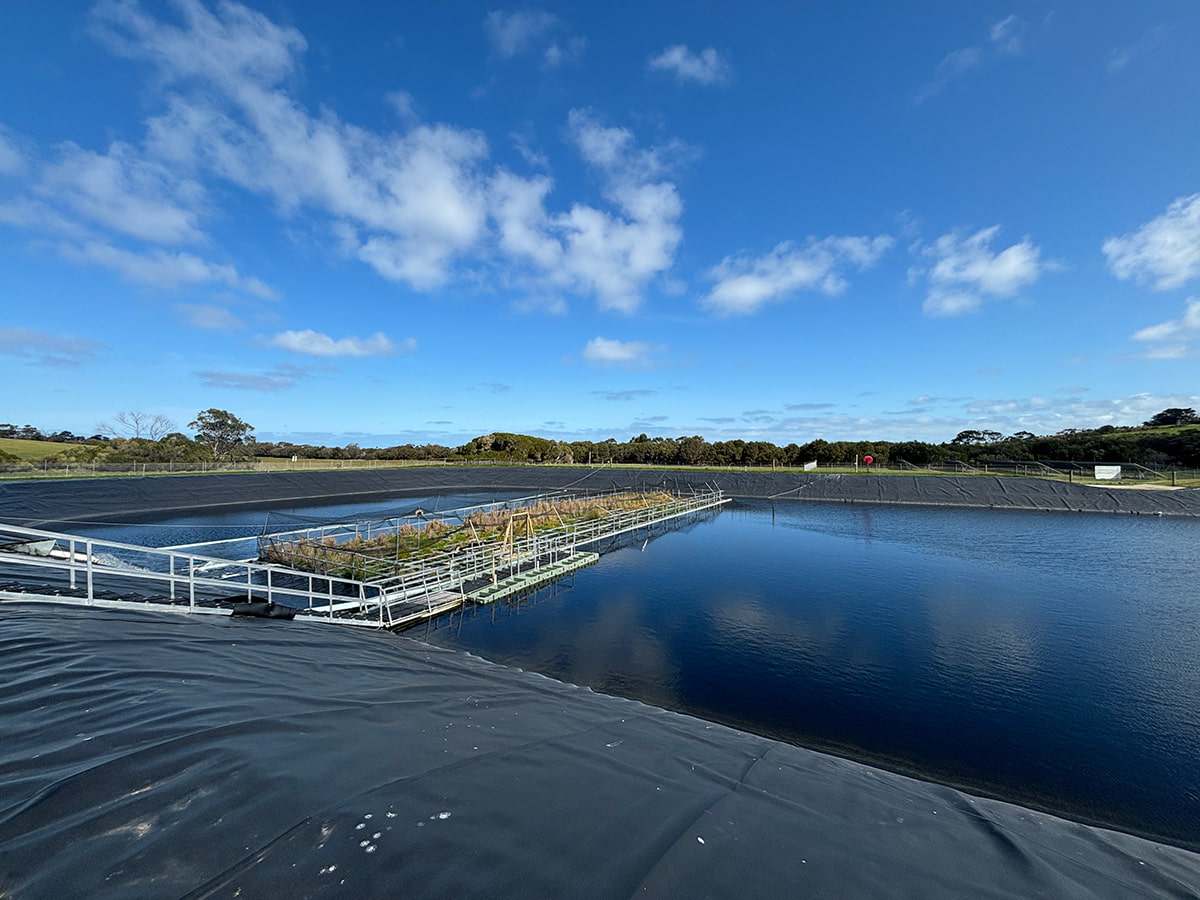
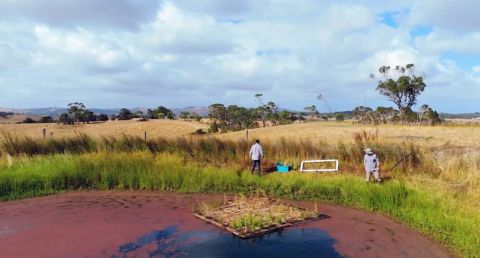
The team installed the constructed floating wetlands planted with native species (Phragmites australis, Baumea articulata and Bolboschoenus caldwellii). 

Plant roots dangling in the water created ideal habitats for microbes that consume methane and other greenhouse gases. 

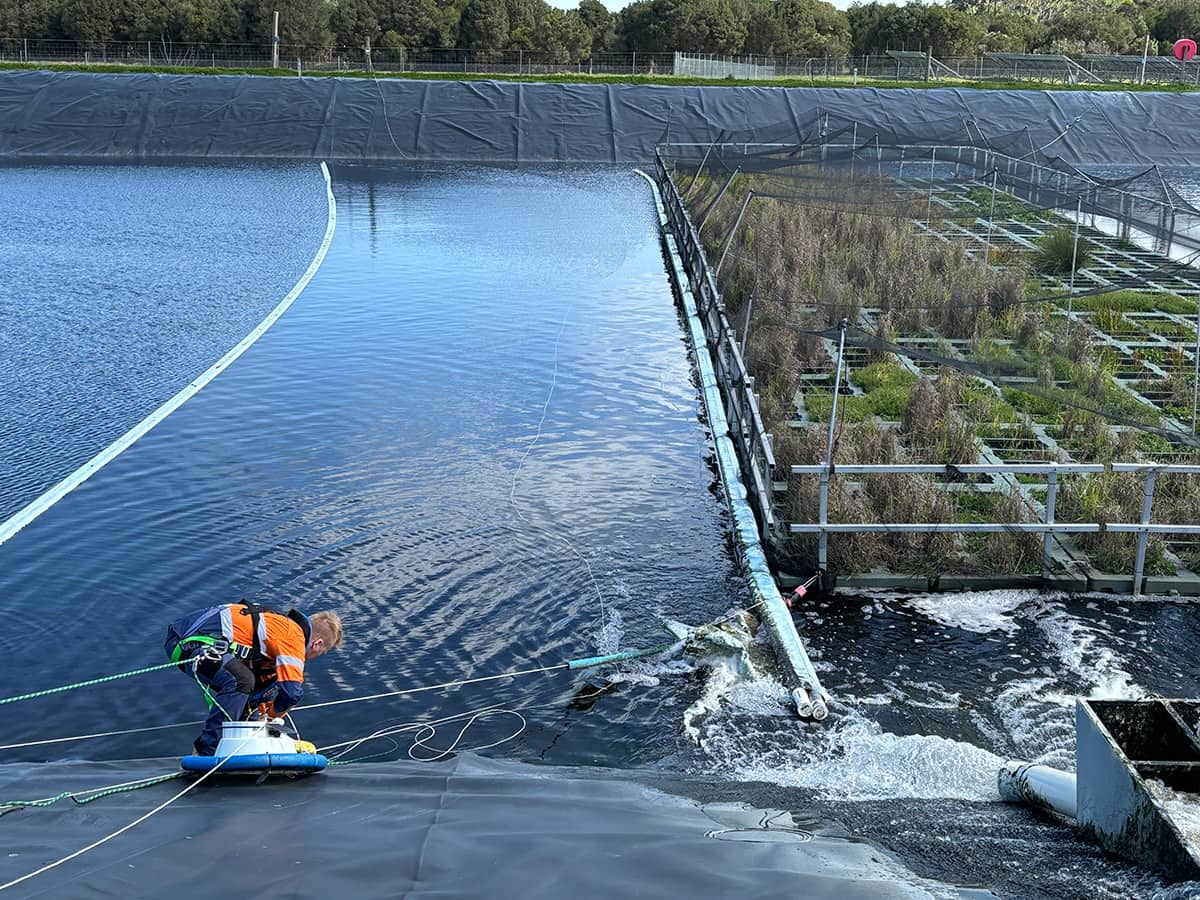
To test the effects of these floating wetlands on nutrient levels and emissions, the lagoon was split into a treatment channel containing a CFW, and one without the floating wetland.  

Emissions were then continuously monitored over two years using ‘Pondi’, solar-powered sensors developed by RMIT and partners including, Deakin University, The University of Queensland and engineers. 

Regular water quality and monthly nutrient sampling were also completed throughout the project. 

Floating wetlands are promising nature-based solutions to reduce carbon emissions in waterbodies.

Key findings

While the CFW did not affect overall nutrient levels throughout the project, the team found that greenhouse gas emissions dropped dramatically. 

  • Average CO₂ emissions dropped by 30% 
  • CH₄ emissions fell by up to 63% 
  • N₂O emissions declined by 17% 

Outcomes and impacts

Martino said that the findings were promising and demonstrated that installing floating wetlands can significantly reduce greenhouse gas emissions from wastewater lagoons, even when the wetland plants do not affect nutrient levels. 

“Floating wetlands harness the power of nature to help restore balance in aquatic systems,” said Martino. 

“By supporting microbial communities in the root systems of wetland plants, we can improve water quality without relying on high-tech solutions.” 

“These nature-based approaches can transform wastewater treatment into part of the climate solution”, he said. 

Next steps

This research is the start of a longer-term program. The team will continue to work with Westernport Water to extend monitoring and better understand the long-term potential of floating wetlands to reduce greenhouse gas emissions and nutrient loads from wastewater, while also exploring opportunities to expand the work across Victoria and Australia. 

Funding acknowledgement


This work was supported with funding from Westernport Water, the Department of Energy, Environment and Climate Action, the Intelligent Water Networks, and Yarra Valley Water. Dr Malerba was supported by an ARC DECRA Fellowship. 

For more information and the full report visit RMIT Centre for Nature Positive Solutions 

Key contact

Dr Martino Malerba 
Centre for Nature Positive Solutions 
School of Science, STEM College 

SDGs

SDG 6 clean water and sanitation
SDG 13 climate action
SDG 15 life on land

Read related RMIT impact stories


Connect with RMIT Research

If you're not sure how you can best work with us, our team can explain what's possible and put you in touch with the right person. 

aboriginal flag float-start torres strait flag float-start

Acknowledgement of Country

RMIT University acknowledges the people of the Woi wurrung and Boon wurrung language groups of the eastern Kulin Nation on whose unceded lands we conduct the business of the University. RMIT University respectfully acknowledges their Ancestors and Elders, past and present. RMIT also acknowledges the Traditional Custodians and their Ancestors of the lands and waters across Australia where we conduct our business - Artwork 'Sentient' by Hollie Johnson, Gunaikurnai and Monero Ngarigo.

Learn more about our commitment to Indigenous cultures