
Restoring Indonesia’s peatlands to tackle climate change

Restoring Indonesia’s peatlands to tackle climate change

Researchers partnered with Indonesian communities and government agencies to support long-term peatland restoration and climate resilience.

Key points

  • The research combined environmental science with local and Indigenous knowledge to help build long-term capacity for accurately and remotely monitoring peatland health and restoration.
  • Technologies such as Chameleon soil moisture sensors and carbon flux towers were trialled and validated alongside community insights to monitor peatland health.
  • The research helped shape Indonesia’s national peatland restoration strategy.   

Research summary

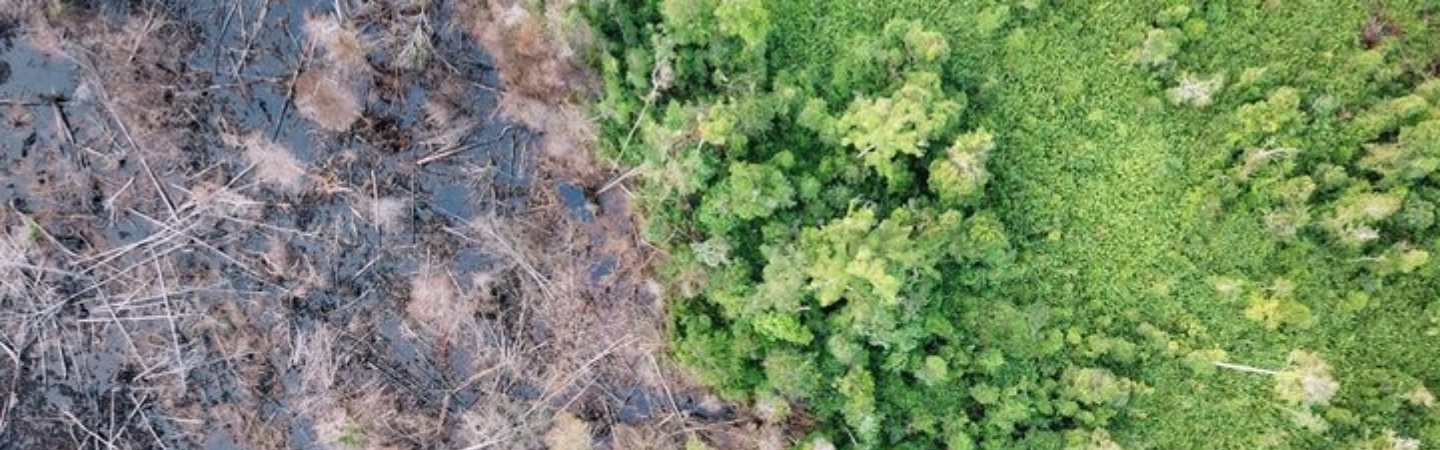
Peatlands are among the world’s most effective carbon stores—but in Indonesia, large areas have been degraded by land clearing, drainage and fire.

Led by RMIT soil scientist Associate Professor Samantha Grover, the research team worked closely with Indonesian communities and government stakeholders to help restore the peatlands.

This involved investigating tools including Chameleon soil moisture sensors and carbon flux towers to monitor restoration progress.

The interdisciplinary approach combined expertise from soil and ecological science with social science.

By integrating scientific indicators with local knowledge and the Indonesian government’s decision-making systems, the research program supported restoration strategies that could be used for the long term.

Professor Samantha Grover RMIT soil scientist Associate Professor Samantha Grover

Why are Indonesia’s peatlands important?

Grover noted that peatlands are increasingly being recognised as critical carbon stores in global efforts to mitigate climate change.

“Given Indonesia contains the majority of the world’s tropical peatlands, the country has an opportunity to lead technical and social innovations in peatland restoration,” said Grover.

“Some of the peatlands are in good condition, but many are degraded, so they have a big task to restore those.

“The current drained state of much of Indonesia’s peatland estate renders it susceptible to fire, and the South-East Asian Haze is caused by peat soil burning,” she said.

Grover was first enlisted to help tackle the issue by the Australian Centre for International Agricultural Research (ACIAR) after large fires had affected Indonesia’s peatlands in 2015.

Since then, she has led a suite of projects that have involved strong collaborations with Australian and international academics, the Indonesian Government, NGOs and local communities.

Interdisciplinary research approach

The research projects combined environmental monitoring with community-based knowledge sharing and learning.

Technologies such as Chameleon soil moisture sensors and eddy flux towers were tested and validated alongside local insights to monitor peatland conditions.

Grover said the program has also included valuable interdisciplinary work from PhD students.

“For example, Corry Antang, one of my PhD students, is an indigenous Dayak woman from Kalimantan, and her background is in linguistics,” said Grover.

“Her PhD is about ecolinguistics in the context of peatland restoration, recognising that there are hundreds of languages in Indonesia.

“She aims to develop a trilingual dictionary of English, Indonesian and Dyak terms associated with peatland restoration.

“The restoration work often involves the government coming out and telling people what is going to happen in their local area.

“However, they do that in Indonesian, drawing on Western scientific concepts, approaches and techniques, so the information can be lost in translation,” she said.

Capturing Dyak, Indonesian, and English terms related to peatland restoration aims to help bridge local knowledge and Government policy making.

“This is taking a similar approach to our project that aimed to validate chameleon soil moisture sensors and the work to involve the local communities,” said Grover.

We understand that people know about how wet the soil is because it's where they live and it affects their day-to-day lives.

“We have used this sensor with three different colours to discuss the soil moisture and to give people an opportunity to share their local knowledge and connect it to some scientific indicators.

“That information can then be shared with the government to inform their restoration planning,” she said.

Key outcomes and impact

  • Fostered strong collaborations and trust between the international research team, and Indonesian government, NGOs and local communities.
  • The program has been highly successful in capacity building for Indonesian partners and research team members and provided tools and frameworks to evaluate peatland health and ongoing restoration efforts.
  • A stronger alignment of restoration programs with local knowledge and Indonesia’s governance systems.
  • Informed Indonesia’s national peatland restoration strategy.

In 2023, together with environmental social scientist Dr Andrea Rawluk from The University of Melbourne, Grover also co-designed and co-led the development of a program-level Theory of Change (impact pathway) for the ACIAR’s Indonesian Peatland program.

ACIAR used this Theory of Change as a guiding document to help inform their next five years of research investment in Indonesia.

Fostering skills for the next generation of scientists

For Grover, there been several benefits and impacts that she’s particularly pleased about, including the capacity building within the research team.

“It’s been wonderful to see those who joined the program as junior researchers to go on and win scholarships to further their studies, complete their master’s degree overseas or join prestigious fellowship programmes,” she said.

Forging strong collaborations to tackle climate change

“The Indonesian government is so interested in this work that we always get really good reception and engagement with their agencies,” said Grover.

“Importantly, our work has informed the development of Indonesia’s national standards for peatlands, which we know they will implement across the country.

“And we are humbled to have been able to engage in authentic shared learning with the local communities.

“Given Indonesia has a huge area of peatlands, helping to restore these areas can result in a globally significant removal of carbon dioxide from the atmosphere,” she said.

Next steps

A new ACIAR-funded project (2024–2028), Meeting the biophysical information needs of peatland restoration and management stakeholders, will build on this work to support improved decision-making at scale.

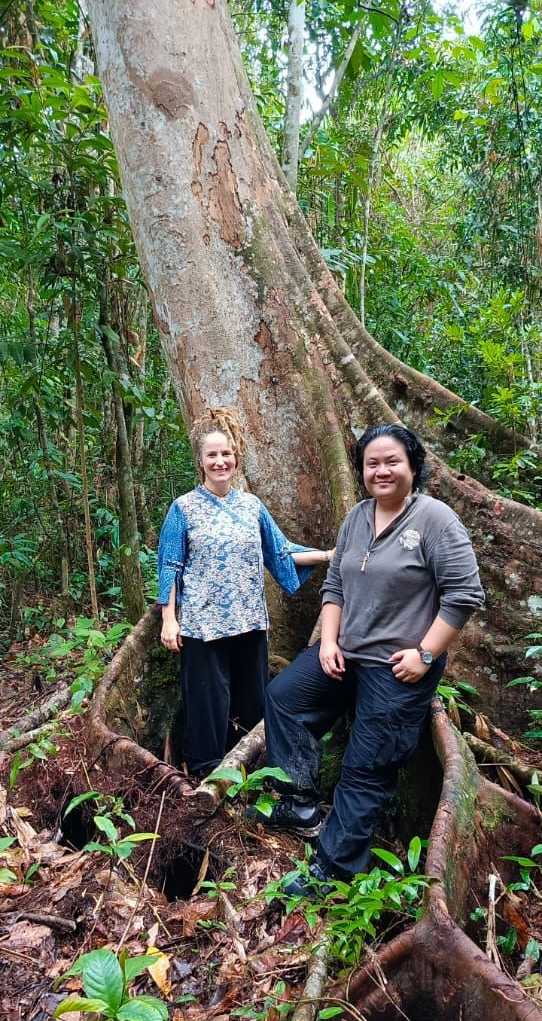
Pilang village Associate Professor Samantha Grover and PhD student, Corry Antang in the forest in Pilang Village.

Partners and collaborators for the research program include:

ACIAR, The Borneo Orangutan Survival Foundation; Indonesian Government, agencies and communities; University of Melbourne; Charles Darwin University; University of Palangka Raya; The University of Western Australia and CSIRO.

For further information visit: Validating technologies for assessing and monitoring the impacts of re-wetting of peatland Indonesia using eddy flux towers coupled with the Chameleon sensors.

Associate Professor Samantha Grover
Leader of the Soil-Atmosphere-Anthroposphere Lab (SAAL)
School of Science
STEM College

SDGs

Read related RMIT impact stories


Connect with RMIT Research

If you're not sure how you can best work with us, our team can explain what's possible and put you in touch with the right person. 

aboriginal flag float-start torres strait flag float-start

Acknowledgement of Country

RMIT University acknowledges the people of the Woi wurrung and Boon wurrung language groups of the eastern Kulin Nation on whose unceded lands we conduct the business of the University. RMIT University respectfully acknowledges their Ancestors and Elders, past and present. RMIT also acknowledges the Traditional Custodians and their Ancestors of the lands and waters across Australia where we conduct our business - Artwork 'Sentient' by Hollie Johnson, Gunaikurnai and Monero Ngarigo.

More information