How RMIT is preparing students for AI

The ubiquity of AI has got many students and parents wondering - where does university fit into the future of work and learning?

On the one hand, AI can create efficiencies to streamline tasks and unlock new possibilities. On the other hand, it has also created shortcuts that bypass necessary steps that enable learning and growth. It is far from being universally accepted, opinions range from curiosity to concern. 

There are many different ways to view AI, but most agree it’s going to have an impact on the future of work and study. AI has already embedded itself across a vast and varied number of industries. From changing the way technology detects potholes to thermal-image that prevents ulcers – the application of AI goes far beyond chatbots and LLMs.  

RMIT recognises the impact of AI and what it means for students, which is why its educators are evolving courses and programs to ensure graduates build strong critical, creative and ethical judgement in their use of AI. 

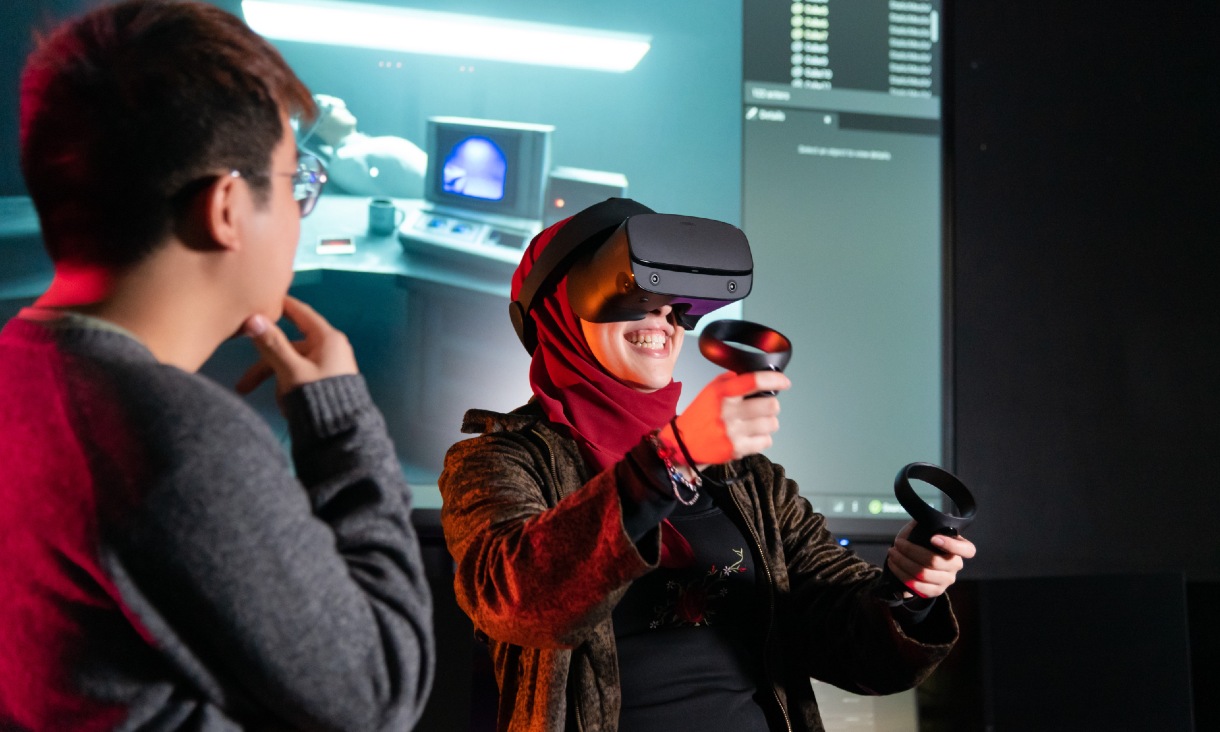
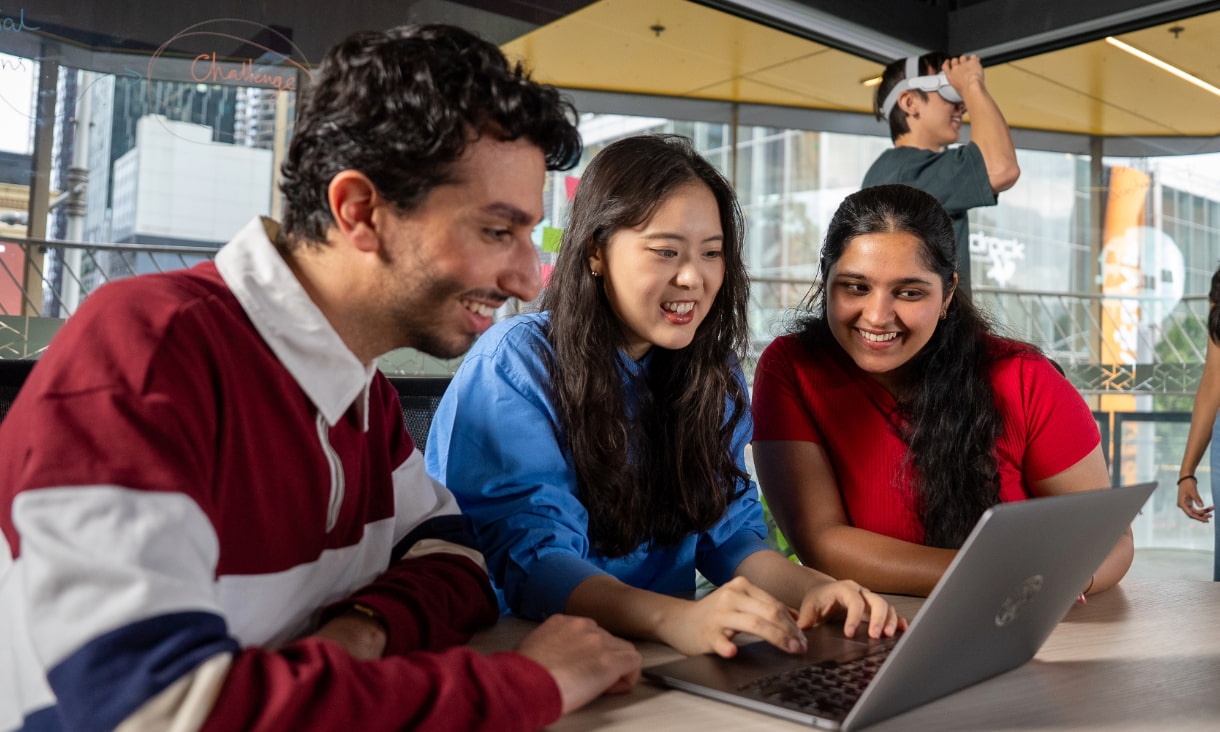
RMIT students working at a computer while a student uses a VR headset in the background

Supporting, not substituting, learning 

At RMIT, students are encouraged to responsibly use AI in learning and assessments. This means AI is used purposefully as a tool, not a substitute. Students are encouraged to use AI critically, be aware of the risks of over-reliance and the potential to be fed incorrect information.  

Professor Karin Verspoor, Executive Dean of RMIT’s School of Computing Technologies, said learning authentically remains at the heart of every RMIT course and program.  

“Learning actually happens most effectively in struggle, so making it too easy for a learner is not our objective,” she said. 

“There's something called the zone of proximal development, the idea that you want things to be just hard enough, but not too hard, because if you're in that zone of struggle where you're pushing your boundaries and expanding your horizons, that's where the magic happens, that's actually where the real learning happens.” 

Exploring where, how and why to use AI

Innovation moves fast and AI has set a blazing pace. RMIT’s Generative AI Lab for Education (GAILE) is supporting educators in building confidence in engaging with this technology and working across disciplines to understand how AI is integrated into the learning.  

This is a careful and collaborative process, said Dr Huan Vo-Tran, Head of RMIT’s Department of Information Systems and Business Analytics.

“We look at program learning outcomes [that] are derived from the academics who do the research in that space, so it's derived from industry who are telling us what is actually needed and also feedback from the students through student staff committees,” he said. 

“We've got multiple feedback mechanisms to support what we do moving forward. “We can't stop AI, but we can actually teach students how to use it ethically and how to work side-by-side with it, how to use it appropriately and how to use it to excel their careers as well.”

RMIT invests in education-focused academics who specialise in pedagogy to inform the university’s delivery of teaching and curriculum design. A large part of this educational leadership is aimed at supporting educators to effectively weave AI into their teaching where appropriate. 

Injecting industry know-how

RMIT has long been a leader in industry collaboration. Its programs are co-designed with industry partners to ensure that students are equipped with real-world knowledge that helps them create impact and drive innovation in their careers.  

These industry connections also strengthen RMIT’s ability to position students at the cutting edge of AI in the workplace. These links, forged through networking or time spent working together, simply cannot be replicated by AI, said Dr Vo-Tran. 

“People from industry come in and students listen firsthand and they might not get that through AI,” he said. “It’s the lived experiences, the people, the connections. You get your first job through connections and people and talking and communicating. Those skills can't be replaced.” 

RMIT students have the opportunity to transfer their learning to the real world before they graduate through work experience, placements and internships. In these work settings, students are expected to bring AI knowledge they can pass on to others. 

Professor Verspoor noted that this mutual exchange of skills and experience is also expected with graduates. 

“They essentially become the drivers of change within the organisation because they're coming in with knowledge that the people who've been there for 15 years don't have,” she said. 

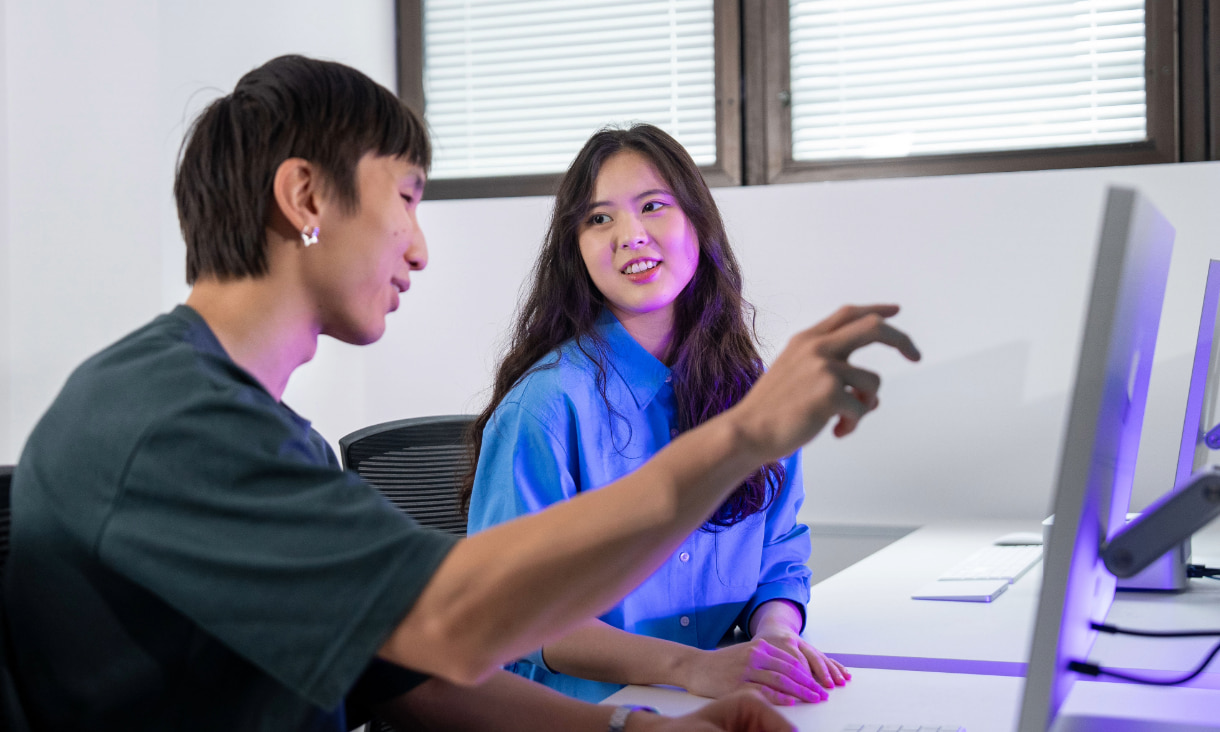
Two RMIT students working at a computer with blue back lighting

Creating space for face-to-face

AI will change much in the coming years, raising important questions about what we value in human-centred learning. At RMIT, we will continue to champion real classrooms led by knowledgeable, industry-embedded teachers who can challenge assumptions, tease out ideas and inspire confidence. That connection between students, teachers and industry is central to the education we offer and the future we want to shape. 

Social connection is a highly valuable tool in learning, particularly peer-to-peer learning, said Dr Vo-Tran. An essential part of the university experience is connecting with like-minded peers, building connections with industry professionals and develop critical thinking skills. This is something that AI cannot replace. 

“What we add is that human aspect,” he said. “So, for students coming from Year 12, they've got a tight-knit group of friends who they've had since probably Year 7, and they’re moving into their first year of university understanding that these people might be friends for life. 

“AI can support them in terms of that learning, but the important part is sharing the learning between the actual students themselves.” 

The AI story is far from over. Learning how to use it and, on the flipside, when not to use it, is absolutely essential. Using AI well means using it responsibly and ethically - lessons that can found in any RMIT learning environment.  


Story: Kate Jones  
aboriginal flag float-starttorres strait flag float-start

Acknowledgement of Country

RMIT University acknowledges the people of the Woi wurrung and Boon wurrung language groups of the eastern Kulin Nation on whose unceded lands we conduct the business of the University. RMIT University respectfully acknowledges their Ancestors and Elders, past and present. RMIT also acknowledges the Traditional Custodians and their Ancestors of the lands and waters across Australia where we conduct our business - Artwork 'Sentient' by Hollie Johnson, Gunaikurnai and Monero Ngarigo.

Learn more about our commitment to Aboriginal and Torres Strait Islander peoples