
Three RMIT graduates on the future of design in an age of AI

What does the future of design look like? We spoke to three RMIT alumni who say it’s more human, interdisciplinary and culturally aware than ever before.

From interior design to animation and visual storytelling, Mike, Caesar and Liz are part of a new generation of creatives redefining what design can do – not just aesthetically, but socially, politically and culturally.

Despite working across different disciplines, the three alumni share a common belief: design is about people. Whether through storytelling, spatial experience or cultural translation, their work points to a future where technology may have a big role to play, but empathy, clear communication and original thinking remain at the centre of creative practice. Here’s what they had to say.

design-students-1220x732

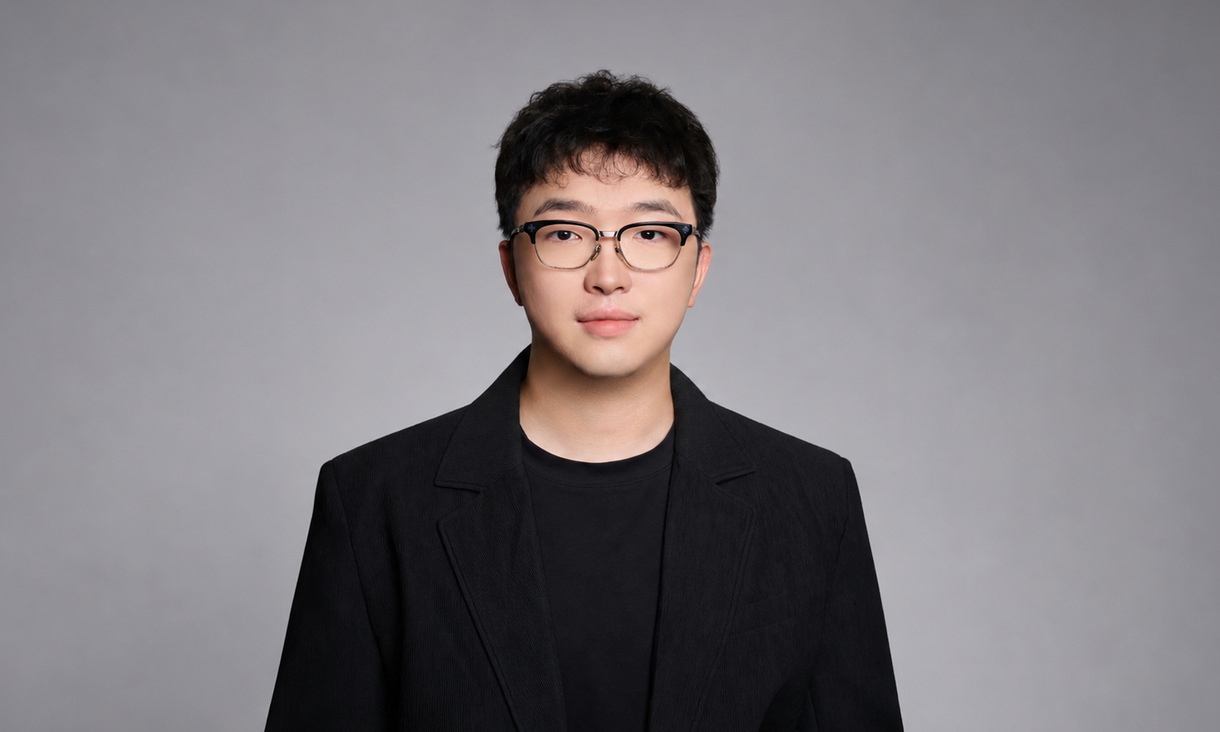
Mike Wu – interior designer

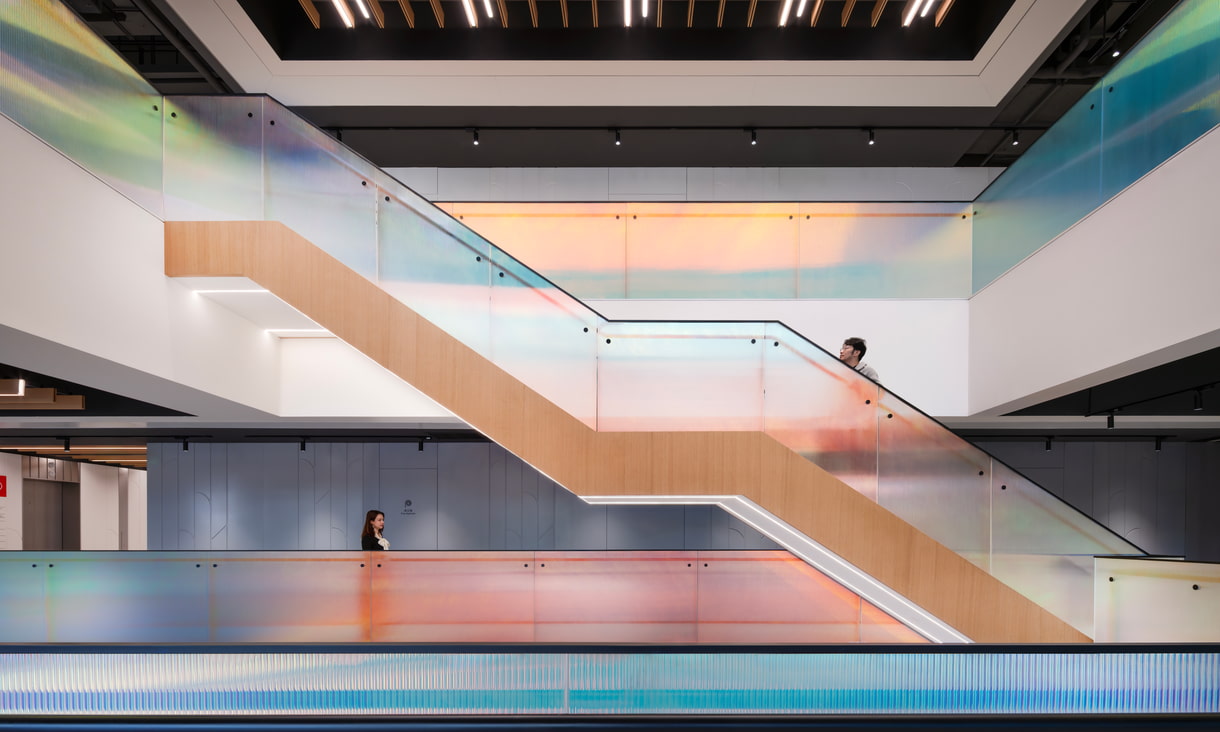
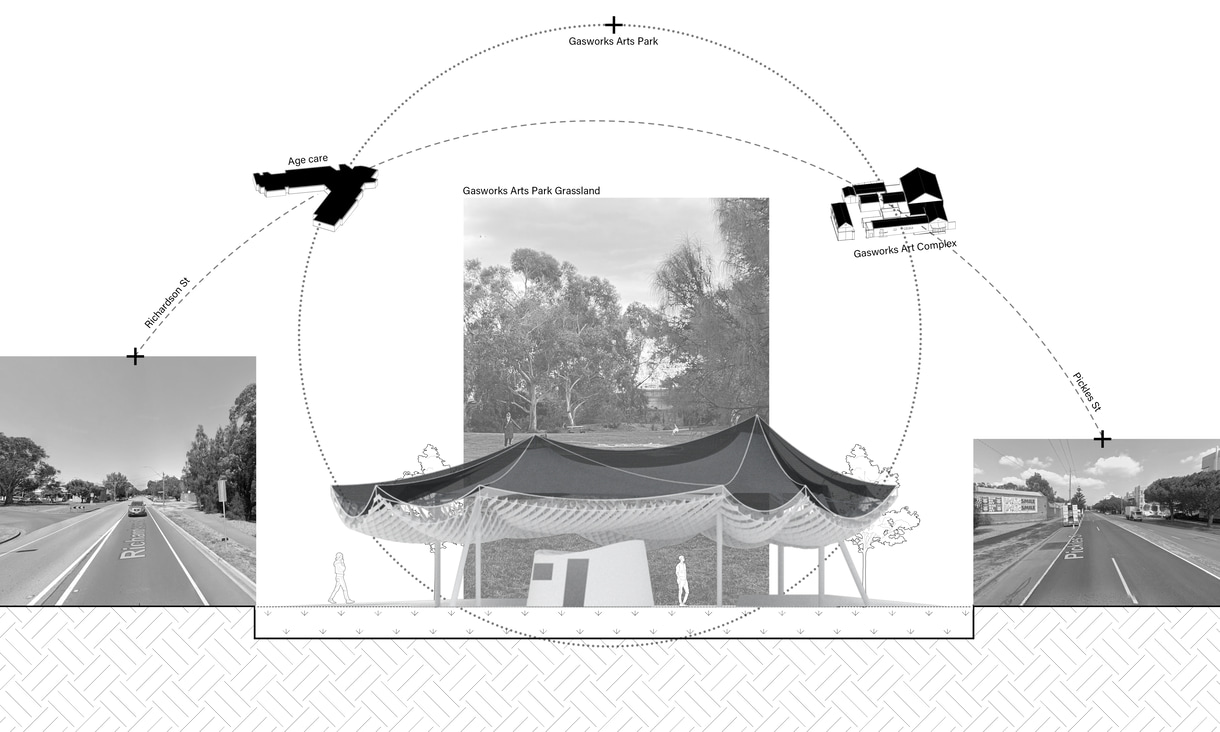
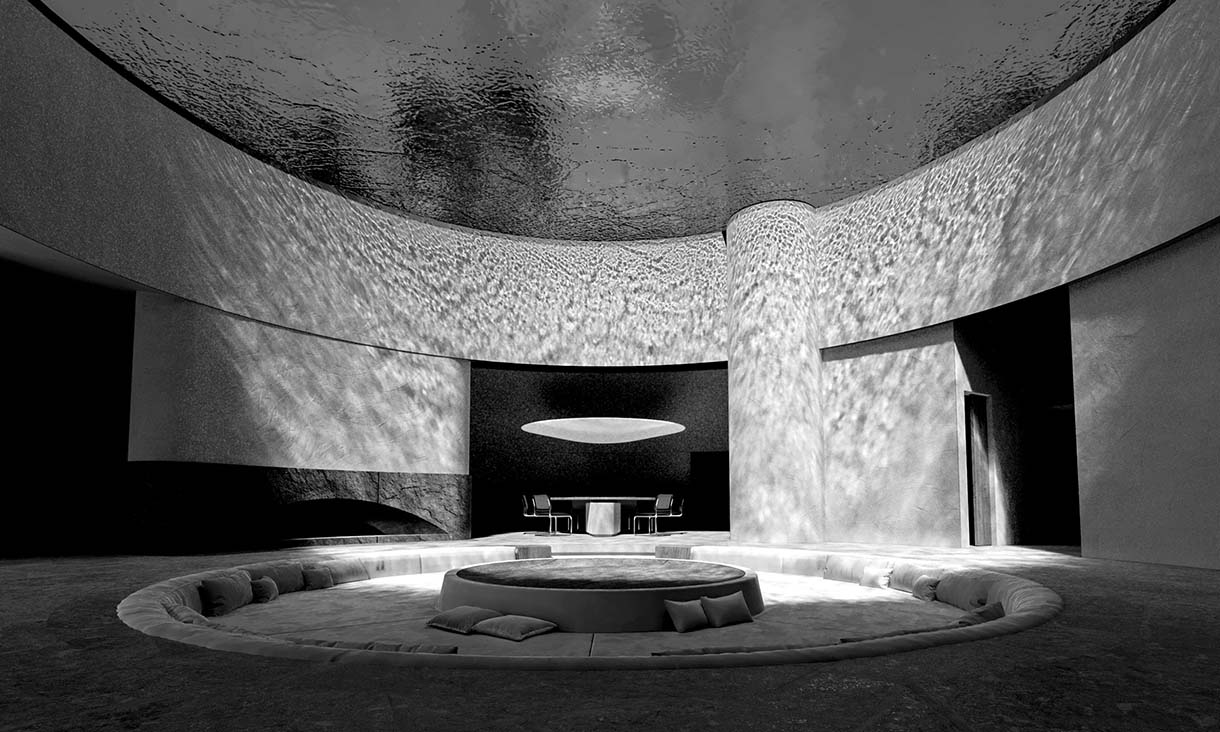
For Mike Wu, who graduated from RMIT’s Master of Interior Design in 2023, the future of design will inevitably be shaped by artificial intelligence, but not in the way many believe. Instead, he sees AI as another tool in the designer’s evolving toolkit, similar to the transition from hand drawing to CAD and 3D modelling.

“The biggest change in the future of interior design is not that technology will replace designers,” he explains, “but that it will raise the value of original thinking and communication.” 

As AI makes technical processes faster and more accessible, Mike believes uniquely human skills, like empathy, critical thinking and communication, will become even more valuable.

mike-wu-project-1220x732

"Interior design is not just about designing a space – it is also about understanding people, lifestyles, culture and the way we live. A lot of inspiration comes from observation, from everyday experiences, and from being open to different ways of seeing the world."

Mike first became interested in interior design because he was drawn to exploring the intimate relationship between people and space.

“Compared with larger-scale architecture, interior spaces are smaller in scale, but they are much more connected to everyday life, and they can express detail, emotion and atmosphere in a very direct way.”

Mike chose to pursue postgraduate study at RMIT because of its reputation as a global leader in art and design, but also because of its connection with Melbourne culture.

I saw RMIT as a very creative and forward-thinking university. Compared with a more traditional campus environment, RMIT felt more open, inclusive and contemporary, and that matched exactly what I was looking for in a design school.
mike-wu-project-1220x732
mike-wu-masters-project-1220x732

For Mike, the opportunities RMIT provided him to experience hands-on learning were critical to his success.

“After graduating, I joined Woods Bagot in Shanghai, where I’m still working today. Before graduation, I had already completed an internship, and I think that experience helped me a lot when it came to starting my career.”

Throughout his time at Woods Bagot, he’s steadily progressed from foundational project support to being more involved across multiple stages of project delivery. He says these years in practice have helped him grow a lot. 

One project in particular marked a turning point in his career: a large-scale workplace project for a gaming company. It was his first experience navigating the realities of professional practice – balancing client expectations, regulations, structural limitations and creative vision.

“It taught me that design is not only about having ideas – it is also about how to make those ideas work in reality,” he says.

RMIT is ranked #1 in Australia and =19 in the world for studies in Art and Design*

Xinyuan (Caesar) Li – designer and artist

caesar-li-headshot-state-library-1220x732

Originally from Henan, China, Caesar completed RMIT's Master of Communication Design in 2022, and is now pursuing a PhD in Design.

According to Caesar, the future of design lies in recognising its potential beyond aesthetics.

“[There is] growing recognition that design is not just decorative or purely commercial, but something that carries cultural, historical, and political meaning,” he says. 

That intersection between culture, history and identity is central to his practice, which explores typography and cross-cultural design. 

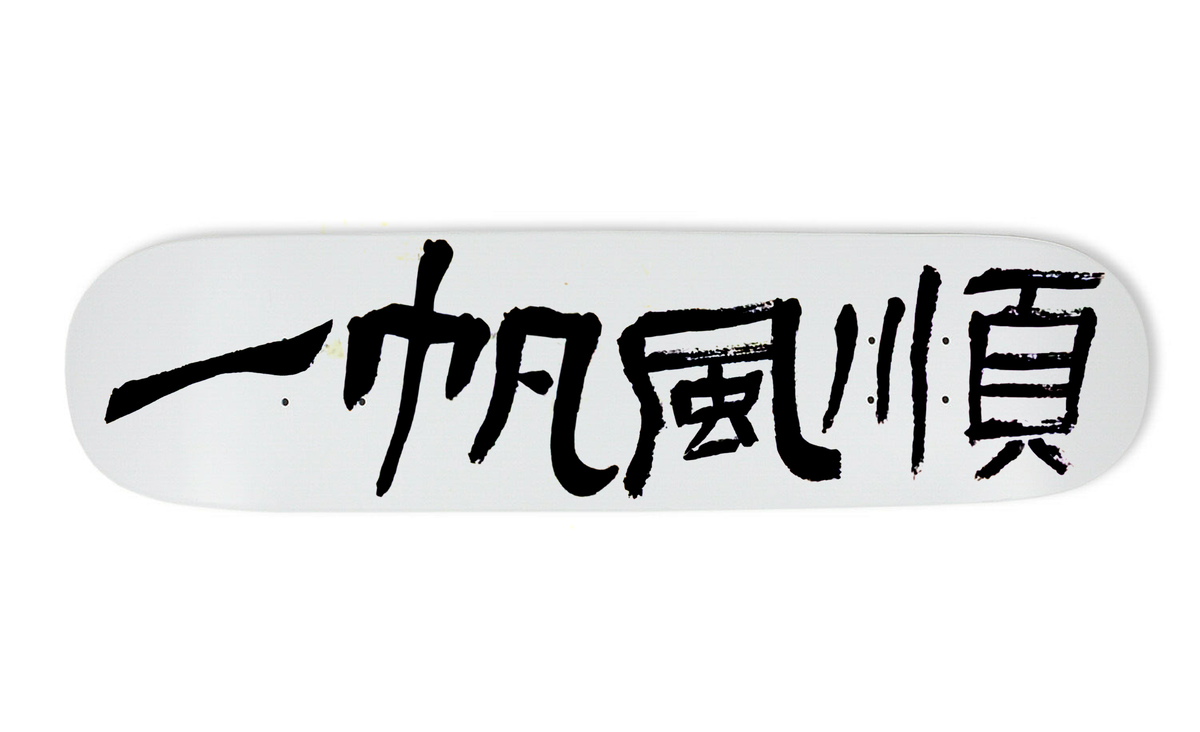
His work is deeply informed by Chinese calligraphy, which he’s been practicing since childhood. 

“What continues to interest me is its dual nature – it carries a deep historical and philosophical background, while also being highly expressive and embodied as a visual form."

caesar-calligraphy-1220x732
Coming from a bilingual, cross-cultural background, I became curious about how meaning shifts between languages and visual forms, and how design can both reflect and construct cultural identity.

He sees calligraphy not only as a historical artform, but as a living visual language that can evolve within contemporary design systems.

“In my work, I’m interested in how these qualities can be translated or reinterpreted within contemporary design contexts, particularly in dialogue with Western typographic systems,” he explains. 

At RMIT, Caesar found an environment that encouraged experimentation.

“The course offered space to experiment and develop ideas in depth,” he says.  

That experimental approach led to opportunities beyond the classroom, including an internship with Dr Fayen d’Evie which focused on digitising a handwritten diary from a Chinese gold miner during the Victorian Gold Rush. The project, later supported by the State Library of Victoria, combined archival research, language and design in an interdisciplinary way.

Now undertaking an ACMI residency while doing his PhD, Caesar’s recent projects include a video installation commissioned for the Melbourne Art Book Fair at the National Gallery of Victoria, as well as Fusion of Forms, an award-winning exploration of bilingual typography exhibited during Melbourne Design Week.

caesar-li-orient-and-reorient-1220x732

Liz Wang – animator and designer

For Liz Wang, who graduated from RMIT's Master of Animation, Games and Interactivity in 2024, the future of design is rooted in human connection – particularly through storytelling.

“For me, great animation is all about emotional resonance,” she says. “Whether it makes you laugh or moves you to tears, it has to touch the heart."

liz-wang-1220x732

Since graduating from RMIT, her career has taken her across many different industries and narratives.

“In a way, I’m constantly role-playing. Especially in the roles I've played in advertising. One day, I might be a deep-sea fisherman off the coast of Chile, diving into the story of how we source pure omega-3 from the freezing Pacific. The next day, I’m stepping into the shoes of a local baker, obsessed with the precision of every paper-thin layer of a croissant to get that perfect honeycomb centre. It’s a job that has allowed me to meet incredible people and see so many different worlds.”

Reflecting on her studies, Liz credits RMIT's supportive culture with giving her the confidence to push creative boundaries.

“The support I received from one of my tutors, especially Moon Hoang (who has since become a close friend!) has been incredible. She encouraged me to submit my animated short, Caffeinism, to international festivals, which led to being the official selection at the 2024 Melbourne International Animation Festival.”

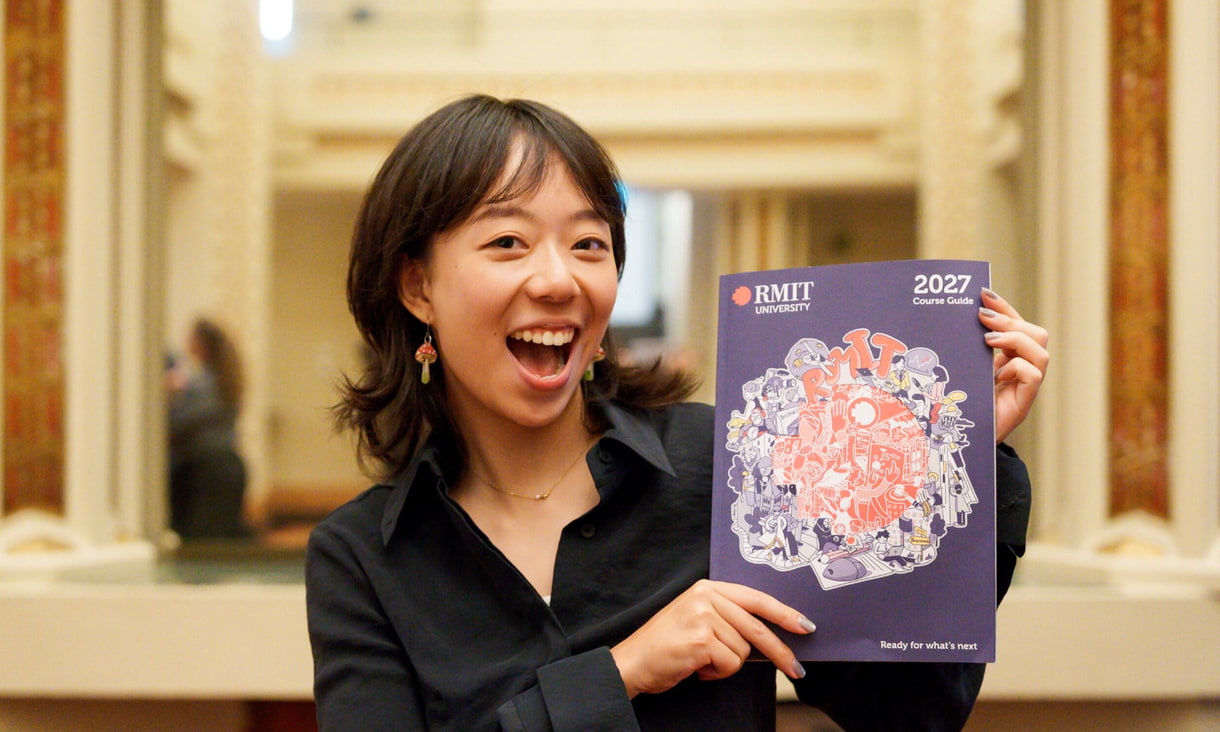
Additionally, Liz has just collaborated with RMIT on their 2027 course guide. 

liz-wang-1220x732

"The fact that I’m now collaborating with the university is the ultimate proof of their support. They actually open doors and provide a platform for international talent to showcase their work globally."

RMIT’s practical focus also played a direct role in launching her career. A dedicated portfolio-building course helped her graduate with an established online presence – a tool that immediately led to agency work and continues to attract freelance clients today.

RMIT didn't just teach me how to animate. They taught me how to brand myself as a professional.

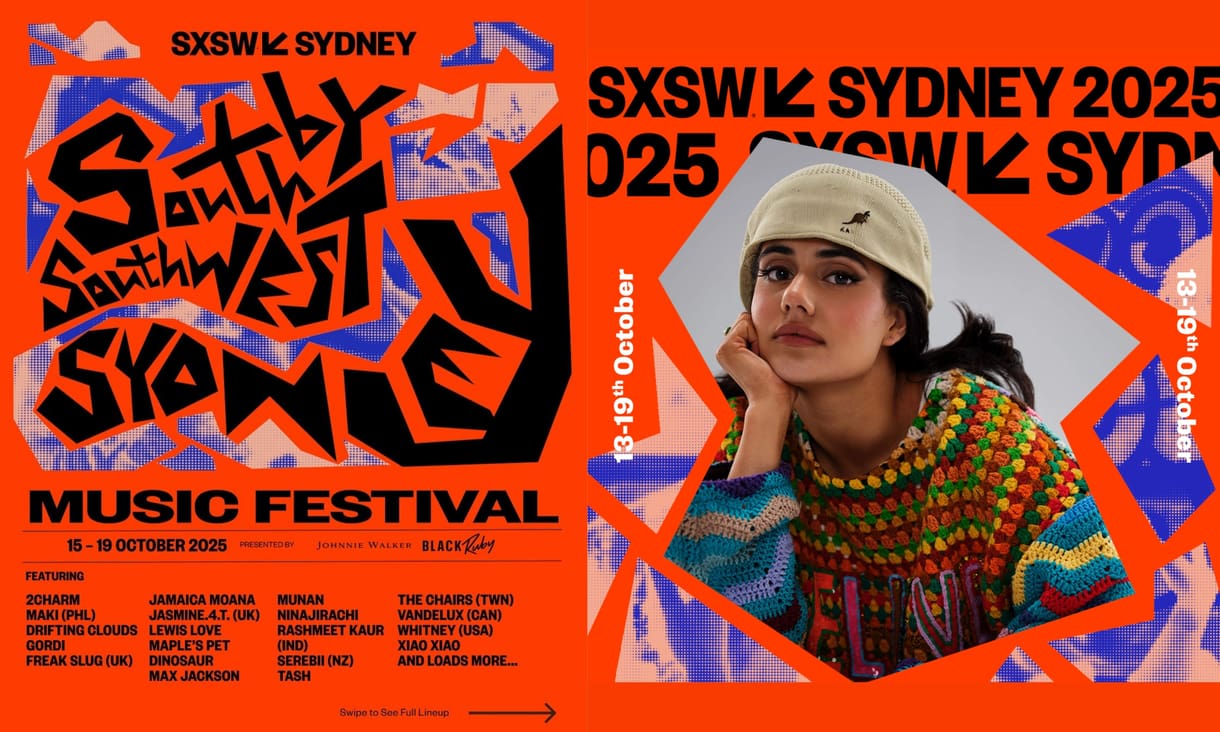
Since completing her studies, Liz has worked on several large-scale projects, including SXSW Sydney.

“I designed their complete brand system for the 2025 Music Festival. The visual direction draws inspiration from the vibrant pulse of live music, blending bold typography, rhythmic layouts, and experimental motion graphics to capture the atmosphere of the festival."

liz-wang-sxsq-artwork-1220x732

Looking ahead, Liz believes creative disciplines will continue to merge and evolve beyond traditional labels.

“We’re no longer just ‘graphic designers’ or ‘animators’,” she says. “We’re visual storytellers.”

It’s a sentiment shared by all three alumni: that the future of design is not confined to one tool, one medium or one discipline. Instead, it lies in the ability to connect ideas, cultures, technologies and people in meaningful ways.

Story: Sophie MacGillivray

aboriginal flag float-starttorres strait flag float-start

Acknowledgement of Country

RMIT University acknowledges the people of the Woi wurrung and Boon wurrung language groups of the eastern Kulin Nation on whose unceded lands we conduct the business of the University. RMIT University respectfully acknowledges their Ancestors and Elders, past and present. RMIT also acknowledges the Traditional Custodians and their Ancestors of the lands and waters across Australia where we conduct our business - Artwork 'Sentient' by Hollie Johnson, Gunaikurnai and Monero Ngarigo.

Learn more about our commitment to Indigenous cultures