How best to describe the late, great David Stratton? Film connoisseur? Cultural campaigner? Public intellectual? Much-loved TV personality? Scholar? Critic? Author? Former – and highly influential – director of the Sydney Film Festival?
Any and all of these would be true. Whether it’s through his 28 years of legendary sparring with his The Movie Show and At The Movies co-host Margaret Pomeranz (only six films ever achieved a five-star rating from both reviewers during their decade at the ABC), his various roles as presenter and curator on SBS, where for years he introduced the weekly SBS Cinema Classics, his instrumental role in opposing film censorship and establishing the R cinema rating, or as the subject of the 2017 documentary – and later series – David Stratton: A Cinematic Life, few people with an interest in screen culture would be unaware of him – and even fewer would have been able to watch and listen to him without thinking: wow, this person really knows about film.
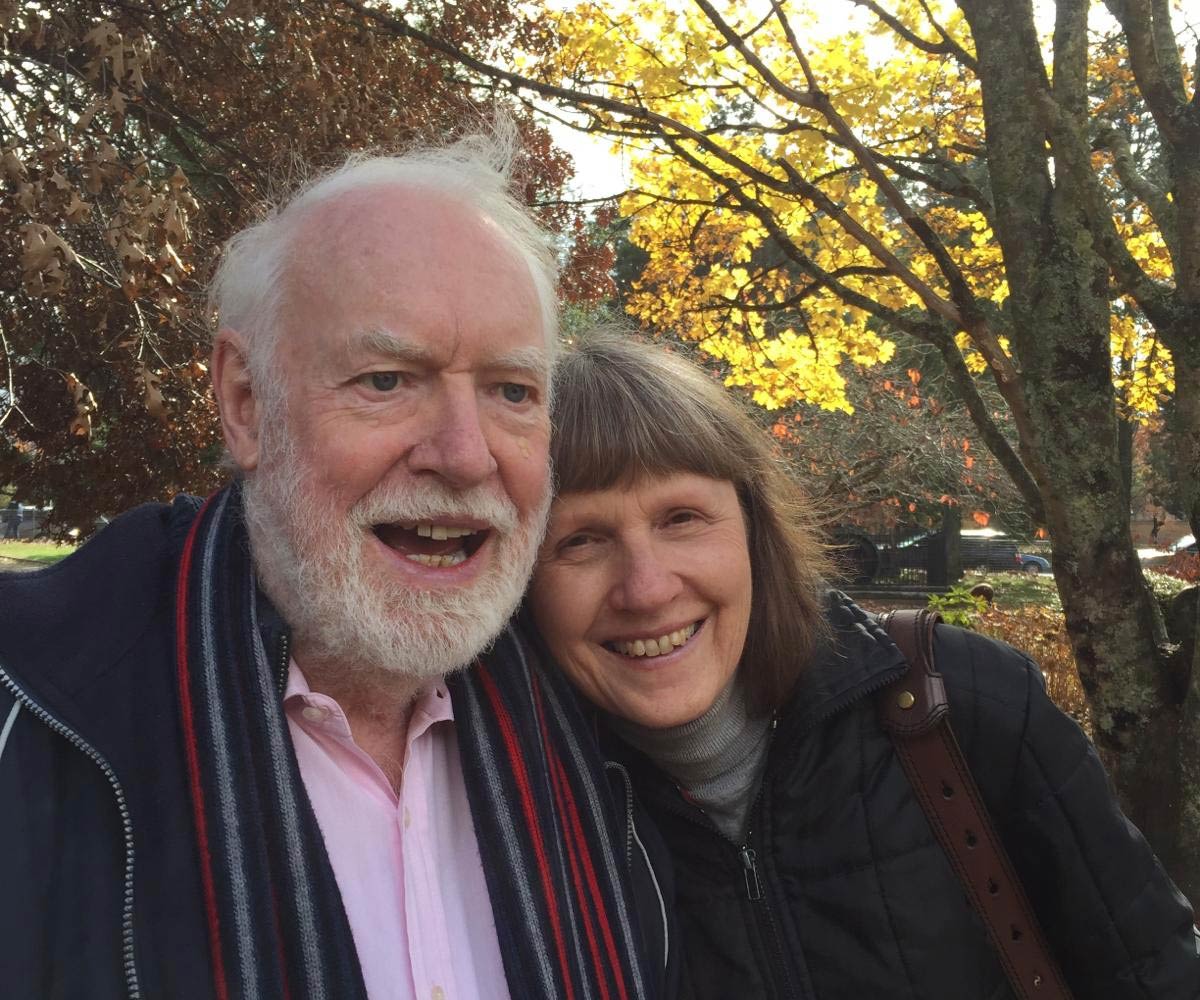
“He had a very good memory for films,” says Stratton’s wife, Susie Craig, who is visiting Melbourne from New South Wales to celebrate the David Stratton Archive, which she has gifted to RMIT’s Australian Screen Research Collection (ASRC) for use (and sheer admiration) by students, scholars, researchers, film enthusiasts and the general public. “People would often be talking about a film, and David would say, ‘Oh, yes, I saw that in such-and-such cinema in Berlin in 1982’ or whatever. He’d remember where he saw it and the date because he wrote detailed notes about every film he ever saw and would update the notes if he saw a film a second or third time.”
The Stratton Archive joins substantial donations already held by the ASRC, including the Fred Schepisi Collection and materials from the acclaimed producer Sue Maslin. The ASRC is also the custodian of the Australian Film Institute Research Collection, the Crawford Collection and the Australian Screen Plays collection.
Stratton’s archive, which is currently being moved in stages from David and Susie’s home in the Blue Mountains, includes his meticulous collection of cards, lecture notes from his 35 years teaching film history and world cinema at the University of Sydney’s Centre for Continuing Education, manuscripts for his books, including his 2008 memoir I Peed On Fellini, copious festival programming notes, wide-ranging correspondence, chronologically listed reviews, journals, photography and reel-to-reel interview recordings with world-famous stars and directors … Oh, and at least 25,0000 DVDs.
“It was thanks to his grandmother,” Susie says, when asked about David’s love of the medium.
Stratton grew in up England, before emigrating to Australia as a Ten Pound Pom in the early 1960s. “He was born in 1939. His father went off to the war, and his mother volunteered with the Red Cross, so they moved in with her parents, leaving his grandmother and grandfather to care for him.
“His grandmother loved cinema and, no matter what was showing, she would take him. In those days there were continuous showings, so sometimes they'd arrive and see the end of a film and then wait and see the beginning. He'd always write the details down, who was in it, who produced it etc, and got to learn that what appealed to him.”
Susie says Stratton would watch, at a minimum, one film a day at home, and often more – a dedication to his craft that opened doors for him throughout his career.
“He never applied for a job,” she says. “Shortly after arriving in Australia when he was 26, he was offered the directorship of the Sydney Film Festival, which he did for 18 years. And from there, he went from one thing to another – it just kept on going.”
Though Susie says it’s “bittersweet” to be handing over the collection, she’s happy it will be cared for in its entirety in its new surrounds, that it will be accessible to a broad audience and, more intimately, to the couple’s children and grandchildren.
Among its more unusual artefacts, she says, is a recovered Australian Security Intelligence organisation (ASIO) file on Stratton – begun, perhaps inevitably, during his years as a festival director in the late 1960s, during which he screened Soviet films and travelled to Russia.
“He was eventually able to get the file after 30 years,” Susie says. “Quite a bit of it is redacted, but there’s a funny note, from when he was going to get his visa for a trip to Russia, where they noted – horror of horrors – that he was wearing a red tie.”
She’s “particularly thrilled” that an ongoing RMIT fellowship has been renamed the RMIT David Stratton Screen Research Fellowship in his honour. In October, she attended an event at which the inaugural recipient, Australian film journalist Jake Wilson, was announced.
Wilson is acutely aware of Stratton’s legacy. “I wasn't around in the 70s when he was running the Sydney Film Festival,” he says. “But in the 80s and 90s, when he was programming the films for SBS, he chose all sorts of films from around the world that just wouldn’t have been seen in Australia otherwise, or at most would have been seen at a couple of festivals.
“For people of my generation there were a huge number of films we discovered only because David Stratton put them on TV and gave them context. In a really concrete way, he made Australia more cosmopolitan, more civilised, by expanding the options for what we could see.”
Wilson’s research project will culminate in a weekend-long screening program at the Bulleke-Bek Brunswick Cinema under the title Brought to Light: A Tribute to Cantrills Filmnotes. It will feature rare films documented in the review of independent film and video edited and published between 1971 and 2000 by experimental Melbourne filmmakers Arthur and Corinne Cantrill, with all films to be screened in their original format, whether 16mm, Super 8 or video.
Impressive though that is, he says the Stratton connection to his Fellowship has generated lots of discussion.
“I've had various people in and out of film culture say things to me about winning the Fellowship,” he says. “Much of that has been because it has David’s name on it, and everybody knows who he is.”
The practicalities of housing the Stratton Archive at RMIT are being handled by Olympia Szilagyi, Collection Coordinator at the ASRC, who visited the “barn” Stratton’s collection was housed in next to his and Susie’s home in NSW. Seeing the collection in its natural habitat was affecting: the floor-to-ceiling shelves of DVDs, his desk with its remote control for watching films, his extensive card catalogue, dated folders, recordings, photographs with autographs and annotations, and so much more.
“It was really moving to see it all,” she says. “You really got a sense of the care he put into organising all his material. As much as he was engaged with the actual films, he also had a particular process to the way he went about everything. He clearly lived a life where he was doing what he loved – that was obvious. Everything in the space reflected a real commitment and care, and it was wonderful to of see it all in situ.”
Szilagyi and colleagues are now engaged in the painstaking process of gathering the collection, caring for it and ensuring its longevity.
“It’s a responsibility,” she says. “I want to do it really well because I want to make sure it's available for the future as well as honouring David’s love of film. He is probably the last of his ilk in terms of film criticism and cultural criticism.”
RMIT Associate Professor of Cinema Studies and Media Adrian Danks agrees that Stratton was one of a kind, and says he’s looking forward to the Archive opening to the public in 2028.
“It’s hard to imagine someone like David coming around in the future,” he says. “The media landscape now is so much more atomised and fragmented. You don't have those on-air personalities in the way you once did.
“David was one of the people that everyone felt they knew whether they knew him personally or not. He was probably the key figure in the history of the Sydney Film Festival. Apart from his many roles on TV he was also deeply involved in screen education, and the author of a couple of major books on Australian cinema. There was always a legend about him, where people would say, ‘Oh, David's got this amazingly detailed card catalogue system’ and now we’ll be able to see that and study it in detail.
“The Archive is unique because David was unique. It will give us an interesting portrait – and probably the kind of portrait David would like of himself, I would imagine, rather than an actual picture.”
For Susie, of course, the bond with David was far more intimate than the rest of us might feel we had with him. After 46 years together, their relationship continues even now.
“I was going through a drawer in the kitchen recently, you know, one of those drawers that have all sort of things in them,” she says. “I found a pad inside it where he used to write down films that might be good to watch in the future, and I discovered a whole lot where he’d written ‘Susie’ next to them. So I can go through the pad and think, ‘These are all these films that he, at some stage, thought I should watch’. I’ve started doing that, and I tick them off them off as I go. He's still curating my movie watching.”