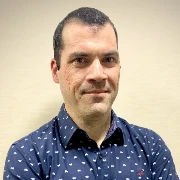
Felipe Carpes
Details
 College: School of Health and Biomedical Sciences
 Department: Health and Biomedical Sciences
 felipe.carpes@rmit.edu.au

About
Dr. Carpes is a Full Professor at the Federal University of Pampa, Brazil. He has been a Visiting Professor at the Universitat de València (Spain) and the Technische Universität Chemnitz (Germany), and is currently an adjunct professor (by courtesy) at RMIT.
Dr. Carpes holds a Ph.D. in Human Movement Sciences from the Federal University of Rio Grande do Sul (Brazil), with pre- and postdoctoral visiting periods at the University of Calgary (Canada) and KU Leuven (Belgium).
He currently serves as President of the International Society of Biomechanics (ISB, 2025–2027), is a member of the ISBS Diversity, Equity, and Inclusion Committee, and previously served as President of the Brazilian Society of Biomechanics, in addition to other board roles.
Dr. Carpes is also committed to science outreach and the global development of biomechanics. He serves as Vice-President of The Biomechanics Initiative and actively supports the growth of biomechanics in Economically Developing Countries (EDC), fostering new research groups and scientific societies.
He believes that promoting equity and diversity strengthens biomechanics research and advances the field in an increasingly complex world.
He is active on social media, including YouTube (NeuromechTV), the podcast Biomecast, and on Instagram and Bluesky (@felipecarpes).

UN sustainable development goals
- 4 Quality Education
- 3 Good Health and Well Being
- 10 Reduced Inequalities

Teaching interests
Dr. Carpes teaches at the Federal University of Pampa in Brazil at both the undergraduate and graduate levels. His courses include biomechanics, functional anatomy, scientific writing, and neural control of human movement.

Research interests
His research focuses on understanding the production and regulation of movement in humans and pre-clinical models, with applications to training and rehabilitation.
His work addresses acute effects of physical exercise on neuromuscular and cognitive systems, sports performance (including neuromuscular control, kinetics, and kinematics of running, cycling, and jump-landing tasks), gait and balance (foot and ankle proprioception, neuropaties and movement control) and soft tissue injury prevention and rehabilitation (muscle, ligaments, and tendons).




