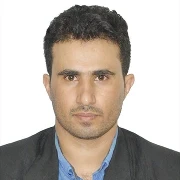
Dr. Nabil Farah
Details
 College: School of Engineering
 Department: School of Engineering
 Campus: City Campus Australia
 nabil.farah@rmit.edu.au
 ORCID: 0000-0002-0269-729X
Open to
- Industry Projects
- Collaborative projects
- Teaching provision
About
Dr. Nabil Farah is a Research Fellow in the School of Engineering at RMIT University, working at the intersection of machine learning and electrical machine control. He holds a PhD in Electrical Engineering from the University of Technology Sydney (2024), with a research background in data-driven and AI-based control of Permanent Magnet Synchronous Machine (PMSM) drives. His current work extends this expertise to zero-emission bus (ZEB) depot electrification and EV charging infrastructure, combining control theory, power electronics, and machine learning to support the transition to sustainable transport and energy systems. He has authored or co-authored over 20 peer-reviewed journal articles and more than 10 conference papers, and has hands-on experience in experimental validation using dSPACE systems, FPGA, Microcontroller, and custom motor drive testbenches.

Research fields
- 400806 Electrical machines and drives
- 4611 Machine learning
- 400705 Control engineering
- 400803 Electrical energy generation (incl. renewables, excl. photovoltaics)
- 460207 Modelling and simulation

UN sustainable development goals
- 7 Affordable and Clean Energy
- 11 Sustainable Cities and Communities
- 13 Climate Action
- 9 Industry, Innovation and Infrastructure

Academic positions
- Research Fellow
- RMIT University
- School of Engineering
- Melbourne, Australia
- 30 Mar 2026 – Present
- Research Associate
- University of Technology Sydney
- Faculty of Engineering and IT
- Sydney, Australia
- 19 May 2024 – 19 Dec 2024
- Casual Lecturer
- Melbourne Institute of Technology
- Sydney, Australia
- 15 Sep 2023 – 14 Nov 2025
- Graduate Research Assistant
- Technical University of Malaysia Malacca
- Electrical Engineering
- Malacca, Malaysia
- 15 Jun 2017 – 21 Nov 2020

Teaching interests
- Electrical machine drives and power electronics, including motor control, inverter design, and drive system analysis
- Control systems engineering, from classical PID to advanced and predictive control techniques
- Machine learning and AI applications in engineering, including neural networks for real-time control and classification tasks
- MATLAB/Simulink modelling and simulation for engineering design and control system prototyping
- Renewable energy systems and electric vehicle/transport electrification technologies
- Embedded systems and hardware prototyping, including microcontroller-based control implementation
- Programming fundamentals (MATLAB, C++, Python) for engineering students
- Project-based and experiential learning, supervising undergraduate final-year and capstone projects

Research interests
- Machine learning and AI-based control of electric machine drives (PMSM and induction motors)
- Zero-emission bus (ZEB) depot electrification and infrastructure planning
- EV charging systems and smart grid/community battery integration
- Robust, predictive, and model-free control of AC machine drives
- Resilient and fault-tolerant motor drive design
- Sustainable transport electrification and renewable energy integration




