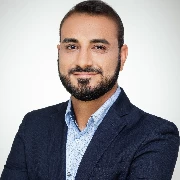
Dr. Shah Khalid Khan
Details
 College: School of Accounting Information Systems & Supply Chain
 Department: Accounting, Info Sys & Supply Chain
 Campus: City Campus Australia
 shah.khalid.khan2@rmit.edu.au


About
With over 15 years of combined experience in advanced research, industry application, and tertiary education, Dr. Shah Khalid Khan has established himself as an accomplished professional in cyber security, particularly at the critical intersection of technology and business. His career demonstrates a consistent commitment to excellence, leveraging deep technical expertise to produce high-impact research, deliver industry-relevant teaching, and lead significant international capacity-building initiatives. His work has been recognized with prestigious awards from bodies such as the Institute of Transportation Engineers and the Australian Transport Research Forum.

Research fields
- 3509 Transportation, logistics and supply chains
- 4001 Aerospace engineering
- 4007 Control engineering, mechatronics and robotics
- 4009 Electronics, sensors and digital hardware
- 4010 Engineering practice and education
- 4012 Fluid mechanics and thermal engineering
- 4602 Artificial intelligence
- 4604 Cybersecurity and privacy
- 4605 Data management and data science
- 4608 Human-centred computing

Teaching interests
Dr. Khan’s pedagogical approach is defined by translating complex technical concepts into accessible, applied learning for both university students and industry professionals. He has a proven ability to design and deliver engaging curricula across undergraduate, postgraduate, and professional development contexts.
His accomplishments include serving as the instructor for RMIT’s national "Cyber Security Foundations for Business Professionals" micro-credential, where he designed content to bridge technical principles with strategic business risk. Furthermore, he successfully led the design and delivery of the large-scale "Building Cyber Resilience Across the Indo-Pacific" program (2023-2025). Funded by the Australian Department of Foreign Affairs and Trade (DFAT), this initiative trained over 3,000 government and industry professionals in Vietnam and Cambodia, receiving outstanding feedback and securing extended funding due to its measurable impact.

Research interests
Dr. Khan's research exemplifies interdisciplinary innovation in cyber security, specifically addressing the complex risks within modern cyber-physical systems. His work navigates the nexus of technological vulnerability, human factors, and strategic business impact, with a specialised focus on autonomous systems. His contributions have garnered significant academic recognition, evidenced by an impressive Field-Weighted Citation Impact (FWCI) of 2.76 and over 1,689 citations.
His research program is strategically centred on:
-
Securing Autonomous and Cyber-Physical Systems: Developing novel models to quantify and mitigate cyber risks in autonomous vehicles, space infrastructure, and maritime systems, linking technical security directly to commercial viability.
-
Informing Policy and Strategic Defence: Conducting applied research for government and defence stakeholders, including co-leading Category 1 projects for the Australian Department of Defence on space cybersecurity and trade threats.
-
Bridging Technical and Business Domains: Translating complex cyber threats into actionable business intelligence and risk management strategies for organisational leaders.
Research Keywords: cyber security, autonomous vehicles, cyber-physical systems, risk modelling, system dynamics, threat analysis, critical infrastructure protection, space cybersecurity, business resilience, policy, human factors, supply chain security



