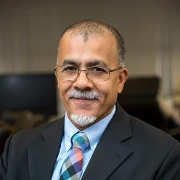
Professor Shekhar Kumta
Details
 College: School of Health and Biomedical Sciences
 Department: Health and Biomedical Sciences
 Campus: Bundoora West Australia
 shekhar.kumta@rmit.edu.au
Open to
- Collaborative projects
- Masters Research or PhD student supervision
- Industry Projects
- Mentoring (long-term)
- Technical support
- Join a web conference as a panellist or speaker
- Career advice
About
Professor Shekhar Kumta is a distinguished clinician-academic with nearly five decades of experience spanning surgery, translational research, and medical education across three continents. He trained at the Lokmanya Tilak Municipal Medical College, Mumbai, where he earned his MBBS and Master of Surgery (Orthopaedics) before joining the Chinese University of Hong Kong (CUHK) in 1989 — a tenure of 33 years that culminated in his appointment as Emeritus Professor. At CUHK, he pioneered Hong Kong's first multidisciplinary orthopaedic oncology programme, developing landmark innovations in paediatric joint-sparing sarcoma resections, computer-navigation surgery, and 3D-printed patient-specific implants. Since 2022, he has served as Professor of Surgery at Northern Hospital and, from January 2025, as Head of the Department of Clinical Translational Research at RMIT University–Northern Health — a founding leadership role in the AUD 50 million Medicine 2050 Research Program, Victoria's most ambitious clinical-translational enterprise. He holds Fellowship of the Royal College of Surgeons of Edinburgh (ad hominem) and Honorary Fellowship of the Hong Kong College of Orthopaedic Surgery, and has attracted over AUD 10 million in competitive grant income across his career.

Research fields
- 32 Biomedical and clinical sciences
- 321199 Oncology and carcinogenesis not elsewhere classified
- 320602 Medical biotechnology diagnostics (incl. biosensors)
- 510203 Nonlinear optics and spectroscopy
- 461199 Machine learning not elsewhere classified
- 320216 Orthopaedics
- 320226 Surgery
- 320504 Medical biochemistry - lipids

UN sustainable development goals
- 1 No Poverty
- 4 Quality Education
- 9 Industry, Innovation and Infrastructure
- 3 Good Health and Well Being
- 16 Peace, Justice and Strong Institutions

Academic positions
- Emeritus Professor
- The Chinese University of Hong Kong
- Hong Kong SAR
- 1 Aug 2022 – Present
- Honorary Professor
- The Chinese University of Hong Kong
- Orthopaedics & Traumatology
- Hong Kong, Hong Kong SAR
- 1 Aug 2022 – Present

Supervisor projects
- Spectroscopic Quantification and Clinical Validation of Protein Glycation as a Diagnostic Biomarker
- 7 May 2026
- NanoZyme Sensors for Color-Based Environmental, Food, and Clinical Analysis
- 12 Dec 2025
- Nanosensors for point-of-care detection of environmental, food, agriculture, and clinical analytes.
- 1 Dec 2025
- Developing a machine learning model using multimodal spectroscopy with Raman and Near Infrared Spectroscopy to differentiate cancer, fibrotic and normal rectal tissue in rectosigmoid resection specimens following neoadjuvant therapy for rectal cancer
- 5 Sep 2025
- Development of Nucleic Acid Aptamer-Based Biosensors for Point of Care Detection of Mycobacterium tuberculosis
- 16 Jul 2025
- Nanosensors for point-of-care detection of environmental, food, agriculture, and clinical analytes
- 1 Jul 2025

Teaching interests
Professor Kumta is an internationally recognised educator whose commitment to transformative teaching has been honoured with the most prestigious awards in tertiary medical education. He is a recipient of the UGC Award for Teaching Excellence in Tertiary Education (University Grants Commission, HKSAR Government, 2012) - the highest teaching honour in Hong Kong — as well as the Vice-Chancellor's Exemplary Teaching Award (CUHK, 2012), the AMEE Henry Walton Prize for contribution to excellence in medical education in Europe (2015), and multiple Faculty of Medicine Outstanding Teacher Awards (CUHK, 2001 and 2008). Over more than three decades at CUHK, he served as Assistant Dean of Medical Education (2008–2022), led two major curricular reforms, coordinated undergraduate and internship training, and developed restorative professionalism programmes for students and residents. At RMIT-Northern Health, he continues this legacy by teaching musculoskeletal assessment to University of Melbourne medical students, supervising PhD and Masters candidates in spectroscopy-based research, and organising institution-wide research weeks and surgical skills workshops -embodying a lifelong dedication to mentorship, academic rigour, and the holistic development of the next generation of clinicians.

Research interests
Professor Kumta's current research programme centres on the clinical application of vibrational spectroscopy and the development of point-of-care (POC) diagnostic platforms for critical care conditions, including renal dysfunction and sepsis. He established Victoria's first — and only — multi-modal Clinical Spectroscopy Facility at the Northern Centre for Health Education and Research (NCHER), where his team deploys FTIR, Raman, and surface-enhanced Raman spectroscopy (SERS) to identify novel biomarkers in plasma, serum, and biological fluid aspirates, with active HREC-approved projects spanning orthopaedics, oncology, surgery, and haematology. In parallel, he leads the clinical validation arm of the CRC-funded STREPSURE biosensor project (AUD 7.5 million, 2024–2027) — an ultra-sensitive nano-sensor platform for Group B Streptococcus detection — and directs POC renal biomarker research targeting urinary cystatin-C, KIM-1, and NGAL for early acute kidney injury diagnosis in critically ill patients. Collaborating with international spectroscopy leaders, including Professor Isaac Aafra (University of Eastern Finland) and industry partners such as PerkinElmer, Renishaw, and Metrohm, his translational research bridges engineering science with clinical practice to deliver next-generation diagnostic tools at the bedside



