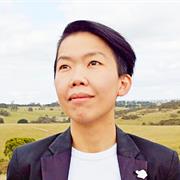
Associate Professor Li Ping Thong
Details
 College: School of Design
 Department: School of Design
 Campus: City Campus Australia
 liping.thong@rmit.edu.au


Open to
- Masters Research or PhD student supervision
- Media enquiries
- Industry Projects
- Collaborative projects
- Join a web conference as a panellist or speaker
- Membership of an advisory committee
About
Associate Professor Li Ping Thong is the Associate Dean of Digital Design at RMIT University’s School of Design, where she leads the School’s largest discipline area across Games, Animation, Digital Media and the Master of Animation, Games and Interactivity (MAGI). With more than 20 years of international teaching, curriculum and academic leadership experience across Malaysia, Vietnam and Australia, she is a digital design educator, researcher and academic leader with deep expertise in digital media, curriculum innovation, emerging technologies and practice-led digital education.
Key Highlights
- Associate Dean of Digital Design, leading the School of Design’s largest discipline area across Games, Animation, Digital Media and MAGI.
- Over 20 years of international teaching, curriculum and academic leadership experience across Malaysia, Vietnam and Australia.
- Expertise across UX, UI, interaction design, serious games, immersive media, digital storytelling and digital design education.
- More than $1.2 million in research income across interdisciplinary projects with government, industry, education and community partners.
- Chief Investigator on the ARC Linkage project Young Creators Lab: Gaming the Curriculum.
- Public speaker and media commentator on digital design, emerging technologies, user experience, digital inclusion, education and the social impact of design. Selected Media Appearances | Selected Speaking Engagements
Li Ping’s work sits at the intersection of digital design, emerging technologies, education, sustainability and community impact. Her practice and research span Virtual Reality (VR), Augmented Reality (AR), Serious Games, User Experience (UX) Design, User Interface (UI) Design, Interaction Design, Digital Storytelling, Web and App Development, and creative digital content production. Across these areas, her focus is on building thoughtful and future-facing digital media experiences that connect technological innovation with real-world social, cultural and environmental questions.
Since 2017, Li Ping has secured and contributed to more than $1.2 million in externally funded research, industry and community-engaged projects across education, road safety, food systems, sustainability, cultural heritage and digital inclusion. She is a Chief Investigator on the ARC Linkage project Young Creators Lab: Gaming the Curriculum, a national research collaboration exploring how game-based learning can support young people’s creativity, digital capability and wellbeing. Her broader research portfolio includes partnerships with industry, government, education and community organisations, including the Australian Automobile Association, End Food Waste Australia, Foodbank Australia, Federation Square, Melbourne Girls Grammar School and Golden Plains Shire Council.
Li Ping is also an active public speaker and media commentator on digital design, emerging technologies, user experience, digital inclusion, immersive media, education and the social impact of design. She has contributed to public conversations through national television, radio and podcast interviews, including ABC News and ABC Radio and has delivered keynotes, public talks and invited presentations on the future of design, digital media education, place-based practice, and learning and teaching in a changing technological landscape.
As a CALD (Culturally and Linguistically Diverse) leader in design and technology, Li Ping brings a perspective shaped by lived experience, long-term regional engagement and deep cross-cultural experience across Southeast Asia and Australia. She is known for her clarity, strategic thinking and ability to build collaborative environments where new ideas, practices and partnerships in digital design can take shape and gain momentum.
Outside her academic role, Li Ping stewards a 32-acre rural property in regional Victoria. This hands-on, analogue and land-based practice increasingly informs how she thinks about digital design, education and leadership. The duality of city and land, code and soil, digital systems and living systems shapes her land-based digital practice: not only as a site of technical innovation, but as a discipline that must also grapple with place, culture, ecology, resilience and long-term repair.
Her current work explores how digital media design can move beyond extractive models of technological development toward more regenerative frameworks and more-than-human interaction design. This includes her emerging Farm Lab practice, where the rural property operates as a methodological setting for examining physical-digital convergence, environmental interaction, more-than-human design and regenerative systems.
Li Ping is open to connecting with industry collaborators, educators, researchers, digital media professionals, designers and community partners working across VR, AR, UX, serious games, digital storytelling, immersive media, learning technologies, sustainability and regenerative systems.
Areas of Expertise
Immersive & Emerging Technologies
Virtual Reality (VR), Augmented Reality (AR), Extended Reality (XR), Mixed Reality (MR), Immersive Technologies, Spatial Computing
Game & Interactive Systems
Serious Games, Game-Based Learning, Game Design, Simulation Design, Interactive Media, Interactive Storytelling
Design & Creative Production
2D/3D Animation, Motion Design, Digital Storytelling, Creative Content Production, Digital Illustration, Content Development
UX, UI & Human-Centred Design
User Experience (UX) Design, User Interface (UI) Design, Human-Centred Design, Digital Environments, Web Design and App Development
Education, Culture & Digital Pedagogy
Technology-Enhanced Learning, Digital Learning Environments, Design Pedagogy, Education Technology (EdTech), Digital Media, Digital Design, Culture and Heritage

Media

Research fields
- 360503 Digital and electronic media art
- 3605 Screen and digital media
- 460706 Serious games
- 4607 Graphics, augmented reality and games
- 360504 Interactive media
- 460910 Information systems user experience design and development
- 460708 Virtual and mixed reality
- 3303 Design
- 390405 Educational technology and computing
- 430205 Heritage and cultural conservation

UN sustainable development goals
- 4 Quality Education
- 2 Zero Hunger
- 15 Life on Land
- 10 Reduced Inequalities

Academic positions
- Associate Professor (Digital Design)
- RMIT University
- School of Design
- Melbourne, Australia
- 1 Jan 2025 – Present
- Associate Dean (Digital Design)
- RMIT University
- School of Design
- Melbourne, Australia
- 1 Feb 2024 – Present
- Senior Lecturer (Digital Media),
- RMIT University
- DSC|School of Design
- Melbourne, Australia
- 1 Feb 2021 – 31 Dec 2024
- Program Manager (Digital Media)
- RMIT University
- DSC|School of Design
- Melbourne, Australia
- 1 Jan 2018 – 31 Dec 2020
- Lecturer (Digital Media)
- RMIT University
- School of Design
- Melbourne, Australia
- 1 Jan 2018 – 31 Dec 2020
- Associate Lecturer (Digital Media)
- RMIT University
- School of Design
- Melbourne, Australia
- 14 Feb 2015 – 31 Dec 2017
- Senior Lecturer (Design - Multimedia Systems)
- RMIT Vietnam
- DSC|School of Design
- Ho Chi Minh City, Vietnam
- 1 Jan 2014 – 1 Jan 2015
- Lecturer (Design - Multimedia Systems)
- RMIT Vietnam
- School of Design
- Ho Chi Minh City, Vietnam
- 1 Jan 2008 – 1 Jan 2013
- Lecturer
- Taylor's University
- School of Mass Communication
- Subang Jaya, Malaysia
- 1 Jan 2006 – 31 Dec 2008

Non-academic positions
- Photographer/Graphic Designer
- Fotorex Holdings
- Kuala Lumpur
- 1 Apr 2005 – 30 Apr 2005
- AV Application Specialist
- Taylor's University
- Subang Jaya, Malaysia
- 1 Jan 2005 – 31 Dec 2006
- Designer
- Hunter Studios
- Kuala Lumpur
- 1 Jan 2005 – 31 Dec 2008
- Animator/Line Artist
- FAT Lizard
- Kuala Lumpur)
- 1 Apr 2004 – 31 Dec 2004
- Animator/Graphic Designer,
- Flextronics Asia
- Kuala Lumpur
- 1 Jan 2004 – 1 Jan 2005

Supervisor projects
- Heritage Reimagination: A Framework for Envisioning Design Futures from Digital Cultural Heritage
- 5 Sep 2025
- Crafting Vietnamese Digital Heritage: Navigating Cultural Hybridity through Interactivity and Extended Reality Design Practice.
- 23 Feb 2024
- Mind You!: A Card Game Design for Learning the Pragmatics of a Second Language
- 1 Apr 2019
- Designing an Immersive Virtual Reality Classroom to Assist Pre-service Teachers with Supporting Low-level Challenging Behaviours
- 20 Sep 2018
- Towards Developing an Effective Virtual Reality Instructional Tool for Secondary Students Learning English as a Foreign Language in Saudi Arabia
- 2 Jul 2018
- Volumetric Light Sculptures: Occupying the Space Between the Apparatus and the Image
- 12 Feb 2018

Teaching interests
Work-Integrated Learning (WIL) Studio Courses – Selected Projects
Li Ping has led and supervised a range of Work-Integrated Learning (WIL) studio courses focused on digital media design, immersive technologies, and industry collaboration. These projects integrate real-world design challenges with emerging technologies such as Virtual Reality (VR), Augmented Reality (AR), UX/UI design, and interactive media, preparing students to work across digital design, social impact, and creative industries.
Selected WIL Projects
- Golden Plains Stories (2022) - Externally funded WIL project focused on digital storytelling and community heritage
- Remembering Australian Army Nurses (2021) - Externally funded WIL project using interactive digital media to explore untold histories
- Design for All Studio with Foodbank and YWaste App (2020) - CRC-funded WIL project exploring UX, service design, and social impact
- Digital Media Creative Collaboration (2018, 2019) - International study tours funded by DFAT, focused on cross-cultural digital collaboration
- Xperience VR (2017) – Industry-funded project focused on virtual reality experience design in partnership with external clients
These WIL studios have engaged students in designing and producing real-world immersive media and environments, interactive storytelling, and UX-driven content for diverse audiences.
Core Digital Media and Design Courses Taught (Selected):
Li Ping regularly teaches and develops courses across immersive media and environments, interactive digital design, and advanced content production, covering areas such as:
- Digital Media Studio - Focused on Virtual Reality (VR), Augmented Reality (AR), UX/UI design, and web development
- Interactive Media - Emphasising user interaction, interface behaviour, and creative coding
- Advanced Electronic Imaging - Covering advanced techniques in digital illustration and concept visualisation
- Advanced Web Authoring - Front-end web design and development with responsive frameworks
- Advanced 3D Imaging and Animation - Production and post-production pipelines for 3D content
- Content Design Project - Industry-aligned motion design and creative content production

Research interests
Li Ping’s research is grounded in applied digital design, with a focus on how emerging digital media technologies can address real-world social, cultural, educational and environmental challenges. Her work spans immersive media, Virtual Reality (VR), Augmented Reality (AR), Serious Games, User Experience (UX) Design, User Interface (UI) Design, Interaction Design, digital storytelling, learning technologies, simulation-based environments and practice-led digital design research.
Across these areas, Li Ping is interested in the design of interactive systems that are not only technically innovative, but also meaningful, situated and socially engaged. Her research brings together design practice, user-centered methods, digital media production and interdisciplinary collaboration across sectors including education, road safety, food waste, sustainability, cultural heritage, health and wellbeing and community engagement.
Since 2017, Li Ping has secured and contributed to more than $1.2 million in research income across projects with government, industry, education and community partners. She is a Chief Investigator on the ARC Linkage project Young Creators Lab: Gaming the Curriculum, a national research collaboration exploring how game-based learning can support young people’s creativity, digital capability, student-led learning and wellbeing.
An emerging focus in Li Ping’s creative practice research is Farm Lab, a land-based digital design practice developed through her 32-acre rural property in regional Victoria. Farm Lab examines how digital systems behave when they are situated within environmental conditions that are unstable, material and beyond human control. Through this work, she explores physical-digital convergence, environmental interaction, more-than-human design and the role of place in shaping digital practice.
Selected Research Projects
Young Creators Lab: Gaming the Curriculum (LP250200607)
ARC Linkage (CAT 1) | Chief Investigator | 2026–current
A national research collaboration exploring how game-based learning can support young people’s creativity, digital capability, student-led learning and wellbeing.
Deadly Safe Driving: Virtual Reality Hazard Perception Training for Young First Nations Drivers
National Road Safety Action Grants (CAT 1) | Chief Investigator | 2025–2027
A VR and serious games project developing hazard perception training for young First Nations drivers through immersive simulation and user-centred digital intervention.
The Road to Safer Walking: Improving Hazard Perception in Older Adult Pedestrians
Australian Automobile Association (CAT 3) | Chief Investigator | 2023–2026
An interdisciplinary project using immersive simulation, user-centred design and digital intervention to improve hazard perception and safe street-crossing decisions among older pedestrians.
Quick Service Restaurants Sector Action Plan
End Food Waste Australia / Fight Food Waste CRC (CAT 4) | Lead Chief Investigator | 2023–2025
A national sector-wide research project addressing food waste in the quick service restaurant industry through research translation, stakeholder engagement and sector action planning.
Community Banashi
Australia–Japan Foundation Grant (CAT 1) | Chief Investigator | 2021–2023
A digital storytelling project connecting community knowledge, cultural exchange, digital media practice and Australia–Japan collaboration.
Golden Plains Stories: Community History Web Museum
Public Record Office Victoria and Golden Plains Shire Council (CAT 2) | Lead Chief Investigator | 2021–2023
A digital heritage project documenting and preserving regional histories through an interactive community history web museum.
Angels of War: Remembering Australian Army Nurses
Victoria Remembers Grant and Federation Square (CAT 2) | Lead Chief Investigator | 2021–2022
An immersive AR/VR exhibition project exploring public memory, wartime history and the stories of Australian Army nurses.
Foodbank Meals via YWaste App: User Experience Research
Fight Food Waste CRC, Foodbank Australia and YWaste (CAT 4) | Lead Chief Investigator | 2019–2021
A UX research project examining how digital food redistribution platforms can support food relief, reduce food waste and improve user engagement.
XperienceVR Studio
Porter Davis (CAT 3) | Lead Chief Investigator | 2017
An industry-engaged virtual reality project exploring immersive architectural visualisation and digital design applications for residential housing.
Emerging practice-led research
Farm Lab
Practice-led digital design research | 2026–current
A land-based digital design research practice using Li Ping’s 32-acre rural property as a methodological setting for examining physical-digital convergence, environmental interaction, more-than-human design and regenerative systems.
The Wind Writes
Creative practice-led research project | 2026
A site-responsive digital work exploring environmental agency, wind-driven interaction, unstable interfaces and more-than-human approaches to interaction design.
For more information about Li Ping’s research projects and creative practice, visit her research page: https://liping.com.au/research/
Research interests
- Virtual Reality (VR), Augmented Reality (AR) and immersive media
- Serious games for learning, training and behavioural change
- User Experience (UX) and User Interface (UI) Design
- Interaction Design and interactive systems
- Digital storytelling, digital heritage and place-based media
- Simulation-based learning and digital education
- Technology-enhanced learning and curriculum innovation
- Food systems, sustainability and digital social impact
- More-than-human design, environmental interaction and land-based digital practice




