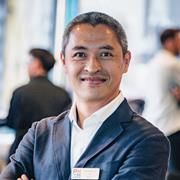
Dr. Tiendung (TJ) Le
Details
 College: School of PCPM
 Department: School of PCPM
 Campus: City Campus Australia
 tiendung.le@rmit.edu.au
 ORCID: 0000-0002-6048-8883
 LinkedIn
Open to
- Masters Research or PhD student supervision
- Collaborative projects
- Career advice
- Join a web conference as a panellist or speaker
- Membership of an advisory committee
- Media enquiries
- Mentoring (long-term)
About
Dr Tiendung (TJ) Le is a passionate educator and researcher in project management. He is a pioneer in using the case method in project management education, and has played a leading role in bringing this discussion-based pedagogy into the field. Through facilitated discussion, he helps students learn to analyse deeply, think critically, make decisions with incomplete information, and engage constructively with different points of view. He believes this is one of the most effective ways to prepare professionals for a life of learning and growth. His teaching aims to develop well-rounded project professionals and leaders with judgement, confidence, agility, and audacity. In recognition of his contribution to teaching, he received the DSC College Teaching Award in 2022.
TJ is a strong advocate for students and for the broader development of the project management profession. As Program Manager of the Master of Project Management from 2018 to 2024, he mentored many students at RMIT and was instrumental in supporting project management students to build their student society into one of the largest and most successful clubs of its kind in Australia. He also helped the society become the first PMI student club in Australia. Under his guidance, many students have gone on to become active members, volunteers, and leaders in professional bodies such as PMI and its local chapters. TJ was instrumental in a number of innovations in the teaching and curriculum of the MPM program, including the introduction of new courses that align well with the new development and requirements of the industry.
As a researcher, TJ focuses on how project success is shaped well before delivery begins. His work centres on front end planning, project delivery systems, and agility in projects. He is particularly interested in how front end planning can be both rigorous and adaptive in the face of uncertainty; how owners and project parties can work together through project delivery systems (procurement methods) that promote collaboration, sustainability, good governance, and value creation; and how projects and their participants develop agility and apply Agile and Lean principles to maximise learning and value delivery. TJ is also deeply committed to developing future project leaders and to advancing the quality and impact of project management education through research collaboration.
TJ brings a combination of academic and industry experience from Australia, the United States, and Vietnam. While completing his doctoral studies at The University of Texas at Austin, he worked mainly in front end planning and risk management under the supervision of Dr Carlos Caldas and Dr G. Edward Gibson Jr. He later moved to Vietnam, where he worked in senior management roles in real estate development, co-founded a project management consulting and training company, and trained scores of practitioners. Before joining RMIT full-time in 2015, he also taught in Vietnam at the National University of Civil Engineering and at RMIT Vietnam.
Beyond the university, TJ is an active leader in the profession. He sees leadership as service and empowerment. He served for seven years on the PMI Melbourne Chapter Board, including as President and Immediate Past President. Under his leadership, the chapter won PMI Global’s Chapter of the Year Award in 2024. He also co-founded and chaired the PMI Asia Pacific Agile Special Interest Group, which grew into one of PMI’s most active regional communities and connected thousands of project professionals through events such as symposia and collaborations across PMI chapters around the world.
TJ lives in the beautiful Dandenong Ranges in the east of Melbourne with his family. He enjoys gardening and making coffee.

Research fields
- 350713 Project management
- 330202 Building construction management and project planning

UN sustainable development goals
- 4 Quality Education
- 9 Industry, Innovation and Infrastructure
- 11 Sustainable Cities and Communities
- 17 Partnerships for the Goals

Academic positions
- Visiting Fellow
- University of Technology Sydney
- Sydney, Australia
- 1 Apr 2026 – 31 Oct 2026
- Associate Professor
- RMIT University
- School of Property, Construction and Project Management
- Melbourne, Australia
- 1 Jan 2024 – Present
- Senior Lecturer
- RMIT University
- School of Property, Construction and Project Management
- Melbourne, Australia
- 1 Jan 2020 – 31 Dec 2023
- Lecturer
- RMIT University
- School of Property, Construction and Project Management
- Melbourne, Australia
- 25 Jun 2015 – 31 Dec 2019

Supervisor projects
- Designing a Circular Social Project Management Framework: Integrating Industry 5.0 Sustainability Goals
- 8 Dec 2025
- A Grounded Theory of Integration of Agile Ways of Working in Construction Project Delivery
- 24 Feb 2025
- A framework for improving safety performance of construction project performance based on the interaction of lean construction and BIM
- 7 Mar 2024
- Investigating front end planning for government projects in Australia
- 3 Mar 2021
- A Front End Planning Decision-Making Framework for Infrastructure Project Selection and Prioritisation in Indonesia
- 17 Jul 2017
- Informing Building Integrated Photovoltaics (BIPV) Deployment in Australia: A Sociotechnical Perspective and Data Mining Methods
- 1 Mar 2017
- Investigation of Knowledge Management Process Within the Vietnamese Construction Industry
- 28 Sep 2015

Teaching interests
TJ brings his passion for teaching and developing students to all courses he teaches. He enjoys the learning and co-creation journey with students. He teaches various topics in and related to project management, including the following:
RMIT University, Melbourne, Australia
- Agile Project Management | 2022 - present
- Project Procurement & Ethics | 2024 - present
- Project Management Concepts | 2025 - present
- Techniques for Project Planning and Management | 2026 - present
- Project Initiation Management | 2014 - 2023
- Construction Specialisation | 2017 -2023 (Singapore campus)
RMIT University, Vietnam
- Project Management Leadership | 2014
- Project Procurement & Ethics | 2014
National University of Civil Engineering, Vietnam
- Engineering Economy | 2010 - 2012
- Corporate Finance | 2011 - 2013
The University of Texas at Austin, USA
As teaching assistant | 2007 - 2009
- Project Management and Economics
- Investment Theory & Practice
- Investment Management
- Financial Management for Engineering & Construction Firms
- Project Controls
- Contracts, Liability, and Ethics

Research interests
- Front end planning
- Project delivery systems
- Sustainable procurement
- Agile and agility in projects
- Project management education best practices
- Project management in general
- Construction in general
Research Projects
- Sustainable Procurement for Modern Methods of Construction (2025-2027). Project 2.11.5. Funder: Sustainable Built Environment National Research Centre (SBEnrc).
- Procuring Buildings and Infrastructure: Unlocking the value of ESG (2024-2026). Project 2.10.5. Funder: Sustainable Built Environment National Research Centre (SBEnrc).
- Achieving Decarbonisation by Reducing Embodied Carbon Through Procurement (2023-2024). Project 2.96. Funder: Sustainable Built Environment National Research Centre (SBEnrc).
- Developing Sustainable and Resilient Supply Chains (2021-2023). Project 2.86. Funder: Sustainable Built Environment National Research Centre (SBEnrc).
- Sustainable Procurement (2020-2021). Project 2.76. Funder: Sustainable Built Environment National Research Centre (SBEnrc).
- The Use of Commercial Frameworks for Driving Exceptional Health and Safety Performance in the Construction Industry (2015-2016). Project Link. Funder: Melbourne Metro Rail Authority/Level Crossing Removal Authority.




