Department of Mathematical and Geospatial Sciences
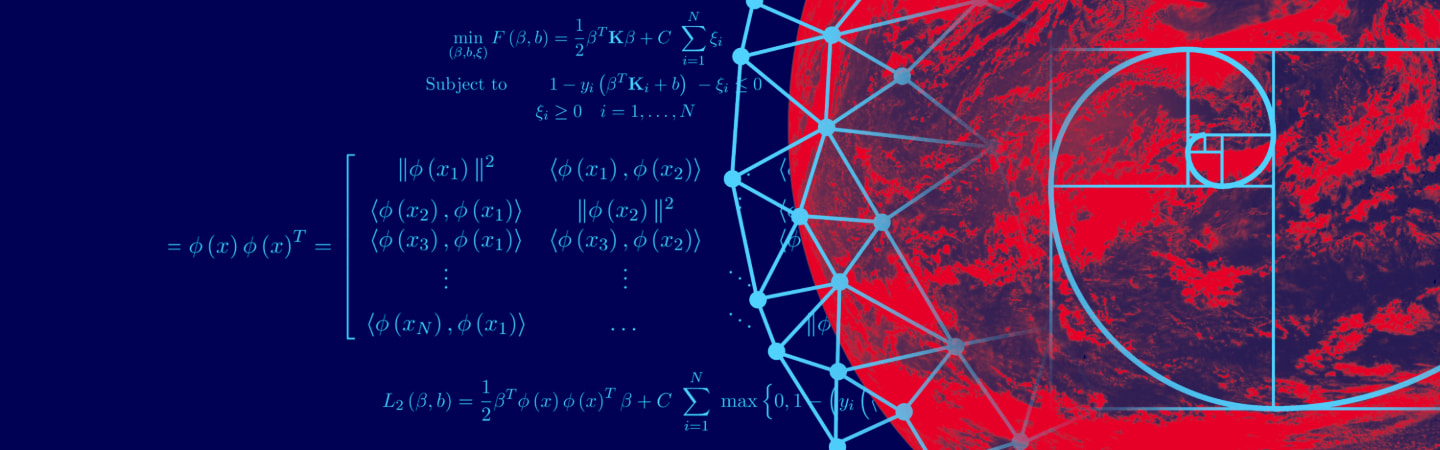
The RMIT Department of Mathematical and Geospatial Sciences is a globally recognised leader in advancing knowledge and innovation in mathematics, statistics, surveying, and geospatial sciences. We equip students with the analytical and technical skills to solve complex real-world challenges, from environmental sustainability, modelling of complex systems, urban informatics to AI-driven decision-making.
Our specialised educational and research programs blend theoretical and applied knowledge with industry practice, preparing graduates for careers in data analytics, operations research, information security, environmental modelling, geospatial intelligence, surveying, infrastructure planning, and spatial data science – supporting industries from finance and technology to environmental management, climate change impact, and urban development.
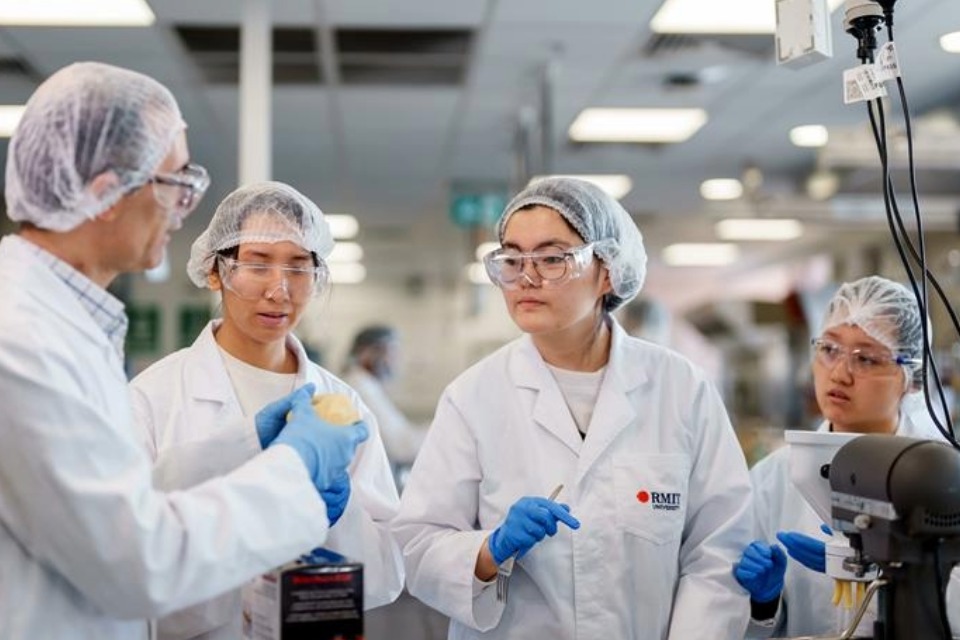
Students engage in practical, project-based learning in state-of-the-art facilities, gaining valuable skills through research collaborations, real-world case studies, and industry placements.
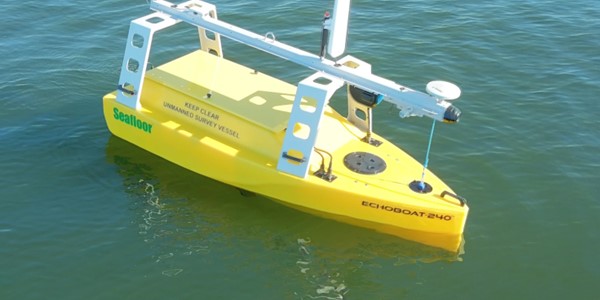
Through strong partnerships with government and industry, we drive impactful research in: optimisation and operations research, mathematical and statistical modelling, cyber mathematics, Earth Observation, sustainable urban development, next-generation spatial data analytics, positioning and navigation – equipping students to lead in a world increasingly shaped by data driven decision making and spatial intelligence. Students actively contribute to this research ecosystem, gaining hands-on experience and industry insights that enhance employability and foster innovation.
The Department of Mathematical and Geospatial Sciences has long-standing partnerships with over twenty governmental and private enterprises, driving research collaboration on critical problems facing these sectors.
Taught by leading academics and industry experts, our programs emphasize hands-on learning with cutting-edge technology, including the use of modern computational tools and large-scale datasets. Students gain practical experience through project-based learning, industry placements, and real-world case studies, preparing them to address complex challenges in areas such as environmental sustainability, urban development, industrial problem-solving, and data-driven decision-making.
Our research explores innovative solutions to real-world problems, from shaping future cities and advancing environmental management to developing new analytical and computational methods for complex industrial and societal challenges. By combining theoretical insight with applied practice, our researchers drive innovation across mathematics, statistics, geospatial sciences, and data analytics, producing outcomes that impact industry, government, and communities worldwide. We address both new technical and theoretical challenges as well as practical difficulties facing decision makers.
Mathematical modelling, epidemiology, optimisation, information security and computational mathematics.
Statistical machine leaning, analytics, design of experiment, biostatistics, environmental statistics and application in biology, finance and climate science.
Geographic Information Systems (GIS); Remote Sensing & Earth Observation; Spatial Data Science & Geospatial AI; Smart Cities & Digital Twins; Environmental & Urban Informatics; Cartography and Geovisualization.
Digital cadastres, geodesy, global navigation satellite systems, and sustainable land management.

Professor James McCoy, Head of Mathematical and Geospatial Sciences & Associate Dean
Email: james.mccoy@rmit.edu.au
Associate Professor Stella Stylianou, Deputy Head of Learning and Teaching
Email: stella.stylianou@rmit.edu.au
Professor Andrew Eberhard, Deputy Head of Research and Innovation
Email: andy.eberhard@rmit.edu.au
Associate Professor Chayn Sun, Deputy Head of Partnerships and Engagement
Email: chayn.sun@rmit.edu.au


RMIT University acknowledges the people of the Woi wurrung and Boon wurrung language groups of the eastern Kulin Nation on whose unceded lands we conduct the business of the University. RMIT University respectfully acknowledges their Ancestors and Elders, past and present. RMIT also acknowledges the Traditional Custodians and their Ancestors of the lands and waters across Australia where we conduct our business - Artwork 'Sentient' by Hollie Johnson, Gunaikurnai and Monero Ngarigo.
Learn more about our commitment to Aboriginal and Torres Strait Islander peoples