Associate Degree in Professional Writing and Editing
Student type:
Quick facts
-
Entry score
-
Duration
Full-time 2 years, Part-time 4 years -
Location
Melbourne City -
Fees
Next intake
February, JulyEntry score
Range of criteria
Duration
Full-time 2 years
Location
Melbourne City
Fees
AU$28,800 (2019 annual)
Program brochure (PDF) Create a personalised brochure
Next intake
February
Overview
This practical, industry-focused program will nurture your creative potential while building the skills, expertise and versatility you need to become a professional writer and/or editor. Whatever your goal - to write a novel, start an online magazine, or work as a freelance editor - we'll support and inspire you.
During your studies you'll work alongside fellow students passionate about reading and writing. You'll also learn from teachers and mentors who are leading practitioners in their fields.
You’ll start by gaining a broad base of skills in fiction, creative nonfiction, professional communication, digital content, grammar and editing. Then you’ll specialise in your preferred areas, with a focus on building a writing portfolio, developing practical projects, and engaging with industry and with readers.
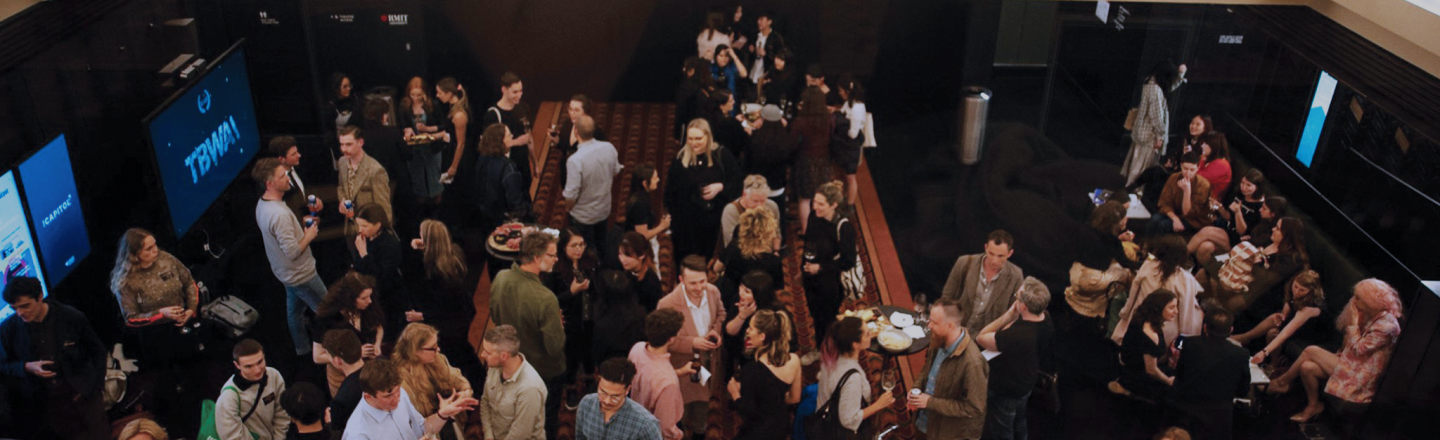
Other opportunities include completing an industry placement, producing the annual Visible Ink anthology, collaborating with creative partners outside the program, and building your professional networks by organising and participating in literary events.
Details
In your first year, you will begin building your professional writing and editing skills. Through writing fiction and non-fiction you will explore story and structure, research and readership, and learn how to build a strong narrative. You will develop a solid grounding in the use of language, grammar and punctuation, which will assist your writing and inform your studies in copyediting and proofreading.
In applying these skills, you will develop concepts for a range of projects and study the principles and practice of writing for different audiences. You will learn to use industry-standard software to manipulate text and images, and through your electives you will explore specialist writing areas.
In your second year, you will be offered a wide choice of writing and editing electives and the opportunity to further develop your writing projects, learning how to polish and pitch them for publication. You will also have the option of working with others in editing and publishing roles.
You will explore ways of creating content for digital media and can choose to complete an industry placement. By organising and attending industry forums and investigating a self-directed research topic, you will increase your broader professional knowledge, skills and networks.
Throughout the course, learning activities include lectures, seminars, demonstrations, presentations, guest speakers, group project work, practical exercises and field trips.
Content is delivered in a variety of forms including weekly face-to-face classes, seminars, full-day and weekend workshops, laboratory sessions and online. Many classes are held in the evening for those with daytime commitments.
Assessment is ongoing throughout the program and includes:
- publishable writing forms - novels, short stories, flash fiction, poetry, picture books, feature articles, personal essays, opinion pieces, reviews
- professional writing forms - media releases, reports, proposals, copywriting, social media writing, career profiles
- presentations and speeches
- practical projects - designed publications, websites, blogs
- group project work - producing online magazines, anthologies and books; creating communications strategies
- self-assessment and reflection
You will benefit from ongoing teacher feedback, class workshopping, class and group discussion and peer review.
All programs are delivered in English. You will have access to online resources through the myRMIT student portal.
You will have the opportunity to work in your chosen industry area for at least 48 hours, gaining valuable experience and industry contacts. Past students have completed industry placements in major publishing houses and organisations, and internships with a wide range of journals and magazines. You are also encouraged to seek opportunities interstate and internationally, as well as locally.
Visiting writers, editors and publishing professionals regularly attend our classes and seminars. They offer you vital industry knowledge and networking opportunities. In second year, you may pitch your creative work to editors and publishers who give you feedback. You also receive regular information about job and publishing opportunities, fellowships, writing competitions, and literary events and activities.
You can complete your industry placement in Australia or overseas. Students are encouraged to submit their writing to local and international publications and to enter competitions worldwide.
RMIT’s Global Experience Office supports students to undertake an exchange or short term mobility activity with over 165 partner universities worldwide.
Year 1
You will begin building your professional writing and editing skills. Through writing fiction and non-fiction you will explore story and structure, research and readership, and learn how to build a strong narrative. You will develop a solid grounding in the use of language, grammar and punctuation, which will assist your writing and inform your studies in copyediting and proofreading.
In applying these skills, you will develop concepts for a range of projects and study the principles and practice of writing for different audiences. You will learn to use industry-standard software to manipulate text and images, and through your electives you will explore specialist writing areas.
Year 2
You will be offered a wide choice of writing and editing electives and the opportunity to further develop your writing projects, learning how to polish and pitch them for publication. You will also have the option of working with others in editing and publishing roles.
You will explore ways of creating content for digital media and can choose to complete an industry placement. By organising and attending industry forums and investigating a self-directed research topic, you will increase your broader professional knowledge, skills and networks.
Choose a program structure
| Title | Location | Duration | Plan code | CRICOS | ||
|---|---|---|---|---|---|---|
| Associate Degree in Professional Writing and Editing | City Campus |
2 years full-time
4 years part-time
|
2 years full-time
|
AD016 | 074927G |
Choose a program structure
Program code: AD016
Career
Employers include publishers, government organisations, the technical, education and scientific industries, private consultancies, advertising agencies, arts and cultural organisations and community groups.
The Professional Writing and Editing degree has a long and proud tradition of producing writers and editors for the publishing and communications industries. Our graduates have become successful authors, publishing books, articles, poetry and stories, and winning major awards and fellowships. Others gain entry-level positions in a competitive industry and start their own business and entrepreneurial projects. This degree also has pathways into higher education courses.
Graduates also work as freelance writers and editors, using the industry networks developed during the program.
Careers
Graduates work in book, magazine, newspaper and digital publishing in roles such as:
- editor or online editor
- social media writer
- journalist
- broadcaster
- publicity or communications officer
- copywriter
- administrator
- project manager
Admissions
RMIT is committed to providing transparency to the admissions process. In line with this commitment, we provide you with information that will help in making informed choices about your undergraduate study options.
RMIT admits students from a range of educational pathways, including Year 12 results, previous higher education or vocational education study, work experience, and for some programs - interviews, auditions or portfolios.
Gain a better understanding of the Admission criteria for this program by viewing RMIT’s Admission information.
The highest level of education you have previously completed will determine which category applies to you.
Applicants with recent secondary education (current or within the past two years)
Successful completion of an Australian Year 12 senior secondary certificate of education or equivalent in 2016, 2017 or 2018. If applicable, this includes equity access schemes and any other adjustment factors.
School Network Access Program (SNAP)
The SNAP access scheme is designed to increase tertiary access and participation of eligible students from SNAP partner schools.
Applicants with Vocational Education and Training study
Satisfactory completion of an Australian Certificate IV or above (or equivalent).
Applicants with Higher Education study
Satisfactory completion of at least two courses (subjects) at an Australian undergraduate level (or overseas equivalent).
Applicants with Work and Life Experience
Successful completion of an Australian senior secondary certificate of education (Year 12) or overseas equivalent.
Prerequisites: VCE Units 3 and 4: a study score of at least 25 in English (EAL) or at least 20 in English other than EAL (or equivalent) or achieve an overall score of at least 150 in the STAT multiple choice.
You must:
- complete and submit the Professional Writing and Editing (Associate Degree) pre-selection kit.
- VTAC applicants must register and submit the selection kit.
- All kits must be submitted by the dates noted below for each VTAC round:
- Early round (Non year 12 only): 27 September 2018
- Main round (All applicants): 30 November 2018
- All subsequent rounds (if places are available): 7 February 2019
- RMIT current or recent students please click the apply button to submit your direct application. The link to submit your pre-selection kit will appear on the applicant dashboard after you have submitted your application.
- All kits must be submitted by 13 February 2019*
- *Kits will be assessed in the order they are received until this date unless places are filled prior.
- attend an interview (some applicants).
- If further information is needed to make a selection decision, you will be invited via email to an interview.
- Interviews will be held in October (VTAC Early round) and November/December (VTAC main round).
- For all subsequent rounds and direct applicants, interviews will be arranged after you have submitted your application.
- Some applicants will be selected based on their pre-selection kit and will not be required to attend an interview. These applicants will receive an advisory email by mid December.
Advisory letters will be sent in late October (Early round) and late December (Main round).
Pre-selection kit
The pre-selection kit requires:
- a statement outlining your interest in professional writing and editing (maximum 500 words).
- a writing sample, of 1000 words. Your writing sample can be fiction, non-fiction or factual writing, or a combination, depending on your area of interest.
- any other material you think will support your application. This may include a list of published work, CV, written references, a URL to a website or blog, etc.
Working with Children Check: Students are required to complete a Working With Children Check before going on placement.
Aboriginal and Torres Strait Islander peoples
The Indigenous Access Program will support your application into RMIT programs through an informal interview process with support from the Ngarara Willim Centre. Your relevant life, work, educational and training experience as preparation for study, in addition to any formal qualifications, are all considered.
Elite Athlete Program
The RMIT Elite Athlete Program (REAP) supports elite athlete and emerging athletes to achieve sporting and academic excellence.
You must have successfully completed an Australian Year 12 (or equivalent senior secondary school qualification) with a minimum 60% average (check calculator below).
Equivalent qualifications may also include completion of the RMIT Foundation Studies program or a recognised post-secondary diploma in the relevant discipline with the required grades.
Meeting the minimum academic requirements does not guarantee entry. Your application will still need to be assessed and accepted.
Selection tasks for international students completing year 12 in Australia and applying through VTAC
Pre-selection kit: You are required to submit a completed pre-selection kit along with your application.
Interview: You may be required to attend a folio presentation and/or an interview, either in person or via phone/video call.
To study this program you will need to complete one of the following English proficiency tests:
- IELTS (Academic): minimum overall band of 6.0 (with no individual band below 5.5)
- TOEFL (Paper Based Test): minimum score of 550 (TWE 4.0)
- TOEFL (Internet Based Test - IBT): minimum overall score of 60 (with minimum of 10 in Reading, 9 in Listening, 16 in Speaking and 19 in Writing)
- Pearson Test of English (Academic) (PTE (A)): minimum score of 50 (with no communication band less than 42)
- Cambridge English: Advanced (CAE): minimum of 169 with no less than 162 in any component.
For detailed information on English language requirements and other proficiency tests recognised by RMIT, visit English language requirements and equivalency information.
Don't meet the English language test scores? Complete an Advanced Certificate at RMIT English Worldwide.
Pathways
Graduates of the Associate Degree in Professional Writing and Editing may be eligible for exemptions from the following programs:
When you successfully complete the Associate Degree in Professional Writing and Editing, you are guaranteed entry into a range of other RMIT programs. The grades you achieve determine the programs you can get into and the amount of credit you will receive.
If you achieve a minimum grade point average (GPA) of 3.0 (out of 4.0), you will receive 3 semesters of advanced standing (equivalent to 144 credit points) in the Bachelor of Arts (Creative Writing). If you achieve below the minimum GPA, you may still apply and will need to submit a Pre-Selection Kit. Applicants will be assessed on a case-by-case basis and credit is not guaranteed.
If you achieve a minimum GPA of 3.0 (out of 4.0) and complete the pre-requisite courses, you will receive 2 semesters of advanced standing (equivalent to 96 credit points) in the Bachelor of Communication (Public Relations). The pre-requisite courses are
- COMM2462 Writing for the Print Media
- COMM2471 Advanced Professional Writing – Text, Design and Strategy OR COMM2467 Magazine Writing and Editing
If you achieve below the minimum GPA or have not completed the pre-requisite courses, you may still apply and will need to attend an interview. Applicants will be assessed on a case-by-case basis and credit is not guaranteed.
If you achieve a minimum GPA of 3.0 (out of 4.0), you will receive 1 semester of advanced standing (equivalent to 60 credit points) in the Bachelor of Communication (Journalism). If you achieve below the minimum GPA, you may still apply and will need to attend an interview. Applicants will be assessed on a case-by-case basis and credit is not guaranteed.
Alternatively, you may be eligible for entry into other RMIT undergraduate programs.
Fees
Entry for this program is through Commonwealth supported places (CSP).
2019 indicative fees
Commonwealth supported places (CSP) range from AU$6,566 to AU$10,958*.
* Amounts quoted are indicative fees per annum, and are based on a standard year of full-time study (96 credit points). A proportionate fee applies for more or less than the full-time study load.
Additional expenses
Student services and amenities fee (SSAF): AU$303 maximum fee for 2019.
Other items related to your program, including field trips, textbooks and equipment.
Fees are adjusted on an annual basis and these fees should only be used as a guide.
Learn more about fees for undergraduate study.
Defer your payment
You may be eligible to apply for a HECS-HELP loan, which can be used to defer payment of up to the full amount of your student contribution fees. You may also be eligible to apply to defer payment of your SSAF through the SA-HELP loan scheme.
All undergraduate and honours degrees have Commonwealth supported places (CSP) available. In 2019, the annual student contribution amount (tuition fee) you will pay for a standard year of full-time study is between AU$6,566 to AU$10,958.
In a CSP, your tuition fees are subsidised by the Australian Government. Your share of the fee (student contribution) is set each year by the Australian Government and is determined by the discipline areas (bands) of the courses in which you enrol, not the overall program.
How much can I expect to pay for my Commonwealth supported place?
Courses (subjects) fall into one of three bands. The band determines the student contribution amount for the course.
Amounts listed in the table below are based on a standard, full-time study load (96 credit points per year) with all courses in the same band. A proportionate fee applies for more or less than the full-time study load or for enrolment in courses (subjects) from a combination of bands.
You can learn how to calculate your exact tuition fees for units from different bands at fees for Commonwealth supported students.
Maximum student contribution amount for Commonwealth supported places in 2019
Student contribution band by course (subject) |
Maximum annual student contribution amount in 2019 |
Band 1: humanities, behavioural science, social studies, clinical psychology, foreign languages, visual and performing arts, education, nursing |
$6,566 per standard year |
Band 2: mathematics, statistics, computing, built environment, other health, allied health, science, engineering, surveying, agriculture |
$9,359 per standard year |
|
$10,958 per standard year
|
HECS-HELP
The Australian Government provides financial assistance via the HECS-HELP loan scheme, which allows eligible students (such as Australian citizens or holders of an Australian permanent humanitarian visa) to defer payment of up to 100% of their student contribution.
How does a HELP loan work?
If your HECS-HELP and/or SA-HELP loan application is successful, the Australian Government will pay RMIT, on your behalf, up to 100% of your fees. This amount will become part of your accumulated HELP debt.
You will only start repaying your accumulated HELP debt to the Australian Government once you earn above the minimum income threshold for repayment, which is set each year by the Australian Government (this also applies if you are still studying).
The Australian Taxation Office (ATO) will calculate your compulsory repayment for the year and include this on your income tax notice.
For more information about loan repayment options see Commonwealth assistance (HELP loans) or Study Assist.
In addition to tuition fees, you will be charged an annual student services and amenities fee (SSAF), which is used to maintain and enhance services and amenities that improve your experience as an RMIT student.
The SSAF is calculated based on your enrolment load and the maximum fee for 2019 is $303.
You may be eligible to apply to defer payment of the SSAF through the SA-HELP loan scheme. If you use SA‑HELP, the amount will be added to your accumulated HELP debt.
For more information about calculating your actual SSAF see Paying SSAF.
You may also be required to purchase other items related to your program, including field trips, textbooks and equipment. These additional fees and expenses vary from program to program.
The annual tuition fee for 2019 is AU$28,800.
The total indicative tuition fee for 2019 commencement is AU$58,560.
In addition to tuition fees you also need to pay for:
- Student services and amenities fee (SSAF) in each calendar year.
- Overseas Student Health Cover (OSHC) - Student visa holders must have cover for the total duration of their visa.
- Some programs incur additional expenses.
You also need to account for your living expenses. Estimate the cost of living in Melbourne.