Associate Degree in Aviation (Professional Pilots)
Student type:
Quick facts
-
Entry score
-
Duration
Full-time 2 years -
Location
Point Cook -
Fees
$62,640 to $67,920 (2019 annual)
Next intake
February, JulyEntry score
ATAR 40.65
Duration
Full-time 2 years
Location
Point Cook
Overview
Qantas Future Pilot program
Qantas and RMIT have partnered to offer an exciting career path to aspiring pilots.
Your career as a professional pilot
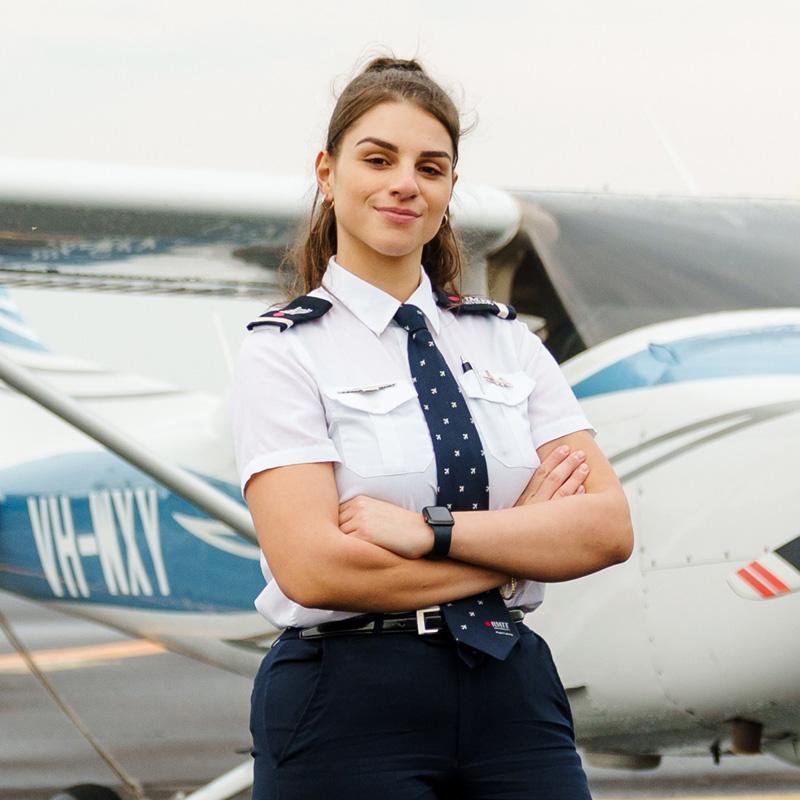
Start your career as a professional pilot or work as instructor while you pathway towards flying in a commercial operation or airline.
What you will study
Gain the practical and theoretical skills you need to achieve CASA certification as a Commercial Pilot and start your career in the sky.
Details
You will gain sufficient aeronautical knowledge, practical skills and appropriate behaviours to fly an aircraft safely and reliably to achieve CASA certification as a Commercial Pilot.
In fulfilling your chosen career, the RMIT flight training program is designed to provide a high-quality learning environment to meet the commercial pilot licensing requirements of Australia’s Civil Aviation Safety Authority.
The pathway to gaining a Commercial Pilots Licence, you’ll also develop the necessary skills to apply for the Recreational Pilots Licence (RPL), the Private Pilot’s Licence (PPL) and required knowledge for the Air Transport Pilots Licence (ATPL).
RMIT Flight Training has been training pilots since 1994 and has successfully trained over 3,000 pilots.
Graduates will be well-situated for employment given the continuing shortage of pilots and flight instructors in Australia and in the Asia Pacific region.
Classes are taught through a combination of lectures, seminars, tutorials, online reading, workshop, practical and interactive sessions.
You'll have access to online resources through the myRMIT student portal.
Ongoing assessment throughout the semester includes examinations, essays, reports, oral classes, presentations, group projects, research projects, and practical assignments.
After the Commercial Pilot’s Licence, you have the option to undertake Instrument or Instructor rating training.
You will have access to a twin-engine PA44-Piper Seminole and Flight Training Devices including the Frasca 242 flight simulator and FM210 - Touch Trainer.
Training and facilities
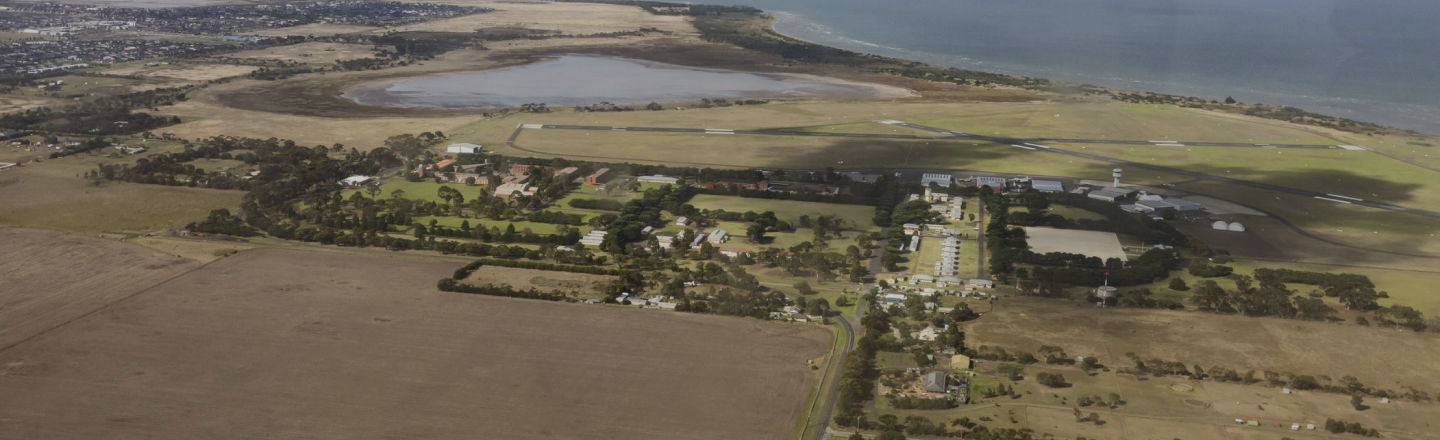
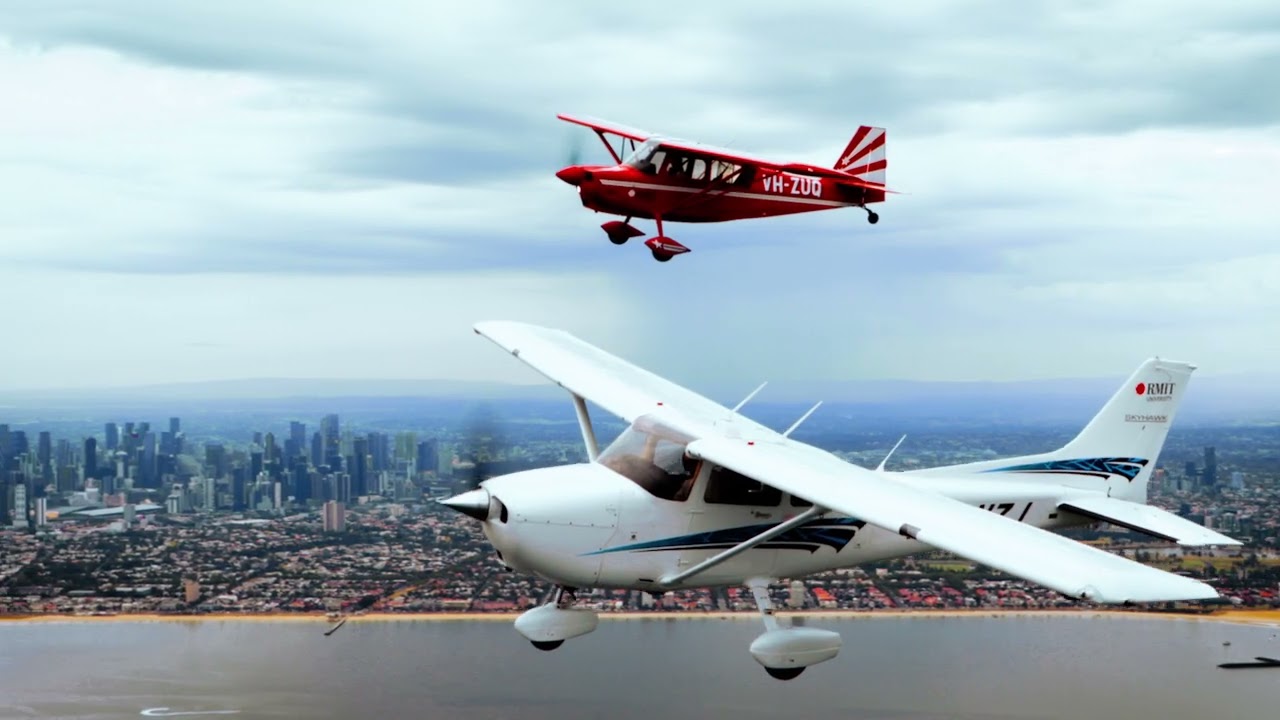
RMIT University's Point Cook campus provides easy access to airspace, terrain and urban development, maximising your navigational experiences.
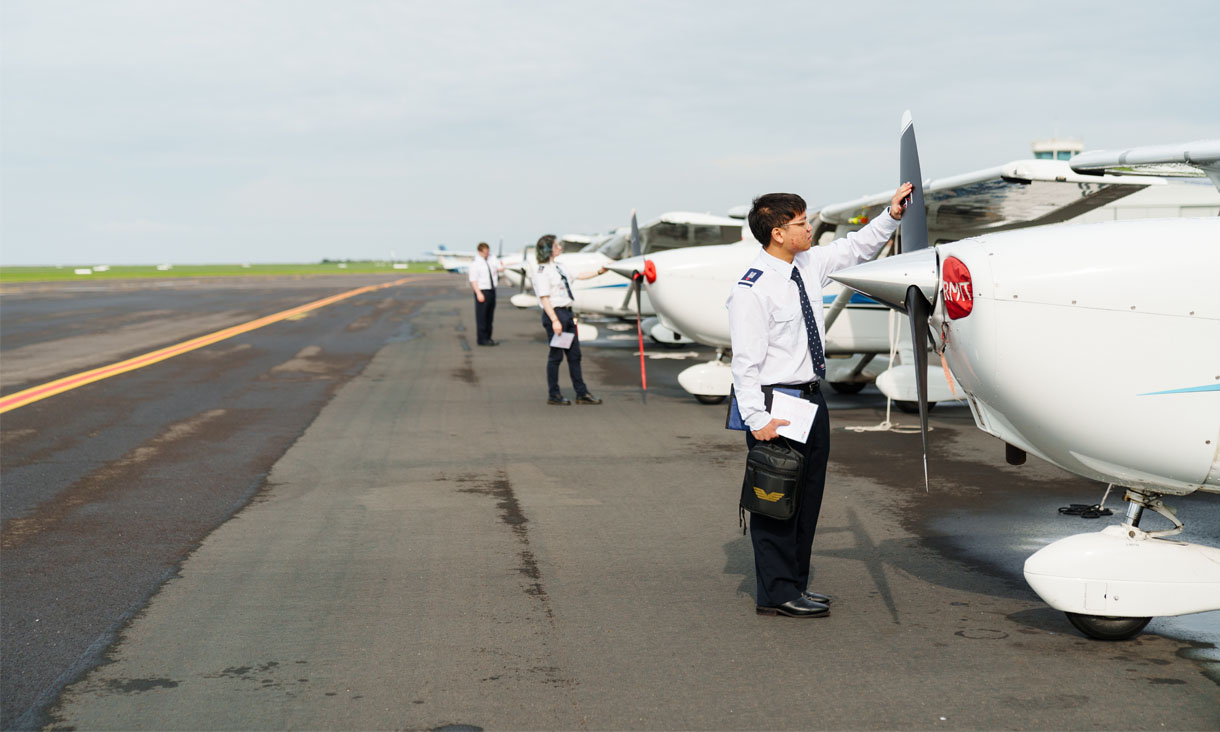
Flight training is conducted at Point Cook Airfield, 25 kilometres south-west of central Melbourne. Flight training facilities consist of a modern, purpose-built, pilot training complex at the former home of the Royal Australian Air Force (RAAF) No. 1 Flying Training School.
The 4,500 feet of airspace over the airfield allows unrestricted training manoeuvres, minimising congestion and delays, and enabling more take-offs and landings per hour than many other airfields.
The Point Cook Airfield training environment is ideally situated with access to all types of airspace nearby and variable weather conditions. This enables you to develop the confidence and capability to handle command under a variety of operational conditions.
Students will attend the City campus one day per week for a select number of non-flying related courses. This will enable you to access RMIT Student Services and other facilities.
Student experiences
RMIT's Flight Training program prepares students for to become professional pilots.
RMIT Flight Training is authorised by the Australian Civil Aviation Safety Authority (CASA) as Part 141/142 organisation to provide pilot training.
You can undertake industry-supported project work within the aviation industry while studying the theory modules.
Choose a program structure
| Title | Location | Duration | Plan code | CRICOS | ||
|---|---|---|---|---|---|---|
| Associate Degree in Aviation (Professional Pilots) | Point Cook Campus |
2 years full time
|
2 years full time
|
AD023A | 077041K |
Choose a program structure
Program code: AD023
Career
Career outlook
As an RMIT Flight Training graduate, there are a variety of paths you can take. You may choose flight instructor training and work as an instructor while you complete further studies. This can be a rewarding way to build your hours or even become a long-term career.
With further experience (typically more than 200-300 flight hours), you may find work in multi-engine charter operations flying high-performance aircraft with regional airlines, or within high-performance general aviation activities such as the Royal Flying Doctors Service or Border Protection Command services and in the role of First Officer in major airlines.
Major airlines typically require approximately 1,500 hours total time for direct entry first officers. With further experience and managerial qualifications you'll be able to seek positions within major airlines as a:
- chief pilot
- fleet manager
- flight operations manager
- flight operations inspector
Admissions
*ATAR refers to the lowest selection rank to which an offer was made (including consideration of any adjustments) for current and recent year 12 applicants.
RMIT is committed to providing transparency to the admissions process. In line with this commitment, we provide you with information that will help in making informed choices about your undergraduate study options.
RMIT admits students from a range of educational pathways, including Year 12 results, previous higher education or vocational education study, work experience, and for some programs - interviews, auditions or portfolios.
Gain a better understanding of the Admission criteria for this program by viewing RMIT’s Admission information.
The highest level of education you have previously completed will determine which category applies to you.
Entry to this program is competitive. Applicants are ranked and selected in order of merit based on their academic achievement, e.g., ATAR or GPA (including any adjustments).
Applicants with recent secondary education (current or within the past two years)
Successful completion of an Australian Year 12 senior secondary certificate of education or equivalent in 2016, 2017 or 2018. If applicable, this includes equity access schemes and any other adjustment factors.
School Network Access Program (SNAP)
The SNAP access scheme is designed to increase tertiary access and participation of eligible students from SNAP partner schools.
Applicants with Vocational Education and Training study
Satisfactory completion of an Australian Certificate IV or above or equivalent.
Applicants with Higher Education study
Satisfactory completion of at least four courses (subjects) at an Australian undergraduate level or overseas equivalent.
Applicants with Work and Life Experience
Satisfactory completion of an Australian Year 12 senior secondary certificate of education or equivalent more then two years ago.
You must sit the Special Tertiary Admissions Test (STAT) Multiple Choice if:
- You have no prior Year 12, VET qualifications, HE results or relevant work experience that meet the minimum entry requirements for the program; and
- You are 19 years of age or over (as of 1 Jan 2019) and have not enrolled in secondary studies for at least two years.
The STAT Multiple Choice will satisfy Year 12 English and Year 11 Mathematics prerequisites. Applicants must meet all other prerequisites or equivalents. Learn more about RMIT STAT results.
Form: Non-Year 12 applicants may submit additional information if they would like it to be considered.
- For semester 1 intake, this can be completed through the VTAC Personal Statement online.
- For semester 2 intake, this can be completed through the personal statement in the Apply Direct application.
CASA Class 1 Medical Examination
Successful applicants are required to undergo a CASA Class 1 Medical Examination by a medical practitioner known as a Designated Aviation Medical Examiner (DAME).
You will also need to attend a mandatory interview at our Point Cook site prior to enrolment.
Please refer to VTAC for full details on semester 1 selection requirements.
Note: In most cases having minor vision problems, such as those requiring you to wear glasses, will not prevent you getting a licence. The medical examination ensures that there are no conditions that prevent you from operating an aircraft safely.
More about the aviation medical examination
Students are expected to source and arrange their own Aviation Medical through a Designated Aviation Medical Examiner.
Although not required at the commencement of training, the student must hold a valid aviation medical certification in order for them to progress through the various tests associated with different licence levels and in order to exercise the rights and privileges associated with certain licences.
There are two levels of aviation medical certification applicable to pilots. These are:
- Class 1 – required for the issue and the exercising of rights and privileges of the Airline Transport Pilot Licence and Commercial Pilot Licence
- Class 2 – required for the issue and the exercising of rights and privileges of the Private Pilot Licence and the Flight Radio Operators Licence. This class of medical is also required to exercise the rights and privileges of the Student Pilot Licence at certain levels of training, but is not required for initial issue.
A valid aviation medical certification is obtained by undergoing a medical examination performed by a Designated Aviation Medical Examiner (DAME). You must specify to the DAME which class of medical certification you are applying for. The DAME will advise you of tests etc required to complete the examination.
Students are expected to source their own medical examiner.
In RMIT’s Aviation program, we recommend that students apply for a Class 1 medical, prior to commencing the program.
Obtaining this level of certification will give the student confidence that there is no existing ailment that could prevent them from completing their Commercial Pilot Licence (CPL) training or continuing their flying career to a higher level.
More information and the location of your nearest DAME go to the CASA web page.
Special Entry Access Scheme (SEAS) /RMIT Access
This is a gender underrepresented program and awards bonus points to female applicants. To be eligible you must submit a SEAS/RMIT Access application and complete category 1.
Aboriginal and Torres Strait Islander peoples
The Indigenous Access Program will support your application into RMIT programs through an informal interview process with support from the Ngarara Willim Centre. Your relevant life, work, educational and training experience as preparation for study, in addition to any formal qualifications, are all considered.
Elite Athlete Program
The RMIT Elite Athlete Program (REAP) supports elite athlete and emerging athletes to achieve sporting and academic excellence.
You must have successfully completed an Australian Year 12 or an equivalent senior secondary school qualification with a minimum average of 50% (see calculator below).
Equivalent qualifications may also include completion of the RMIT Foundation Studies program or a recognised post secondary diploma in the relevant discipline with the required grades.
Meeting the minimum academic requirements does not guarantee entry. Your application will still need to be assessed and accepted.
Mathematics; or VCE Units 3 and 4 in Mathematics (any), with a study score of at least 20.
If successful, you must obtain a Statutory Class 1 Medical Clearance prior to course commencement. Fees include all flying tuition and theory delivery. Additional practicum may be required to meet regulatory standards. Fees exclude books, ancillary equipment and CASA exams.
To study this program you will need to complete one of the following English proficiency tests:
- IELTS (Academic): minimum overall band of 6.0 (with no individual band below 5.5)
- TOEFL (Paper Based Test): minimum score of 550 (TWE 4.0)
- TOEFL (Internet Based Test - IBT): minimum overall score of 60 (with minimum of 10 in Reading, 9 in Listening, 16 in Speaking and 19 in Writing)
- Pearson Test of English (Academic) (PTE (A)): minimum score of 50 (with no communication band less than 42)
- Cambridge English: Advanced (CAE): minimum of 169 with no less than 162 in any component.
For detailed information on English language requirements and other proficiency tests recognised by RMIT, visit English language requirements and equivalency information.
Don't meet the English language test scores? Complete an Advanced Certificate at RMIT English Worldwide.
Pathways
Graduates are guaranteed entry with credit of 12 courses (equivalent to 144 credit points) into the pilot stream of the Bachelor of Applied Science (Aviation).
Previous flying experience may be taken into consideration on a case-by-case basis. You’ll need to supply an up-to-date log-book once you begin training for review.
Students with international pilots' licences can request to have these converted to Australian equivalents. The Chief Flight Instructor will evaluate your licence and current flying experience against CASA regulations and make an assessment of any additional training required before a conversion can take place.
When you successfully complete the Associate Degree in Aviation (Professional Pilots) you are guaranteed entry in the Bachelor of Applied Science (Aviation) Piloting major with 2 semesters of advanced standing (equivalent to 144 credit points).
Alternatively, you may be eligible for entry into other RMIT undergraduate programs.
Fees
2019 fees
- The annual tuition fee for 2019 is AU$65,280.
- The total indicative tuition fee for 2019 commencement is AU$131,520.
The tuition fee includes the program's allotted flight hours. If students need more flight hours these will be incurred as additional costs.
A guide to tuition fees
Theory fees 2019 |
Practical fees 2019 |
Total program fees 2019 |
|
| Year 1 | $16,800 | $45,840 | $62,640 |
| Year 2 | $20,160 | $47,760 | $67,920 |
| Total | $36,960 | $93,600 | $130,560 |
Note: Fees are indicative and will vary based on individual study load. Fees are adjusted on an annual basis and these fees apply to the year indicated only. (e.g. you will be charged at the 2019 rate for any courses taken in 2019, and at the 2020 rate for any courses taken in 2020.)
There are also materials and additional fees that are charged on top of the tuition fees.
Read below for a full breakdown of the tuition, materials and other fees for this program.
In addition to tuition fees you also need to pay for:
- Student services and amenities fee (SSAF) in each calendar year.
- Overseas Student Health Cover (OSHC) - Student visa holders must have cover for the total duration of their visa.
- Materials fees and other expenses (detailed below)
You also need to account for your living expenses. Estimate the cost of living in Melbourne.
Tuition fees
The Associate Degree in Aviation (Professional Pilots) is only offered as a full-fee paying program. You are required to pay a tuition fee that covers the full tuition costs of your program.
A guide to fees (full-time)
Theory fees 2019 |
Practical fees 2019 |
Total program fees 2019 |
|
| Year 1 | $16,800 | $45,840 | $62,640 |
| Year 2 | $20,160 | $47,760 | $67,920 |
| Total | $36,960 | $93,600 | $130,560 |
Note: Fees are indicative and will vary based on individual study load. Fees are adjusted on an annual basis and these fees apply to the year indicated only. (e.g. you will be charged at the 2019 rate for any courses taken in 2019, and at the 2020 rate for any courses taken in 2020.)
Defer your payment
You may be eligible to apply for a FEE-HELP loan, which can be used to defer payment of up to $104,440 (2019 indexed rate) of your tuition fees. You may also be eligible to apply to defer payment of your student services amenities fee (SSAF) through the SA-HELP loan scheme.
Program plan AD023A
You will be charged a specific fee for each course, with practical flying-oriented courses attracting higher fees and theory-oriented courses attracting lower fees.
To graduate you need to complete 192 credit points, which includes 48 credit points from one of three specialised streams (Instrument, Instructor or Academic).
Program plan AD023HA
This is for students enrolled under the Hartwig Air plan.
You will be charged a specific fee for each course, with practical flying-oriented courses attracting higher fees and theory-oriented courses attracting lower fees.
To graduate you need to complete 192 credit points.
Annual fee adjustment
All fees are quoted in Australian dollars and should only be used as a guide. Fees for all program plans apply to the specified year only. You will be charged at the 2019 rate for any courses taken in 2019, and at the 2020 rate for any courses taken in 2020.
RMIT reserves the right to adjust fees on an annual basis by an amount that will not exceed 7.5% each year (subject to rounding). For higher education fees, tuition fees are rounded up to the nearest $10 per credit point increment, and so the actual fee increase may exceed 7.5%.
These are tuition fees only and do not include any additional fees that may apply, such as materials fees, the student services and amenities fee and any additional flight hours required beyond the allocated amount.
To graduate you need to complete the following core courses, which total 144 credit points. You also need to complete 48 credit points from one of three specialised streams (Instrument, Instructor or Academic). Fees for these streams are detailed in the sections below.
The fee charged will depend on the year you take the course (e.g. if you take a course in 2019 you will be charged the 2019 course fee, and if you take a course in 2020 you will be charged the 2020 course fee).
If you fail a course, you will be required to repeat it in order to be accredited and you will be charged the fee for that course again.
Course code |
Course name |
Credit points |
2019 course fee |
| AERO2465 | Introduction to Aviation | 12 | $3,360 |
| MATH2222 | Mathematics | 12 | $3,360 |
| AERO2466 | Theory to Recreational Pilot Licence | 12 | $3,360 |
| AERO2467 | Flying to Recreational Pilot Licence | 12 | $22,560 |
| Semester 1 fees | 48 | $32,640 | |
| AERO2468 | Human Factors in Aviation | 12 | $3,360 |
| AERO2469 | Theory to Private Pilot Licence | 12 | $3,360 |
| AERO2470 | Flying to Private Pilot Licence | 12 | $13,920 |
| AERO2576 | Introduction to Commercial Pilots Licence | 12 | $9,360 |
| Semester 2 fees | 48 | $30,000 | |
| AERO2471 | Aviation Industry Environment | 12 | $3,360 |
| AERO2472 | Aviation Quality Systems | 12 | $3,360 |
| AERO2587 | Commercial Pilot Licence Theory | 12 | $3,360 |
| AERO2586 | Commercial Pilot Licence Flying | 12 | $29,040 |
| Semester 3 fees | 48 | $39,120 | |
| Total for Semesters 1, 2 and 3 | 144 | $101,760 |
Complete the following three courses:
Course code |
Course name |
Credit points |
2019 course fee |
| AERO2477 | Theory to Instrument Rating | 12 | $3,360 |
| AERO2577 | Air Transport Pilot Licence 1 & 2 | 24 | $6,720 |
| AERO2478 | Flying to Instrument Rating | 12 | $18,720 |
| Semester 4 fees | 48 | $28,800 | |
| Plus Semester 1, 2 and 3 fees | 144 | $101,760 | |
| Total program fees | 192 | $130,560 |
Complete the following three courses:
Course code |
Course name |
Credit points |
2019 course fee |
| Elective | Student Elective | 12 | $3,360 |
| AERO2578 | Theory to Instructor Rating | 24 | $6,720 |
| AERO2479 | Flying to Instructor Rating | 12 | $18,720 |
| Semester 4 fees | 48 | $28,800 | |
| Plus Semester 1, 2 and 3 fees | 144 | $101,760 | |
| Total program fees | 192 | $130,560 |
Complete the following three courses:
Course code |
Course name |
Credit points |
2019 course fee |
| Elective | Student Elective | 12 | $3,360 |
| AERO2383 | Airport/Airline Operations | 12 | $3,360 |
| AERO2577 | Air Transport Pilot Licence 1 & 2 | 24 | $6,720 |
| Semester 4 fees | 48 | $13,440 | |
| Plus Semester 1, 2 and 3 fees | 144 | $101,760 | |
| Total program fees | 192 | $115,200 |
Course code |
Course name |
Credit points |
2019 course fee |
Campus |
| AERO2589 | Theory to Recreational Pilot Licence | 12 | $3,360 | Hartwig Air |
| AERO2590 | Flying to Recreational Pilot Licence | 12 | $22,560 | Hartwig Air |
| AERO2591 | Theory to Private Pilot Licence | 12 | $3,360 | Hartwig Air |
| AERO2592 | Flying to Private Pilot Licence | 12 | $13,920 | Hartwig Air |
| Semester 1 Fees | 48 | $43,200 | ||
| AERO2595 | Introduction to Commercial Pilots Licence | 12 | $9,360 | Hartwig Air |
| AERO2597 | Commercial Pilot Licence Theory | 12 | $3,360 | Hartwig Air |
| AERO2596 | Commercial Pilot Licence Flying | 12 | $29,040 | Hartwig Air |
| Semester 2 Fees | 36 | $41,760 | ||
| AERO2465 | Introduction to Aircraft | 12 | $3,360 | RMIT |
| MATH2222 | Mathematics | 12 | $3,360 | RMIT |
| AERO2468 | Human Factors in Aviation | 12 | $3,360 | RMIT |
| AERO2471 | Aviation Industry Environment | 12 | $3,360 | RMIT |
| AERO2472 | Aviation Quality Systems | 12 | $3,360 | RMIT |
| Semester 3 Fees | 60 | $16,800 | ||
| AERO2593 | Theory to Instrument rating | 12 | $3,360 | Hartwig Air |
| AERO2594 | Flying to Instrument rating | 12 | $18,720 | Hartwig Air |
| AERO2577 | Air Transport Pilot Licence 1 & 2 | 24 | $6,720 | RMIT |
| Semester 4 Fees | 48 | $28,800 | ||
| Total | 192 | $130,560 |
If you successfully complete the first 8 core subjects of the Associate Degree of Aviation (Professional Pilots) plan AD023A and gain your Private Pilot Licence, you may be eligible to apply for the Diploma of Flying (Private Pilot Licence).
This diploma is offered only as an exit award, for students who do not wish to complete the full AD023A associate degree.
DP016, Diploma of Flying (Private Pilot Licence)
To graduate you must complete the following:
Course code |
Course name |
Credit points |
2019 course fee |
| AERO2465 | Introduction to Aircraft | 12 | $3,360 |
| AERO2466 | Theory to Recreational Pilot Licence | 12 | $3,360 |
| AERO2467 | Flying to Recreational Pilot Licence | 12 | $22,560 |
| MATH2222 | Mathematics | 12 | $3,360 |
| AERO2469 | Theory to Private Pilot Licence | 12 | $3,360 |
| AERO2470 | Flying to Private Pilot Licence | 12 | $13,920 |
| AERO2468 | Human Factors in Aviation | 12 | $3,360 |
| AERO2576 | Introduction to Commercial Pilots Licence | 12 | $9,360 |
| Total program fees | 96 | $62,640 |
RMIT Code |
Item |
2019 fee |
| M1499 | David Clark Headset (H10 13.4) | $595 |
| M1498 | Flight Computer CR3 - $62, Protractor - $17, Scale Ruler 120 NM - $17 | $96 |
| M1518 | Knee-board (GFPT, PPL, CPL) | $79 |
Textbooks and handbooks are required at the start of each licensing level: General Flying Progress Test (GFPT), Private Pilot Licence (PPL), and Commercial Pilot Licence (CPL).
Some materials can be used across multiple licensing levels. Students who elect to obtain their Instructor rating as an elective can use the CASA-approved Aviation Instructor's Handbook, which is available without charge for this portion of their training.
RMIT Code |
Item |
2019 fee |
| TBA | Avionics Manual - Seminol PA44 POH Glass | $95 |
| M1496 | Avionics Manual - Cessna 172S POH Glass (172SIMBUS) | $100 |
| M1497 | Avionics Manual -Cessna 172S POH Analogue (172SIM) | $100 |
| M1494 | GFPT The Complete Student Pilot Manual by Val Dyson-Holland | $103 |
| M1495 | Manual of Aviation Meteorology | $79 |
| M1514 | The Human Being Pilot - book | $87 |
| M1508 | PPL/CPL VFR Meteorology (Dyson-Holland) | $81 |
| M1509 | PPL/CPL Aerodynamics, Maths & Physics (Dyson-Holland) | $81 |
| M1510 | PPL/CPL Aircraft General Knowledge (Dyson-Holland) | $81 |
| M1511 | PPL/CPL Aeroplane Performance & Operation and VFR Flight Planning (Dyson-Holland) | $81 |
| M1512 | PPL/CPL VFR Navigation and NAV Computer Handbook (Dyson-Holland) | $81 |
| M1513 | PPL/CPL Human Performance and Limitations (Dyson-Holland) | $48 |
| M1515 | Victorian Country Airstrip Guide (PPL & CPL) | $60 |
| M1516 | Avionics Manual - Cessna 182T POH Analogue (182TIM) (PPL & CPL) | $88 |
| M1517 | Avionics Manual -Cessna 182T POH Glass (182TIMAUS) (PPL & CPL) | $88 |
| M1519 | Instrument Rating Study Guide (Bob Tait) | $110 |
| M1650 | Radiotelephony, Radio Systems Equipment & VFR Flight Rules & Air Law (PPL/CPL) Dyson Holland | $81 |
RMIT Code |
Item |
2019 fee |
M1612 |
Replacement RMIT branded epaulette |
$35 |
M1616 |
Replacement RMIT branded tie |
$35 |
The uniform items below are available directly from the supplier. Contact RMIT Flight Training for more information.
Item |
2019 fee
|
Short sleeve shirt, white epaulette |
$28 |
Long sleeve shirt, white epaulette |
$29 |
Epaulette jumper |
$73 |
Trousers, navy (poly/viscose) |
$52 |
Trousers, navy (poly/wool) |
$100 |
RMIT branded bomber jacket |
$79 |
| RMIT branded soft shell jacket (women's) | $106 |
In some situations, students who require training above the maximum allotted flight hours for their course may be charged for any additional flight hours to achieve the required competencies.
Each fee is for one additional hour of flying time. It will only be charged if additional hours above the standard number of flying hours are required.
RMIT Code |
Item |
2019 fee |
| M1444 | C172S solo hire | $260 |
| M1445 | C182T solo hire | $440 |
| M1446 | PA-44 solo hire | $505 |
| M1447 | Aero 8KCAB solo hire | $310 |
| M1520 | Flight Simulator dual hire | $250 |
| M1521 | C172S dual hire flying cost for per 1 hours for students who withdraw prior to census date | $430 |
| M1651 | C182Tdual hire flying cost for per 1 hours for students who withdraw prior to census date | $600 |
| M1652 | PA-44 dual hireflying cost for per 1 hours for students who withdraw prior to census date | $660 |
| M1653 | Aero 8KCABdual hire flying cost for per 1 hours for students who withdraw prior to census date | $470 |
This fee is for one additional hour of flying time. It will only be charged if additional hours above the standard number of flying hours are required.
RMIT code |
Item |
2019 fee |
|---|---|---|
M1448 |
Flight Instructor Hourly Rate |
$170.00 |
These fees are paid to bodies outside of RMIT but will be necessary for students wishing to pursue the program. The prices given below relate to 2019 and are indicative only. Students should ensure they remain up to date with current pricing.
Licences
Item |
2019 fee |
|---|---|
Class 1 Medical Exam (First Issue only) |
Approx $420 |
Processing of medical exam results (Civil Aviation Safety Administration – CASA) |
$77 |
Aviation Security Identity Card (CASA) |
$204 |
Private Pilot Licence – licence issue, processing and consideration of application (CASA) |
$61 |
Private Pilot Licence – exam (CASA and ASL) |
$178 |
Commercial Pilot Licence – 7 exams (CASA and ASL) |
$1075 |
Commercial Pilot Licence – licence issue, processing and consideration of application (CASA) |
$81 |
Air Transport Pilot Licence – 7 exams (CASA and ASL) |
$1060 |
Instrument Rating Examination (CASA and ASL) |
$178 |
In addition to tuition fees, you will be charged an annual student services and amenities fee (SSAF), which is used to maintain and enhance services and amenities that improve your experience as an RMIT student.
The SSAF is calculated based on your enrolment load and the maximum fee for 2019 is $303.
You may be eligible to apply to defer payment of the SSAF through the SA-HELP loan scheme. If you use SA‑HELP, the amount will be added to your accumulated HELP debt.
For more information about calculating your actual SSAF see Paying SSAF.
FEE-HELP loans
You may be eligible to apply for the FEE-HELP loan scheme.
FEE-HELP loans are available to eligible Associate Degree in Aviation (Professional Pilots) students, such as Australian citizens or holders of an Australian permanent humanitarian visa. A FEE-HELP loan can be used to defer payment of up to $104,440 (2019 indexed rate) of your tuition fees over the course of your total tertiary education.
FEE-HELP is subject to annual government indexation.
For more information visit Commonwealth assistance (HELP loans) or Study Assist.
SA-HELP loans
You may be eligible to apply to defer payment of the SSAF through the SA-HELP loan scheme. If you use SA-HELP, the amount will be added to your accumulated HELP debt.
How does a HELP loan work?
If your FEE-HELP and/or SA-HELP loan application is successful, the Australian Government will pay RMIT, on your behalf, up to $104,440 (2019 indexed rate) of your tuition fees and/or your SSAF. This amount will become part of your accumulated HELP debt.
You will only start repaying your accumulated HELP debt to the Australian Government once you earn above the minimum income threshold for repayment, which is set each year by the Australian Government (this applies even if you are still studying).
The Australian Taxation Office (ATO) will calculate your compulsory repayment for the year and include this on your income tax notice.
For more information about loan repayment options see Commonwealth assistance (HELP loans) or Study Assist.