People

Meet our people

The School of Management boasts a diverse team of academic members, professional staff and adjunct professors. Our people bring a blend of academic excellence and real-world experience, ensuring programs are relevant, impactful, and aligned with both academic and industry needs.

School Executive team

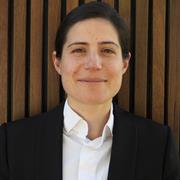
Professor Emma Sherry

Dean, School of Management

  • Location City Campus Australia
  • Department College of Business and Law
Emma Sherry specialises in the area of sport for development and her research interests include community development through sport activities, undertaking a broad range of research projects with national and regional sport organisations in Australia and globally including the Commonwealth Secretariat, Victorian Government, VicHealth, Netball Australia, National Rugby League, Australian Football League, and Tennis Australia. Other recent research has included access and equity in sport participation, social impact of sport, sport's contribution to the sustainable development agenda, and sport and recreation for at-risk and marginalised communities. Emma is currently supervising a number of PhD students in the areas of: sport and environmental sustainability, sport participation for older adults, open space exercise equipment, organisational leadership and change, sport migration for women athletes, and knowledge management in sport. Emma is on the editorial boards of the Journal of Sport Management, Sport Management Review, and European Sport Management Quarterly. Outside of her academic career, Emma has worked in roles in the area of sport facility and event management and recreation management within the local government and university sport sectors. Emma has extensive sport industry experience as a board director, including roles with Vicsport, Tennis Victoria and the Melbourne and Olympic Park Trust. Emma currently sits on the Advisory Board of the Australian Sport Innovation Centre of Excellence, and as a director for the National Disability Sport Organisation - Sport Inclusion Australia.

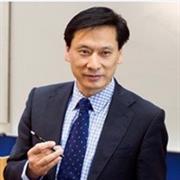
Professor Ling Mei Cong

Academic Director, Singapore and China Partnerships

  • Location City Campus Australia
  • Department Strategy Int'l & Engagement
Professor Ling Mei Cong is an experienced executive in higher education and an expert in curriculum design for business and law. She currently serves as the Deputy Dean, Learning and Teaching, at the School of Management, RMIT University.  Ling Mei is a recipient of prestigious international and national teaching awards, such as QS Reimagine Education Gold Medal in Immersive Experiential Learning and the Australian Awards for University Teaching (AAUT) Citation Award.  With over 20 years of experience in universities across the Asia Pacific region, Ling Mei holds a PhD in accounting and is a Fellow of the Association of Chartered Certified Accountants (ACCA). Her research focuses on technology-enhanced learning, as well as the intersection of internationalisation, innovation and corporate performance. Her publications appear in leading journals such as Accounting Education, Technovation, and Transport Research Part D: Transport and Environment.    Ling Mei is passionate about digital pedagogies and experiential learning. Her recent projects include virtual reality roleplay for soft skills development, gamification, and AI at Work. Her impact in higher education is evident through her interviews and media appearances, including those in Harvard Business Publishing Education, AACSB Insights and Australian Financial Review. Industry experience: Fellow Member of Association of Chartered Certified Accountants (ACCA)

Professor Cameron Duff

Deputy Dean, Research & Innovation

  • Location City Campus Australia
  • Department Management
Cameron Duff is a Professor of Politics and Organisation in the Centre for Organisations and Social Change in the College of Business and Law at RMIT University, where he is also Deputy Dean, Research and Innovation in the School of Management. Trained in Political Science and with a strong commitment to interdisciplinarity, Professor Duff’s ongoing program of research has three main areas of focus: (A) theoretical and conceptual investigations of community, place, and ‘the commons’, with a focus on theories of praxis and social change; (B) empirical investigations of the ways notions of ‘place’ and ‘community’ are mobilised in social innovations in diverse community settings; and (C) policy and practice investigations of the ways organisational forms and processes support (or inhibit) innovation in the design of social impact and sustainability initiatives in particular organisational settings.    In each of his areas of focus, Duff is concerned to elaborate how social innovation and social change are argued about in Australian social and political debates – including across ‘civil society’ and the ‘for purpose’, community and not-for-profit sectors – with a focus on problems of sustainability, housing, health and social care. With his collaborators, Duff publishes the results of this research in the top international journals in geography and urban planning, organisational studies, sociology and medical anthropology. Recent key publications indicate how demands for social change typically reflect enduring local struggles over place and belonging, identity and social inclusion. Duff’s research is highly cited and he is routinely placed in the top 2% of research scientists in the Stanford/Elsevier Global ranking of highly cited scholars. Duff serves on the Editorial Boards of Wellbeing, Space & Society, Contemporary Drug Problems and the International Journal of Drug Policy where he is the Senior Editor for submissions in social sciences, political and social theory.    Across RMIT, Duff regularly collaborates with researchers at the Centre for Urban Research, the Social Equity Research Centre, and the Workforce Innovation and Development Institute where he is embedded in key research programs in organisational innovation, social care, housing and mental health research. Recent national research collaborations have involved collegeagues at the University of New South Wales, Swinburne University and the University of Tasmania He also has a number of longstanding international collaborations with colleagues at the Goldsmiths and Liverpool University in the United Kingdom, and the University of British Columbia and McMasters University in Canada. Duff has attracted nearly $2million in career external research income with recent projects funded by the Australian Research Council (LP190100247) for research exploring the social and policy implications of the ongoing widening of categories of ‘personality disorders’. Additional research has been funded by the Australian Housing and Urban Research Institute (18/PRO53210 and 22/PRO/51311) for studies exploring the coordination and integration of housing, health and social care responses in community settings. The results of this research provide crucial insights into the needs of diverse groups seeking support across the health and social care sectors in Australia, and how programs may be improved to better meet these needs. Duff commenced at RMIT in 2015 when he was appointed as Vice Chancellor’s Senior Research Fellow at the Centre for People, Organisation and Work in the School of Management. Prior to joining RMIT, Duff held a Monash Fellowship in the Social Sciences and Health Research Centre at Monash University. Between 2005 and late 2008, Dr Duff was a Clinical Assistant Professor in the School of Population and Public Health at the University of British Columbia, Canada. Dr Duff was awarded his PhD in Political Theory at the University of Queensland in 2002 for research that developed a novel political ethics from the works of Michel Foucault and Gilles Deleuze. Duff’s first book, Assemblages of Health: Deleuze’s Empiricism and the Ethology of Life, was published in 2014 by Springer. Industry experience: Professor Cameron Duff's current program of research is informed by an extended period of applied and practical research engagement. From August 2005 to January 2009 he was Manager of Youth Addiction & Mental Health Services at Vancouver Coastal Health Authority, Canada. In this role he was responsible for delivering evidence based mental health care services for disadvantaged youth in complex urban settings. His most significant responsibility in this time was the leadership of a large change management activity supporting the introduction of ‘community based’ youth mental health promotion initiatives across all programs within the Youth Addiction & Mental Health Services portfolio. Working with partners at the City of Vancouver, the Vancouver School Board, the Provincial Ministry of Health, and the School of Public and Population Health at the University of British Columbia, all programs were reviewed and then restructured to incorporate ‘strengths based’ program orientations. The goal was to move the locus of prevention care from clinical settings into the community. Awards: 2019 RMIT Research Excellence Award; Outstanding Research Performance by an Academic in the School of Management 2018 RMIT Research Excellence Award; Innovative Research Supervision by an Academic in the School of Management 2017 RMIT Research Excellence Award; Best Journal Publication by an Academic in the School of Management 2014 Vice Chancellor’s Senior Research Fellowship. RMIT University. 2009 Sir John Monash Fellowship. Monash University. 2004 Young Writer’s Award. International Journal of Drug Policy Award for best paper published in 2004 by a writer aged under 35. 2002 Dean’s Commendation for High Achievement, University of Queensland. 1997 Australian Postgraduate Award

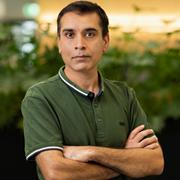
Professor Timothy Bartram

Head of Department

  • Location City Campus Australia
  • Department Management
Professor Timothy Bartram is Professor of HRM and Head of Department HRM in the School of Management. His area of expertise is in HRM, industrial relations and healthcare management. Professor Bartram's research is in human resource management (HRM), high performance work systems (HPWS) industrial relations and healthcare management. His work also focuses on the effective management and inclusion of vulnerable groups working in organisations, such as workers with intellectual disability, neurodiverse workers, Indigenous men and older men. He has an interest in AI, people analytics and the digitisation of HRM. His research work has culminated in 167 refereed journal publications. Publications include articles in Human Resource Management, Human Resource Management Journal, Journal of Management Studies, Human Resource Management Review, The British Journal of Industrial Relations, The International Journal of Human Resource Management, British Journal of Management, Journal of Product Innovation Management, International Journal of Small Business, Public Management Review, Personnel Review, Industrial Relations Journal, Applied Psychology: An International Review, Journal of Business Ethics, Journal of Advanced Nursing, and Health Care Management Review. Professor Bartram's work has been cited over 11,000 times (Google Scholar) and has a H-Index of 55. Web of Science Author Analytics has recently ranked him as the fourth most impactful researcher of HPWS in business and management research.  Professor Bartram has led a number of large externally funded research projects, including ARC grants (Discovery and Linkage(s)), DFAT-funded grants, Federal and State Government research contracts, as well as contract research for both private and public sector organisations, which have culminated in almost $2,000,000 in research income. He has held three ARC grants ((1) DP120103071 Testing the integration and differentiation of national employment systems: Multi-nationals in an international comparative context; (2) LP110200528 Work process change in hospital services; and (3) LP200200379 Promoting Long-Term Employment of Autistic Individuals). He has also been awarded grants and research contracts from the Department of Vetran Affairs, Department of Health ansd Human Services (Vic), Telematics Trust, Department of Foregn Affairds and Trade, WorkSafe, ISCRR, AFL Player Association and others. CI-Bartram's research work utilises cutting-edge research methods and strong theoretical underpinning (e.g., HRM, organisational behaviour and management theories) to solve real-world contemporary challenges, such as the effective management of healthcare professionals in contemporary hospitals, development of sustainable and effective management systems and the inclusion of vulnerable groups of workers, such as Men's Shed participants, and people with intellectual disability and neurodiversity. His most significant contributions to HRM/HPWS research include a theoretical and empirical examination of the relationships between high-performance work systems, clinician attitudes and behaviours (i.e., intention to leave, emotional labour) and clinician/hospital performance (i.e., HRM performance indicators, quality of patient care and patient safety). This work has been at the cutting edge of HRM in health research and as a result he has developed research relationships and commissioned research with key healthcare industry players (e.g., Victorian Hospitals' Industrial Association, Australian Nursing and Midwifery Federation, Australian Men's Shed Association, Department of Health and Human Services, and Department of Health and Ageing), as well as a range of leading healthcare services. He has also contributed innovative research to lean management and HRM in healthcare organisations (e.g., British Journal of Management), and has recently published leading research on wellbeing-orientated HRM practices and employee resilience (e.g., Human Resource Management, Human Resource Management Journal, International Journal of HRM). His work on HRM and disability is also cutting-edge. This work has made a significant contribution to social enterprise organisations and other organisations, such as hotels and supermarkets that employ people with a disability and has been published in the Journal of Business Ethics, Personnel Review and the Journal of Vocational Education and Training. Professor Bartram has been involved in large-scale research projects examining the employment, management and social inclusion of workers with disability across Australian industries. He and his team have examined using a qualitative research the inclusion of workers with intellectual disability design in 15 organisations, which has culminated in over 10 journal articles (e.g., Journal of Business Ethics; Personnel Review) and a special issue in the Journal of Vocational Education and Training. He has also led large-scale projects for the Department of Health and Ageing (DoHA) on the Men's Shed movement in Australia (e.g., examining Indigenous men's participation in Men's Sheds and related health, wellbeing and employment outcomes and evaluating the operations of the Australian Men's Sheds Association (AMSA)). These projects have involved a census of all the Men's Sheds in Australia (including shed coordinators, men members and healthcare service workers. He has advised Department of Health and Ageing (DoHA) (Federal Government) on the efficacy of the current management (including HRM) operations of AMSA and Indigenous sheds and community groups and their impact on men's health and wellbeing in Australia. He is regarded as the leading expert on the Men's Shed movement (throughout Australia and internationally) having conducted research with twenty-six Indigenous groups across every State and Territory. The research included a review/consensus of over 1,000 Men's Sheds in Australia. This was the first ever census of Australian Men's Sheds. This research has made a significant impact on building healthy communities and improving the health and wellbeing of people. He has published over 10 journal articles on Men's Sheds and he and his team have undertaken several interviews with the media (e.g., ABC Breakfast, ABC Radio, The Australian, Wall Street Journal). Professor Bartram has also consulted to several medical and healthcare associations (e.g., Victorian Hospitals' Industrial Association) and health care unions (e.g., Australian Nursing and Midwifery Federation and Medical Scientists Association of Victoria). He has also published a report detailing the adoption of strategic HRM in the Victorian public healthcare sector (published by the Victorian Hospitals' Industrial Association). This was the first ever large-scale survey of HRM practice of Victorian public health care organisations. He has also led complex research projects in large tertiary hospitals on the use of strategic HRM and HPWS and impact on employee wellbeing and quality of patient care. This research has contributed significantly to the development of management practices within many of these organisations. He has presented his research work at world leading management, human resource management and employment relations conferences, at health practitioner and union delegate conferences and healthcare human resource director forums. Professor Bartram has successfully supervised 21 PhD students to completion. He has also successfully supervised to completion 24 DBA students. Professor Bartram is the Co-editor of Asia Pacific Journal of Human Resources (APJHR) with Professor Fang Lee Cooke. He is on the Editorial Board of Personnel Review and The International Journal of HRM. He acts as a referee for many leading international journals, including the Journal of Management Studies, Human Resource Management, International Journal of HRM, Personnel Review, Relations Industrielles, British Journal of Management, the British Journal of Industrial Relations, and Human Relations. Professor Timothy Bartram is Professor of HRM and Head of Department HRM & IR in the School of Management. He coordinates and teaches Key Concepts in HRM (BUSM4499).

Professor Afreen Huq

Head of Department – Department of International Business, Innovation and Entrepreneurship

  • Location City Campus Australia
  • Department Management
Afreen Huq is Professor at the School of Management in RMIT University. Her research in women’s entrepreneurship has a strong empirical base and is cross disciplinary in approach with an emphasis on impact. As a researcher she specializes in how gender identity and socio-cultural factors influencing the aspiration, acceptability and feasibility of business-ownership shape women’s entrepreneurial behaviour and approach to growth. Afreen researches this phenomenon on women entrepreneurs in both developed countries as well as in culturally restrictive societies. She is also interested in exploring identity reconstruction, socialisation, and resilience of migrant and refugee women entrepreneurs.  Afreen has 20 years of teaching and research experience in the discipline of management and entrepreneurship. She has taught Foundations of Entrepreneurship, Social Entrepreneurship, New Venture Creation, Creativity and Innovation, Management, Business Communication, Multinational Enterprise Management, and HRM in universities in Bangladesh, UK and Australia. Afreen has authored more than 30 research-based articles. Along with her academic experience, Afreen has over 6 years of experience as programme manager and gender specialist in several multi-donor funded international development projects operating in Bangladesh, Nepal, Bhutan and North-east India aimed at promoting entrepreneurship for poverty alleviation and economic growth.

Professor Sen Sendjaya

Head of Department

  • Location City Campus Australia
  • Department Management
Sen Sendjaya is a Professor of Leadership and Management, and Head of the Department of Management & Organisations at the School of Management, RMIT University. Prior to joining RMIT in 2024, he held various leadership roles at Swinburne and Monash University. He spearheaded NOBLE (Network for Organisational Behaviour and Leadership Enquiry), a dynamic research group that advances the knowledge and practice of how individuals and teams interact, influence, and innovate in contemporary organisations.   A leading scholar on servant leadership, Sen's research has appeared in prominent journals such as The Leadership Quarterly, Journal of Management Studies, Journal of Vocational Behaviour, Journal of Business Ethics, as well as five books that he authored or edited. His research areas of interest include servant leadership, leadership development, and various OB topics including identity, diversity, spirituality. Sen is the creator of the Servant Leadership Behaviour Scale (SLBS), a widely used psychometric measure to inform leadership selection, assessment, and training in organisations. He engages with senior leaders from various sectors (i.e., government, transportation, finance, health, higher education, not-for-profit, and church), leveraging their capacities to produce deep and lasting impacts on their followers and organisation, through executive education and corporate workshops both in Australia and overseas.

Dr. Carol Bond

Deputy Head of Department

  • Location City Campus Australia
  • Department Management
Carol Bond is a political and social scientist investigating business-related socio-economic and policy topics in the energy and resources sectors. Industry Experience Carol works closely with the energy and extractives industries as well as peak bodies. Research partners include: Energy Networks Australia (ENA), Australian Pipelines and Gas Association (APGA), The Australian Hydrogen Council (AHC), Australian Institute of Mining & Metals (AusIMM), Jemena, Origin, and the Australian Gas Infrastructure Group (AGIG).   Aboriginal & Torres Strait Islander Engagement Carol is privileged to work with Aboriginal and Torres Strait Islander communities in Queensland on topics such as entrepreneurship, business management, protecting Indigenous IP, while supporting deep connection to culture and country.

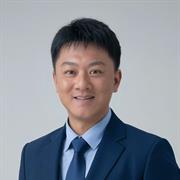
Yulong Liu

Deputy Head of Department, International Business, Innovation & Entrepreneurship

  • Location City Campus Australia
  • Department Management
David is an Associate Professor of International Business and Deputy Head of Department (International Business, Innovation and Entrepreneurship) in the School of Management. He is also Program Manager of the Master of International Business (MIB). He holds a Bachelor of Management Science and Engineering (BMSE), a Master and PhD in International Business from Massey University, Auckland, New Zealand. His primary research interests are International Business and Digital Technology. David has published over 70 refereed academic outputs. His research work has appeared in leading journals such as International Journal of Production Economics, Industrial Marketing Management, Technovation, Journal of Business Research, International Business Review, Journal of Global Information Management, Journal of Enterprise Information Management, Family Business Review and Long Range Planning. His research addresses how digital technologies such as AI are transforming multinationals, innovation, and governance, creating impact across both academia and industry. David has served as a member of the editorial boards of several leading international journals, including the Editorial Board of Research Technology Management (ABDC: A) and the Editorial Review Boards of the Journal of Business Research (ABDC: A) and the Journal of Global Information Management (ABDC: A). He frequently serves as a special issue editor of academic journals. He also served as associate editor for international journals, e.g., Journal of Business to Business Marketing; Journal of Management & Organization; International Journal of Information Technology Project Management; Track chair roles, e.g., Australian and New Zealand Academy of Management (2022 and 2023 ANZAM), and session chair and invited speaker at international conferences.   Prior to joining RMIT, David was a Senior Associate Professor of International Business at XJTLU University. He was a Director of the AI & Digital Business Research Group at Massey Business School and served as a Senior Lecturer in International Business at Massey University in New Zealand from 2012 to 2024. In these roles, he has led curriculum innovation, program governance, and interdisciplinary collaborations, building strong international linkages, e.g., across Australasia, China, the US, and Europe. David holds a Postgraduate Certificate in Tertiary Teaching and Learning (PGCertTTL) from the Institute of Education, Massey University, New Zealand, and a Fellowship (FHEA, Fellow of the Higher Education Academy, UK) since 2023. He has taught a wide range of undergraduate and postgraduate courses in various teaching delivery modes, e.g., International Business; International Operational Management; International Supply Chain Management; Innovation and New Ventures; Technology Governance and Risk Management; Managing Organisations; Growing Multinational Enterprises; Business Succession and Innovation; Business Ethics. He is actively involved in graduate-level supervision, including Masters and PhD supervision, and has supervised over 20 postgraduate students, including research Masters students and PhD candidates to successful completion. David served on several school and college committees during his career, e.g., School Research Committee [2025 - to date]; Program Manager of the Master of International Business program [July 2025 - to date];  College Research Committee at XJTLU [2024]; IB specialization lead for the MMgt program advisory group at Massey Business School (MBS) [2021 - 2023]; School Committee member for the Teaching and Learning Committee [2014]; College Staff-Student Liaison Committee (SSLC) [2019 - 2023]. He was an active champion of MBS, looking after several International cooperative education programs for MBS at Massey University, New Zealand. 

Melanie Nahm

Senior Manager, Planning and Operations

Departments

Professor Timothy Bartram

Head of Department

Professor Di Fan

Professor, Management

Dr. Asanka Gunasekara

Senior Lecturer

Dr. Hannah Meacham

Senior Lecturer, Human Resource Management And Analytics

Dr. Leila Afshari

Senior Lecturer, Human Resource Management

Dr. Matthew Walker

Senior Lecturer

Dr. Jessica Borg

Lecturer, Human Resource Management

Dr. Pradeepa Dahanayake

Lecturer, Human Resource Management/People Analytics

Dr. Thi Tuyet Tran

Lecturer, Human Resource Management

Mr. Muhammad Umer Ijaz

Lecturer (Education Focused) (ACDF)

Ms. Kaixin Zhang

Lecturer, Human Resource Management

Mr. Sihong Lu

Associate Lecturer

Professor Afreen Huq

Head of Department – Department of International Business, Innovation and Entrepreneurship

Yulong Liu

Deputy Head of Department, International Business, Innovation & Entrepreneurship

Professor Cameron Duff

Deputy Dean, Research & Innovation

Professor Fuming Jiang

Professor, Management

Dr. Deepak Sardana

Associate Professor, Entrepreneurship and Innovation (Open)

Dr. Ashenafi Biru

Senior Lecturer, Management (Entrepreneurship)
Dr. Xueli Huang

Senior Lecturer

Dr. Joelle Hawa

Senior Lecturer, Entrepreneurship and Innovation
Dr. Joseph Kim

Senior Lecturer

Yang Yu

Senior Lecturer, International Business

Dr. Justyna Dabrowska

Vice Chancellor's Research Fellow

Dr. Seyedehkhadijeh Taghizadeh

Lecturer (Education-focused), ACDF, Entrepreneurship

Dr. Sam Wilkins

Lecturer, International Business

Dr. Shuang Li

Lecturer, International Business (ECDF)

Dr. Ismail Abdulhak

Lecturer, Entrepreneurship

Dr. Shoon Chan Hor

Lecturer, Management and Technology

Dr. Yuksel Ayden

Lecturer, Entrepreneurship

Dr. Thi Ha Lan Do

Lecturer (Education Focused) (ACDF)

Mr. Stephan Hitchins

Associate Lecturer, Business Administration (Education Focused)

Miss Gaomin Liu

Associate Lecturer (Education Focused) (ACDF)

Professor Sen Sendjaya

Head of Department

Dr. Carol Bond

Deputy Head of Department

Professor Yuliani Suseno

Professor Management

Dr. Leung To

Associate Professor, Business Administration

Dr. Marco De Sisto

Associate Professor, Management

Dr. Jessica Helmi

Senior Lecturer (Education Focused)

Dr. Ancy Gamage

Senior Lecturer, Management

Dr. Margaret Heffernan

Senior Lecturer

Dr. Melissa Wheeler

Senior Lecturer, Business Administration

Dr. Kendall Herbert

Senior Lecturer

Dr. Saima Ahmad

Senior Lecturer

Dr. Mingjun Yang

Senior Lecturer, Management & Leadership

Dr. Andrew Dhaenens

Senior Lecturer, Management and Leadership

Dr. Hamidreza Harati

Lecturer, Management & Leadership

Dr. Prue Burns

Lecturer, Management

Dr. Zaid Alqhaiwi

Lecturer, Management & Leadership

Dr. Roslyn Sayers

Lecturer (Education Focused) (ACDF)

Mr. Thomas Bierly

Academic Career Development Fellow, Business Administration/Management (Education Focused)

aboriginal flag float-start torres strait flag float-start

Acknowledgement of Country

RMIT University acknowledges the people of the Woi wurrung and Boon wurrung language groups of the eastern Kulin Nation on whose unceded lands we conduct the business of the University. RMIT University respectfully acknowledges their Ancestors and Elders, past and present. RMIT also acknowledges the Traditional Custodians and their Ancestors of the lands and waters across Australia where we conduct our business - Artwork 'Sentient' by Hollie Johnson, Gunaikurnai and Monero Ngarigo.

Learn more about our commitment to Indigenous cultures