

Study Bachelor’s in Australia

Everything you need to know about studying your bachelor’s in Australia.

Australia combines globally recognised universities, practical learning and excellent graduate outcomes, making it one of the world’s most popular destinations for international students. The biggest advantage is how your degree prepares you for life after graduation. 

Whether you’re interested in business, engineering, healthcare, technology or the creative industries, Australian universities offer bachelor’s degrees that balance academic knowledge with real-world experience. Many courses include work-integrated learning, industry projects or placements, helping you graduate with practical skills alongside your qualification. 

Studying a bachelor's degree in Australia

Here are just a few reasons why students from around the world choose Australia: 

  • We have internationally recognised universities with strong global reputations.  
  • You can choose from hundreds of undergraduate courses across every major discipline.  
  • You’ll learn through practical experiences, including industry projects, internships and placements in many courses, then graduate with a qualification recognised by employers around the world.  
  • We offer an outstanding student experience in cities known for safety, culture and quality of life – including Melbourne, consistently ranked among the world’s best student cities.  
  • You can build valuable communication, collaboration and problem-solving skills while studying in an international environment. 

How to choose a university for your bachelor's

There’s no single ‘best’ university. The right choice depends on your goals, preferred learning style and the opportunities you want during and after your studies. Look for universities that provide dedicated support for international students, including orientation programs, academic assistance, career services, wellbeing support and opportunities to connect with other students.

Your bachelor’s degree is more than your first university qualification. It’s the foundation for your future career, so choosing the right country and university is an important first step. Here are some factors to consider when choosing where to study your bachelor degree.

1. Accreditation and industry recognition

If you’re planning to enter a regulated profession, such as engineering, nursing or teaching, make sure your degree meets the relevant accreditation requirements. It’s also worth looking at how employers view the university. Industry partnerships, placements and work-integrated learning can be just as valuable as rankings when it comes to graduate employability.

RMIT's recognition and rankings

RMIT is ranked among the top 120 universities globally and the top 10 universities in Australia in the QS World University Rankings 2027.

#15 globally

for Architecture and Built Environment in the QS Subject Rankings 2026.

Top 10 in Australia

For Accounting & Finance and Business & Management Studies in the QS Subject Rankings 2026.

Top 100 globally

for Civil & Structural Engineering in the QS Subject Rankings 2026.

Top 250 globally

for graduate employability in the Times Higher Education Rankings 2026.

Why are university rankings important?

University rankings signal to employers that your qualification comes from an institution with a demonstrable track record of producing job-ready graduates in your field. Find out more about RMIT's rankings.

2. Course structure and flexibility

Some universities allow you to tailor your degree through electives, majors, minors or interdisciplinary study. If you’re still exploring your interests, flexibility can help you discover new career pathways while building specialised knowledge in your chosen field. Many Australian universities, including RMIT, also offer pathways that help international students transition into undergraduate study if they don’t yet meet direct entry requirements.

As an example, there are a few different pathways into the Bachelor of Information Technology. You can begin with the Associate Degree in Information Technology then move to the bachelor with credit towards your qualification. Alternatively, you can gain entry from RMIT Foundation Studies or a range of vocational study courses.

What is a foundation program?

Foundation programs are designed to help international students build the skills and knowledge needed for university. 

Pathways for international students

Pathways at RMIT provide a way for you to progress to further studies once you complete your initial program.

3. Location

Your university experience extends well beyond the classroom. Think about the city where you’ll spend the next 3-4 years (or more). Consider factors such as climate, public transport, accommodation, lifestyle, part-time work opportunities and access to industry.

Melbourne, for example, is widely recognised as one of the world’s leading student cities, offering a vibrant cultural scene alongside strong employment opportunities and a diverse international student community.

4. Graduate outcomes

One of the best ways to compare universities is to look at where graduates end up. Do graduates find employment quickly? Does the university have strong industry connections? Are there opportunities to complete internships, placements or real-world projects? These experiences can make a significant difference when you’re ready to launch your career.

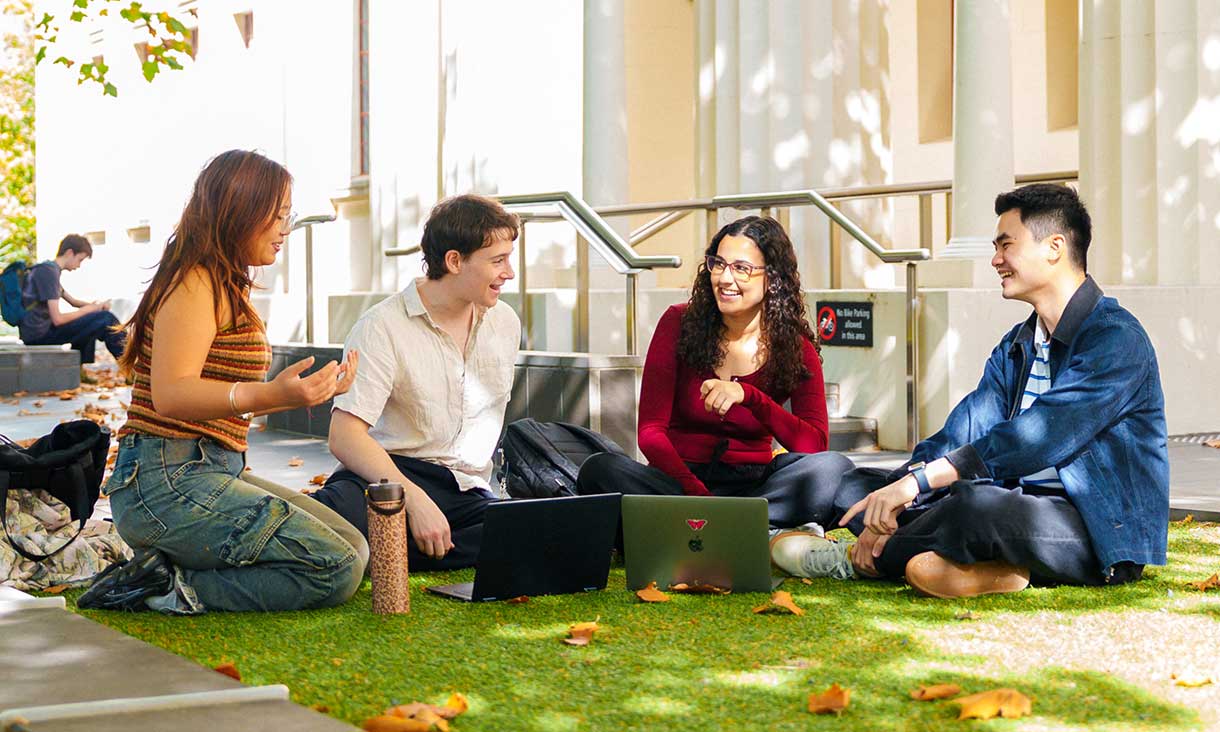
Four students sitting and talking outdoors on campus, using laptops, surrounded by autumn leaves and sunlight.

Does studying abroad increase employability?

Discover how studying abroad can improve employability, develop career-ready skills and create future career opportunities through internal study experiences.

Popular bachelor’s degrees in Australia

Australia offers undergraduate degrees across almost every field of study. The right degree depends on your interests, career goals and the industries you’d like to work in after graduation. Here are some of the most popular bachelor’s degrees for international students. 

Degree name Typical duration (full-time) Good if you want to… Common career outcomes
Bachelor of Business 3 years  …develop leadership and commercial skills.  Marketing, management, entrepreneurship, consulting 
Bachelor of Nursing 3 years …care for people in clinical settings. Registered nurse, community health
Bachelor of Computer Science 3 years …solve problems using technology.  Software developer, programmer, data specialist
Bachelor of Biomedical Science 3 years …explore human health and medical science. Research, biotechnology, postgraduate medicine
Bachelor of Architectural Design 3 years …design buildings and spaces. Architectural design, urban design 
Bachelor of Accounting 3 years …understand finance and business. Accountant, auditor, financial analyst 
Bachelor of Psychology 3 years …study human behaviour. Psychology pathways, research, human services
Bachelor of Cyber Security 3 years …protect digital systems and information. Cyber security analyst, security consultant
Bachelor of Engineering (Honours) 4 years …design solutions for real-world challenges. Civil, mechanical, electrical and software engineering 
Bachelor of Commerce 3 years …build expertise across business disciplines. Finance, economics, international business 

What are the entry requirements?

Entry requirements vary between universities and programs, but international students typically need to demonstrate both academic achievement and English language proficiency. 

Common requirements include: 

  • completion of secondary school or an equivalent qualification  
  • meeting the minimum academic entry requirements for your chosen course  
  • English language proficiency through recognised tests such as IELTS, TOEFL or PTE Academic  
  • additional requirements for some courses, such as portfolios, interviews or prerequisite subjects.  

For accurate and up-to-date entry requirements information, please head to the course pages.  

Is there an age limit for studying a bachelor's degree?

To be eligible for admission to an RMIT bachelor, you must be at least 16 on the commencement date of the course. At some other Australian unis, you have to be at least 17. There is generally no upper age limit for studying a bachelor’s degree in Australia, although visa requirements and individual university policies may differ. 

English language requirements

To study your bachelors at RMIT, you’ll need to complete one of the following English proficiency tests:

  • IELTS (Academic): minimum overall band of 6.5 (with no individual band below 6.0)
  • TOEFL (Internet Based Test - IBT) for Australia: minimum overall score of 79 (with minimum of 13 in Reading, 12 in Listening, 18 in Speaking and 21 in Writing)
  • Pearson Test of English (Academic) (PTE (A)): minimum score of 58 (with no communication band less than 50)
  • Cambridge English: Advanced (CAE): minimum of 176 with no less than 169 in any component.

Please use this as a guide only. 

You are strongly advised to check the minimum English requirements in the 'Entry requirements and admissions' section of your preferred course.

How much does a bachelor’s degree in Australia cost?

Tuition fees vary depending on the university and the course, but most international students can expect to pay between AU$36,000–AU$50,000 per year. (Your total study costs will also include accommodation, food, transport, health insurance and other living expenses.) 

When comparing universities, look beyond tuition fees. Consider the overall value of the degree, including teaching quality, facilities, industry connections and graduate outcomes. 

You’ll find the most accurate tuition fees on each course page, while our guide to the cost of studying in Australia explains other expenses you should plan for before you arrive. 

What else should you consider before studying overseas?

Studying overseas is about much more than earning a qualification. 

You’ll be living independently, adapting to a new culture and building a life in another country. While this can be challenging at first, it’s also one of the most rewarding parts of the experience. 

Before making your decision, think about: 

Preparing for these practical considerations can help you settle into university more confidently. 

Why study your bachelor’s at RMIT?

RMIT combines academic excellence with practical, hands-on, industry-connected learning.

Learn by doing

Many undergraduate degrees include work-integrated learning, so you can apply your knowledge in real-world settings.

Study in the heart of Melbourne

Experience one of the world’s leading student cities, filled with sport, music, culture, food and friendly communities.

Flexible pathways

RMIT offers multiple routes into undergraduate study and opportunities to tailor your degree as your interests evolve.

Thinking of studying your master's degree instead?

If you're considering studying a master's degree in Australia, explore top courses, fees and career pathways in our comprehensive guide.

Next steps

Book a session

Book a session

You can also book an 1-on-1 online or phone consultations with our team about your study options, entry requirements, eligibility, scholarships and much more. 

aboriginal flag float-starttorres strait flag float-start

Acknowledgement of Country

RMIT University acknowledges the people of the Woi wurrung and Boon wurrung language groups of the eastern Kulin Nation on whose unceded lands we conduct the business of the University. RMIT University respectfully acknowledges their Ancestors and Elders, past and present. RMIT also acknowledges the Traditional Custodians and their Ancestors of the lands and waters across Australia where we conduct our business - Artwork 'Sentient' by Hollie Johnson, Gunaikurnai and Monero Ngarigo.

Learn more about our commitment to Indigenous cultures