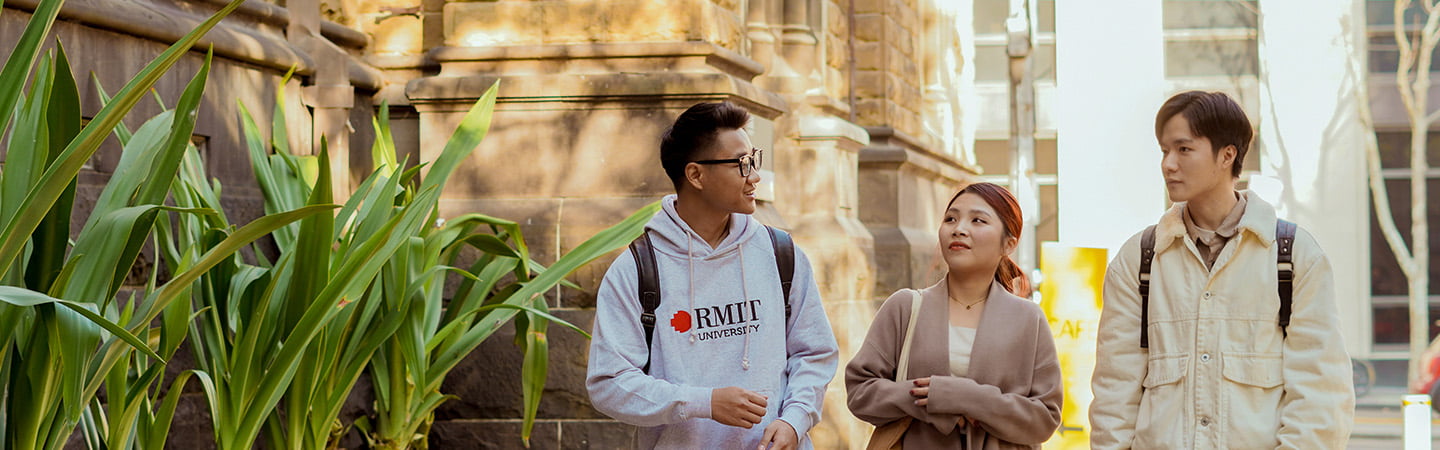
50% more Indonesians study in Australia than in all of Europe combined – a sign of how strongly Australia’s education system draws Indonesian students. Melbourne is consistently ranked among the world's best student cities, and RMIT sits right in the heart of it, giving you a direct route into industries like design, architecture, business and technology.
Whether you're finishing your SMA (or other recognised high school qualification such as IB Diploma or UK A level), hold a Sarjana degree, or a D3/D4 qualification, this page covers what matters most in deciding if Australia, and RMIT, are the right for your next step.
RMIT is #1 in Australia for Architecture/Built Environment and Art & Design
Based in Melbourne, RMIT is the #4 best city in the world and #1 in Australia for students**
RMIT is connected with Melbourne's creative, business and tech industries
Australia has kept international student places steady at 295,000 for 2027, the same as 2026, giving the sector continued stability. Universities can apply for additional places by demonstrating engagement with priority regions and improving student accommodation – RMIT is one of the universities doing this, which can translate to more opportunities for applicants from Indonesia.
As an Indonesian citizen, you’ll also benefit from a reduced Student visa (subclass 500) application charge of AU$2,050, instead of the standard $2,500, under the government’s ASEAN concession – applied automatically when you lodge.

Business, health, computing and engineering are among the most in-demand study areas for international students across Australia. Here’s how that looks at RMIT, where many Indonesian students come to study in these areas.
From accounting to commerce, RMIT's business courses are shaped by real industry partnerships, encouraged by Melbourne's position as a major Asia-Pacific business hub.
*QS World University Rankings by Subject 2026
Try adjusting them or reset all filters to see more options

 February, July
 AU$47,040 (2027 annual)
 Melbourne City
 Full-time 3 years
 February, July, October AU$47,040 (2027 annual) Melbourne City Full-time 3 years
 February, July AU$47,040 (2027 annual) Melbourne City Full-time 3 years
 February, July AU$50,880 (2027 annual) Melbourne City Full-time 2 years or 1.5 years accelerated
 February, July AU$50,880 (2027 annual) Melbourne City Full-time 2 years or 1.5 years accelerated
*QS World University Rankings by Subject 2026
RMIT's engineering programs combine strong theoretical foundations with hands-on industry experience.
Try adjusting them or reset all filters to see more options
 February, July AU$42,240 (2027 annual) Melbourne City Full-time 2 years
 February AU$72,767 (2027 annual) Point Cook, Melbourne City Full-time 3 years
February, July AU$53,856 (2027 annual) Melbourne City Full-time 5 years
February AU$72,767 (2027 annual) Point Cook, Melbourne City Full-time 3 years
February, July AU$53,856 (2027 annual) Melbourne City Full-time 5 years February, July AU$48,960 (2027 annual) Melbourne City Full-time 4 years
 February, July AU$52,632 (2027 total) Melbourne City, Bundoora Full-time 5 years
 February, July AU$48,960 (2027 annual) Melbourne City Full-time 4 years
 February, July AU$48,960 (2027 annual) Melbourne City Full-time 4 years
 February, July AU$53,856 (2027 annual) Melbourne City Full-time 5 years
February, July AU$45,120 (2027 annual) Melbourne City Full-time 5 years
February, July AU$53,856 (2027 annual) Melbourne City Full-time 5 years
February, July AU$45,120 (2027 annual) Melbourne City Full-time 5 years February, July AU$45,120 (2027 annual) Melbourne City Full-time 4 years
*QS World University Rankings by Subject 2026
With demand driven by data science, cybersecurity and software development, RMIT's IT and data science courses are built around the skills employers worldwide are actively looking for.
Try adjusting them or reset all filters to see more options
 February, July AU$45,120 (2027 annual) Melbourne City Full-time 3 years
 February, July AU$45,120 (2027 annual) Melbourne City Full-time 3 years
 February, July AU$45,120 (2027 annual) Melbourne City Full-time 3 years
 February, July AU$45,120 (2027 annual) Melbourne City Full-time 3 years
February, July AU$47,040 (2027 annual) Melbourne City Full-time 2 years
February, July AU$45,120 (2027 annual) Melbourne City Full-time 3 years
February, July AU$47,040 (2027 annual) Melbourne City Full-time 2 years February, July AU$47,040 (2027 annual) Melbourne City Full-time 2 years
*QS World University Rankings by Subject 2026
Try adjusting them or reset all filters to see more options
 February, July AU$52,800 (2027 annual) Melbourne City Full-time 3 years
 February, July AU$48,000 (2027 annual) Melbourne City Full-time 3 years
 February, July AU$48,000 (2027 annual) Melbourne City Full-time 3 years
February, July AU$54,720 (2027 annual) Melbourne City Full-time 2 years
February, July AU$48,000 (2027 annual) Melbourne City Full-time 3 years
February, July AU$54,720 (2027 annual) Melbourne City Full-time 2 years February, July AU$45,120 (2027 annual) Melbourne City Full-time 2 years
 February, July AU$54,060 (2027 annual) Melbourne City Full-time 2 years
Australia’s health system is globally respected, supported by strong public health infrastructure, biomedical research and allied health services.
Healthcare and social assistance is one of Australia’s largest and fastest-growing employment sectors, according to Jobs and Skills Australia. There is strong demand across nursing, allied health, medical research and laboratory sciences.
Try adjusting them or reset all filters to see more options
February, July AU$47,040 (2027 annual) Bundoora Full-time 3 years February, July AU$47,040 (2027 annual) Bundoora Full-time 3 years
February AU$47,040 (2027 total) Bundoora Full-time 1 year
February, July AU$47,040 (2027 annual) Bundoora Full-time 3 years
February AU$47,040 (2027 total) Bundoora Full-time 1 year February, July AU$45,120 (2027 annual) Bundoora Full-time 3 years
 February AU$49,920 (2027 annual) Bundoora Full-time 4 years
 February, July AU$45,120 (2027 annual) Melbourne City Full-time 3 years
 February, July AU$50,880 (2027 annual) Bundoora Full-time 2 years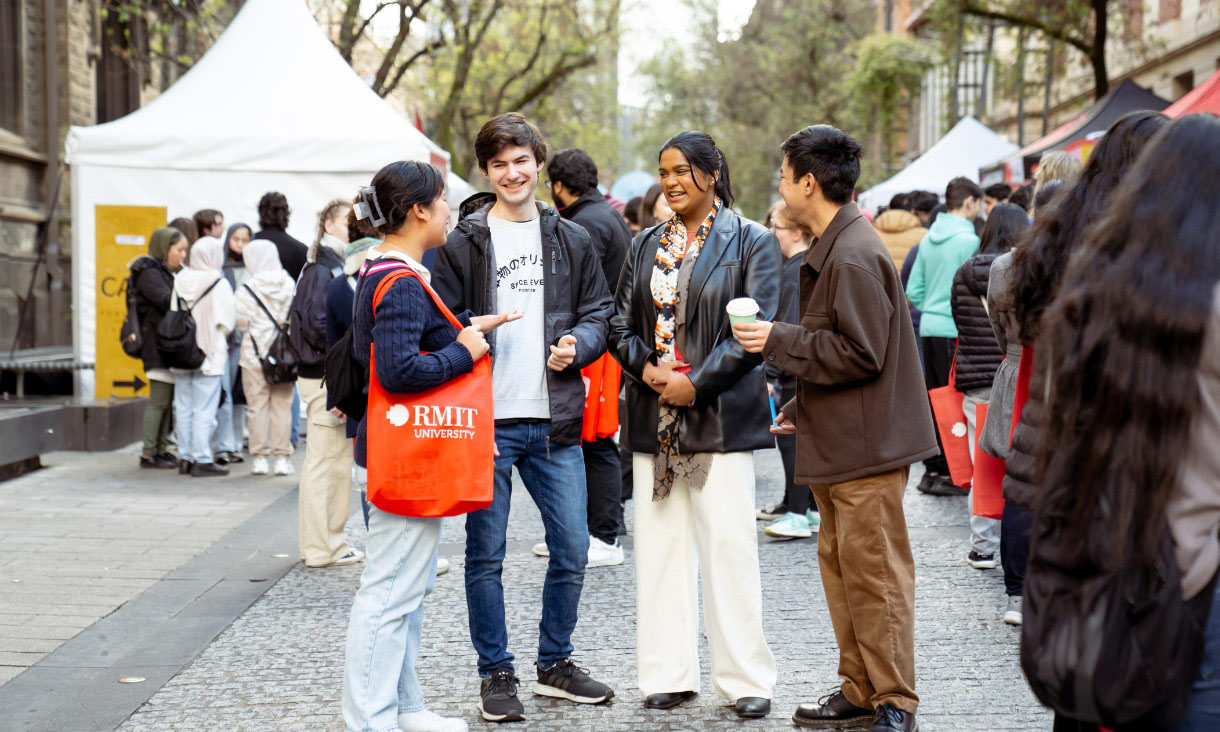
Every university course has its own entry requirements, and RMIT is no different, so it helps to know how things generally work before looking at the specifics for your situation.
Your course page will always have the exact details you need, covering everything from entry requirements and academic prerequisites to any extra steps like portfolios or selection tasks.
Whether you're finishing SMA or already hold a Sarjana, D4, or D3 qualification, the sections below cover how entry requirements generally apply across RMIT's courses.
The score you need depends on your level of study:
For diploma and associate degree entry, RMIT accepts either your ongoing school report results from your final year of SMA (SMA3), or your Ujian Sekolah (final school exam) results.
For a bachelor's degree entry, RMIT specifically requires your Izajah Sekolah showing your final Ujian Sekolah results - your SMA3 report grades alone aren't accepted at this level. For example, an average Ujian Sekolah score of 80% is broadly equivalent to the Australian standard needed for programs requiring 65-70%, while a 90-100% average aligns with programs requiring 80% and above.
Below is an outline of the current minimum percentage needed for some of the most popular courses among Indonesian students:
| Course | Minimum percentage (Ijazah - Sekolah Menengah ATAS + final results of Ujian Sekolah) |
|---|---|
| Bachelor of Business | 80% |
| Bachelor of Commerce | 90% |
| Bachelor of Engineering | 80% |
| Bachelor of Architectural Design | 60% |
| Bachelor of Nursing | 80% |
| Bachelor of Computer Science | 80% |
| Bachelor of Science | 80% |
| Bachelor of Interior Design | 80% |
Exact requirements vary by course, so check your specific course page or see RMIT's full Indonesia entry requirements guide for the complete conversion table.
Offers also depend on subject prerequisites, English language requirements, further studies undertaken after high school, any selection tasks or portfolios your course requires, overall application strength and your ability to meet the Genuine Student requirement for the Student Visa program, as outlined by the Australian Department of Home Affairs.
If you don't meet the direct entry requirements for your chosen bachelor's degree, there may be other routes you can take to get there. RMIT Foundation Studies and Pathways are designed to bridge that gap with a direct pathway into your degree on successful completion.
For example, you may also be able to apply for Foundation Studies packaged with your preferred degree after completing SMA 2, without completing SMA 3, subject to meeting the Foundation Studies entry requirements.
Similarly, a student who does not meet the criteria for RMIT’s Bachelor of Business could open that door by first completing an Associate Degree in Business. Each course has its own potential pathways, so navigate to Pathways & further study on the course page to see what other options you have.
A completed 4-year Sarjana (S1) is recognised as a standard bachelor's degree, so you may be eligible to apply directly to an RMIT master's, provided you meet the GPA threshold and any other requirements for your chosen program. You can find the acceptance criteria on each course page.
To study in Australia, all international students must meet a minimum standard of English, which can differ based on university and course. From Foundation studies through to Postgraduate courses, most courses at RMIT require an IELTS (Academic) score of anywhere from 5.5 to 7. That said, there are a few English language testing providers accepted, not just IELTS.
When applying to RMIT, you can demonstrate your English language proficiency in 3 ways:
If you are demonstrating your proficiency through an English test, RMIT accepts results from several English language proficiency tests, including:
When you apply for your Australian student visa, you'll need to show proof of sufficient funds to cover these costs, so it's worth planning your budget around both your course and your living situation early.
Your fees will be based on the number of credit points you are enroled in for your degree, and the fee-per-credit-point for that course in the current year.
Most, but not all, degrees at RMIT have a standard annual full-time load of 96 credit points, so you can estimate your expected tuition fee for the year by multiplying the fee-per-credit-point by 96.
Fee per credit point x credits per year = annual fee
Budgeting day-to-day
Living costs are the other major factor, and how much you spend often comes down to where you live. Sharing a rental house with other students is typically the cheapest option, since you split rent and bills. Purpose-built student accommodation, which RMIT offers at all three Melbourne campuses, can cost more per week but usually bundles in utilities and internet, which can simplify budgeting. Another option is a homestay, living with a local family, which often includes meals and can suit students who want a more supported start. Most international students at RMIT budget AU$30,000 to AU$45,000 a year for living expenses in Melbourne, on top of tuition.
Studying in Australia is an investment in your future. Use our guide to tuition fees, everyday expenses and understanding working rights to help you plan ahead.
Indonesian students can apply for the Academic Merit Scholarship for Southeast Asia, which gives a 20% tuition fee reduction for the duration of an eligible course. To qualify, you'll need an Australian-equivalent GPA of 2.5 (or 70% average, or an ATAR of 75) in your most recent qualification, and a full or conditional offer for an eligible vocational education, associate degree, bachelor's, graduate certificate, graduate diploma or master's by coursework program.
Scholarships are awarded on a first-come, first-served basis, so it's worth applying early.

RMIT offers a range of scholarships to commencing international students across all fields of study. Browse our scholarships and see what you could be eligible for.
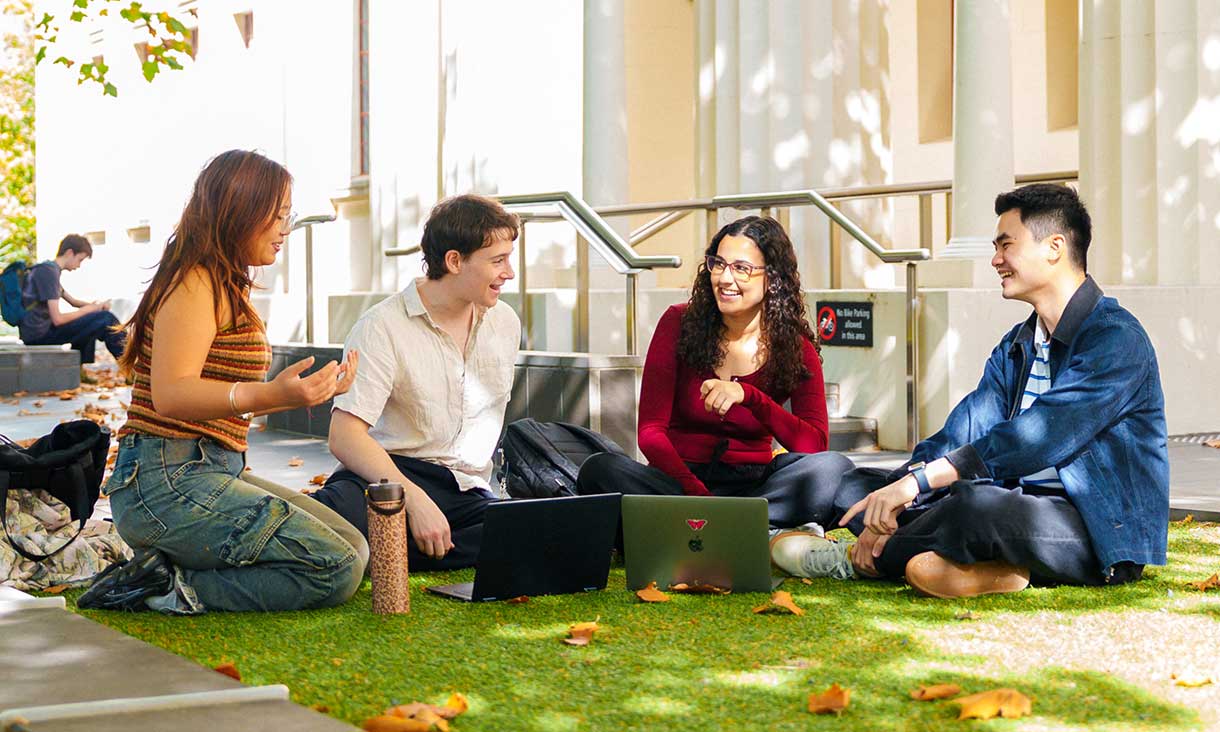
Indonesian students have a well-established presence in Australia as part of a much larger Indonesian community, with tens of thousands studying here in any given year. Further supporting students, RMIT has an active Indonesian Student Association (PPIA RMIT), so if you choose to study in Melbourne, you won’t be on your own. PPIA RMIT runs regular events and gives new students a ready-made community from day one.
Another perk many Indonesian students find in Melbourne is the food scene; Melbourne’s multicultural side is reflected throughout the city, where ample halal restaurants, grocers and food centres, including options right on Swanston Street near RMIT's City campus, are easy to find across the city.
Beyond that, RMIT runs its own calendar of international and cultural events throughout the year.
Where you live, how you get around and staying safe are all things worth planning ahead of arriving. RMIT offers student accommodation across its three Melbourne campuses in the city, Brunswick and Bundoora, along with share housing, private rentals and homestay options nearby.
Melbourne's public transport network makes getting to and from each campus straightforward, plus, RMIT's City campus sits within the free tram zone.
See our Student Life and Support for Students pages for the full picture on accommodation, safety and settling in.
Applying to RMIT from Indonesia involves four key steps: choosing your course and checking its entry requirements, gathering your documents, submitting your application, then applying for your student visa once you have accepted your offer and received Confirmation or Enrolment (COE).

Search for your course and review its specific entry requirements, which vary by program.

You'll typically need academic transcripts and graduation certificates, evidence of your English language level, and any course-specific documents.

Apply through RMIT's Application Portal, either directly or through an authorised education agent based in Indonesia. RMIT's international advisors can help confirm entry requirements and required documents if you're applying directly; if you'd rather have support through the whole process, including your visa application, find an agent through RMIT's Find an Education Agent tool.

Once you accept your offer, apply for your Australian student visa. Apply as early as you can to allow time for processing. See our Visa Guide for more information on these.
If you will be under 18 years of age when commencing your proposed studies, you will be required to provide confirmation of your welfare arrangements. For further information, please visit International students under 18 years of age.
The Indonesian school year usually runs from July to June, with SMA graduation typically falling in May or June. RMIT has two main intakes each year: Semester 1 in February/March, and Semester 2 in July. This means that for most Indonesian SMA graduates, Semester 2 tends to be the closer fit, since it starts just a month or two after graduation, rather than waiting eight or nine months for the following February/March intake.
That said, many students from Indonesia choose to apply to Semester 1 for a variety of reasons. These can be personal choices, or dependent on course availability in each semester. Ultimately, timing can vary depending on your course, your documents, and your own plans, so the most appropriate intake to apply for will differ from person to person.
Before you apply, it helps to have the following ready:
Requirements vary by course, so check the documents required for your application before you start.
Once you've accepted your offer, you'll need to apply for a student visa (subclass 500). You'll need your Confirmation of Enrolment, proof of funds, Overseas Student Health Cover (OSHC), and any additional supporting documents.

Many Indonesian students apply to RMIT through an RMIT-authorised education agent in Indonesia, who can help guide you through course selection, your application and visa preparation. Find an RMIT-authorised agent or book a 1-on-1 appointment with RMIT's international team directly.
Start your journey as an international student at RMIT and find the right course for you - with the support, networks and career opportunities to match.


RMIT University acknowledges the people of the Woi wurrung and Boon wurrung language groups of the eastern Kulin Nation on whose unceded lands we conduct the business of the University. RMIT University respectfully acknowledges their Ancestors and Elders, past and present. RMIT also acknowledges the Traditional Custodians and their Ancestors of the lands and waters across Australia where we conduct our business - Artwork 'Sentient' by Hollie Johnson, Gunaikurnai and Monero Ngarigo.
Learn more about our commitment to Aboriginal and Torres Strait Islander peoples