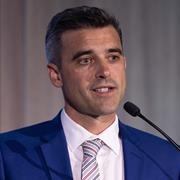
Professor Peter Macreadie
Details
 College: School of Science
 Department: School of Science
 Campus: City Campus Australia
 peter.macreadie@rmit.edu.au


Open to
- Collaborative projects
- Industry Projects
- Masters Research or PhD student supervision
- Media enquiries
- Membership of an advisory committee
About
Prof. Macreadie is an internationally recognised leader in blue carbon and nature-based climate solutions. He is Director of RMIT University’s Centre for Nature Positive Solutions. His research integrates ecology, biogeochemistry, engineering, economics, and policy to develop measurable and verifiable climate and biodiversity solutions.
Prof. Macreadie’s work has shaped national and international carbon-accounting frameworks. His research informed the world’s first model-based blue carbon crediting method under the ACCU Scheme and has been cited in more than 40 policy documents, including the EU Green Deal, the World Bank’s Blue Carbon Wealth of Nations, UN Ocean Decade guidance, and reports tabled to the United States Congress.
He has published more than 280 scientific papers, with over 18,000 citations and an h-index of 70, in leading journals such as Science, Nature Climate Change, Nature Ecology & Evolution, One Earth, The Lancet Planetary Health, PNAS and Global Change Biology. He collaborates with more than 1,000 researchers across 60 countries, including many of the world’s most highly cited blue carbon scientists.
Prof. Macreadie has secured more than $42 million in research and partnership funding, leading major interdisciplinary programs across blue carbon, teal carbon, ecosystem restoration, natural capital accounting, aquatic biosecurity, coastal protection, citizen science, microplastics, and offshore decommissioning. His ARC Future Fellowship (2025–2029) focuses on scaling blue carbon through improved measurement, finance, and equitable on-ground implementation.
His contributions to science and policy have been recognised through more than 30 awards, including the 2023 Frontiers Planet Prize (Australia), the 2020 Premier’s Sustainability Award (Victoria), and the 2015 David Syme Prize. Prof. Macreadie also leads the development of open-access tools — such as low-cost greenhouse-gas loggers and satellite-based monitoring systems — now used globally to support high-integrity climate and nature markets.

UN sustainable development goals
- 13 Climate Action
- 14 Life Below Water
- 15 Life on Land
- 1 No Poverty
- 12 Responsible Consumption and Production
- 11 Sustainable Cities and Communities

Academic positions
- Professor
- RMIT University
- Melbourne, Australia
- 6 May 2024 – Present
- Professor of Marine Science
- Deakin University
- Burwood, Australia
- 1 Jan 2021 – 3 May 2024
- Associate Professor
- Deakin University
- Burwood, Australia
- 1 Jan 2018 – 31 Dec 2020
- Senior Lecturer
- Deakin University
- Burwood, Australia
- 2 Feb 2016 – 31 Dec 2017

Supervisor projects
- Analysis of microbiomes and their functional profiles from the mangrove habitats to understand their role in carbon utilization and storage
- 12 May 2026
- Modelling Ocean Alkalinity Enhancement with Industrial Alkaline Materials: Application to the Great Barrier Reef
- 21 Apr 2026
- Plastic pollution and climate feedback: A study through the lens of blue carbon ecosystems
- 6 Feb 2026
- Enhancing Water Quality and Water Security in Agricultural Dams in Australian
- 18 Dec 2025
- Evaluating Effective Coastal Wetland Management Strategies
- 1 Jun 2025
- Microplastics-mediated dissolved organic matter on blue carbon mineralisation
- 21 May 2025
- Carbon Cycling within Non-Tidal Saline Wetlands
- 23 Apr 2025
- Advancing blue carbon restoration for climate change mitigation
- 21 Jan 2025
- Improving Decision Making in Mangrove Restoration
- 12 Dec 2024
- Quantifying the diverse benefits of large-scale coastal restoration, demonstrating the benefits of Natural Capital, in Victoria, Australia
- 6 Dec 2024
- Barriers and opportunities to blue carbon projects in the Western Indian Ocean (WIO)
- 27 Nov 2024
- Effects of Plastic Pollution on Blue Carbon Ecosystems
- 7 Nov 2024

Research interests
Climate Change Mitigation
-
- Blue carbon ecosystems (e.g., seagrasses, mangroves, tidal marshes)
- Methane and nitrous oxide emissions from aquatic systems
- Remote sensing for blue carbon accounting
- Ocean alkalinity enhancement
Ecosystem Restoration
-
- Rehabilitation of degraded wetlands
- Innovative techniques for mangrove, tidal marsh, and seagrass restoration
- Long-term monitoring of restored ecosystems
Sustainable Fisheries and Biodiversity
-
- Fisheries enhancement from vegetated coastal ecosystems
- Low-cost biodiversity monitoring strategies
Natural Capital and Environmental Economics
-
- Valuation and accounting of natural capital
- Development of market-based blue carbon projects
- Exploring co-benefits of carbon and biodiversity credits
Decommissioning of Offshore Infrastructure
-
-
- Environmental and ecological considerations for decommissioning offshore oil and gas platforms
- Role of artificial structures in supporting marine biodiversity
- Strategies to balance ecological restoration and industrial legacy
-
Aquatic Biosecurity and Pollution
-
- Microplastics in blue carbon ecosystems
- Biosecurity measures for aquatic invasive species
Coastal Protection and Erosion Control
-
- Hybrid green-grey infrastructure for resilience
- Role of vegetation in mitigating coastal erosion
Citizen Science and Community Engagement
-
- Participatory approaches in environmental monitoring
- Climate literacy and corporate engagement
- Outreach programs to provide educational and immersive experiences
Advanced Research Techniques
-
- Use of molecular biology for carbon cycling studies
- Applications of structural equation modelling in ecosystem research




