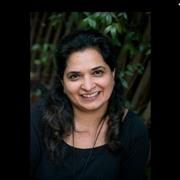
Dr. Bhavna Middha
Details
 College: School of GUSS
 Department: School of GUSS
 Campus: City Campus Australia
 bhavna.middha@rmit.edu.au
 ORCID: 0000-0001-6501-6124
Open to
- Masters Research or PhD student supervision
- Media enquiries
- Membership of an advisory committee
- Join a web conference as a panellist or speaker
- Mentoring (short-term)
- Teaching provision
About
I am a sustainable consumption scholar and a social practice theorist. My research spans the sociology and geographies of consumption through topics such as food, plastics and packaging, energy, and waste. My work has explored and advanced the practice perspective in sustainable consumption by focusing on justice, equity and health aspects of sustainability transitions. A strong focus of my work has been on qualitative research methods, where digital ethnography has been an important aspect of my empirical work.
I am an Australian Research Council (ARC) funded Discovery Early Career Researcher Award (DECRA) recipient for 2024 and a Senior Research Fellow. Bhavna is based at the world-leading Centre for Urban Research in the School of Global, Urban and Social Studies, where I am the Deputy Associate Director of the Regenerative Environments and Climate Action Theme.
I am a recipient of the 2024 RMIT Vice-Chancellor's Award for Research Engagement and Impact (ECR) and the 2024 DSC Award for Research Excellence (ECR). I have also received the 2025 Europe Visiting Fellowship, under which I spent a 10-week secondment at RMIT Europe to advance international collaboration for RMIT.
I co-lead the 'Social Practices and Sustainable Consumption' Enabling Impact Network at RMIT.
I also co-lead RMIT's interdisciplinary 'Food Cultures and Practices' Enabling Impact Network.
My DECRA research titled “Tackling food-related single-use plastics in diverse consumption contexts” aims to investigate the uneven impacts of interventions that target consumers’ engagement with single-use food plastics by utilising critical social science approaches. This research aims to create new knowledge through an evidence base in sustainable consumption and waste studies using innovative qualitative techniques. Expected outcomes of this project include conceptual and methodological approaches that enhance societal capabilities for practicable waste management. This will provide significant benefits by improving Australia’s capacity to develop and integrate lived experiences of single-use food plastics into the current and future National Waste Policy and National Plastics Plan"
I am a CI on the $12 million ARC Industrial Transformation and Research Hub - Transformation of Reclaimed Waste Resources to Engineered Materials and Solutions for a Circular Economy (TREMS) (2021-2026). As part of the hub, I research the social and policy dimensions of waste production and consumption.
My other ongoing research projects include
CI: ARC Linkage project: TRASH: transforming refuse in apartments for sustainable housing
CI: ARC Discovery Project: Empowering households in resource-efficient sustainability transitions
Lead CI: Examining the Container Deposit Scheme in Victoria as an equitable and sustainable waste management strategy
Lead CI: Consumer fridge studies and meat waste project funded by End Food Waste Australia (previously Fight Food Waste CRC) and Meat and Livestock Australia

Research fields
- 4406 Human geography
- 300606 Food sustainability
- 401106 Waste management, reduction, reuse and recycling
- 440612 Urban geography
- 440601 Cultural geography
- 440604 Environmental geography
- 4410 Sociology
- 330410 Urban analysis and development

UN sustainable development goals
- 10 Reduced Inequalities
- 11 Sustainable Cities and Communities
- 12 Responsible Consumption and Production
- 13 Climate Action
- 15 Life on Land
- 3 Good Health and Well Being
- 7 Affordable and Clean Energy
- 9 Industry, Innovation and Infrastructure

Academic positions
- ARC DECRA Senior Research Fellow
- RMIT University
- Centre for Urban Research, School of Global, Urban and Social Studies
- Melbourne, Australia
- 1 May 2024 – Present
- Research Fellow, ARC ITRH TREMS Hub
- RMIT University
- Centre for Urban Research, School of Global, Urban and Social Studies
- Melbourne, Australia
- 25 May 2021 – 30 Apr 2024
- Research Fellow, ARC Linkage - HEET Project
- RMIT University
- Centre for Urban Research, School of Global, Urban and Social Studies
- Melbourne, Australia
- 9 Sep 2019 – 25 May 2021
- Research Fellow, Norwegian Research Council DEMUDIG Project
- RMIT University
- Centre for Urban Research, School of Global, Urban and Social Studies
- Melbourne, Australia
- 1 May 2019 – 1 May 2020

Supervisor projects
- Amplifying the Regenerative Transition: Urban Tourism in the Global South
- 16 Sep 2025
- (Re)Connecting Humans with Nature: Embedding Nature Values into the Fashion Value Chain and Developing Positive Visions for the Future
- 22 Jul 2024
- Circular Economy volume home building; prospects for transition
- 16 Aug 2022

Teaching interests
I currently coordinate and teach the Sustainability, Governance and Social Change core course in the Master's of Environmental and Urban Planning in the School of Global, Urban and Social Studies.
I have previously taught undergraduate and postgraduate courses, including Environmental Ideas, Thoughts and Action.
I regularly guest lecture on various topics and courses such as urban spatial planning, sustainable built environment, Sustainability, Governance and Social Change and Communicating Sustainability. I have participated as a panel advisor for master's capstone students to discuss research methods, especially digital ethnography.
I have also been a guest lecturer in other schools, in DSC college, such as the School of Property, Construction and Management (Sustainable built environment) and the School of Design (Service Design)

Research interests
Discard studies, Food studies, Social Practice Theories, Urban and Regional Planning, Policy development, Human Geography, Sociology, Cultural Studies,
Initiatives and links
 https://cur.org.au/people/bhavna-middha/
- https://tremshub.com/
- https://www.rmit.edu.au/research/our-research/enabling-impact-platforms/case-studies/cafe-lab
- https://endfoodwaste.com.au/projects/consumer-fridge-behaviour-and-waste-reduction-of-red-meat/
- The Conversation
- Social practices and Sustainable Consumption Impact Network
- Food Cultures and Practices Impact Network



