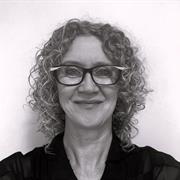
Professor Cecily Maller
Details
 College: School of GUSS
 Department: School of GUSS
 Campus: City Campus Australia
 cecily.maller@rmit.edu.au
 ORCID: 0000-0001-8322-2124
 LinkedIn
Open to
- Masters Research or PhD student supervision
- Media enquiries
- Collaborative projects
- Industry Projects
- Join a web conference as a panellist or speaker
About
Cecily Maller is an interdisciplinary academic based in geography and urban planning. Using mixed methods, her research focuses on everyday human-environment relationships and encounters in urban settings and sustainability, specialising in more-than-human approaches and relational thinking. She is particularly interested in using social theory to understand everyday practices, and the affective, health and wellbeing dimensions of multi-species interactions in homes, workplaces and neighbourhoods, in the context of making cities healthier, biodiverse, and more equitable places.
From 2018-2023 Cecily was one of the founding Lead Editors of the journal ‘People and Nature’ and she is the author of ‘Healthy urban environments: More-than-human theories’ (Routledge, 2018). Her other books include three edited collections, 'Social Practices and Microscopic Matter Challenging Ideas about Bodies, Microbes and Health' (Routledge, 2026/27), 'Social Practices, Intervention and Sustainability: Beyond Behaviour Change' (Routledge, 2012) and 'Social Practices and Dynamic Non-Humans: Nature, Materials and Technologies' (Palgrave, 2019).
A Professor at RMIT University’s School of Global, Urban and Social Studies in Melbourne, Australia she is based in the Sustainability and Urban Planning teaching program. In support of her research, Cecily has been awarded three fellowships (Global Cities Institute Postdoctoral Fellowship 2008-2010, a VicHealth Research Practice Fellowship in Residential Planning and Community Development 2011-2015, and a Vice Chancellor's Senior Research Fellowship 2016-2019). She has established and co-led two research programs in the Centre for Urban Research, Beyond Behaviour Change (2012-2019) and People and Environment (2019-2023).
In 2025 Cecily was recognised in the top 2% of scientists according by Stanford/Elsevier. In the same year she was appointed to the Australian Research Council's (ARC) College of Experts.
A Fellow of the Royal Geographical Society (UK), Cecily has a Bachelor of Science (Hons) in Australian Environmental Studies (Ecology major) and a PhD in health and social development.

Research fields
- 330413 Urban planning and health
- 420606 Social determinants of health
- 420603 Health promotion
- 4406 Human geography
- 440601 Cultural geography
- 310301 Behavioural ecology
- 470209 Environment and culture

UN sustainable development goals
- 11 Sustainable Cities and Communities
- 3 Good Health and Well Being
- 15 Life on Land
- 12 Responsible Consumption and Production
- 13 Climate Action
- 10 Reduced Inequalities

Academic positions
- Professor
- RMIT University
- School of Global, Urban and Social Studies
- Melbourne, Australia
- 1 Jan 2024 – Present
- Associate Dean, Research and Innovation
- RMIT University
- School of Global, Urban and Social Studies
- Melbourne, Australia
- 6 Feb 2023 – Present
- Associate Professor
- RMIT University
- School of Global, Urban and Social Studies
- Melbourne, Australia
- 1 Jan 2020 – 31 Dec 2023
- Vice Chancellor's Senior Research Fellow
- RMIT University
- Centre for Urban Research
- Melbourne, Australia
- 1 Jan 2016 – 31 Dec 2019
- Vichealth Research Practice Fellow in Residential Planning and Community Development
- RMIT University
- Centre for Urban Research
- Melbourne, Australia
- 1 Jan 2010 – 31 Dec 2015
- Research Fellow
- RMIT University
- Centre for Urban Research
- Melbourne, Australia
- 8 Mar 2008 – 31 Dec 2010

Non-academic positions
- Social Scientist
- Australian Government
- Bureau of Rural Sciences, Department of Agriculture, Fisheries and Forestry
- Canberra, Australia
- 7 Mar 2006 – 7 Mar 2008

Supervisor projects
- Roads as workplaces: understanding aggression, anxiety and apathy in Delhi, India
- 10 Jun 2025
- Reframing Sustainable and Smart Rural and Regional Development in Australia Through Smart Villages and Smart Specialisation
- 20 May 2025
- (Re)Connecting Humans with Nature: Embedding Nature Values into the Fashion Value Chain and Developing Positive Visions for the Future
- 22 Jul 2024
- Regenerative energy commons as value networking modelling of just transition in decentralized mobile energy systems
- 2 Jul 2024
- Denaturalising heatwaves: a gendered analysis of social vulnerabilities in urban heatwaves and public cool spaces as a primary heat health measure/policy
- 5 May 2021
- Energy Culture: Implications for Energy Retrofit Programmes in Coyhaique, Chile
- 24 Jul 2020
- Re-Fashioning the Way We Wear: Dressing Practices and Sustainability
- 13 Feb 2019
- Does biodiversity restore us? The relationship between public perceptions of amenity and biodiversity in urban river corridors in Melbourne.
- 11 Jun 2015
- Explorations with 'Place' for Ecologically Responsive Urban Dwelling: A Study of More-than-human Place(making) and Ecological Design in Two Australian Cities
- 3 Mar 2014
- Community as 'Learnt Capacity': The Lived Experience of Filipino and Indian Residents in Masterplanned Estates
- 3 Mar 2014
- Making Sense of 'Food' Animals: A critical exploration of the persistence of 'meat'
- 4 Mar 2013
- Meatless Meat and Meat Free Days: An analysis of interventions and the socio-material-practice dynamics of reduced meat consumption
- 4 Mar 2013

Teaching interests
Human-nature relationships; nature-based solutions for cities; urban ecology; healthy urban environments; sustainability; relational theories social science research methods.

Research interests
Healthy cities, urban multispecies relationships, human-nature interactions, microbiomes, sustainable consumption, urban greening, health impacts of urban waterways, everyday life, sustainable housing, healthy neighbourhood design, social theory application.




