Diploma of Music (Sound Production)

Diploma of Music (Sound Production) - CUA50820

VOCATIONAL

Start your journey in sound production and work with industry professionals.

Student type:
Learning mode:
On campus
Entry score:

Not applicable*

Duration:
Full-time 1 year
Fees:

Fee finder

Next intake:
February, July
Location:
Melbourne City
Learning mode:
On campus
Entry score:

Not applicable

Duration:
Not applicable
Next intake:
Not applicable
Location:
Not applicable

Overview

Important update

This qualification has been superseded on the National Register. As a result, there may be changes to the structure, duration, content and fees of the qualification.

Please see the Apply page for key deadlines for Semester 1, 2026.

Are you ready to work in sound production?

The practical, hands-on Diploma of Music (Sound Production) provides you with studio, lab and live venue-based training. It also has state-of-the-art facilities, a wide range of professional audio equipment and industry-connected instructors.

The sound production suite at RMIT is made up of two years of study, with each year being an individual, nationally recognised qualification.

You will start your journey in the diploma and, upon successful completion, continue in the Advanced Diploma of Music (Sound Production).

In this diploma, you will be provided with the foundation skills and knowledge required for further study or a career in sound production.

Why study sound production at RMIT?

Cutting-edge facilities

Learn in sound lab and studio environments equipped with a wide range of professional audio equipment.

Connect with industry

Gain experience working with musicians under the supervision of professional instructors.

Hands-on learning

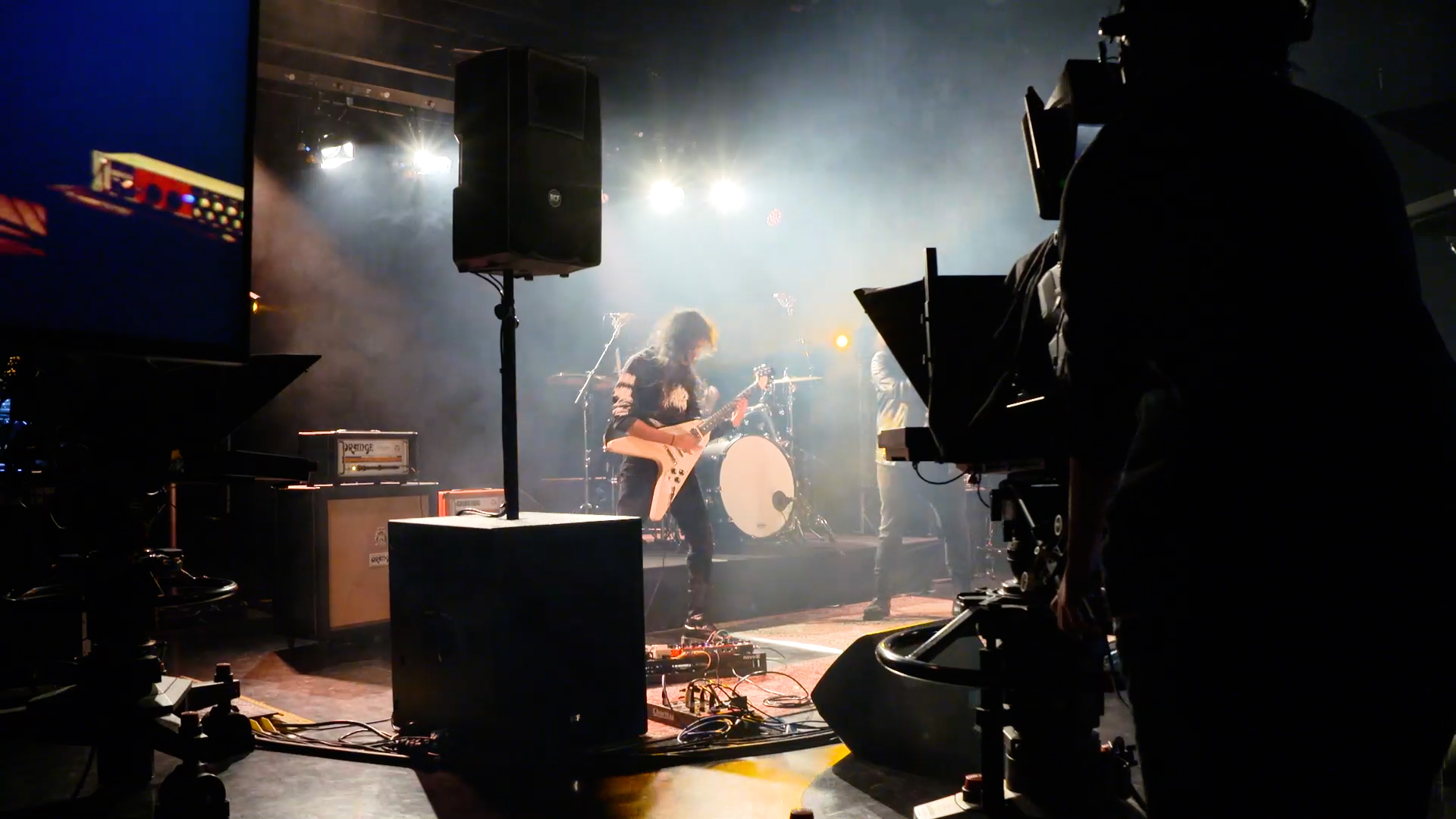
Stage and record live performances, covering front of house and post-production.

Rowena Wise

RMIT students deliver multi-disciplinary live production event

Meet RMIT students Rowena Wise and Xavier Gomez as they take you on their journey of working on Collide, an award-winning, cross-disciplinary project involving staff and students, working together with industry partners.

Please note: this diploma is not available for international students intending to study on a student visa. If you are holding a temporary visa (other than a student visa) and your visa has a full study entitlement, you may be eligible to apply. For more information, see the international students with other temporary (non-student) visas.

This training is delivered with Victorian and Commonwealth Government funding.

Details

Learning and teaching

The learning and teaching environment is made up of audiovisual classrooms, sound computer labs, live sound studios and recording and mixing sound studios.

Audio computer labs for software training and assessment are available to students, as well as online support.

Outside of the classroom, live performance venues are also used in order for students to gain experience in the working environment.

The Diploma of Music (Sound Production) offers you the opportunity to develop your hands-on skills. While theory classes cover important foundation skills and are delivered in lectures or online, the majority of the year is spent working in our specialised Sound Labs working on DAWs like ProTools, as well as in teams using our professional live audio equipment and state of the art sound recording studios working with musicians and being supervised by industry professionals. 

Online delivery of some classes also allows for flexible engagement and skill development away from RMIT but can occur onsite as required.

Assessment methods

Assessments are designed to gage your skill and provide you with feedback on your progress. You will be assessed throughout the semester through a variety of methods, including:

  • folio submission
  • reports
  • presentations
  • group and individual projects
  • lab projects
  • practical assignments, and more.

Studios and equipment

STUDIO 1: NEVE Genesys Console (first in the Southern Hemisphere). 

  • Pro Tools HDX-3 system  
  • Logic X (latest version)
  • HARRISON MixBus 32C v4
  • Education Partnership with McDSP digital signal processing offering full HD collection
  • UAD-2 High End Plug-ins and extensive range by AVID, WAVES and many others.
  • Extensive range of analogue outboard processing
  • MCI 500 series 2" 24track analogue recorder.
  • Stereo Studio monitoring by Dynaudio, Genelec and Yamaha
  • 27” iMac with Retina 5K display.

STUDIO 2: AVID C|24 Control Surface

  • Pro Tools HDX-3 system 
  • Logic X (latest version)
  • HARRISON MixBus 32C v4
  • Education Partnership with McDSP digital signal processing offering full HD collection
  • UAD-2 High End Plug-ins and extensive range by AVID, WAVES and many others.
  • Extensive range of analogue outboard processing
  • 5.1 Surround Studio monitoring by Genelec
  • Stereo Studio monitoring by Dynaudio
  • 27” iMac with Retina 5K display.

STUDIO 3: SSL AWS924 Console (with Delta software integration)

  • Pro Tools HDX-3 system 
  • Logic X (latest version)
  • HARRISON MixBus 32C v4
  • Education Partnership with McDSP digital signal processing offering full HD collection
  • 27” iMac with Retina 5K display.

Learning at RMIT

The types of classes you have will depend on the course you’re studying. Classes are offered in various formats designed to provide meaningful engagement with staff, industry and peers and provide for access and use of spaces where learning can be applied and active, including an array of specialised equipment.

Most RMIT courses do not include passive large-scale classes such as lectures, instead the content traditionally provided in lectures is made available online. This may be in the form of readings, videos or other on-demand learning materials. This content will also support the basis of interactive learning that takes place in on-campus classes.

RMIT Capabilities

The world is constantly changing, and there are universal skills that can help you adapt to the evolving nature of work and global engagement.

As part of your study experience at RMIT, we provide 6 future-focused RMIT Capabilities:

  • Ethical Global Citizens
  • Connected
  • Adaptive
  • Digitally Adept
  • Expert
  • Critically Engaged.

RMIT Capabilities are built into your course as well as some of our extracurricular experiences. They inform the design and delivery of your learning activities and assessments, so by the time you graduate, you’ll be ready to apply these capabilities in your life and work.

In this diploma, you'll do 40 hours of supervised work-integrated learning in RMIT’s professional sound recording studios, gaining industry experience and contacts.

This curriculum has been developed with the ongoing consultation of strong industry networks including:

  • Soundfirm
  • Sing Sing Recording Studios
  • Music and Effects Studios
  • Risk Sound
  • Bakehouse Studios
  • Newmarket Studios
  • ABC Network
  • Network 7
  • Network 10
  • E-Audio/Metropolis Audio
  • McDSP.

This course is competency-based and has been designed to help you develop the practical skills and knowledge necessary to work effectively in your chosen field. You will learn and be assessed by practising and demonstrating your capabilities, all of which can be readily applied in the workplace.

In addition to the specific vocational skills you build throughout this course, you will also develop a set of essential employability skills, including communication, planning, organising, and problem solving, self-management, initiative and teamwork. These foundational skills will enable you to navigate the world of work, collaborate effectively with others, and successfully get the job done.

This suite runs over 2 years (4 semesters), consisting of the diploma (year 1) and the advanced diploma (year 2).

Its focus is the recording, mixing and live production of music, branching out to other applications such as post-production in the second year.

The diploma covers professional knowledge and skills using industry standard hardware and software, and will teach you to operate in a variety of professional audio production environments.

Music recording and mixing principles covered in the first year are expanded on in advanced mixing concepts and mastering in the advanced diploma.

The practical component for the advanced diploma includes staging and recording a number of live performances, including and covering front of house, monitors and post-production on the Collide Project.

Course structure

Choose a plan below to find out more about the subjects you will study and the course structure.

Diploma of Music (Sound Production)
Program code: C5410
National curriculum code: CUA50820

Title
Location
Duration
Plan code
CRICOS
Diploma of Music (Sound Production)
City Campus
Full Time 1 Years
C5410
Location
City Campus
Duration
Full Time 1 Years
Plan code
C5410
CRICOS

Career

Sound technicians operate audio equipment to amplify, enhance, record, mix or reproduce sound in many contexts, including studio recording, pre-production, live sound, sound and music reinforcement (in television, radio, film, and multimedia) and broadcast.

The career options for audio and sound engineers are dynamic and ever-changing. Despite the worlds of media, broadcast and event/concert production continuing to evolve, employment opportunities for skilled media technicians will always be part of this evolution.

You can work as an audio engineer in the following areas:

  • music recording studios
  • post-production facilities
  • television production
  • radio broadcast
  • film production
  • live sound reinforcement
  • concert production
  • event production
  • media production
  • sound production.

Entry requirements and admissions

You need to satisfy all of the following academic (entry) requirements to be considered for entry into this course.

There are no minimum academic entry requirements for this course. Applicants must meet the minimum university entry requirements.

All applicants must submit the selection task

Applicants who are seeking admission on the basis of an approved RMIT pathway will be able to indicate this in the selection task and submit.

All other applicants must complete and submit the selection task requirements.

There are no prerequisite subjects required for entry into this qualification.

All applicants must submit the selection task

Applicants who are seeking admission on the basis of an approved RMIT pathway will be able to indicate this in the selection task and submit.

All other applicants must complete and submit the selection task requirements.

Applications are assessed in the order that they are received until the selection task date below, if places are still available. For your best chance at admission into this program, you are encouraged to apply as early as possible.

Semester 1, 2026

Selection task dates

Selection task dates for VTAC applicants

If you are applying via VTAC, selection tasks should be submitted by the following dates to be considered for timely selection in each VTAC round: 

VTAC offer round Register and submit the selection task by
November round (non-Year 12 applicants only) 9 November 2025
December round (current Year 12 applicants only) 15 December 2025
January rounds (if places are available) 4 January 2026
February rounds (all applicants if places are available) 28 January 2026
Selection task dates for direct applicants

If you are applying direct to RMIT, you must complete and submit your direct application. The link to submit your selection task will appear on the applicant dashboard after you have submitted your application. Please see the Apply page for information on eligibility to apply direct.

Applicant type Register and submit the selection task by
All applications 6 February 2026

Selection task requirements

The selection task has 2 options: RMIT previous studies OR applicant statement. Applicants need to only complete the section most relevant to their qualification(s) and experience.

RMIT previous studies

If you have successfully completed, or are due to complete at the end of the current RMIT semester, one of the following RMIT University courses, you must submit your selection task so that your eligibility and application will be assessed based on the approved RMIT pathway program:

Applicant statement

Applicants are required to answer the following questions (maximum 150 words per question):

  • Question 1: What interests you about studying the Diploma of Music (Sound Production) and what do you expect will be covered? 
  • Question 2: Which Digital Audio Workstation (DAW) software packages have you used, and for how long? 
  • Question 3: Have you had experience using microphones to record instruments, voice or other sources? Did you do this on your own or with other people? Please provide details. 
  • Question 4: Have you had experience using audio consoles, delays / reverbs, EQ, dynamic processors or PA systems? Did you use the equipment on your own or with other people? Please provide details. 

Semester 2, 2026

Selection task details and submission dates will be available closer to the intake.

Selection task date

The link to submit your selection task will appear on the applicant dashboard after you have submitted your application.

Applicant type Register and submit the selection task by
All applications TBC

Selection task requirements

Selection task details and submission dates will be available closer to the intake.

Pathways and further study

A pathway is an alternative way to get into a course. RMIT's pathways can help you move through different levels of study to reach the qualification you're aiming for, even if you don't meet the requirements for your destination course.

Pathways into the Diploma of Music (Sound Production)

This course has pathways available.

Further study

The Diploma of Music (Sound Production) provides credit and guaranteed entry into further study.

Credit and recognition of prior learning

Credit, recognition of prior learning, professional experience and accreditation from a professional body can reduce the duration of your study by acknowledging your earlier, relevant experience.

Credit and exemptions will be assessed consistent with the principles of the RMIT Credit Policy.

Credit, recognition of prior learning, professional experience and accreditation from a professional body can reduce the duration of your study by acknowledging your earlier, relevant experience.

Credit and exemptions will be assessed consistent with the principles of the RMIT Credit Policy.

Fees

Tuition fees

The tuition fees you will pay for this program will depend on whether you are offered a Victorian Government subsidised place or a full-fee place. To find out if you are eligible for a government subsidised place, follow the steps at How to check if you are eligible.

  • 2026 government subsidised place: AU$12,500* per annum
  • 2026 full-fee place: AU$17,500* per annum

*Fees shown are indicative only and subject to change given individual circumstances at the time of enrolment.

Fee finder

Use our fee finder to get an estimate of your fees for this program.

Additional expenses

  • Student services and amenities fee (SSAF): AU$373 maximum fee for 2026*.
  • Other items related to your program, including field trips, textbooks and equipment.

Annual fee adjustment

The student tuition fees as displayed by the fee finder are indicative only and subject to change given individual circumstances at enrolment. Fees are adjusted on an annual basis and these fees should only be used as a guide.

Defer your payment

The Australian Government provides financial assistance via the VET Student Loans scheme, which allows eligible students in eligible programs to defer payment of their tuition fees, up to the maximum loan amount for their program.

Payments and refunds

For information on how to pay your fees or how to apply for a refund, please see Paying your fees and applying for refunds.

In addition to tuition fees, you will be charged an annual student services and amenities fee (SSAF), which is used to maintain and enhance services and amenities that improve your experience as an RMIT student.

The SSAF is calculated based on your enrolment load and the maximum fee for 2026 is $373.

You may also be required to purchase other items related to your course, including field trips, textbooks and equipment. These additional fees and expenses vary from course to course.

VET Student Loans

The Australian Government provides financial assistance via the VET Student Loans scheme, which allows eligible students in eligible programs to defer payment of their tuition fees, up to the maximum loan amount for their program.

How does a VET Student Loan work?

If your VET Student Loan application is successful, the Australian Government will pay RMIT your tuition fees on your behalf, up to the maximum loan amount for your program.

Your VET Student Loan becomes part of your VETSL debt. You will start repaying your accumulated VETSL debt to the Australian Government once you earn above the minimum income threshold for repayment, which is adjusted each year (this also applies if you are still studying).

The Australian Taxation Office (ATO) will calculate your compulsory repayment for the year and include this on your income tax notice.

The Royal Melbourne Institute of Technology advises that:

  • VET student loans will not be approved for students who do not meet eligibility requirements; and
  • a VET student loan gives rise to a HELP debt that continues to be a debt due to the Commonwealth until it is repaid.

For more information see VET Student Loans or Study Assist.

VET Student Loan cap

If your program is eligible for the VET Student Loan scheme and has a loan cap that doesn’t cover the total amount of the tuition fees for your program, then you’ll need to pay RMIT the difference by the due date once you exceed the cap.

It’s easy for you to keep track of your VET Student Loan debt, and you can choose to make upfront payments at any time before the census date. 

In addition to tuition fees you also need to pay for:

You also need to account for your living expenses. Estimate the cost of living in Melbourne.

Student services and amenities fee (SSAF)

In addition to tuition fees, you will be charged an annual student services and amenities fee (SSAF), which is used to maintain and enhance services and amenities that improve your experience as an RMIT student.

The SSAF is calculated based on your enrolment load and the maximum fee for 2026 is $373. 

Find out more details about how fees are calculated and the expected annual increase.

Applying for refunds

Find information on how to apply for a refund as a continuing international student.

Scholarships

Check your eligibility for a scholarship

RMIT awards more than 2000 scholarships every year to recognise academic achievement and assist students from a variety of backgrounds.

Check your eligibility for a scholarship

RMIT awards more than 2000 scholarships every year to recognise academic achievement and assist students from a variety of backgrounds.

Frequently Asked Questions (FAQs)

Looking for answers or more general information?

Use our Frequently Asked Questions to learn about the application process and its equity access schemes, find out how to accept or defer your offer or request a leave of absence, discover information about your fees, refunds and scholarships, and explore the various student support and advocacy services, as well as how to find out more about your preferred program, and more.

This course is not available for international students intending to study on a student visa.

Information for international students

Sorry, this course is not available for international students intending to study on a student visa. If you hold a different visa type, you may be eligible. Please contact Study@RMIT for more information.


Information for local students

If you are a local student please select 'switch to local' below to view the full course information.

aboriginal flag float-start torres strait flag float-start

Acknowledgement of Country

RMIT University acknowledges the people of the Woi wurrung and Boon wurrung language groups of the eastern Kulin Nation on whose unceded lands we conduct the business of the University. RMIT University respectfully acknowledges their Ancestors and Elders, past and present. RMIT also acknowledges the Traditional Custodians and their Ancestors of the lands and waters across Australia where we conduct our business - Artwork 'Sentient' by Hollie Johnson, Gunaikurnai and Monero Ngarigo.

More information