
Creating healthier and more equitable communities in Bangkok

Creating healthier and more equitable communities in Bangkok

An urban liveability framework developed by RMIT researchers and led by Professor Hannah Badland is guiding long-term planning to design healthier neighbourhoods, improving access to services and supporting more equitable urban development in Bangkok.

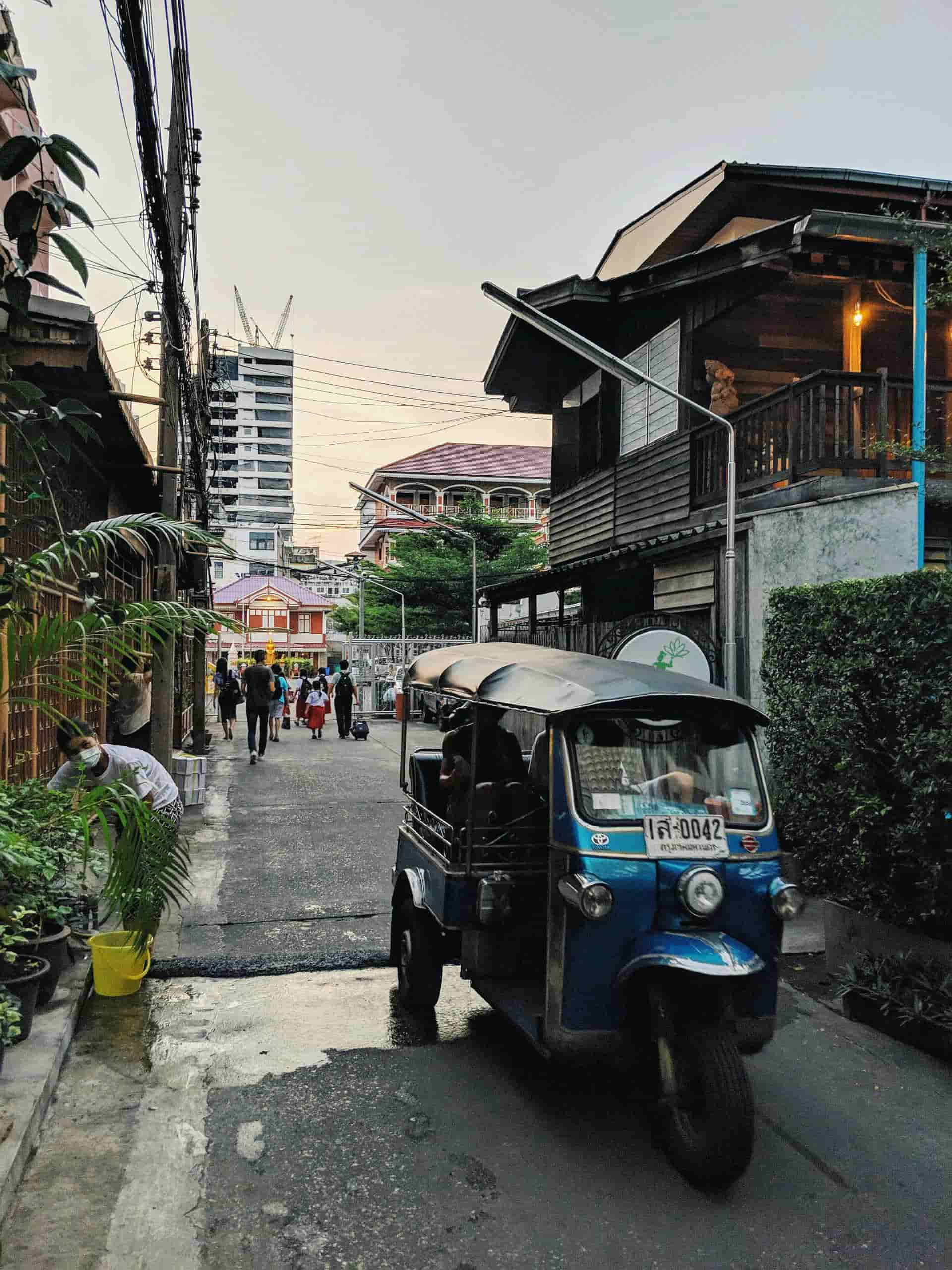
As one of the world’s fastest-growing cities, Bangkok is home to more than 10 million people. Rapid urban growth has placed increasing pressure on housing, transport systems and access to essential services.

In response to this challenge, Professor Hannah Badland, together with Professor Melanie Davern, Dr Amanda Alderton and Carl Higgs, partnered with the Bangkok Metropolitan Administration (BMA), United Nations Global Compact Cities Programme, VicHealth and the Victorian Department of Health and Human Services, to develop the Bangkok Liveability Framework. The framework provides practical, evidence-based tools for city planners to assess and improve urban liveability.

Impact at a glance

  • Policy integration: Embedded in Bangkok’s 20-year Development Plan (2013–2032)
  • Population reach: Informing decisions affecting more than 10 million residents
  • System-level change: Establishes a city-wide approach to measuring liveability
  • Global collaboration: Partnership between RMIT, government and international organisations
  • Transferable model: Informing urban planning initiatives across the Asia-Pacific

Responding to rapid urban growth

Cities influence how people move, work, access services and interact with their communities. The design of neighbourhoods can determine whether residents have safe spaces to walk, reliable transport or access to healthcare, schools and green space.

However, many rapidly growing cities lack consistent ways to assess how well their neighbourhoods support these outcomes.

As the Director of the Social Equity Research Centre at RMIT, Professor Badland’s research examines how the built environment, including housing, transport and access to services, influences health, wellbeing and social equity.

Badland said that developing liveability indicators helps translate complex urban data into practical tools that can inform planning decisions.

“Cities have enormous potential to improve health and wellbeing, but only if we understand how urban design affects people’s everyday lives,” she said.

Partnership with Bangkok Metropolitan Administration (BMA)

Prior to this project, the BMA did not have a unified system for conceptualising and measuring liveability across the city. This limited its ability to identify areas of need, monitor change over time and target investment effectively.

Between 2018-2022, the research team worked with the BMA and international partners to develop the Bangkok Liveability Framework.

The framework comprises 24 indicators covering key domains such as housing, transport, public space and access to services.

The indicators were adapted from an Australian model and tailored to Bangkok’s context. They were aligned with the United Nations Sustainable Development Goals (UN SDGs) and the city’s long-term urban planning priorities.

To support implementation, the project also developed spatial mapping tools that allow planners to visualise patterns of liveability, identify gaps and track change over time.

An example of a liveability indicator, mapped at the district scale across Bangkok, as displayed in the Indicators portal. Indicators site: © RMIT University, 2021.An example of a liveability indicator, mapped at the district scale across Bangkok, as displayed in the Indicators portal. Indicators site: © RMIT University, 2021.

Building capability and embedding change

A key outcome of the project was the development of local capability within the BMA.

The collaboration began with executive training at RMIT in 2017 and evolved into an ongoing partnership involving more than 50 BMA staff, including senior leaders, planners and analysts.

This co-development reciprocal learning approach ensured the framework was embedded within existing planning systems and processes.

Bilingual training resources, digital tools and implementation guidance were also developed to support ongoing use, enabling the BMA to maintain and expand the framework independently.

Shaping Bangkok’s 20-year urban strategy

The Bangkok Liveability Framework is now integrated into the city’s 20-year Development Plan (2013–2032), supporting more coordinated and evidence-based urban planning.

It enables the BMA to:

  • monitor liveability across neighbourhoods
  • identify areas with limited access to services
  • prioritise infrastructure and service investment

Of the 24 indicators, 15 are already aligned with the current development plan, allowing for immediate application. The remaining indicators are being considered for future planning phases.

The framework also establishes a baseline for tracking progress, supporting more efficient, balanced and sustainable urban development.

A framework with global impact

The framework has relevance beyond Bangkok, particularly for cities experiencing rapid growth and inequality.

It has contributed to international initiatives including the Global Indicators Project and the World Bank Pacific Cities program, and has informed policy discussions in other regions, including the Victorian Government’s India Strategy.

Bangkok has linked progressed on the indicators to the UN SDGs and made them publicly accessible through a bilingual online platform, supporting transparency and knowledge sharing.

In addition, the framework is supporting the city’s response to emerging challenges, including post-COVID-19 recovery, by enabling ongoing monitoring of social, economic and environmental conditions.

Links to research report and journal papers

Research Partnership Opportunities

The Bangkok Metropolitan Administration is responsible for planning and delivering city‑wide services and development across Bangkok’s 50 districts, but the scale and complexity of this role - combined with fragmented data, coordination challenges, and constrained resources -makes it difficult to consistently assess needs and target interventions that improve liveability.

RMIT welcomes opportunities to collaborate with governments, NGOs and international organisations to apply and scale this research in diverse urban contexts. To explore further, contact the RMIT Research Partnerships and Translation team (rpt@rmit.edu.au).

Key contact

Professor Hannah Badland

Social Equity Research Centre

School of Global, Urban and Social Science

Design and Social Context Portfolio

SDGs

SDG 11
SDG 12
SDG 13

Read related RMIT impact stories


Connect with RMIT Research

If you're not sure how you can best work with us, our team can explain what's possible and put you in touch with the right person. 

aboriginal flag float-starttorres strait flag float-start

Acknowledgement of Country

RMIT University acknowledges the people of the Woi wurrung and Boon wurrung language groups of the eastern Kulin Nation on whose unceded lands we conduct the business of the University. RMIT University respectfully acknowledges their Ancestors and Elders, past and present. RMIT also acknowledges the Traditional Custodians and their Ancestors of the lands and waters across Australia where we conduct our business - Artwork 'Sentient' by Hollie Johnson, Gunaikurnai and Monero Ngarigo.

Learn more about our commitment to Indigenous cultures