International consortium tackles waste management in humanitarian operations

International consortium tackles waste management in humanitarian operations

RMIT Vietnam researchers have joined a global effort to reduce the environmental impact of healthcare and humanitarian aid operations, including managing medical waste from field hospitals safely and sustainably.

Humanitarian operations such as field hospitals are vital across the globe yet produce high volumes of waste that must be managed safely and responsibly.

An estimated 10–25% of this waste is hazardous, and common practices such as unregulated incineration and the disposal of fossil fuel-based materials contribute to air pollution and environmental contamination.

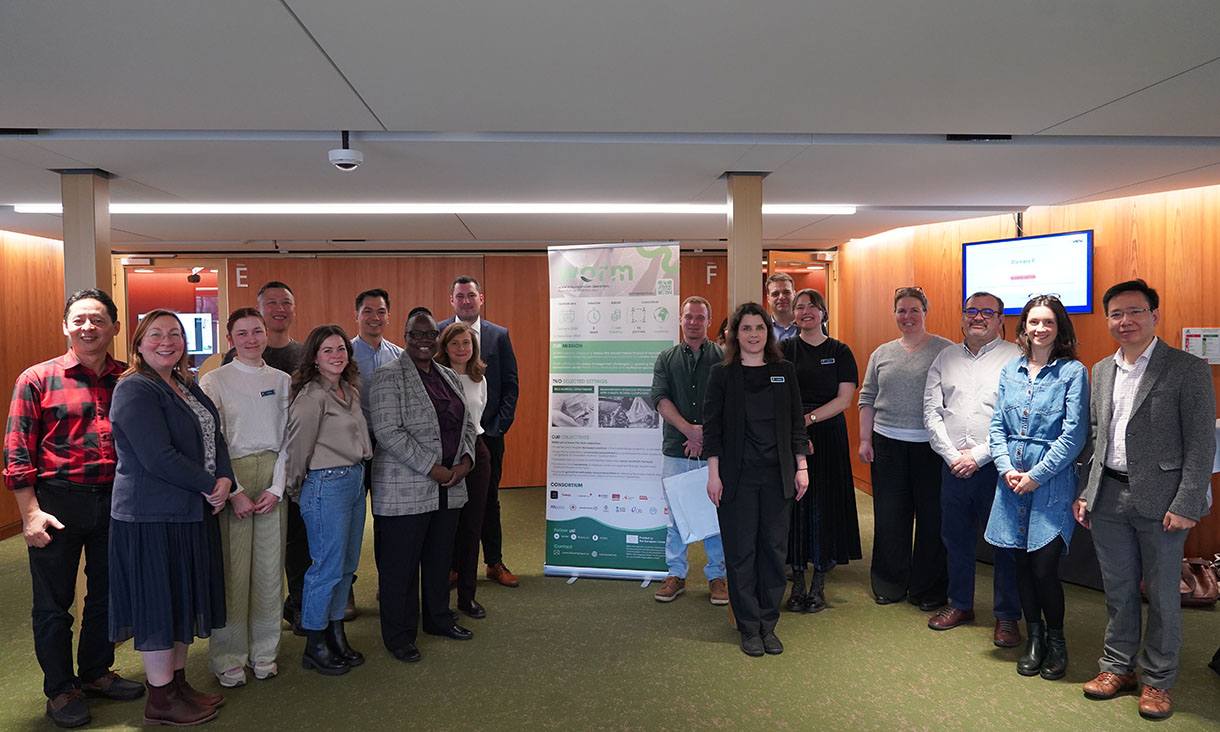
Researchers from the School of Business at RMIT Vietnam joined the WORM Project (Waste in humanitarian operations: Reduction and Minimisation) - an international consortium led by the Hanken School of Economics

Key outcomes involved developing policy recommendations for field hospitals, sustainable procurement and medical waste management, local waste management business models, and standard operating procedures for product use, reuse and recycling.

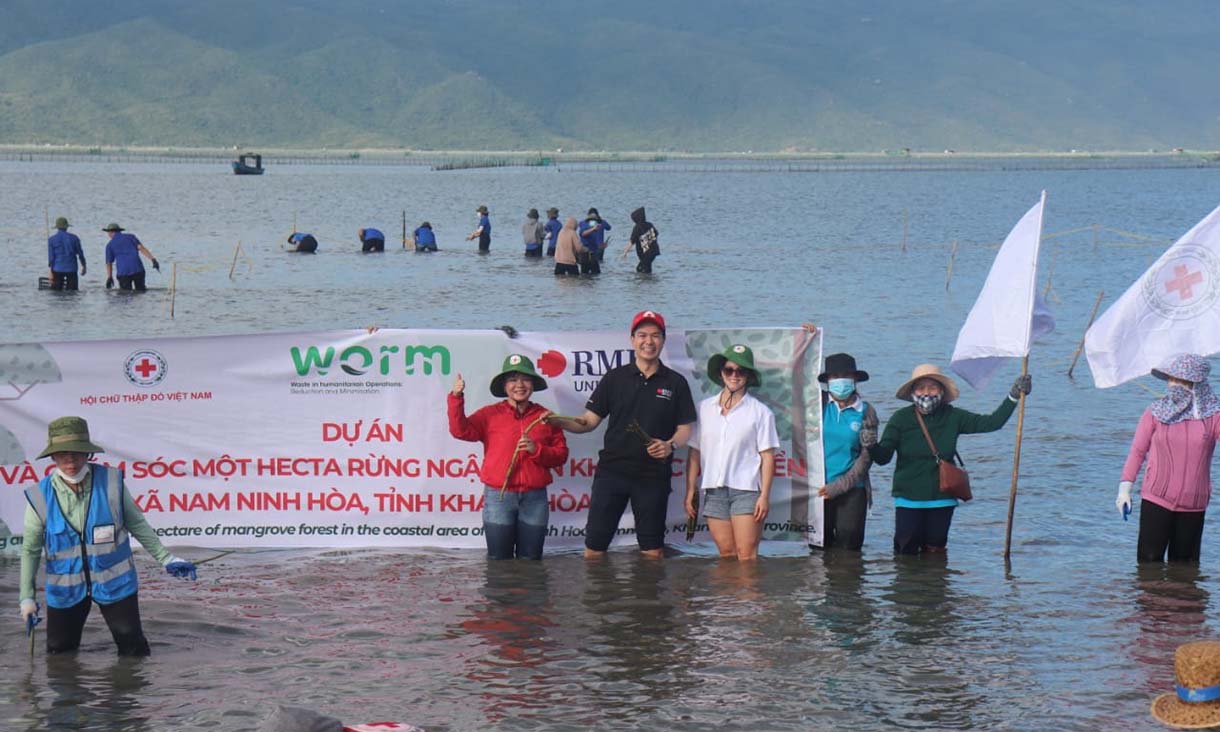
A community led mangrove restoration project in Khanh Hoa province, connected to the WORM project as it followed waste picking and removal of three tonnes of coastal waste.

WORM Project

The EU Horizon WORM project focused on identifying bio-based and circular solutions to minimise and reduce waste in global humanitarian operations.

RMIT’s involvement was co-led by Dr Seng Kiong Kok and Dr Duc Trinh Tran, working with international humanitarian and private-sector partners to identify where waste could be prevented, reduced and safely treated across the entire humanitarian operation lifecycle.

Seng said the team investigated how procurement choices for products such as personal protective equipment, syringes, sharps containers, and temporary water and sludge bladders affect waste volumes and toxicity.

“We saw procurement as very much a ‘gatekeeper’, where what you feed into a humanitarian operation in terms of medical supplies would ultimately result in the amount of waste that you generate,” he said.

The team examined how alternative biobased and biodegradable materials and product design could reduce reliance on incineration, while also assessing non‑destructive disinfection and sterilisation options that allow items such as test tubes and sharps to be safely recovered and returned to the value chain.

Field research in Kenya and Vietnam

The research also considered regional differences in capacity to manage waste, with the team focusing on two different emerging settings, in Kenya and Vietnam.

In Vietnam, humanitarian waste typically flows into central municipal systems that also include household waste; while in East Africa, humanitarian settings like long-standing refugee camps often have their own waste management systems.

Protecting local economies and informal workers known as waste pickers was also an important focus for the research team.

Seng explained that in regions such as Kenya and Vietnam, waste pickers play a major role in waste management.

“These people who pick waste and segregate it are often women from impoverished backgrounds,” said Seng.

“They can be exposed to hazardous medical waste if they’re not wearing proper protection such as gloves; and as we introduce new biomaterials, we also have to consider how these changes may affect their livelihoods,” he said.

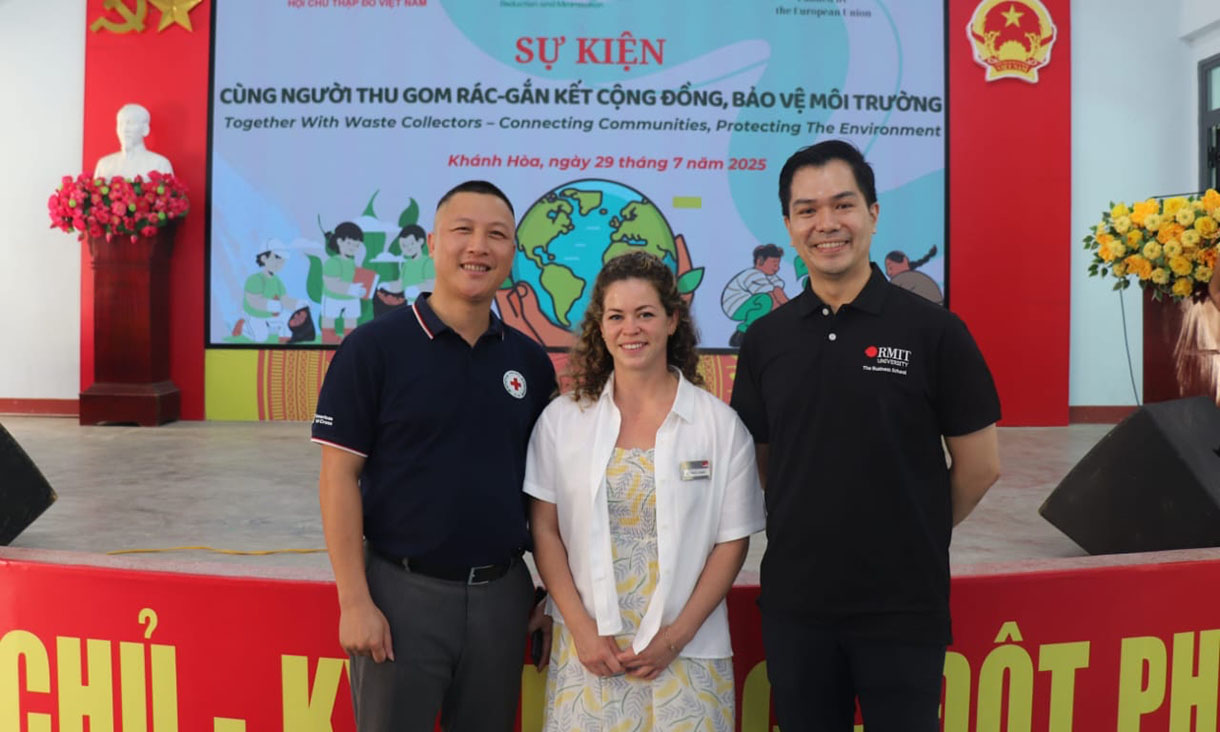
RMIT’s Dr Seng Kiong Kok (right) and fellow WORM project consortium members, Nguyen Van Hoa(Vietnam Red Cross) and Dr Sarah Joseph( Kuhne Logistics University) in Nam Ninh Hoa, supporting safer practices among informal waste pickers.

Key outcomes and impact

WORM produced several decision-making tools to help humanitarian organisations and partners improve their processes including:

  • A multilingual sustainable procurement portal (9 languages, including Vietnamese) linking humanitarian operators to suppliers of more sustainable medical products and bio-based materials.
  • A decision-support tool: a “plug-and-play” waste management model, mapping available treatment pathways in Vietnam to support more informed and sustainable disposal decisions.
  • Causal loop diagrams that show how waste moves through humanitarian operations and how decisions at each checkpoint create environmental and social consequences.
  • A livelihoods and safety analysis of the informal waste sector, recognising that waste pickers face heightened risks from medical waste, while shifts to different materials may also affect income. This aspect of the work aims to help agencies and policymakers plan changes responsibly.

Seng said being part of a large international consortium was particularly rewarding.

“Being able to tackle a very big problem by combining multidisciplinary skills is so valuable,” he said.

“Our international consortium brings together private-sector procurement specialists, international humanitarian organisations such as the Red Cross and Red Crescent, and research institutions."

Medview project

The smaller MedView project that stemmed from WORM aimed to scope Vietnam’s medical waste management sector and inform future policy and commercial engagement to support more sustainable practices.

Funded by Business Finland, the collaboration mapped waste treatment activities, identified gaps, and explored opportunities to apply high‑efficiency, circular economy technologies being developed in Finland

Next steps

WORM Project: The EU Commission review has been completed for WORM, and the project finalised.

Medview: The scoping report has been completed and submitted for Business Finland to identify how they would like to proceed and partner to help make Vietnam’s waste management operations more sustainable.

Research partnerships

  • International humanitarian partners including Red Cross and Red Crescent Societies
  • Private-sector and specialist partners including Pamela Steele Associates, Innovation Norway, Solvoz, and International Medical Corps
  • Sixteen WORM consortium partners from 11 countries across research, procurement and humanitarian operations

Funding acknowledgement

  • WORM was funded by the EU Horizon Europe program
  • MedView was funded by Business Finland

For further information visit:

Key contact

SDGs

SDG 11
SDG 12
SDG 13
SDG 11

Read related RMIT impact stories


Connect with RMIT Research

If you're not sure how you can best work with us, our team can explain what's possible and put you in touch with the right person. 

aboriginal flag float-starttorres strait flag float-start

Acknowledgement of Country

RMIT University acknowledges the people of the Woi wurrung and Boon wurrung language groups of the eastern Kulin Nation on whose unceded lands we conduct the business of the University. RMIT University respectfully acknowledges their Ancestors and Elders, past and present. RMIT also acknowledges the Traditional Custodians and their Ancestors of the lands and waters across Australia where we conduct our business - Artwork 'Sentient' by Hollie Johnson, Gunaikurnai and Monero Ngarigo.

Learn more about our commitment to Indigenous cultures