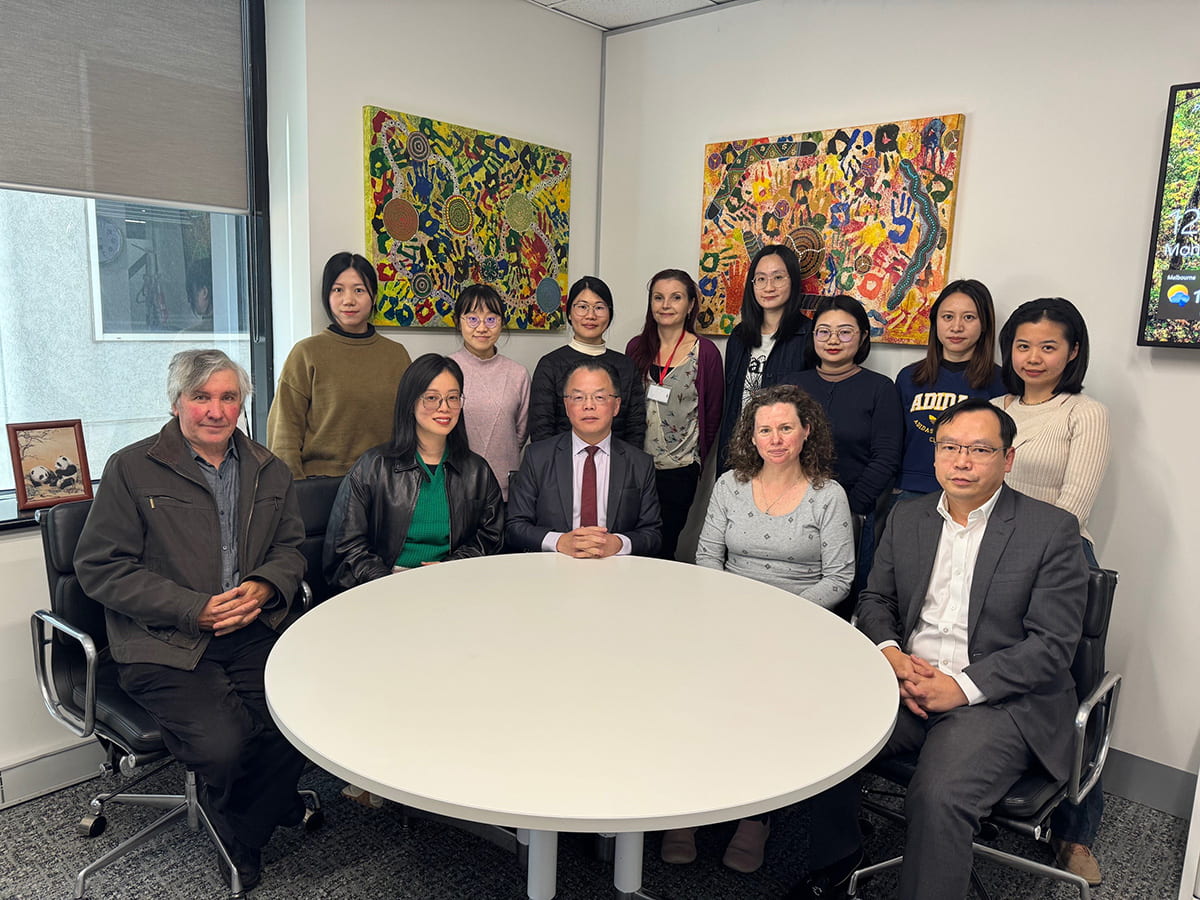
 Team members and PhD students from the China–Australia International Research Centre for Chinese Medicine
Traditional, complementary and integrative medicine and practices (TCIM), including Chinese medicine have long been used and shown benefits for some clinical conditions. However, it has not been fully embraced by the scientific community, largely due to a historical lack of high-quality evidence of its clinical effectiveness.
The World Health Organisation (WHO) reported that nearly 90 percent of its member states include TCIM in their health care systems, and in response developed a new global strategy (Global traditional medicine strategy 2025-2034) to support the evidence‑based development and integrative practice of TCIM.
Building a strong and comprehensive evidence base, however, has been highly challenging. Each form of traditional medicine requires consideration of its historical context, unique theories, and clinical approaches that often do not align neatly with conventional Western research models.
To tackle this issue, an RMIT research team led by Distinguished Professor Charlie C Xue established the China–Australia International Research Centre for Chinese Medicine (CAIRCCM), that has been running an extensive research collaborative program for more than 20 years.
Xue said the research centre was established as part of a long‑standing partnership between RMIT’s School of Health and Biomedical Sciences, the Guangdong Provincial Hospital of Chinese Medicine, and the Guangdong Provincial Academy of Chinese Medical Sciences.
“A major strength of this research program is our international partnerships and access to top-ranked hospitals in China, which are leaders in clinical care and research,” he said.
The team developed the ‘Whole of Evidence Approach’, a new methodology for systematically integrating diverse clinical evidence into a comprehensive framework for evaluating Chinese medicine. Working with more than 100 clinicians across 30 departments on the project, they have brought together sources ranging from classical medical texts to modern randomised controlled trials.
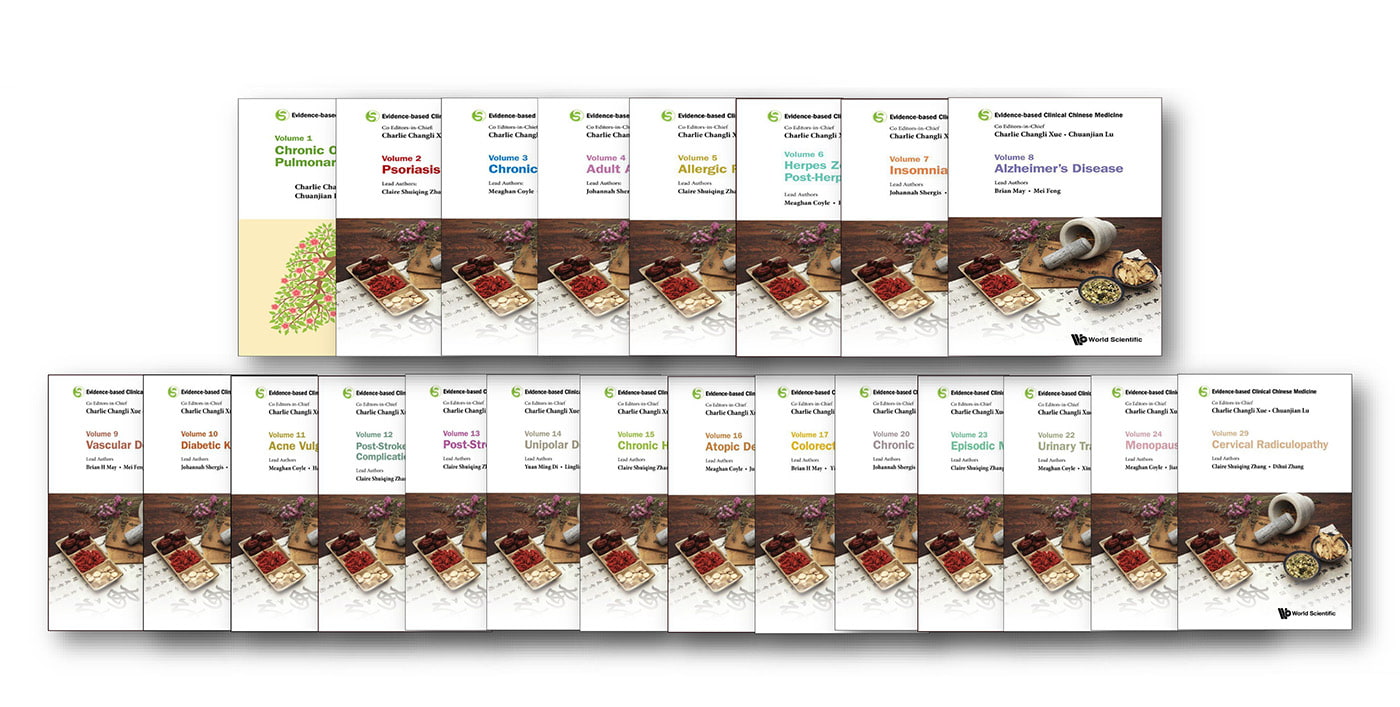
A key outcome of the research program has been to develop a 29 volume Evidence based Clinical Chinese Medicine monograph series, published by World Scientific (Singapore).
Each volume addresses a major health condition commonly treated using Chinese medicine, including cancer pain, insomnia, diabetes, migraine and stroke rehabilitation.
Fifteen volumes have also been published by China’s leading medical publisher, the People’s Health Publishing House, with the remaining translations also set to be completed in 2026. This ensures evidence based guidance is accessible to more than 400,000 registered Chinese medicine practitioners across China.
A leading researcher on the team, RMIT’s Professor Tony Zhang, said the book series will be highly beneficial to Chinese medicine clinicians and students across the globe.
“Chinese medicine practitioners can refer to these books for guidance on herbal medicine formulas, specific herbs and acupuncture points and be informed by the current best evidence for their decision-making,” said Zhang.
“These publications are also extremely valuable for students of evidence-based Chinese medicine and for academics involved in teaching or in clinical studies of Chinese medicine,” he said.
The Centre offers joint PhD programs with the Guangdong Provincial Academy of Chinese Medical Sciences, with 18 students enrolled to date and 13 having already successfully completed their studies.
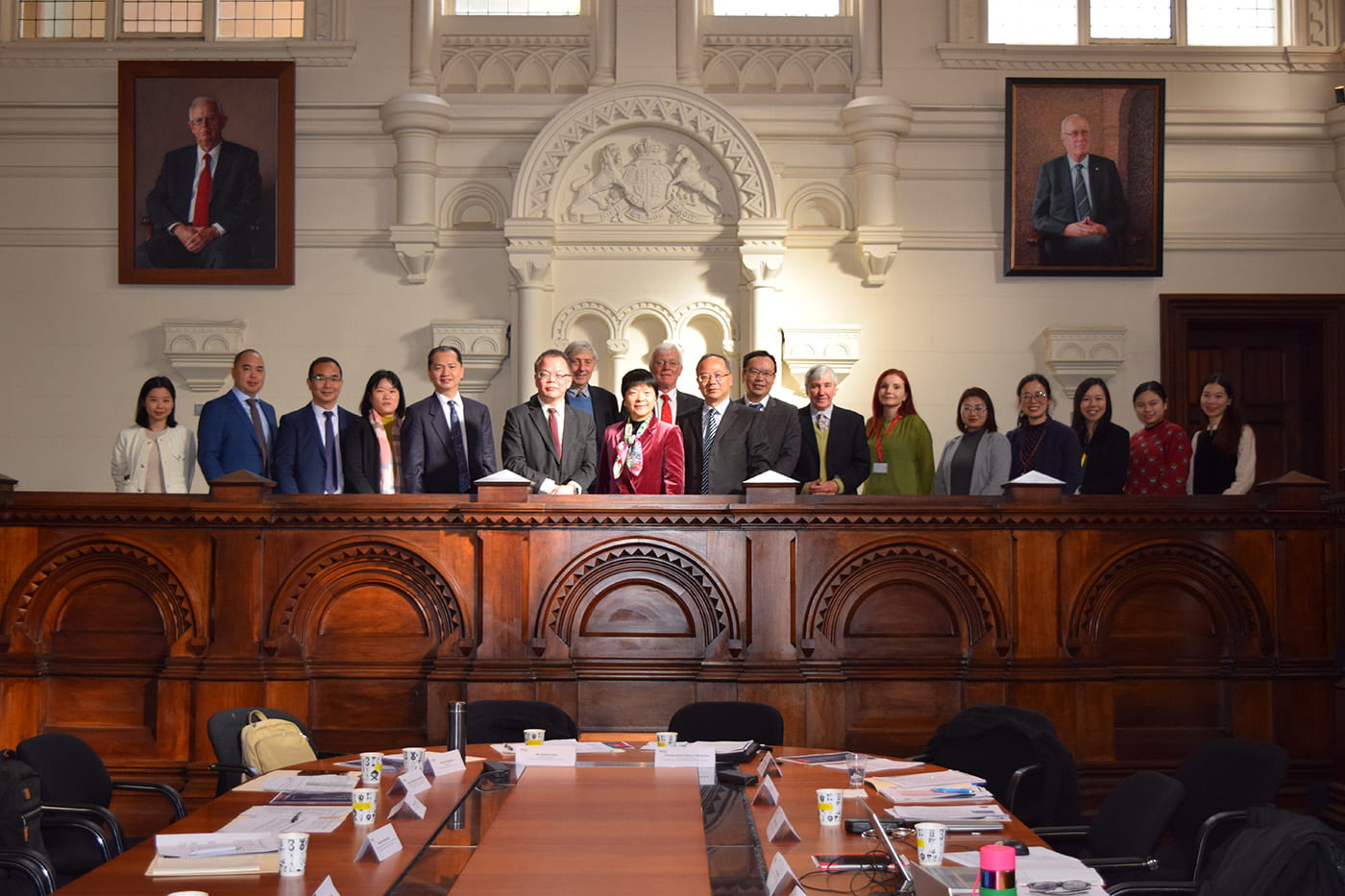 Attendees at a CAIRCCM Management Committee symposium at RMIT University
The Centre is developing and testing an artificial intelligence tool that streamlines literature searching, data extraction and evidence updates for the Chinese medicine monographs. This tool, designed with researchers, educators and clinicians in mind, aims to significantly improve the efficiency and accuracy of evidence synthesis.
Xue said the team is also increasing its focus on implementation science to build capability in translating their research findings into clinical practice. Five new PhD students and projects will be focusing on this area.
“I’d like to see more traditional medicines including Chinese medicine and Ayurveda traditional Indian medicine that have strong clinical evidence, being incorporated into everyday care for our communities. People worldwide should be able to access evidence based, safe care from these treatments,” he said.
For further information about the research visit the China–Australia International Research Centre for Chinese Medicine (CAIRCCM)
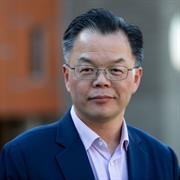
Associate DVC, International
Co-Director, China-Australia International Research Centre for Chinese Medicine
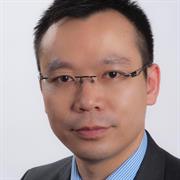
Deputy Dean, International
Deputy Co-Director, China-Australia International Research Centre for Chinese Medicine


RMIT University acknowledges the people of the Woi wurrung and Boon wurrung language groups of the eastern Kulin Nation on whose unceded lands we conduct the business of the University. RMIT University respectfully acknowledges their Ancestors and Elders, past and present. RMIT also acknowledges the Traditional Custodians and their Ancestors of the lands and waters across Australia where we conduct our business - Artwork 'Sentient' by Hollie Johnson, Gunaikurnai and Monero Ngarigo.
Learn more about our commitment to Aboriginal and Torres Strait Islander peoples