Study in Australia for Cambodian Students

Whether you’re finishing Grade 12 and thinking about third level education, or planning a master’s, this page covers what matters most when deciding if Australia, and RMIT, is the right next step.

More than 4,400 Cambodian students studied in Australia in 2025^. Melbourne is currently ranked #4 in the world as a student city*, with RMIT landing in the top 120 universities worldwide**. 


^Australian Government Department of Foreign Affairs and Trade 2025
*QS Best Student Cities 2026
**QS World University Rankings 2027

Why Cambodian students choose RMIT 

Globally recognised rankings

RMIT ranks #1 in Australia and #15 globally for Architecture and Built Environment*, and #1 in Australia and #19 globally for Art and Design*.

Study in Melbourne

Experience life in Australia’s top student city, with a vibrant lifestyle, multicultural community and world-class education.

Reduced student visa fee

Cambodian citizens are eligible for a reduced Student visa (subclass 500) application fee of AU$2,050, compared with the standard AU$2,500 ASEAN concession rate.

*QS World University Rankings by Subject 2026

Business, architecture and design, health, engineering and computing are consistently some of the most in-demand study areas among our Cambodian students. Here are the most popular courses to explore in each: 

Business and Management

#10 in Australia and top #150 universities globally for Business & Management Studies*.

*QS World University Rankings by Subject 2026

No courses match your current filters

Try adjusting them or reset all filters to see more options

Bachelor degreeBusiness

Bachelor of Accounting

  • next intake February, July
  • fees AU$47,040 (2027 annual)
  • location Melbourne City
  • duration Full-time 3 years

Bachelor degreeBusiness

Bachelor of Business

  • next intake February, July, October
  • fees AU$47,040 (2027 annual)
  • location Melbourne City
  • duration Full-time 3 years
Bachelor degreeBusiness

Bachelor of Commerce

  • next intake February, July
  • fees AU$47,040 (2027 annual)
  • location Melbourne City
  • duration Full-time 3 years
Masters by courseworkBusiness

Master of Business Analytics and AI Strategy

  • next intake February, July
  • fees AU$50,880 (2027 annual)
  • location Melbourne City
  • duration Full-time 2 years
Masters by courseworkBusiness

Master of Finance

  • next intake February, July
  • fees AU$50,880 (2027 annual)
  • location Melbourne City
  • duration Full-time 2 years or 1.5 years accelerated
Masters by courseworkBusiness

Master of Professional Accounting

  • next intake February, July
  • fees AU$50,880 (2027 annual)
  • location Melbourne City
  • duration Full-time 2 years or 1.5 years accelerated

Architecture and Design

#1 in Australia and #15 in the world for Architecture & Built Environment*

*QS World University Rankings by Subject 2026

#1 in Australia and #19 in the world for Art & Design*

*QS World University Rankings by Subject 2026

No courses match your current filters

Try adjusting them or reset all filters to see more options

Bachelor degreeArchitecture, Design

Bachelor of Architectural Design

  • next intake February, July
  • fees AU$52,800 (2027 annual)
  • location Melbourne City
  • duration Full-time 3 years
Honours degreeArchitecture, Design

Bachelor of Interior Design (Honours)

  • next intake February, July
  • fees AU$49,920 (2027 annual)
  • location Melbourne City
  • duration Full-time 4 years
Masters by courseworkArchitecture

Master of Architecture

  • next intake February, July
  • fees AU$54,720 (2027 annual)
  • location Melbourne City
  • duration Full-time 2 years

Engineering

Civil engineering student

Top 50 globally

Two of RMIT's engineering specialisations are ranked among the best in the world. Civil Engineering sits at #26 globally and Aerospace Engineering at #34, with both ranked #1 in Australia, according to the ShanghaiRanking for 2026.

No courses match your current filters

Try adjusting them or reset all filters to see more options

Bachelor degreeEngineering, Aviation

Bachelor of Aviation (Pilot Training)

  • next intake February
  • fees AU$72,767 (2027 annual)
  • location Point Cook, Melbourne City
  • duration Full-time 3 years
Honours degreeEngineering

Bachelor of Engineering (Honours)

  • next intake February, July
  • fees AU$48,960 (2027 total)
  • location Melbourne City
  • duration Full-time 4 years
Masters by courseworkEngineering

Master of Engineering (Civil Engineering)

  • next intake February, July
  • fees AU$49,920 (2027 annual)
  • location Melbourne City
  • duration Full-time 2 years

IT, Data Science and Computing Technologies

#10 in Australia and top #120 universities globally for Computer Science & Information Systems*.

#7 in Australia and top #100 universities globally for Data Science & Artificial Intelligence*.

*QS World University Rankings by Subject 2026

No courses match your current filters

Try adjusting them or reset all filters to see more options

Bachelor degreeInformation technology

Bachelor of Computer Science

  • next intake February, July
  • fees AU$45,120 (2027 annual)
  • location Melbourne City
  • duration Full-time 3 years
Bachelor degreeInformation technology

Bachelor of Cyber Security

  • next intake February, July
  • fees AU$45,120 (2027 annual)
  • location Melbourne City
  • duration Full-time 3 years
Bachelor degreeInformation technology, Science, Business

Bachelor of Data Science

  • next intake February, July
  • fees AU$45,120 (2027 annual)
  • location Melbourne City
  • duration Full-time 3 years
Bachelor degreeInformation technology

Bachelor of Information Technology

  • next intake February, July
  • fees AU$45,120 (2027 annual)
  • location Melbourne City
  • duration Full-time 3 years
Masters by courseworkInformation technology, Business

Master of Cyber Security

  • next intake February, July
  • fees AU$47,040 (2027 annual)
  • location Melbourne City
  • duration Full-time 2 years
Masters by courseworkInformation technology, Science

Master of Data Science

  • next intake February, July
  • fees AU$47,040 (2027 annual)
  • location Melbourne City
  • duration Full-time 2 years
Masters by courseworkInformation technology

Master of Data Science and Artificial Intelligence

  • next intake February, July
  • fees AU$47,040 (2027 annual)
  • location Melbourne City
  • duration Full-time 2 years
Masters by courseworkInformation technology

Master of Information Technology

  • next intake February, July
  • fees AU$47,040 (2027 annual)
  • location Melbourne City
  • duration Full-time 2 years

Health and Biomedical Sciences

Health and science students in certain courses gain hands-on experience with specialised laboratory equipment in RMIT’s state-of-the-art facilities and labs.

No courses match your current filters

Try adjusting them or reset all filters to see more options

Bachelor degreeHealth, Biomedical sciences, Science

Bachelor of Biomedical Science

  • next intake February, July
  • fees AU$47,040 (2027 annual)
  • location Bundoora
  • duration Full-time 3 years
Honours degreeHealth, Biomedical sciences, Science

Bachelor of Health and Biomedical Sciences (Honours)

  • next intake February
  • fees AU$47,040 (2027 total)
  • location Bundoora
  • duration Full-time 1 year
Bachelor degreeHealth

Bachelor of Nursing

  • next intake February, July
  • fees AU$45,120 (2027 annual)
  • location Bundoora
  • duration Full-time 3 years
Honours degreeHealth, Biomedical sciences, Science

Bachelor of Pharmacy (Honours)

  • next intake February
  • fees AU$49,920 (2027 annual)
  • location Bundoora
  • duration Full-time 4 years
Bachelor degreeHealth, Psychology

Bachelor of Psychology

  • next intake February, July
  • fees AU$45,120 (2027 annual)
  • location Melbourne City
  • duration Full-time 3 years

Masters by courseworkBiomedical sciences, Science

Master of Laboratory Medicine

  • next intake February, July
  • fees AU$50,880 (2027 annual)
  • location Bundoora
  • duration Full-time 2 years
Masters by courseworkHealth

Master of Physiotherapy

  • next intake July
  • fees AU$54,720 (2027 annual)
  • location Bundoora
  • duration Full-time 2 years

Law and Social Work

Law degrees at RMIT can be completed in as little as three years, compared to the standard four-year timeline. This means that students who gain their law degree here can practise sooner or use the extra year to boost their qualification with a graduate certificate. 

No courses match your current filters

Try adjusting them or reset all filters to see more options

Bachelor degreeLaw

Bachelor of Laws

  • next intake February, July
  • fees AU$47,040 (2027 annual)
  • location Melbourne City
  • duration Full-time 3 years
Masters by courseworkSocial and community

Master of Social Work

  • next intake February
  • fees AU$41,280 (2027 annual)
  • location Melbourne City
  • duration Full-time 2 years
international-students.jpg

Courses for international students

Check out the content, graduate outcomes, location and rankings of courses you are interested in.

Entry requirements and pathways for Cambodian students

Entry requirements for Cambodian students to study at RMIT differ by course and level of study. Your preferred course’s page has the exact entry requirements and details, from academic prerequisites to portfolios or other selection tasks.  

Below, we explain how entry generally works at RMIT if you’re finishing Grade 12, have completed your Baccalaureate or already hold a Cambodian bachelor’s degree.

What Grade 12 or Bac II score do I need to study in Australia?

The final Bac II grade you need to study in Australia depends on the level of study you’re planning to pursue. Almost all university courses in Australia require Grade 12 completion with a Diploma of Upper Secondary School, or a positive Bac II result at a minimum to enrol. RMIT assesses Cambodian applicants using its Cambodia equivalency guide, which lists the following for your Diploma of Upper Secondary School (graded A to F): 

Study level Entry requirement
Foundation Studies Completion with an E grade average.
University Pathways (UP) Fast Track Completion with a C grade average.
Diploma, associate degree and undergraduate degree entry Applicants must have completed their first year at a recognised university with a minimum C grade average to be considered for acceptance.

Some schools in Cambodia teach Australian senior secondary programs, meaning students graduate high school with an official Australian Year 12 Certificate and an ATAR. If you’re completing a recognised Australian Year 12 program in Cambodia, you may be able to apply through VTAC using your ATAR. For these students intending to pursue an undergraduate degree at RMIT, their ATAR can be used to apply directly to university in Australia without the need to have completed the first year of tertiary study in Cambodia. It’s important to note that although you apply through VTAC, you are still considered an international student for enrolment and visa purposes. 

Meeting the minimum course requirement doesn’t guarantee entry. Places in some courses are competitive and may require a portfolio, interview or other selection task. International students must also meet the Australian Government’s Genuine Student requirement. If you are unsure of your options, and an RMIT international adviser can confirm the best option for your chosen course. 

Can I study a master’s at RMIT after undergraduate study in Cambodia?

Yes, if your bachelor’s degree is recognised as equivalent to an Australian bachelor’s degree. RMIT assesses international qualifications for comparability with the Australian Qualifications Framework, and each course sets its own requirements. For example:

Course Entry requirement
Master of Analytics A bachelor’s degree (or equivalent overseas qualification) and proven English proficiency.
Master of Architecture Australian architecture-specific bachelor’s degree (or equivalent overseas qualification) and proven English proficiency.
Master of Finance Varies by course duration, see Entry Requirements section on page for details.
Master of Cyber Security Proven English proficiency plus an Australian bachelor’s degree (or equivalent overseas qualification) in any discipline with a minimum GPA of 2.0 (out of 4.0) OR a minimum five years' relevant work experience in a designated field.

Entry requirements shown above are examples only and may not reflect current requirements.

For up-to-date and accurate information, please head to the Entry Requirements section on our course pages.

International students on a student visa must study their master’s degrees full time.

What are RMIT’s English language requirements for international students?

To study in Australia, all international students must meet a minimum standard of English. English language requirements at Australian universities can differ based on university and course. 

When applying to RMIT, you can demonstrate your English language proficiency in 3 ways:

  • An approved English test 
  • An accepted English language provider 
  • A recognised qualification.

If you are demonstrating your proficiency through an English test, RMIT accepts results from several English language proficiency tests, including: 

  • IELTS Academic
  • PTE Academic 
  • TOEFL iBT or TOEFL iBT Australia (for tests taken from 21 January 2026)
  • Cambridge English (C1 Advanced, and C2 Proficiency) 
  • Occupational English Test (OET) – accepted for selected health and medical science courses only.

What if I don't meet the requirements to study my degree in Australia?

If you don't meet the entry requirements for your course, there are alternate pathways to enter university in Australia, such as through vocational education, foundation programs and associate degrees.

Each course has different pathways available, so make sure to check the ‘Pathways and further study’ section on our course pages. 

Proof of funds for your student visa

Prospective international students in Australia must show evidence of sufficient funds when they apply for their student visa. This proves to the Department of Home Affairs that you have the means to support your life and studies while here. This can include savings, education loans, or a combination of both, along with any scholarship you've been awarded. Before applying, it’s worth planning your budget around both your course and your living situation to ensure you can satisfy this requirement.

Cost of studying in Australia for Cambodian students

The price of studying is Australia as an international student can be broken down into two main considerations: university fees and lifestyle costs. 

Tuition fees

Your fees will be based on the number of credit points you are enroled in for your degree, and the fee-per-credit-point for that course in the current year.

Most, but not all, degrees at RMIT have a standard annual full-time load of 96 credit points, so you can estimate your expected tuition fee for the year by multiplying the fee-per-credit-point by 96.

Fee per credit point x credits per year = annual fee

Living costs

Your day-to-day costs when living in Melbourne will depend largely on your living arrangement, eating preferences and general lifestyle choices, including entertainment and how you spend your free time.

As a guideline, most international students at RMIT budget approximately AU$30,000 to AU$45,000 a year for living expenses in Melbourne, on top of tuition.

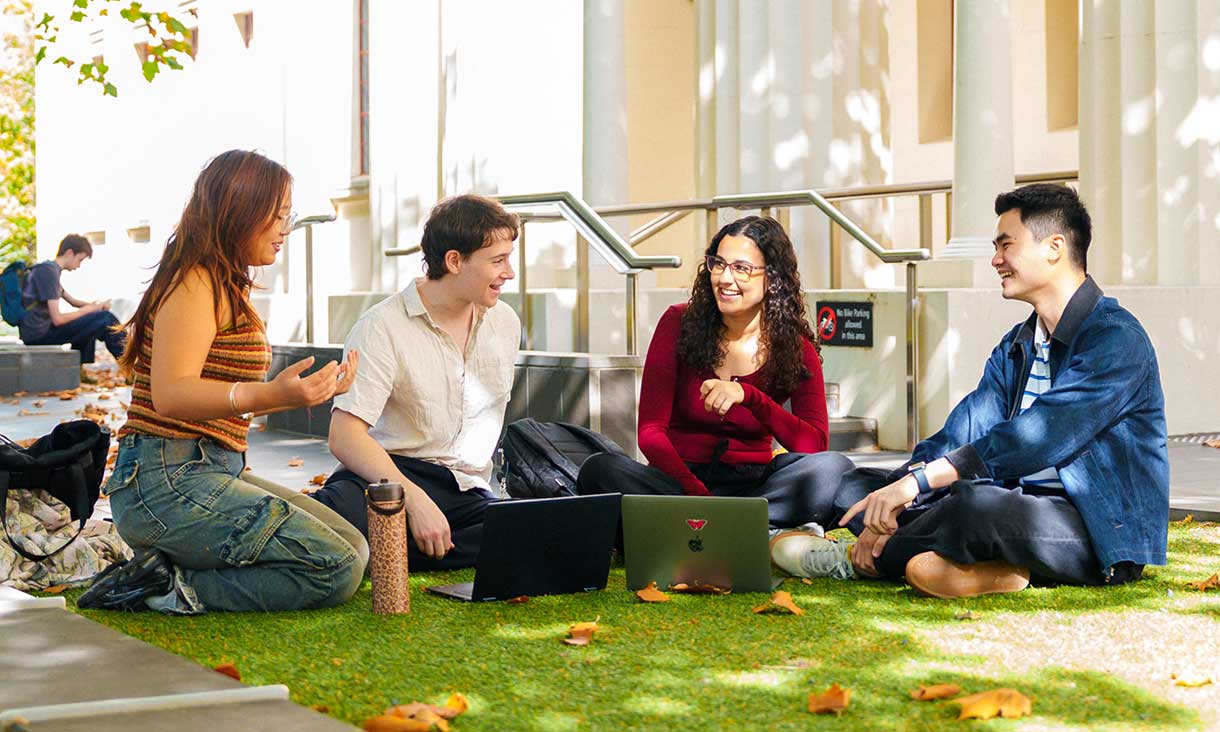
Four students sitting and talking outdoors on campus, using laptops, surrounded by autumn leaves and sunlight.

Cost of Studying in Australia for International Students

Studying in Australia is an investment in your future. Use our guide to tuition fees, everyday expenses and understanding working rights to help you plan ahead.

Scholarships for Cambodian students

In 2025, RMIT awarded 4,616 scholarships to international students, including 774 Academic Merit scholarships. 

As citizens of an eligible Southeast Asian country, Cambodian students can apply for the Academic Merit Scholarship for Southeast Asia. Recipients of this receive 20% off their tuition for the duration of an eligible course if they meet the criteria: an Australian-equivalent GPA of 2.5 (or 70% average, or an ATAR of 75) in their most recent qualification and a full or conditional offer for an eligible vocational education, associate degree, bachelor's, graduate certificate, graduate diploma or master's by coursework program. There is no separate application: you apply for your course as usual and, if you’re successful, your offer letter shows the discount. 

Scholarships are awarded on a first-come, first-served basis, so it's worth applying early! 

Three students sit at table with coffee and laptop.

Scholarships for international students

RMIT offers a range of scholarships to commencing international students across all fields of study. Browse our scholarships and see what you could be eligible for.

Life in Melbourne for students from Cambodia

Settling into life in a new country can take some getting used to. Here are some key pieces of information to help you get started.

Weather tip!

Pack layers. Australia’s climate varies widely by region, and Melbourne in particular is famous for its ‘four seasons in one day’. You’ll need both sunscreen and a hoodie (sometimes in the same hour). 

Finding community

Cambodian students arriving in Melbourne become part of a long-established Cambodian community. As of the 2021 census, there are 39,043 Cambodian-born people living in Australia, of which 16,758 live in Victoria.

The community marks Khmer New Year (Chaul Chnam Thmey) as well as Pchum Ben, and Springvale is home to Cambodian Buddhist temple Wat Khmer, offering students in Melbourne spaces to celebrate their culture and feel at home.

RMIT’s Cambodian student society, RCSA, is a place to meet other Cambodian students during your studies. After you graduate, the Australian Alumni Association of Cambodia connects Cambodians who have studied in Australia.

How to apply to RMIT from Cambodia

Choose your course and check entry requirements

Search for your preferred course and review the entry requirements listed on the course page.

Prepare your documents

You will need your academic transcripts and graduation certificates, evidence of English language level, plus any additional course-specific documents.

Submit your application

You or your authorised agent can submit your application through RMIT’s Application Portal.

Apply for your visa

Once you have been made and accepted your offer, you can apply for your Australian student visa through Home Affairs with your Confirmation of Enrolment (CoE).

You’ll need to receive your university offer before applying for a student visa. This process can take several weeks, so give yourself plenty of time.

Which RMIT intake should Cambodian students apply for?

For many courses, RMIT offers two or sometimes three intakes. Which one you choose depends on a few things; personal preference, course availability and how the timing aligns with the end of your final school term and exam results in Cambodia. 

For public school students who sit their final exams in August, RMIT’s semester 3 intake from September – November could align well if the preferred course is offered in semester 3. Otherwise, semester 1 is in February – March is the most ideal fit with the most courses offered. 

Students following the Cambodian private or international school calendar finishing their exams in June may be able to commence their studies in the semester 2 intake in mid-July. While possible, the quick timing can add pressure when it comes to the application and visa approval processes, so it would be best to speak with one of RMIT’s international student advisors before making any decisions. 

Have more questions?

Ask your dedicated RMIT adviser about study options and how to apply. Choose your own contact method and time.

aboriginal flag float-starttorres strait flag float-start

Acknowledgement of Country

RMIT University acknowledges the people of the Woi wurrung and Boon wurrung language groups of the eastern Kulin Nation on whose unceded lands we conduct the business of the University. RMIT University respectfully acknowledges their Ancestors and Elders, past and present. RMIT also acknowledges the Traditional Custodians and their Ancestors of the lands and waters across Australia where we conduct our business - Artwork 'Sentient' by Hollie Johnson, Gunaikurnai and Monero Ngarigo.

Learn more about our commitment to Aboriginal and Torres Strait Islander peoples