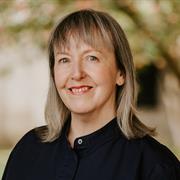
Dr. Helen Hayden
Details
 College: School of Science
 Department: School of Science
 Campus: City Campus Australia
 helen.hayden@rmit.edu.au
 ORCID: 0000-0002-5443-538X
About
Dr Helen L. Hayden is a soil microbial ecologist working within the Applied Chemistry and Environmental Science (ACES) department in the School of Science at RMIT University. Her research interests include soil biology, soil health, soil-plant-microbe interactions and plant pathology.
Helen brings an interdisciplinary approach to her research projects. She uses “omics” technologies and molecular biology to examine soil microbial and faunal community responses to different land uses, crops, management practices and climate change in the varied soil types across Australia. Her research has included agricultural, dairy, and horticultural systems as well as native ecosystems.
Helen is particularly interested in researching natural environments to benchmark changes to soil biological communities through agricultural management, and how ecosystem restoration affects belowground biological communities. She welcomes new collaborations in the area of soil-plant-microbe interactions with an emphasis on soilborne disease control through disease suppressive soils and management effects on the soil food web, as well as projects that explore the connections between soil health and food nutrition. Helen also enjoys working with farmer groups to co-design projects on sustainable agricultural practices to provide new knowledge and scientific evidence to support practice change.

Research fields
- 410603 Soil biology
- 310703 Microbial ecology
- 3002 Agriculture, land and farm management

UN sustainable development goals
- 13 Climate Action
- 15 Life on Land
- 2 Zero Hunger

Supervisor projects
- The Effect of Alternative Land Management Practices on Soil Carbon and Soil Hydrology
- 5 Jun 2026
- Harnessing Native Microbe-Plant Interactions for Ecological Restoration of Coalmine Soils under Heavy Metal and Water Deficit Stress
- 27 Apr 2026

Teaching interests
I am the course coordinator of first year course, ENVI1146 The Changing Environment with Prof Rachel Caruso.
In this subject students learn how science informs efforts to achieve a sustainable society. Students learn about the diversity of environmental science disciplines and their application in the real world, including engaging with social debate that accompanies topical environmental issues. As we assess the challenges facing our society and our planet, we focus on providing realistic, forward-looking solutions for a sustainable future.
I teach into the second year subject, ENVI1012 The Soil Environment, which is coordinated by Dr Fereshteh Shahriari, delivering the soil biology component.
I am also teach into third year subject, ENVI1232 Environmental Sampling and Analysis, which involves a one week intensive teaching experience involving field assessment and some laboratory testing of soils, vegetation, water quality, wildlife detection, contaminated land sites and environmental policy discussions.
I also do Project supervision for Applied Science Projects 1 and 2 for third year students. This course is a capstone experience giving students the opportunity to do a small research project under the supervision of an academic staff member. The project allows students to engage in all aspects of research including project planning, risk assessment, meeting stakeholders, doing laboratory and field work, analysing results and producing a research report. Students can extend their knowledge and practical skills in a particular area of interest, while building skills and getting training from staff and peers.
For the last decade I have also been guest lecturing third year agriculture students in soil science at La Trobe University in collaboration with Prof Caixian Tang and Dr Gary Clark. This lecture series examines soil biology, soil health, policy, soil biology indicators for soil health, soil health monitoring programs, measuring soil biology, biological product regulation, biocontrol, microbial inoculants and biostimulant products, and agricultural biotechnology applications.

Research interests
My research focusses on all aspects of soil biology including its important role within soil health and ecosystem service provision. I have worked across different agricultural industries and natural environments. I primarily use molecular biology, DNA and RNA sequencing and metabolomics methods in my research but also have experience in plant pathology and nematode extraction from soils. My research examines microbial biodiversity, microbial ecology, microbial functional genes using QPCR and their expression using metatranscriptomics, and microbial and plant metabolites in both soils and plants in response to plant pathogens and nematode infection.
Research highlights include showing that specific bacterial and fungal taxa respond in soil to the climate change effects of elevated CO2 and warming (Hayden et al 2012), and that the abundance of bacterial nitrogen cycling gene amoA involved in nitrification is affected by soil type and land management (Hayden et al 2010). My research on disease suppressive soils using novel “omics” technologies led to the discovery of an antimicrobial metabolite in suppressive soil (Hayden et al 2019, 35 citations) and that disease suppression is likely facilitated by the expression of genes for antibiotic and terpene production (Hayden et al 2018, 64 citations).
I am also active in science communication, co-authoring a reference book for farmers, agronomists, advisors and extension officers. “Soil Health, Soil Biology, Soilborne Diseases and Sustainable Agriculture. A Guide” was published by CSIRO in 2016 and is available in 1,163 libraries globally.



