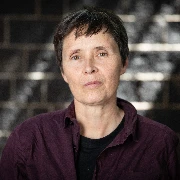
Associate Professor Rebecca Hill
Details
 College: School of Media & Communication
 Department: School - Media & Communication
 Campus: City Campus Australia
 rebecca.hill2@rmit.edu.au
 ORCID: 0000-0001-5573-3074
Open to
- Masters Research or PhD student supervision
About
Rebecca Hill conducts research in continental feminist philosophy, anti-colonial and decolonial theory, critical Indigenous studies, and Ancient Greek thought. She is a founder and convenor of the Philosophies of Difference Seminars (PoD) and co-director of the Luce Irigaray Circle. She is a core member of RMIT’s non/fictionLab.
Rebecca has written extensively on Luce Irigaray’s philosophy of sexual difference. She has also published on the thought of Aristotle, Henri Bergson, Behrouz Boochani, Bill Neidjie, Friedrich Nietzsche, Irene Watson and Alexis Wright. She is co-editor of Topologies of Sexual Difference: Space after Irigaray in Philosophy and Visual Art (SUNY) and Philosophies of Difference: Nature, Racism and Sexuate Difference (Routledge) Rebecca is the author of a monograph, The Interval: Relation and Becoming in Irigaray, Aristotle and Bergson (Fordham).

Supervisor projects
- Gardening Without Borders: Cultivating and Documenting Connections with Nature in the Urban Garden
- 2 Feb 2026
- Autotheory as Praxis: Performing the Relational, Critical, Archival ‘I’
- 21 Jul 2025
- The Poppies I Was Speaking Of: A Trans Poetics
- 2 Jan 2025
- Archiving the Disaster: Preservation, Separation and Encounter
- 23 May 2024
- niyakara tabalti: dreaming beyond the archive
- 19 Jan 2022
- Captivity, Joy & Literature
- 1 Dec 2021
- Body Common: Writing Towards a Metabolic Framework
- 23 Nov 2021
- Intimate Sensing in Climate Research
- 19 Mar 2020
- Displacing Heterocentrism in Adaptation: Making New Space for Textual Queerness.
- 10 Feb 2020
- Houses of Moss: Hybridity in Novels, Multiple and Moss
- 18 Dec 2019
- Living as Rotten Girls: Women’s Affects and Queer Fandom in China
- 13 Jun 2019
- The Call of the Tūī(a): Writing ‘Becoming-With’ Animals as a Challenge to Rationalist Veganism
- 17 Dec 2018
- Wounded bodies as sites of dissensus: Acts of resistance by detained people seeking asylum, and in the performance art of Mike Parr
- 26 Mar 2012
- Possum Skin Cloak Story Reconnecting Communities and Culture: Telling the Story of Possum Skin CloaksKooramookyan-an Yakeeneeyt-an Kooweekoowee-yan
- 1 Mar 2010

Teaching interests
Rebecca coordinates and teaches Feminist and Queer Perspectives in the Gender Studies Minor and Literature and Decolonisation in the Literary Studies Minor in the School of Media and Communication.
She supervises Honours, Masters, and PhD students. She is particularly interested in working with students in feminist/queer and trans theory, continental philosophy, anti-colonial and decolonial theory, and the environmental humanities. Rebecca is also interested in interdisciplinary research.

Research interests
20th Century Continental Philosophy, Critical Indigenous Studies, Feminist/Queer Theory, Environmental Humanities, Anti-Colonial Theory, Decolonial Theory, Literary Modernisms, Ancient Greek Thought



