









Hay and Backman Supply Chain and Logistics Scholarship
For students enrolled in supply chain and logistics programs; worth up to $10,000.

The global movement of products, people and data creates some of the
fastest‑growing careers of the future.

If you’re interested in how products move from supplier to customer, the impact of climate change and online shopping on logistics and supply chain, or how organisations respond to disruption and global events, the Diploma of Logistics provides a strong foundation for a career in the logistics and supply chain sector.
You’ll learn how goods and services are planned, moved and managed across local and global networks, with a focus on transport, operations, risk, sustainability, ethical practice and new technologies shaping the industry. You’ll build practical skills in coordinating day‑to‑day logistics activities, managing supplier and customer relationships, meeting safety and compliance requirements, improving processes, and leading teams and communicating in workplace settings. You’ll also develop the confidence to respond to changing conditions and technologies in modern supply chains, preparing you for a sector that is constantly evolving.
This diploma is suited to school leavers, career changers and working professionals who enjoy organising systems, solving problems and working with others. It’s ideal if you’re looking to build practical logistics and supply chain skills, gain a nationally recognised qualification, or progress into further business study.
 - Quynh Trinh, RMIT Diploma of Logistics student
Studying the Diploma of Logistics at RMIT I've gained knowledge within Logistics and Supply Chain industry, especially as a woman stepping into the world of STEM. The course combines real-world industry knowledge with practical skills and equips me the confidence to break barriers in a traditionally male-dominated industry, showing that women can thrive and lead in logistics.
Develop your skills in real world situations, graduating with important skills and knowledge applicable to multiple sectors.
Undertake industry practice through Work Integrated Learning subjects.
Take advantage of our partnerships across multiple organisations in the supply chain and logistics sectors.
In taking the Diploma of logistics at RMIT I've not only expanded my knowledge within the logistics and supply chain industry but have also built the confidence to step foot into a heavily male dominated field. Experiencing this has also inspired me to work towards creating opportunities where I can engage with younger women and open up about the conversation of pursuing careers in logistics and forever impacting the industry positively.
 - Kawther Al Matoory, RMIT Diploma of Logistics student
You’ll learn in an environment that is designed to feel like a current logistics and supply chain workplace.
Most of your study happens in face‑to‑face, on‑campus classes, where you’ll work closely with classmates, and you’ll take part in interactive workshops, applied projects, group discussions and presentations, using industry‑informed case studies to test ideas and solve realistic problems.
Across the year, your assessments are designed to mirror workplace tasks. You might analyse and improve a supply chain, prepare professional reports, present your recommendations, work on group projects, build portfolios of evidence, and complete research and practical activities based on current industry practice. Industry guest speakers, site visits and real‑world scenarios are woven through the course so you can see how what you’re learning applies on the job when you graduate.
RMIT’s logistics qualifications are designed with strong input from industry, so what you learn matches what employers are looking for now and into the future.
Throughout the course, you’ll apply your skills to real‑world scenarios and projects that mirror how logistics and supply chains actually operate, across both domestic and international networks. You may have the chance to work on industry‑based projects and engage with real clients, giving you exposure to current tools, challenges and expectations in professional logistics environments and helping you build experience that’s relevant to your future career.
These projects are completed in the classroom as part of your coursework – they are not jobs, internships, placements or paid work. Recent examples of organisations that RMIT has worked with include:
The types of classes you have will depend on the course you’re studying. Classes are offered in various formats designed to provide meaningful engagement with staff, industry and peers and provide for access and use of spaces where learning can be applied and active, including an array of specialised equipment.
Most RMIT courses do not include passive large-scale classes such as lectures, instead the content traditionally provided in lectures is made available online. This may be in the form of readings, videos or other on-demand learning materials. This content will also support the basis of interactive learning that takes place in on-campus classes.
The world is constantly changing, and there are universal skills that can help you adapt to the evolving nature of work and global engagement.
As part of your study experience at RMIT, we provide 6 future-focused RMIT Capabilities:
RMIT Capabilities are built into your course as well as some of our extracurricular experiences. They inform the design and delivery of your learning activities and assessments, so by the time you graduate, you’ll be ready to apply these capabilities in your life and work.
Throughout this course, you will be required to attend face-to-face classes on campus 2 full days per week. You can also expect 10 hours of external study per week to complete required reading and assignments.
In Semester 1, you'll start with the fundamentals of supply chains, learning how modern supply chains and transport operations work in practice. You’ll learn how supply chains are structured, the key roles involved, how information and products flow, and the relationship between suppliers, operations, distribution, and customers.
You’ll then learn how organisations source goods and manage stock day to day. This includes learning about the basic procurement processes, how to work with suppliers, and simple but effective inventory control methods so the right stock is in the right place at the right time. You’ll learn how accurate planning and record‑keeping support operational performance.
From there, you’ll explore the physical side of logistics – transport, warehousing and distribution – including different transport modes, how warehouses run safely and efficiently, and the importance of scheduling, documentation and coordination to keep goods moving.
Alongside this, you’ll build workplace skills that employers expect, such as reading and communicating logistics information clearly, using documentation and basic data to support decisions, and working effectively as part of an operations team. By the end of Semester 1, you'll develop the core knowledge and practical skills needed to coordinate, monitor and support logistics activities within an organisation.
Semester 2 shifts focus from individual operations to a broader, more integrated view of the supply chain. You’ll learn about how different parts of the chain are planned and controlled, learning how to coordinate schedules and resources, monitor performance and respond when things don’t go to plan. This helps you understand how supply chains operate in fast‑moving, real‑world environments where decisions need to be made quickly and confidently.
You’ll also learn the responsibilities that come with working in logistics, including managing risk and uncertainty, meeting regulatory and compliance requirements, and considering sustainability and ethical practice in supply chain decisions. You’ll build your problem‑solving skills by learning how to spot inefficiencies, analyse processes and use data to recommend improvements that support quality and performance.
Throughout the semester, you’ll apply the skills you’ve learned through integrated projects simulating workplace scenarios. You’ll work on realistic case studies, integrated projects that simulate workplace scenarios, and collaborative tasks that mirror how supply chain teams operate.
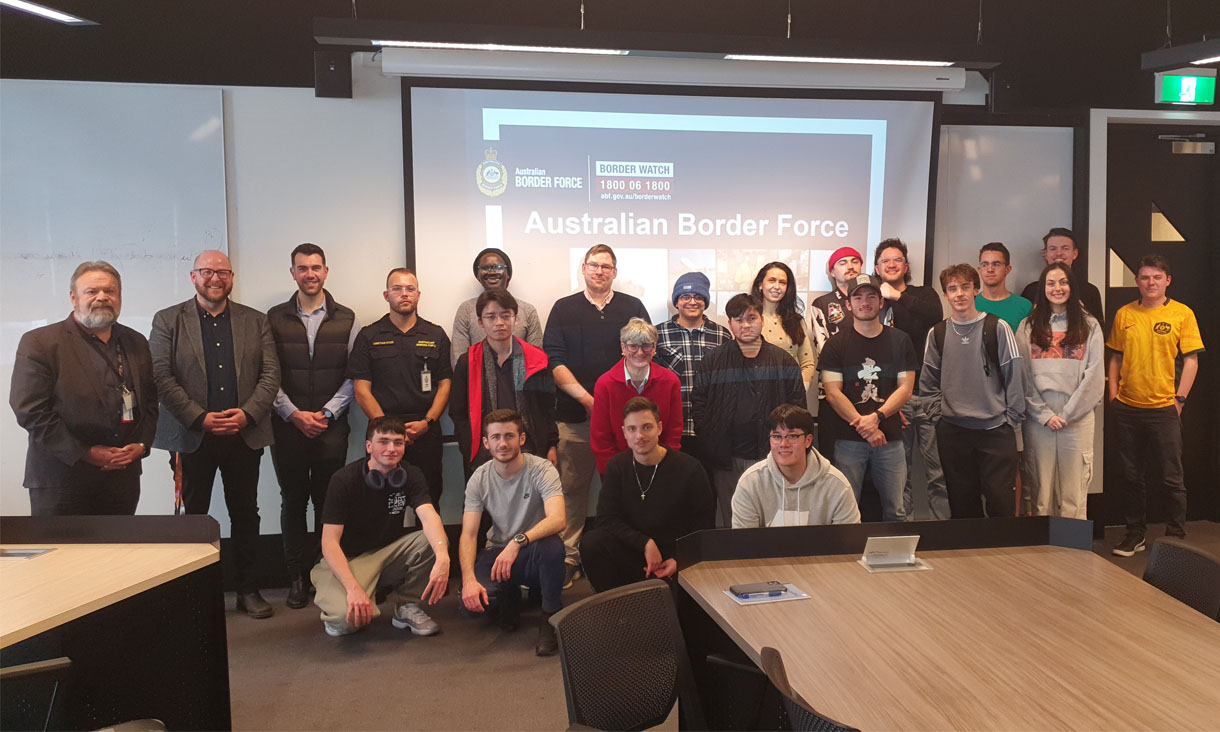 RMIT Diploma of Logistics students
In the second semester, you will complete an applied industry project that is embedded across all semester 2 subjects, rather than taught as a standalone unit.
Using the knowledge and skills you have built over the duration of the course, you will be tasked with solving a real business problem drawn from logistics, supply chain, transport, procurement, or distribution contexts from a real company, rather than a simplified or hypothetical scenario. These problems may relate to areas such as:
This capstone WIL experience will help you transition from classroom learning to workplace readiness, building skills that are transferable across logistics and supply chain roles.
Recent examples of organisations that RMIT has worked with include:
This course is competency-based and has been designed to help you develop the practical skills and knowledge necessary to work effectively in your chosen field. You will learn and be assessed by practising and demonstrating your capabilities, all of which can be readily applied in the workplace.
In addition to the specific vocational skills you build throughout this course, you will also develop a set of essential employability skills, including communication, planning, organising, and problem solving, self-management, initiative and teamwork. These foundational skills will enable you to navigate the world of work, collaborate effectively with others, and successfully get the job done.
The Diploma of Logistics prepares graduates for operational and supervisory roles across industries where supply chains, transport and distribution are essential to business success including retail, transport, construction, manufacturing, and e-commerce. Graduates can work across importing and exporting, transport and freight forwarding, distribution operations, supply chain coordination, procurement, and inventory and warehousing management.
Graduates of the Diploma of Logistics typically move into roles such as:
Organise deliveries, manage schedules, and liaise with suppliers. The average salary in Australia is $75,000 per year*.
Manage shipments, track inventory, and ensure operations run smoothly. The average salary in Australia is $83,000 per year*.
Oversee stock control, warehouse operations, and small teams. The average salary in Australia is $88,000 per year*.
With experience and further upskilling, you can move onto roles such as:
Manage stock levels, accuracy, and flow from receiving to dispatch, ensuring optimal inventory to meet demand while minimising costs. The average salary in Australia is $85,000 per year*.
Assist with the purchase of equipment, services and supplies for an organisation. The average salary in Australia is $90,000 per year*.
Analyses product delivery or supply chain processes to identify or recommend changes. The average salary in Australia is $100,000 per year*.
With a degree or equivalent experience, you can move onto roles such as:
Ensure the smooth and efficient transport of resources for businesses and organisations. The average salary in Australia is $120,000 per year*.
Manage a company, or a department within a large organisation, to run as efficiently as possible. The average salary in Australia is $125,000 per year*.
Oversee a company’s logistics and operations in order to maximise process efficiency and productivity. The average salary in Australia is $135,000 per year*.
Source: seek.com.au 2026
You need to satisfy all of the following academic (entry) requirements to be considered for entry into this course.
You must have:
There are no prerequisite subjects required for entry into this qualification.
A selection task is not required for entry into this qualification.
A pathway is an alternative way to get into a course. RMIT's pathways can help you move through different levels of study to reach the qualification you're aiming for, even if you don't meet the requirements for your destination course.
This course has pathways available.
The Diploma of Logistics provides credit and guaranteed entry into further study.
Credit, recognition of prior learning, professional experience and accreditation from a professional body can reduce the duration of your study by acknowledging your earlier, relevant experience.
Credit and exemptions will be assessed consistent with the principles of the RMIT Credit Policy.
Credit may reduce the duration of your study by acknowledging your earlier, relevant study experience.
When you are submitting an application, please indicate that you want to be considered for credit and provide detailed course syllabus (also known as course outline), outlining volume of learning, course content and weekly topics, learning objectives/outcomes, assessment types and their weightings, and reference to the learning resources such as prescribed textbooks and recommended readings.
The tuition fees you will pay depends on your eligibility for government subsidies.
Not sure which fee type applies to you? Learn more and check your eligibility.


Fees are adjusted on an annual basis and these fees should only be used as a guide.
You may be eligible for a fee concession if you hold a valid Commonwealth Health Care Card, Pensioner Card, or Veteran's Gold Card, or are enrolled in the Asylum Seeker VET program. Find out more about fee concessions.
| Item Cost (AUD) | Description | Cost (AUD) |
|---|---|---|
|
Tuition fee student pays
$9,250.00
Tuition fees after government subsidy
|
Tuition fees after government subsidy
|
$9,250.00 |
|
Student services and amenities fee (SSAF)
$373.00
Based on 2027 cap of $386 per calendar year
|
Based on 2027 cap of $386 per calendar year
|
$373.00 |
|
Material fees
N/A

Total cost of material fees associated with this course
|
Total cost of material fees associated with this course
|
N/A
|
|
Estimated total cost to you
$9,623.00
Includes all fees listed above
|
$9,623.00 |
The tuition fees shown include the Victorian Government contribution. This amount is reflected in your fees and is paid directly to RMIT by the Government: $7.70 per nominal hour ($6,622.00 total).
| Item Cost (AUD) | Description | Cost (AUD) |
|---|---|---|
|
Tuition fee student pays
$16,250.00
The total tuition fee you will be charged for a full-fee place
|
The total tuition fee you will be charged for a full-fee place
|
$16,250.00 |
|
Student services and amenities fee (SSAF)
$373.00
Based on 2027 cap of $386 per calendar year
|
Based on 2027 cap of $386 per calendar year
|
$373.00 |
|
Material fees
N/A
Total cost of material fees associated with this course
|
Total cost of material fees associated with this course
|
N/A
|
|
Estimated total cost to you
$16,623.00
Includes all fees listed above
|
$16,623.00 |
The tuition fees shown include the Victorian Government contribution. This amount is reflected in your fees and is paid directly to RMIT by the Government: $ per nominal hour ($ total).
| Item Cost (AUD) | Description | Cost (AUD) |
|---|---|---|
|
Tuition fee student pays
$0.00
Tuition fees exempt for eligible students in a government subsidised place
|
Tuition fees exempt for eligible students in a government subsidised place
|
$0.00 |
|
Student services and amenities fee (SSAF)
$0.00
Based on 2027 cap of $386 per calendar year
|
Based on 2027 cap of $386 per calendar year
|
$0.00 |
|
Material fees
N/A
Total cost of material fees associated with this course
|
Total cost of material fees associated with this course
|
N/A
|
|
Estimated total cost to you
$0.00
Includes all fees listed above
|
$0.00 |
The tuition fees shown include the Victorian Government contribution. This amount is reflected in your fees and is paid directly to RMIT by the Government: $7.70 per nominal hour ($6,622.00 total).
Generated on 23 July 2026 | RMIT University's Registered Training Organisation (RTO) Code is 3046 | Payment and refund information
VET Student Loan cap for Diploma of Logistics (C5441): $12858
Any tuition fees above the cap must be paid upfront to RMIT by their due date. Caps are indexed annually by the Commonwealth Government. Eligibility applies.
Learn about eligibility for VSL|
|
|||||
|
|
|||||
|
$0
|
$0
|
||||
|
|||||
|
|
|||||
$ per nominal hour ($ total).
Choose the specific course plan to see relevant fee information:
VET Student Loan cap for (): $
Any tuition fees above the cap must be paid upfront to RMIT by their due date. Caps are indexed annually by the Commonwealth Government. Eligibility applies.
Learn about eligibility for VSLFor students enrolled in supply chain and logistics programs; worth up to $10,000.
RMIT awards more than 2000 scholarships every year to recognise academic achievement and assist students from a variety of backgrounds.
RMIT awards more than 2000 scholarships every year to recognise academic achievement and assist students from a variety of backgrounds.
Use our Frequently Asked Questions to learn about the application process and its equity access schemes, find out how to accept or defer your offer or request a leave of absence, discover information about your fees, refunds and scholarships, and explore the various student support and advocacy services, as well as how to find out more about your preferred program, and more.


RMIT University acknowledges the people of the Woi wurrung and Boon wurrung language groups of the eastern Kulin Nation on whose unceded lands we conduct the business of the University. RMIT University respectfully acknowledges their Ancestors and Elders, past and present. RMIT also acknowledges the Traditional Custodians and their Ancestors of the lands and waters across Australia where we conduct our business - Artwork 'Sentient' by Hollie Johnson, Gunaikurnai and Monero Ngarigo.
Learn more about our commitment to Indigenous cultures