Made up of a range of technical, theoretical and practical subjects, this diploma covers core engineering skills including drafting, CAD and manufacturing processes.
Learn skills in basic machining operations and fabrication tasks, as well as how to select, set up and use a range of test equipment.
You'll also be introduced to engineering mathematics, fluid and thermodynamics, and materials engineering.
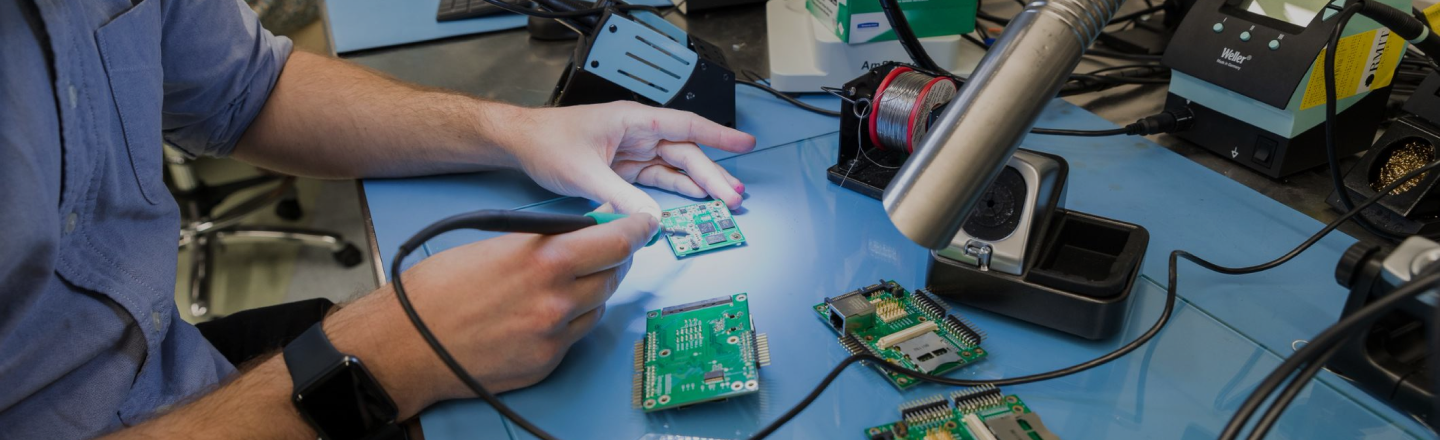
From computer-aided drafting to fabrication, you'll develop a broad suite of skills using the latest equipment and programs.
Undertake a simulated industry-based engineering project and learn about real-life industry developments.
An advisory committee, made up of leading industry representatives, ensures this degree reflects current industry needs.
RMIT offers a variety of learning and teaching approaches, including lectures, tutorials, seminars, workshops, presentations and group discussions.
You'll have access to online resources through the student portal.
The types of classes you have will depend on the course you’re studying. Classes are offered in various formats designed to provide meaningful engagement with staff, industry and peers and provide for access and use of spaces where learning can be applied and active, including an array of specialised equipment.
Ongoing assessment throughout the semester includes examinations, essays, reports, oral classes, presentations, group projects, research projects, laboratory projects and practical assignments.
Your assignments will help develop your skills in technical analysis, critical thinking and a practical understanding of the industry. In addition, they’ll provide the opportunity to receive feedback on your learning and skills development.
The types of classes you have will depend on the course you’re studying. Classes are offered in various formats designed to provide meaningful engagement with staff, industry and peers and provide for access and use of spaces where learning can be applied and active, including an array of specialised equipment.
Most RMIT courses do not include passive large-scale classes such as lectures, instead the content traditionally provided in lectures is made available online. This may be in the form of readings, videos or other on-demand learning materials. This content will also support the basis of interactive learning that takes place in on-campus classes.
The world is constantly changing, and there are universal skills that can help you adapt to the evolving nature of work and global engagement.
As part of your study experience at RMIT, we provide 6 future-focused RMIT Capabilities:
RMIT Capabilities are built into your course as well as some of our extracurricular experiences. They inform the design and delivery of your learning activities and assessments, so by the time you graduate, you’ll be ready to apply these capabilities in your life and work.
This course is competency-based and has been designed to help you develop the practical skills and knowledge necessary to work effectively in your chosen field. You will learn and be assessed by practising and demonstrating your capabilities, all of which can be readily applied in the workplace.
In addition to the specific vocational skills you build throughout this course, you will also develop a set of essential employability skills, including communication, planning, organising, and problem solving, self-management, initiative and teamwork. These foundational skills will enable you to navigate the world of work, collaborate effectively with others, and successfully get the job done.
Throughout this diploma, you'll be required to attend face-to-face classes on campus 3 to 3.5 days per week.
You can also expect 2 hours of external study per subject per week to complete required reading and assignments.
This qualification is delivered over one year. |
You'll begin by learning how to work safely and effectively in workshop environments, interpret technical information and communicate clearly within an engineering context. Alongside this, you'll be introduced to key concepts in sustainability, materials selection, and industry-standard software such as computer-aided design (CAD).
As the year progresses, your skills will broaden to include hands-on project work and more advanced drawing and modelling techniques. You'll develop confidence using workshop equipment, interpreting mechanical systems and completing engineering tasks from planning through to production.
In the later stages of the course, the focus shifts toward deeper technical understanding. You'll apply mechanical principles and mathematical methods – including calculus and stress analysis – to solve real-world engineering problems. Through these integrated tasks, you'll begin to think and work like a mechanical engineer, developing a toolkit that prepares you for further study or entry-level roles in the industry.
Choose a plan below to find out more about the subjects you will study and the course structure.
International student visa holders can only study full-time.
After completing this qualification you may find work at the paraprofessional level, in roles such as:
Jobs and Skills Australia projects that work opportunities for industrial, mechanical and production engineers are set to increase by 13.1% to 2028.
You need to satisfy all of the following academic (entry) requirements to be considered for entry into this course.
You must have successfully completed the Victorian Certificate of Education (VCE) (or equivalent qualification).
OR
At least 6 months of full-time work experience (or part-time equivalent) in a related industry field.
OR
Successful completion of post-secondary studies in a related field (Certificate II or above).
There are no prerequisite subjects required for entry into this qualification.
A selection task is not required for entry into this qualification.
You must meet the University's minimum English language requirements to be eligible for a place in this program.
You need to satisfy all of the following requirements to be considered for entry into this course.
You must have successfully completed a qualification recognised by RMIT as equivalent to the Victorian Certificate of Education (VCE) with a minimum average of 65% (see calculator below).
Equivalent qualifications may also include completion of the RMIT Foundation Studies course or a recognised post secondary diploma in the relevant discipline with the required grades.
Meeting the minimum academic requirements does not guarantee entry. Your application will still need to be assessed and accepted.
There are no prerequisite subjects required for entry into this qualification.
A selection task is not required for entry into this qualification.
To study this course you will need to complete one of the following English proficiency tests:
Note: RMIT does not accept scores from 'at-home' or 'online' testing.
For detailed information on English language requirements and other proficiency tests recognised by RMIT, visit English language requirements and equivalency information.
Don't meet the English language test scores? Complete an English for Academic Purposes (EAP) Advanced Plus at RMIT University Pathways (RMIT UP).
A pathway is an alternative way to get into a course. RMIT's pathways can help you move through different levels of study to reach the qualification you're aiming for, even if you don't meet the requirements for your destination course.
Unfortunately we are currently unable to offer formal pathways into this course. Contact Study@RMIT to discuss your options.
Graduates of this course will be guaranteed entry into the course/s below. Credit may apply which will reduce the total duration of the destination course. See destination course page pathways for full details on entry and credit.
Try adjusting them or reset all filters to see more options
Graduates of this course who complete their further studies in the Advanced Diploma of Engineering (Mechanical) will be guaranteed entry into the course/s below upon successful completion of the Advanced Diploma. Credit may apply which will reduce the total duration of the destination course. See destination course page pathways for full details on entry and credit.
Try adjusting them or reset all filters to see more options
Credit, recognition of prior learning, professional experience and accreditation from a professional body can reduce the duration of your study by acknowledging your earlier, relevant experience.
Credit and exemptions will be assessed consistent with the principles of the RMIT Credit Policy.
Credit, recognition of prior learning, professional experience and accreditation from a professional body can reduce the duration of your study by acknowledging your earlier, relevant experience.
Credit and exemptions will be assessed consistent with the principles of the RMIT Credit Policy.
The tuition fees you will pay for this program will depend on whether you are offered a Victorian Government subsidised place or a full-fee place. To find out if you are eligible for a government subsidised place, follow the steps at How to check if you are eligible.
*Fees shown are indicative only and subject to change given individual circumstances at the time of enrolment.
Use our fee finder to get an estimate of your fees for this program.
The student tuition fees as displayed by the fee finder are indicative only and subject to change given individual circumstances at enrolment. Fees are adjusted on an annual basis and these fees should only be used as a guide.
The Australian Government provides financial assistance via the VET Student Loans scheme, which allows eligible students in eligible programs to defer payment of their tuition fees, up to the maximum loan amount for their program.
For information on how to pay your fees or how to apply for a refund, please see Paying your fees and applying for refunds.
In addition to tuition fees, you will be charged an annual student services and amenities fee (SSAF), which is used to maintain and enhance services and amenities that improve your experience as an RMIT student.
The SSAF is calculated based on your enrolment load and the maximum fee for 2026 is $373.
You may also be required to purchase other items related to your course, including field trips, textbooks and equipment. These additional fees and expenses vary from course to course.
You may be entitled to apply for a fee concession or exemption if you are in a Victorian Government subsidised place and you meet the eligibility criteria.
If your application for a fee concession is approved, you will be charged 20% of the standard government subsidised tuition fee for your program. You will also be charged a lower rate on your student services and amenities fee (SSAF).
In addition to tuition fees you also need to pay for:
You also need to account for your living expenses. Estimate the cost of living in Melbourne.
In addition to tuition fees, you will be charged an annual student services and amenities fee (SSAF), which is used to maintain and enhance services and amenities that improve your experience as an RMIT student.
The SSAF is calculated based on your enrolment load and the maximum fee for 2026 is $373.
Find out more details about how fees are calculated and the expected annual increase.
Find information on how to apply for a refund as a continuing international student.
RMIT awards more than 2000 scholarships every year to recognise academic achievement and assist students from a variety of backgrounds.
Use our Frequently Asked Questions to learn about the application process and its equity access schemes, find out how to accept or defer your offer or request a leave of absence, discover information about your fees, refunds and scholarships, and explore the various student support and advocacy services, as well as how to find out more about your preferred program, and more.
RMIT University acknowledges the people of the Woi wurrung and Boon wurrung language groups of the eastern Kulin Nation on whose unceded lands we conduct the business of the University. RMIT University respectfully acknowledges their Ancestors and Elders, past and present. RMIT also acknowledges the Traditional Custodians and their Ancestors of the lands and waters across Australia where we conduct our business - Artwork 'Sentient' by Hollie Johnson, Gunaikurnai and Monero Ngarigo.
More information