Through hands-on experience and industry-focused training, you'll respond to real and simulated briefs that mirror the dynamic world of fashion. From personal styling and image consultancy to editorial shoots, social media content and styling for television or film, you'll learn how to craft innovative and impactful styling solutions for individuals and businesses alike.
You'll study at RMIT's renowned Centre for Fashion – Melbourne's creative hub for fashion education – where industry meets innovation. Surrounded by the energy of Australia’s fashion capital, you'll learn in state-of-the-art studios and interactive teaching spaces, guided by leading professionals who are shaping the industry today.
Get career-ready with skills that matter:
This is more than just a course – it's your pathway into the world of fashion styling. Whether you're looking to launch your own styling consultancy, work in-house for a brand or explore the broader fashion landscape, this diploma is your launchpad.
Explore eco-styling and ethical fashion practices to tackle real-world challenges and shape a more sustainable industry future.
Gain hands-on experience using professional styling kits, photography gear and Adobe Creative Cloud at an official Adobe Creative Campus.
Discover how fashion trends move across cultures through global case studies, industry insights and connections to international style networks.
With dynamic, face-to-face classes designed to mirror the fast-paced global fashion industry, this diploma offers an exciting, hands-on learning experience where creativity, collaboration and professional practice come together.
You'll build essential knowledge across key styling disciplines while developing practical, industry-ready skills in photography and digital design. Learning takes place in RMIT’s purpose-built fashion studios, giving you real-time interaction with expert teachers and peers.
You'll be immersed in interactive classes that encourage idea-sharing, creative experimentation and skill development.
Activities include:
Every project is grounded in real-world styling challenges – so you're not just learning, you're doing.
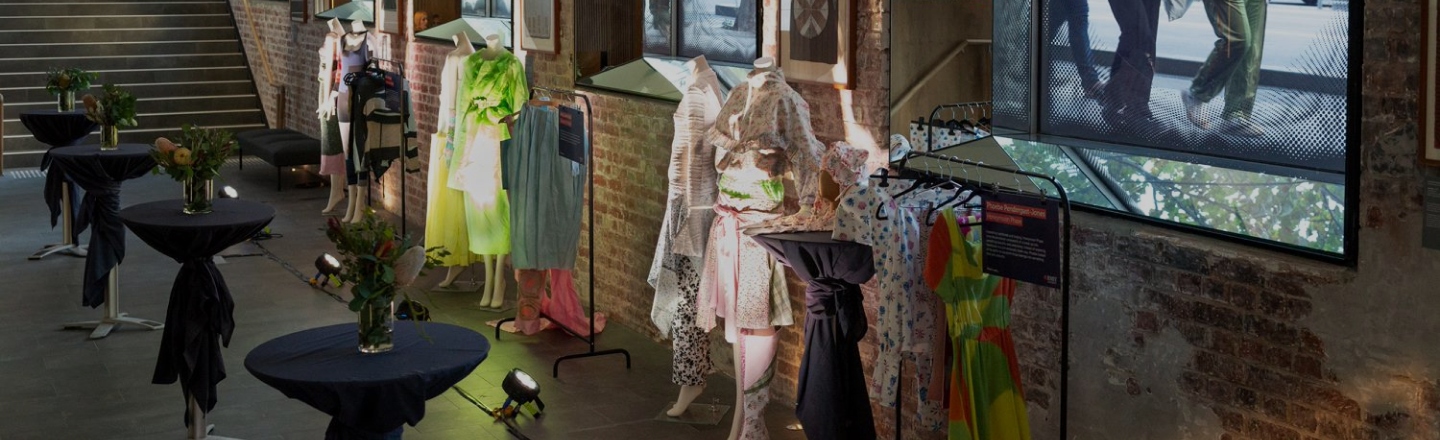
Your progress will be assessed through a mix of individual and group work, presentations, practical workshops and live projects – all delivered in person.
You'll tackle real case studies, develop styling proposals and pitch ideas to your classmates, and, at times, to fashion industry professionals. From mood boards to mock-ups, you'll bring your vision to life and build a portfolio that reflects your unique styling voice.
Whether you're preparing a shoot, designing a look or presenting to a client, every assessment is designed to sharpen your creative and professional edge.
The types of classes you have will depend on the course you’re studying. Classes are offered in various formats designed to provide meaningful engagement with staff, industry and peers and provide for access and use of spaces where learning can be applied and active, including an array of specialised equipment.
Most RMIT courses do not include passive large-scale classes such as lectures, instead the content traditionally provided in lectures is made available online. This may be in the form of readings, videos or other on-demand learning materials. This content will also support the basis of interactive learning that takes place in on-campus classes.
The world is constantly changing, and there are universal skills that can help you adapt to the evolving nature of work and global engagement.
As part of your study experience at RMIT, we provide 6 future-focused RMIT Capabilities:
RMIT Capabilities are built into your course as well as some of our extracurricular experiences. They inform the design and delivery of your learning activities and assessments, so by the time you graduate, you’ll be ready to apply these capabilities in your life and work.
Throughout the diploma, you'll engage with the fashion industry in meaningful and inspiring ways.
From simulated events to exciting real-world projects delivered by practising professionals, every experience is designed to connect you with the styling industry. You'll hear directly from industry speakers, collaborate on styling-related projects and work through real-life fashion challenges.
These connections allow you to build confidence and expand your professional network, gaining invaluable insight into this fast-paced world.
This course is competency-based and has been designed to help you develop the practical skills and knowledge necessary to work effectively in your chosen field. You will learn and be assessed by practising and demonstrating your capabilities, all of which can be readily applied in the workplace.
In addition to the specific vocational skills you build throughout this course, you will also develop a set of essential employability skills, including communication, planning, organising, and problem solving, self-management, initiative and teamwork. These foundational skills will enable you to navigate the world of work, collaborate effectively with others, and successfully get the job done.
While studying this diploma, you'll be expected to attend 20 hours per week of scheduled classes and undertake approximately 13 hours of extra study and research weekly.
There are often concentrated periods of self-directed study, research and out-of-class work when assessments are due.
Class sizes are approximately 21 students.
As a student in this diploma, you will study 20 units across 2 semesters. These units are often clustered together for delivery and assessment purposes to enrich the learning experience.
Topics you'll cover include styling for media and fashion editorial, negotiating and refining design briefs, developing and executing event management plans, planning and styling merchandise photo shoots, analysing influences on contemporary fashion designs, researching global design trends, leading and managing teams and projects, and more.
Choose a plan below to find out more about the subjects you will study and the course structure.
International student visa holders can only study full-time.
Our graduates are at the forefront of fashion, using their expertise to create impactful styling solutions and influence trends. Consider the following roles:
With hands-on training at RMIT's Centre for Fashion, you'll engage with industry leaders and gain real-world experience. From mastering the Adobe Creative Cloud to networking with professionals, you’ll be equipped with the skills and connections to thrive in the dynamic world of fashion styling.
You need to satisfy all of the following academic (entry) requirements to be considered for entry into this course.
There are no minimum academic entry requirements for this course. Applicants must meet the minimum university entry requirements.
Applicants who are seeking admission on the basis of an approved RMIT pathway will be able to indicate this in the selection task and submit.
All other applicants must complete and submit the selection task requirements.
There are no prerequisite subjects required for entry into this qualification.
If you are applying via VTAC, selection tasks should be submitted by the following dates to be considered for timely selection in each VTAC round:
| VTAC offer round | Register and submit the selection task by |
|---|---|
| November round (non-Year 12 applicants only) | 9 November 2025 |
| December round (current Year 12 applicants only) | 15 December 2025 |
| January rounds (if places are available) | 4 January 2026 |
| February rounds (all applicants if places are available) | 28 January 2026 |
If you are applying direct to RMIT, you must complete and submit your direct application. The link to submit your selection task will appear on the applicant dashboard after you have submitted your application. Please see the Apply page for information on eligibility to apply direct.
| Applicant type | Register and submit the selection task by |
|---|---|
| All applications | 6 February 2026 |
The selection task has 2 options: RMIT previous studies OR applicant statement with folio. Applicants need to only complete the section most relevant to their qualification(s) and experience.
If you have successfully completed, or are due to complete at the end of the current RMIT semester, the following RMIT University course, you must submit your selection task so that your eligibility and application will be assessed based on the approved RMIT pathway program:
Submit a folio containing 4 to 5 images that demonstrate your interest in fashion styling or design. The images may include:
You can include work from secondary school, previous studies and personal or work-related design experience. Please briefly describe each image you include, what inspired you or what it represents to you (maximum 50 words per image).
Upload your folio as:
OR
The link to submit your selection task will appear on the applicant dashboard after you have submitted your application.
| Applicant type | Register and submit the selection task by |
|---|---|
| All applications | TBC |
Selection task details and submission dates will be available closer to the intake.
You must meet the University's minimum English language requirements to be eligible for a place in this program.
You need to satisfy all of the following requirements to be considered for entry into this course.
You must have successfully completed an Australian Year 12 (or equivalent senior secondary school qualification) (check calculator below).
Equivalent qualifications may also include completion of the RMIT Foundation Studies program or a recognised post-secondary diploma in the relevant discipline with the required grades.
You may also be considered if you have work experience in this field.
Meeting the minimum academic requirements does not guarantee entry. Your application will still need to be assessed and accepted.
There are no prerequisite subjects required for entry into this qualification.
Pre-selection kit: You are required to submit a completed pre-selection kit (PDF 595 KB) along with your application.
To study this program you will need to complete one of the following English proficiency tests:
Note: RMIT does not accept scores from 'at-home' or 'online' testing.
For detailed information on English language requirements and other proficiency tests recognised by RMIT, visit English language requirements and equivalency information.
Don't meet the English language test scores? Complete an English for Academic Purposes (EAP) Upper Intermediate at RMIT University Pathways (RMIT UP).
If you are currently in Australia on an asylum seeker visa, please contact the Domestic Admissions team on +61 3 9925 8795 or directadmissions@rmit.edu.au for information on how to apply.
A pathway is an alternative way to get into a course. RMIT's pathways can help you move through different levels of study to reach the qualification you're aiming for, even if you don't meet the requirements for your destination course.
This course has pathways available.
Graduates of this course will be guaranteed entry into the course/s below. Credit may apply which will reduce the total duration of the destination course. See destination course page pathways for full details on entry and credit.
Try adjusting them or reset all filters to see more options
You can gain entry to this diploma from RMIT Foundation Studies or a range of vocational study courses.
Credit may reduce the duration of your study by acknowledging your earlier, relevant study experience.
When you are submitting an application, please indicate that you want to be considered for credit and provide detailed course syllabus (also known as course outline), outlining volume of learning, course content and weekly topics, learning objectives/outcomes, assessment types and their weightings, and reference to the learning resources such as prescribed textbooks and recommended readings.
When you successfully complete this diploma, you may be eligible for entry to other RMIT vocational or undergraduate courses.
Credit, recognition of prior learning, professional experience and accreditation from a professional body can reduce the duration of your study by acknowledging your earlier, relevant experience.
Credit and exemptions will be assessed consistent with the principles of the RMIT Credit Policy.
Credit, recognition of prior learning, professional experience and accreditation from a professional body can reduce the duration of your study by acknowledging your earlier, relevant experience.
Credit and exemptions will be assessed consistent with the principles of the RMIT Credit Policy.
This program is only offered as a full-fee program.
*Fees shown are indicative only and subject to change given individual circumstances at the time of enrolment.
Use our fee finder to get an estimate of your fees for this program.
The student tuition fees as displayed by the fee finder are indicative only and subject to change given individual circumstances at enrolment. Fees are adjusted on an annual basis and these fees should only be used as a guide.
The Australian Government provides financial assistance via the VET Student Loans scheme, which allows eligible students in eligible programs to defer payment of their tuition fees, up to the maximum loan amount for their program.
For information on how to pay your fees or how to apply for a refund, please see Paying your fees and applying for refunds.
In addition to tuition fees, you will be charged an annual student services and amenities fee (SSAF), which is used to maintain and enhance services and amenities that improve your experience as an RMIT student.
The SSAF is calculated based on your enrolment load and the maximum fee for 2026 is $373.
You may also be required to purchase other items related to your course, including field trips, textbooks and equipment. These additional fees and expenses vary from course to course.
In addition to tuition fees you also need to pay for:
You also need to account for your living expenses. Estimate the cost of living in Melbourne.
In addition to tuition fees, you will be charged an annual student services and amenities fee (SSAF), which is used to maintain and enhance services and amenities that improve your experience as an RMIT student.
The SSAF is calculated based on your enrolment load and the maximum fee for 2026 is $373.
Find out more details about how fees are calculated and the expected annual increase.
Find information on how to apply for a refund as a continuing international student.
RMIT awards more than 2000 scholarships every year to recognise academic achievement and assist students from a variety of backgrounds.
Use our Frequently Asked Questions to learn about the application process and its equity access schemes, find out how to accept or defer your offer or request a leave of absence, discover information about your fees, refunds and scholarships, and explore the various student support and advocacy services, as well as how to find out more about your preferred program, and more.
RMIT University acknowledges the people of the Woi wurrung and Boon wurrung language groups of the eastern Kulin Nation on whose unceded lands we conduct the business of the University. RMIT University respectfully acknowledges their Ancestors and Elders, past and present. RMIT also acknowledges the Traditional Custodians and their Ancestors of the lands and waters across Australia where we conduct our business - Artwork 'Sentient' by Hollie Johnson, Gunaikurnai and Monero Ngarigo.
More information