


Building and Construction Foundation Scholarship
For construction management and building and construction students passionate about a career in the industry; worth $5,000.

Learn about the planning, coordination, and control of medium-rise and wide-span building projects.

In this diploma, you’ll develop an understanding of the principles, systems, regulations and professional practices that underpin the delivery of medium-rise and wide-span building projects up to 25 metres high.
The course uses applied and project-based learning to help you understand how the different elements of a construction project come together, including planning, compliance, documentation, coordination and site management. You’ll work through realistic industry scenarios and develop the skills needed to interpret information, solve problems and make informed decisions in a construction environment.
Your learning is also supported by industry-connected experiences that help bring construction practice into context. These may include engagement with industry professionals, analysis of live or simulated projects, site-based observations, case studies and other activities designed to expose you to current residential and commercial construction practice. Together, these experiences help connect your studies with the professional responsibilities, decision-making and coordination required of building and construction managers.
Assignments reflect real or simulated industry conditions, supported by project-based learning and industry-informed experiences.
Choose from day or evening classes to work around your work or life commitments.
Graduates have the option to continue further studies in construction, project management, or property services with RMIT.
Construction is about more than completing the physical work on site. It takes building professionals who can plan, coordinate, supervise and manage projects, people and trades from commencement through to completion.
The Diploma of Building and Construction (Building) prepares you for professional roles in the building industry, including building supervision, construction management and project coordination. It can also provide an important qualification supporting a pathway towards builder registration.
This is not a trade qualification. You won’t train to become a carpenter, plumber or other tradesperson. Instead, you’ll develop the knowledge to manage and supervise the qualified tradespeople and specialists who deliver construction projects.
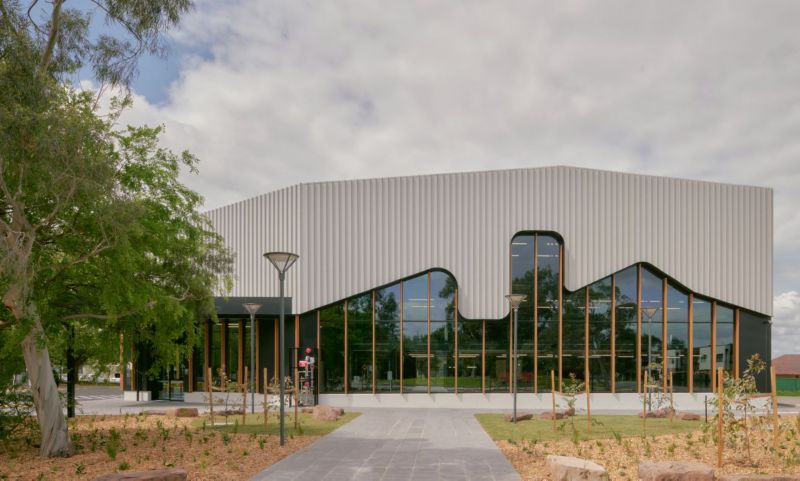
RMIT’s Trades Innovation Centre is a cutting-edge facility offering the latest in skills training and technology for students and industry.
The centre features adaptable spaces, including a 2.5-metre-deep sand pit, double-height workshop ceilings, and a three-storey training rig that mimics building construction for real-world experience.
Divided into ‘trade zones’, this allows students to gain hands-on experience while observing other trades.

This diploma is delivered using a structured blended learning model.
For full-time students, blended learning combines online and on-campus classes to create a flexible and connected learning experience. Typically, students will begin the week with shorter online classes that introduce key concepts, ideas and preparation activities. These sessions provide a foundation for the week and are then built on through face-to-face classes on campus, where students can apply their learning through discussion, problem solving, practical activities, projects and assessment preparation.
In a typical week, full-time students can expect approximately one day of online classes and 2 days of face-to-face classes on campus, depending on the semester timetable.
The online component is also an important part of preparing students for the modern construction industry. Building and construction professionals increasingly work across multiple sites, projects and locations, and may not have a traditional office environment. Meetings, project coordination, consultant discussions, document reviews and communication with clients, subcontractors and other stakeholders are often conducted online or remotely.
Being able to communicate professionally, contribute to discussions and work effectively with others in an online environment is therefore an important industry skill. Scheduled online classes provide students with regular opportunities to develop these capabilities while progressing through their course.
Online classes are a planned part of the learning program, and students are expected to attend and actively engage in them live, just as they would with face-to-face classes. Together, the online and on-campus components allow students to build their knowledge progressively while experiencing different ways of communicating, collaborating and working.
Students should plan their work and personal commitments around the published timetable so they can participate in all scheduled online and face-to-face classes.
Part-time and evening students undertake the course predominantly online through scheduled evening classes. This delivery mode reflects many of the same remote communication and collaboration practices used across the construction industry. These scheduled online classes require regular attendance and engagement, while some subjects and learning activities also include face-to-face sessions on weeknights or scheduled Saturdays.
Practical activities are an important part of the diploma for all students, regardless of enrolment option. These activities may be delivered across both the City and Bundoora campuses, depending on the subject and facilities required. Students need to be able to attend either campus when scheduled so they can participate in the practical learning and assessment activities that form part of the course.

This diploma has been developed in response to industry needs, and it is recognised by building and construction industry organisations.
The types of classes you have will depend on the course you’re studying. Classes are offered in various formats designed to provide meaningful engagement with staff, industry and peers and provide for access and use of spaces where learning can be applied and active, including an array of specialised equipment.
Most RMIT courses do not include passive large-scale classes such as lectures, instead the content traditionally provided in lectures is made available online. This may be in the form of readings, videos or other on-demand learning materials. This content will also support the basis of interactive learning that takes place in on-campus classes.
The world is constantly changing, and there are universal skills that can help you adapt to the evolving nature of work and global engagement.
As part of your study experience at RMIT, we provide 6 future-focused RMIT Capabilities:
RMIT Capabilities are built into your course as well as some of our extracurricular experiences. They inform the design and delivery of your learning activities and assessments, so by the time you graduate, you’ll be ready to apply these capabilities in your life and work.

International student visa holders can only study full-time.
The Diploma of Building and Construction (Building) can open pathways to a range of professional, supervisory and management roles across the building and construction industry.
Graduates may pursue career opportunities including:
These careers can involve working on site, in a construction office, at head office, remotely, or across multiple project locations. Graduates may work for residential and commercial builders, developers, construction contractors, subcontractors, project management organisations, consultancies and other organisations within the built environment.
Jobs and Skills Australia projects that work opportunities for architectural, building and surveying technicians are set to increase by 4.1% to 2028.
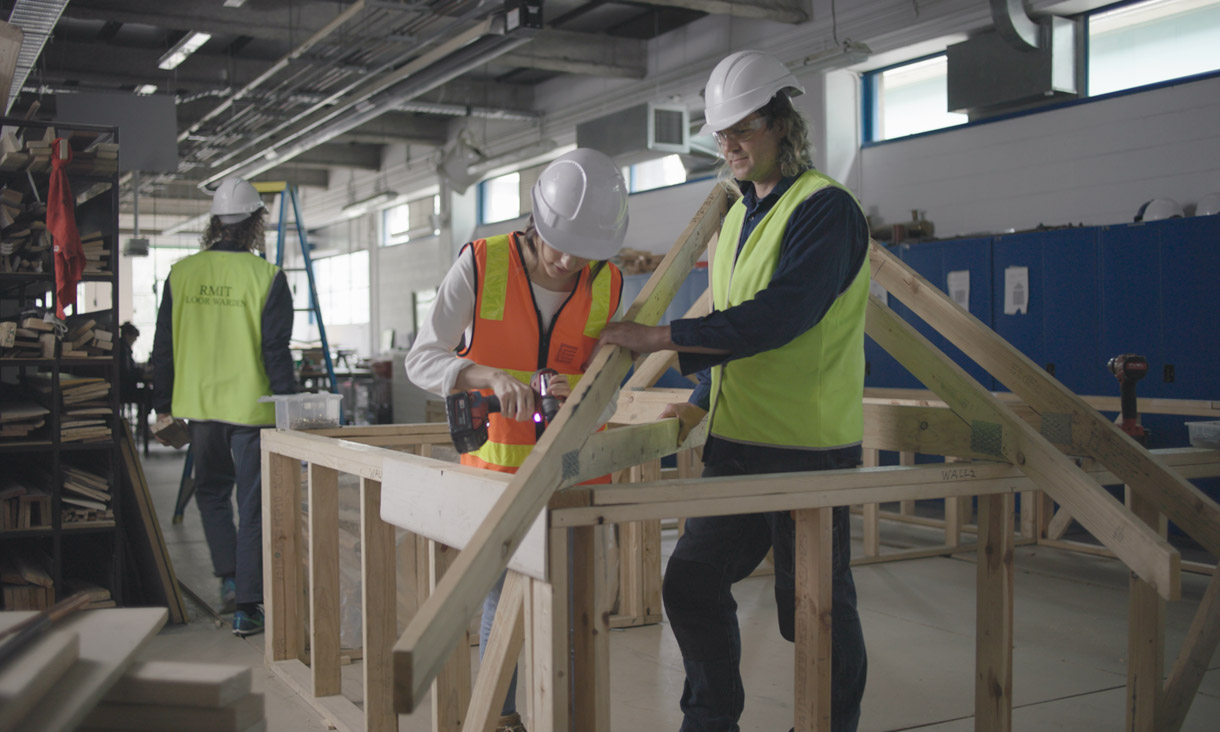
Studying the Diploma of Building and Construction has helped Danielle open doors to exciting job prospects in the building industry.
You need to satisfy all of the following academic (entry) requirements to be considered for entry into this course.
You must have:
If you are applying for a packaged pathway option, please note that they are available at both the City and Bundoora Campus. If you are interested in attending Bundoora, you can apply to the City offering either via VTAC or Direct and transfer prior to enrolling.
There are no prerequisite subjects required for entry into this qualification.
A selection task is not required for entry into this qualification.
You need to satisfy all of the following requirements to be considered for entry into this course.
You must have successfully completed a qualification recognised by RMIT as equivalent to the Victorian Certificate of Education (VCE) with a minimum average of 50% (see calculator below).
Equivalent qualifications may also include completion of the RMIT Foundation Studies course or a recognised post secondary diploma in the relevant discipline with the required grades.
Meeting the minimum academic requirements does not guarantee entry. Your application will still need to be assessed and accepted.
There are no prerequisite subjects required for entry into this qualification.
A selection task is not required for entry into this qualification.
To study this program you will need to complete one of the following English proficiency tests:
Note: RMIT does not accept scores from 'at-home' or 'online' testing.
For detailed information on English language requirements and other proficiency tests recognised by RMIT, visit English language requirements and equivalency information.
Don't meet the English language test scores? Complete an English Language Pathways (Academic English) Upper Intermediate at RMIT University Pathways (RMIT UP).
A pathway is an alternative way to get into a course. RMIT's pathways can help you move through different levels of study to reach the qualification you're aiming for, even if you don't meet the requirements for your destination course.
This course has pathways available.
The Diploma of Building and Construction (Building) provides credit and guaranteed entry into further study.
You can gain entry to this diploma from RMIT Foundation Studies or a range of vocational study courses.
You are guaranteed entry with credit into one of the following RMIT programs when you successfully complete the Diploma of Building and Construction (Building):
Alternatively, you may be eligible for entry to other RMIT vocational study or undergraduate study courses.
Credit, recognition of prior learning, professional experience and accreditation from a professional body can reduce the duration of your study by acknowledging your earlier, relevant experience.
Credit and exemptions will be assessed consistent with the principles of the RMIT Credit Policy.
Credit may reduce the duration of your study by acknowledging your earlier, relevant study experience.
When you are submitting an application, please indicate that you want to be considered for credit and provide detailed course syllabus (also known as course outline), outlining volume of learning, course content and weekly topics, learning objectives/outcomes, assessment types and their weightings, and reference to the learning resources such as prescribed textbooks and recommended readings.
The tuition fees you will pay depends on your eligibility for government subsidies.
Not sure which fee type applies to you? Learn more and check your eligibility.

Fees are adjusted on an annual basis and these fees should only be used as a guide.
You may be eligible for a fee concession if you hold a valid Commonwealth Health Care Card, Pensioner Card, or Veteran's Gold Card, or are enrolled in the Asylum Seeker VET program. Find out more about fee concessions.
| Item Cost (AUD) | Description | Cost (AUD) | |||||||||
|---|---|---|---|---|---|---|---|---|---|---|---|
|
Tuition fee student pays
$0.00
Tuition fees fully subsidised under Free TAFE scheme
|
Tuition fees fully subsidised under Free TAFE scheme
|
$0.00 | |||||||||
|
Student services and amenities fee (SSAF)
$772.00
Based on 2027 cap of $386 per calendar year
|
Based on 2027 cap of $386 per calendar year
|
$772.00 | |||||||||
|
Material fees
$116.42

Total cost of material fees associated with this course
|
Total cost of material fees associated with this course
|
$116.42
|
|||||||||
|
|||||||||||
|
Estimated total cost to you
$888.42
Includes all fees listed above
|
$888.42 | ||||||||||
The tuition fees shown include the Victorian Government contribution. This amount is reflected in your fees and is paid directly to RMIT by the Government: $18.55 per nominal hour ($39,882.50 total).
| Item Cost (AUD) | Description | Cost (AUD) | |||||||||
|---|---|---|---|---|---|---|---|---|---|---|---|
|
Tuition fee student pays
$17,000.00
Tuition fees after government subsidy
|
Tuition fees after government subsidy
|
$17,000.00 | |||||||||
|
Student services and amenities fee (SSAF)
$772.00
Based on 2027 cap of $386 per calendar year
|
Based on 2027 cap of $386 per calendar year
|
$772.00 | |||||||||
|
Material fees
$116.42
Total cost of material fees associated with this course
|
Total cost of material fees associated with this course
|
$116.42
|
|||||||||
|
|||||||||||
|
Estimated total cost to you
$17,888.42
Includes all fees listed above
|
$17,888.42 | ||||||||||
The tuition fees shown include the Victorian Government contribution. This amount is reflected in your fees and is paid directly to RMIT by the Government: $8.25 per nominal hour ($17,737.50 total).
| Item Cost (AUD) | Description | Cost (AUD) | |||||||||
|---|---|---|---|---|---|---|---|---|---|---|---|
|
Tuition fee student pays
$33,500.00
The total tuition fee you will be charged for a full-fee place
|
The total tuition fee you will be charged for a full-fee place
|
$33,500.00 | |||||||||
|
Student services and amenities fee (SSAF)
$772.00
Based on 2027 cap of $386 per calendar year
|
Based on 2027 cap of $386 per calendar year
|
$772.00 | |||||||||
|
Material fees
$116.42
Total cost of material fees associated with this course
|
Total cost of material fees associated with this course
|
$116.42
|
|||||||||
|
|||||||||||
|
Estimated total cost to you
$34,388.42
Includes all fees listed above
|
$34,388.42 | ||||||||||
The tuition fees shown include the Victorian Government contribution. This amount is reflected in your fees and is paid directly to RMIT by the Government: $ per nominal hour ($ total).
| Item Cost (AUD) | Description | Cost (AUD) | |||||||||
|---|---|---|---|---|---|---|---|---|---|---|---|
|
Tuition fee student pays
$0.00
Tuition fees exempt for eligible students in a government subsidised place
|
Tuition fees exempt for eligible students in a government subsidised place
|
$0.00 | |||||||||
|
Student services and amenities fee (SSAF)
$0.00
Based on 2027 cap of $386 per calendar year
|
Based on 2027 cap of $386 per calendar year
|
$0.00 | |||||||||
|
Material fees
$116.42
Total cost of material fees associated with this course
|
Total cost of material fees associated with this course
|
$116.42
|
|||||||||
|
|||||||||||
|
Estimated total cost to you
$116.42
Includes all fees listed above
|
$116.42 | ||||||||||
The tuition fees shown include the Victorian Government contribution. This amount is reflected in your fees and is paid directly to RMIT by the Government: $8.25 per nominal hour ($17,737.50 total).
Generated on 13 October 2026 | RMIT University's Registered Training Organisation (RTO) Code is 3046 | Payment and refund information
VET Student Loan cap for Diploma of Building and Construction (Building) (C5415): $19984
Any tuition fees above the cap must be paid upfront to RMIT by their due date. Caps are indexed annually by the Commonwealth Government. Eligibility applies.
Learn about eligibility for VSL|
|
|||||
|
|
|||||
|
$0
|
$0
|
||||
|
|||||
|
|
|||||
$ per nominal hour ($ total).
Choose the specific course plan to see relevant fee information:
VET Student Loan cap for (): $
Any tuition fees above the cap must be paid upfront to RMIT by their due date. Caps are indexed annually by the Commonwealth Government. Eligibility applies.
Learn about eligibility for VSLIn addition to tuition fees you also need to pay for:
You also need to account for your living expenses. Estimate the cost of living in Melbourne.
In addition to tuition fees, you will be charged an annual student services and amenities fee (SSAF), which is used to maintain and enhance services and amenities that improve your experience as an RMIT student.
The SSAF is calculated based on your enrolment load and the maximum fee for 2027 is $386.
You may also be required to purchase other items related to this course, including field trips, textbooks and equipment.
While we make every effort to ensure that materials fees are kept to a minimum and are competitive with alternative suppliers, material fees are not compulsory and you may choose to purchase these items independently.
For more information about material and other fees for this course, see additional fees and expenses.
Find out more details about how fees are calculated and the expected annual increase.
Find information on how to apply for a refund as a continuing international student.
For construction management and building and construction students passionate about a career in the industry; worth $5,000.
RMIT awards more than 2000 scholarships every year to recognise academic achievement and assist students from a variety of backgrounds.
RMIT awards more than 2000 scholarships every year to recognise academic achievement and assist students from a variety of backgrounds.
Looking for answers or more general information? Use our Frequently Asked Questions to learn about the application process and its equity access schemes, find out how to accept or defer your offer or request a leave of absence, discover information about your fees, refunds and scholarships, and explore the various student support and advocacy services, as well as how to find out more about your preferred course, and more.


RMIT University acknowledges the people of the Woi wurrung and Boon wurrung language groups of the eastern Kulin Nation on whose unceded lands we conduct the business of the University. RMIT University respectfully acknowledges their Ancestors and Elders, past and present. RMIT also acknowledges the Traditional Custodians and their Ancestors of the lands and waters across Australia where we conduct our business - Artwork 'Sentient' by Hollie Johnson, Gunaikurnai and Monero Ngarigo.
Learn more about our commitment to Aboriginal and Torres Strait Islander peoples
