Diploma of Screen and Media

Diploma of Screen and Media - CUA51020

VOCATIONAL

Prepare to work in TV, broadcast, production and live streaming with industry focused skills across studio, location, and hybrid production methods. 

Student type:
Learning mode:
On campus
Entry score:

Not applicable

Duration:
Full-time 1 year
Fees:

Fee finder

Next intake:
February
Location:
Melbourne City
Learning mode:
On campus
Entry score:

See admissions

Duration:
Full-time 1 year
Next intake:
February
Location:
Melbourne City

Overview

Prepare to work in TV, broadcast, production and live streaming with industry focused skills across studio, location, and hybrid production methods. 

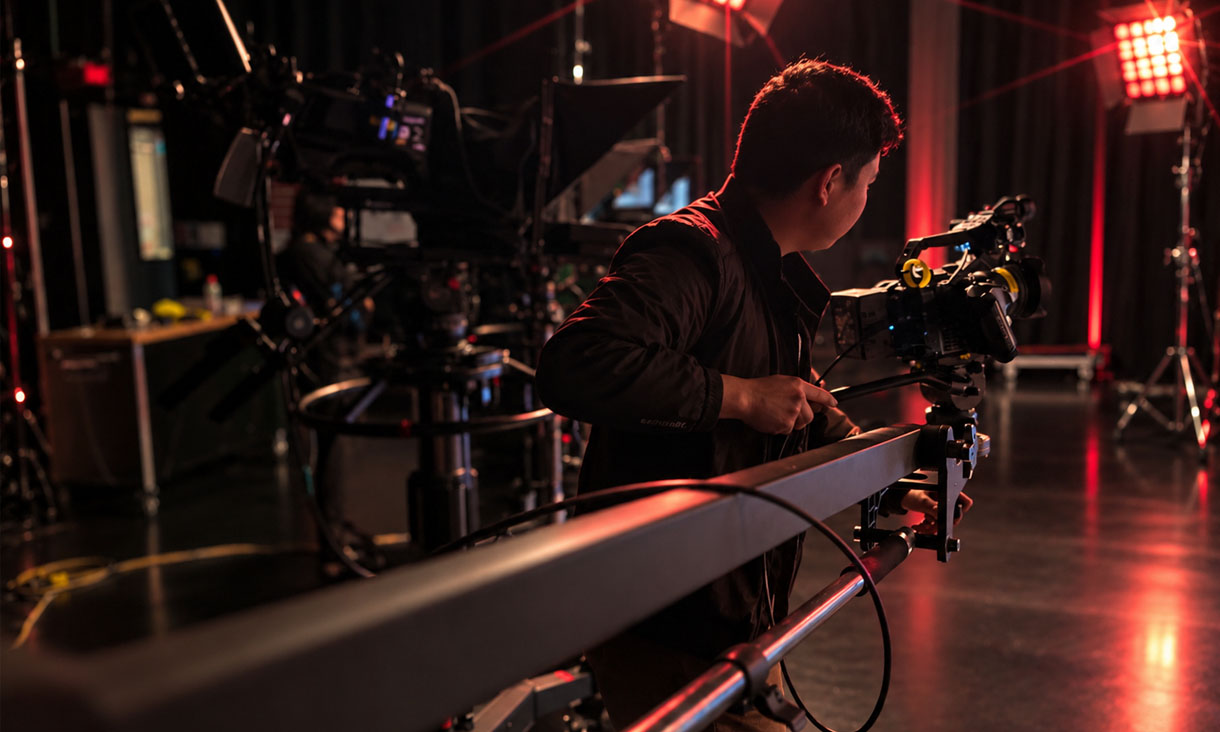
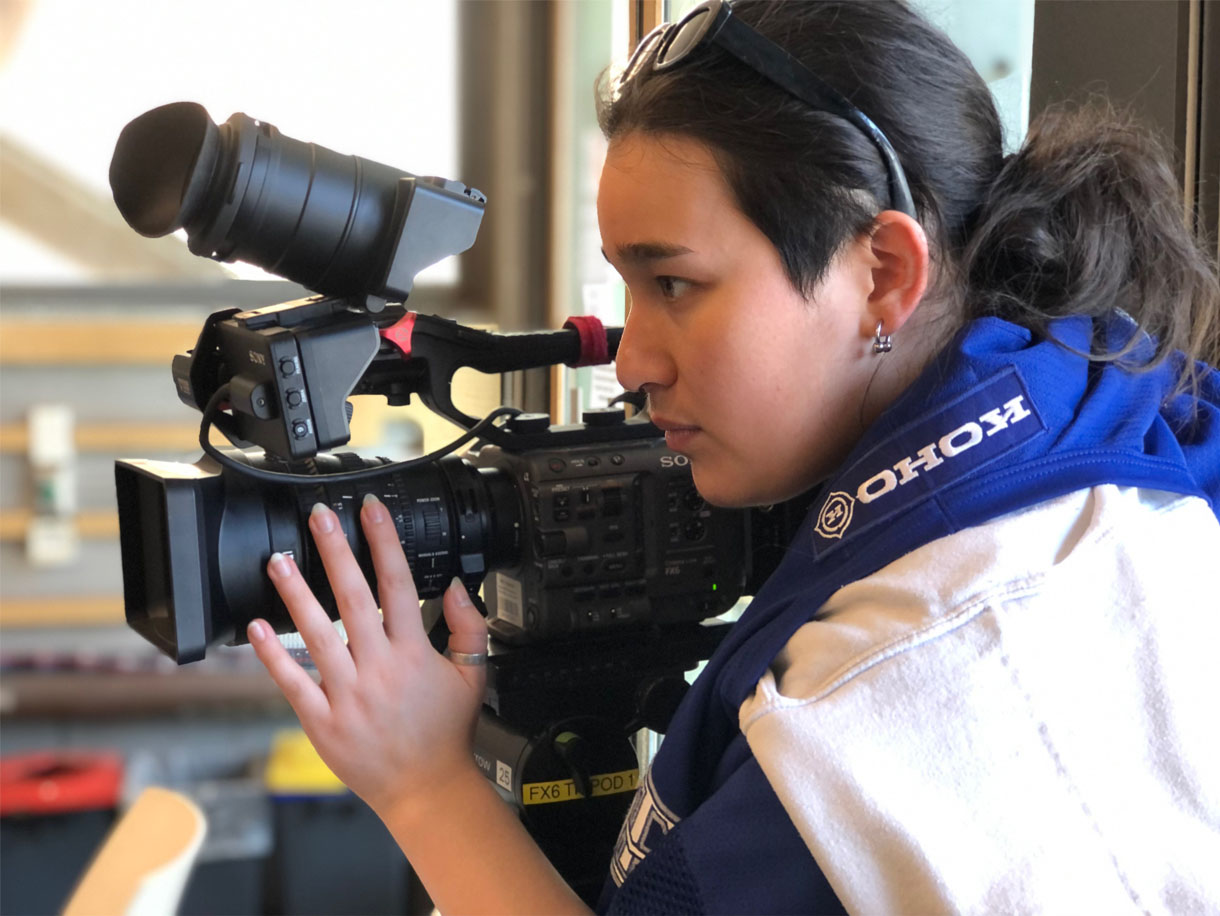
Student looking trhough camera viewfinder while filming panel

Connect with industry

Gain practical experience and build real-world connections with Work Integrated Learning (WIL) activities across major industry broadcasters and organisations in the areas of news, drama, sport, light entertainment and events.

The Diploma of Screen and Media is where industry professionals look to fill the demand for skilled graduates. This one-year, intensely practical course will prepare you to enter the industry with the experience you need to succeed.

You will work on live broadcast and streaming productions, across all technical areas including producing, production management, directing, camera, lighting, audio, graphics and post production.

You'll learn in RMIT’s renowned Media Precinct on industry-grade equipment, including:

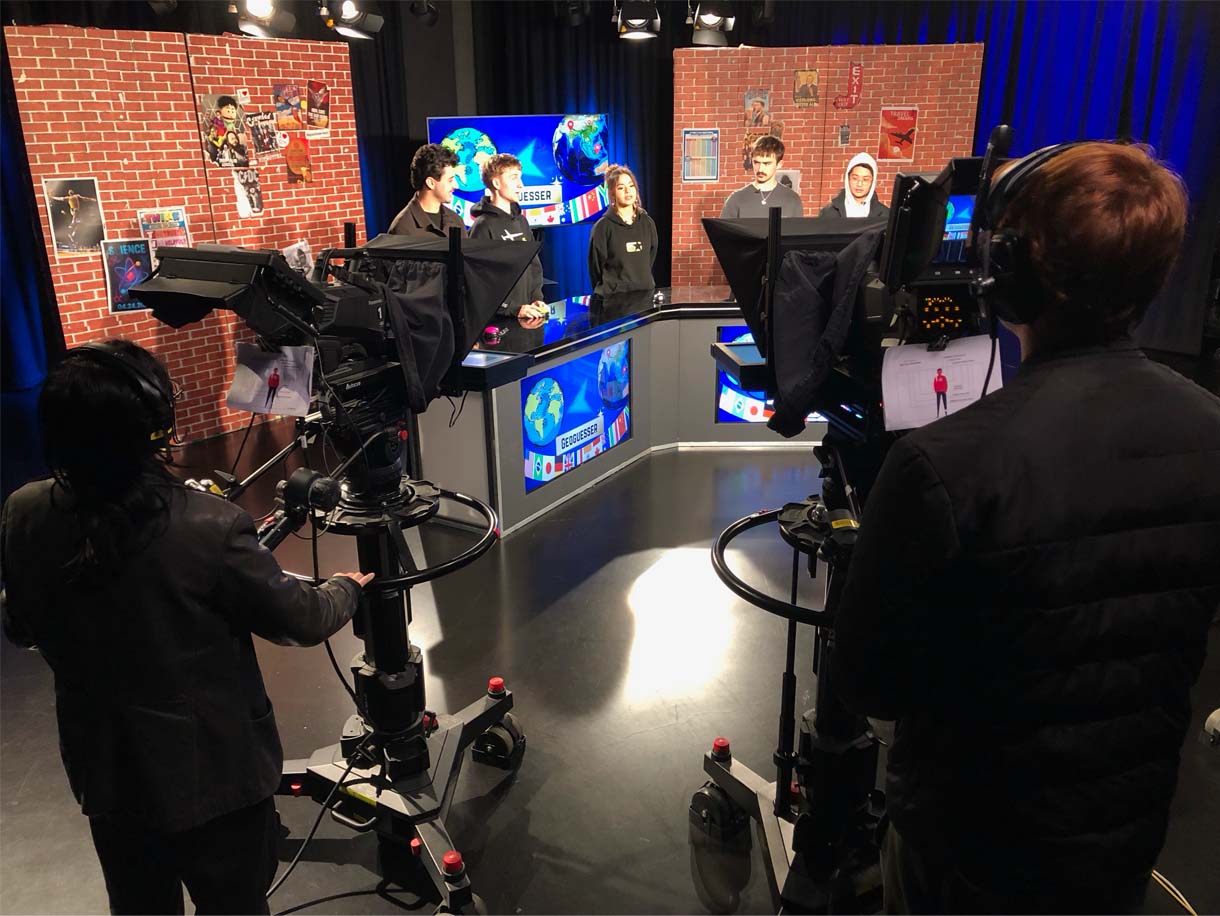
  • 4 x broadcast studios for television and live streaming in 4K
  • the RMIT Cloud Studio, a purpose-built vMix live streaming facility
  • location and ENG production equipment
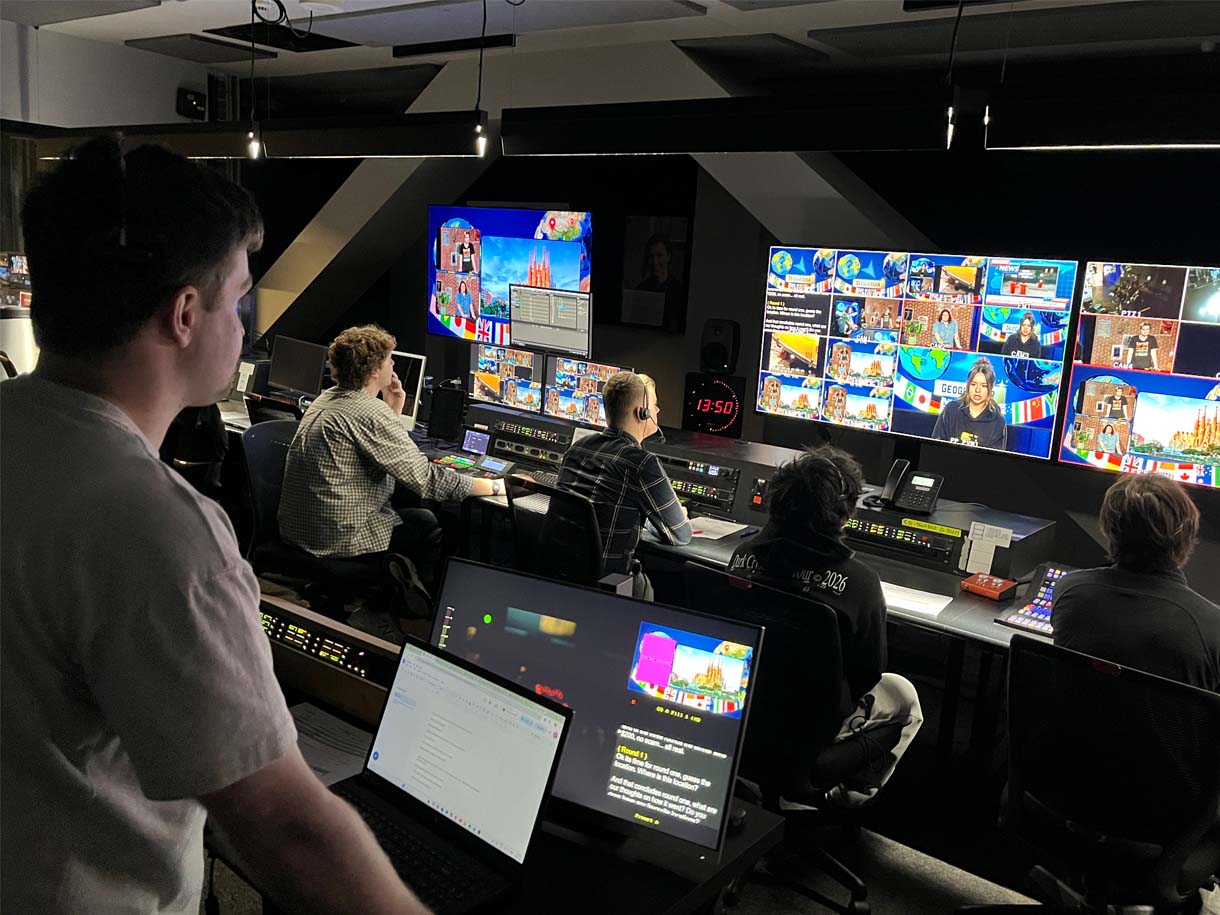
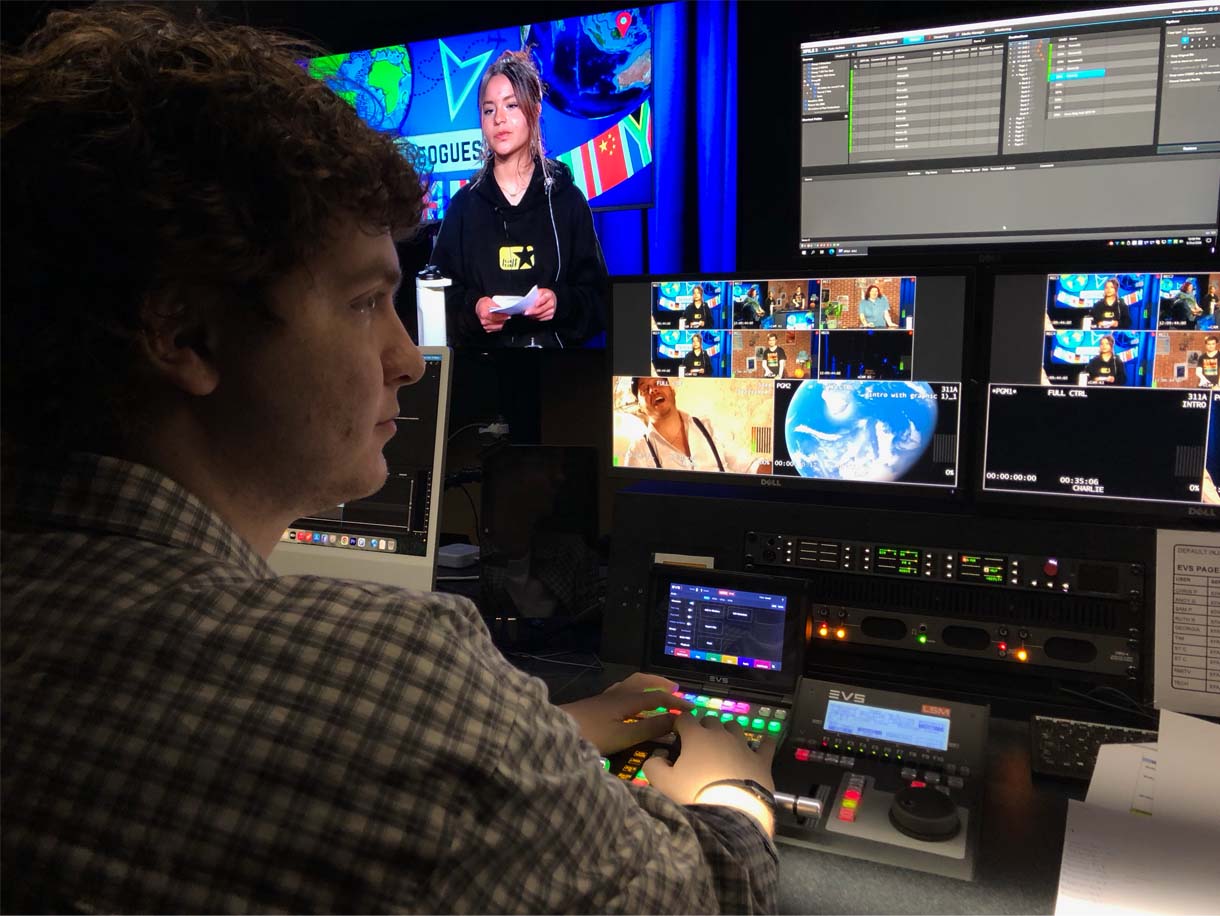
  • industry standard control rooms incorporating EVS, CCU and Xpression graphics
  • Sony and Ross vision mixers
  • LED lighting and digital audio mixer systems
  • DaVinci Resolve and Adobe suite of post-production facilities.

Our teaching staff includes world-class industry experts who work in broadcast production and live streaming, allowing students to gain industry-level skills and prepare for employment upon graduation. Close links with community television, such as C31, and RMITV give you the opportunity to practise your skills and knowledge, and extend your experience while completing your qualification.

Why study screen and media at RMIT?

Up-to-date content

Stay ahead of the game with constantly updated material that keeps your knowledge relevant.

Work relevant

Hear from specialist guest speakers who provide insight into current practices.

Hands-on learning

Gain practical experience in live media and broadcast environments.

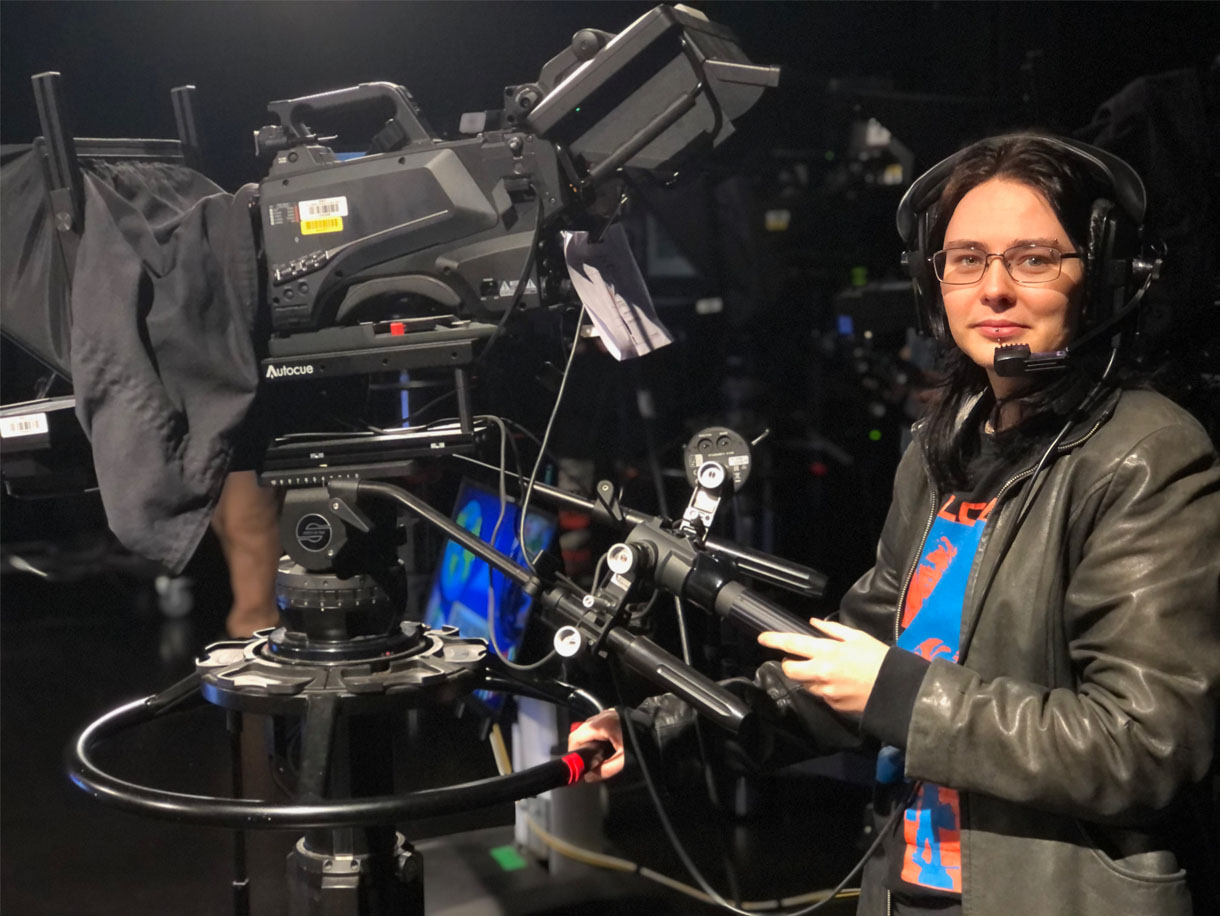
Female student wearing headphones and using camera equipment

Bring productions to life

Work with screenwriting, advertising and journalism students on exciting, industry-relevant projects, including drama, live news broadcasts, advertising panel programs, game shows and special broadcasts that are streamed on YouTube and Community Television C31.

This training is delivered with Victorian and Commonwealth Government funding.

Details

Learning and teaching

The Diploma of Screen and Media is taught via a combination of studio-based sessions, on-location shoots and post-production learning.

Throughout one year of intense learning, you will gain an understanding of and the ability to demonstrate the fundamental skills required to work in the TV, broadcast and live streaming industries.

Students will be involved with multiple production teams across the duration of the program, with each team member having the opportunity to take on all key roles in the production.

Productions you work on will be streamed live to the web and some collaborative productions will be broadcast on free-to-air television via Melbourne Community TV Channel 31.

All academic staff are professionally qualified teachers with substantial industry experience. You will be challenged to refine and practise your skills through industry projects.

Assessment methods

Your assessment will take several different forms, including folio submission, skills demonstration, group and independent projects, presentations, reports and assignments.

Learning at RMIT

The types of classes you have will depend on the course you’re studying. Classes are offered in various formats designed to provide meaningful engagement with staff, industry and peers and provide for access and use of spaces where learning can be applied and active, including an array of specialised equipment.

Most RMIT courses do not include passive large-scale classes such as lectures, instead the content traditionally provided in lectures is made available online. This may be in the form of readings, videos or other on-demand learning materials. This content will also support the basis of interactive learning that takes place in on-campus classes.

RMIT Capabilities

The world is constantly changing, and there are universal skills that can help you adapt to the evolving nature of work and global engagement.

As part of your study experience at RMIT, we provide 6 future-focused RMIT Capabilities:

  • Ethical Global Citizens
  • Connected
  • Adaptive
  • Digitally Adept
  • Expert
  • Critically Engaged.

RMIT Capabilities are built into your course as well as some of our extracurricular experiences. They inform the design and delivery of your learning activities and assessments, so by the time you graduate, you’ll be ready to apply these capabilities in your life and work.

RMIT University is committed to providing you with an education that strongly links formal learning with professional or vocational practices.

This diploma has been developed in consultation with the Industry Advisory Committee (IAC) representing a cross section of TV, broadcast, live streaming, and screen production employers to ensure it delivers industry relevant training outcomes.

Pre-employment opportunities have been provided by ABC News Operations, ABC Television Operations, Channel 9 News Operations, NEP, MKTG, Pacific Broadcast, JAM TV, Ticker News, Fortress Melbourne, and Gravity Media through RMIT’s Work Integrated Learning (WIL) program.

You’ll also have access to industry guest lecturers and have the opportunity to network throughout your studies, increasing your employment opportunities upon graduation.

This course is competency-based and has been designed to help you develop the practical skills and knowledge necessary to work effectively in your chosen field. You will learn and be assessed by practising and demonstrating your capabilities, all of which can be readily applied in the workplace.

In addition to the specific vocational skills you build throughout this course, you will also develop a set of essential employability skills, including communication, planning, organising, and problem solving, self-management, initiative and teamwork. These foundational skills will enable you to navigate the world of work, collaborate effectively with others, and successfully get the job done.

This diploma includes a suite of production-based classes clustered into key areas of skill: Safe Studio, Produce, Audio Visual, VFX, On-Air, Post Production, Screen industry.

Through your studies you'll explore:

  • producing and directing TV programs and segments
  • studio and location media production
  • live streaming for physical and virtual productions
  • multi-camera operation and vision mixing
  • on-location and studio camera operation
  • screen industry and safety
  • broadcast audio mixing 
  • location sound recording
  • visual effects
  • colour grading 
  • audio and video editing.

These skills will prepare you to enter the TV, broadcast and live streaming industries competent across a variety of productions and roles along with a comprehensive understanding of the screen and media industry and its associated creative and work opportunities.


Course structure

Choose a plan below to find out more about the subjects you will study and the course structure.

Diploma of Screen and Media
Program code: C5421
National curriculum code: CUA51020

Title
Location
Duration
Plan code
CRICOS
Diploma of Screen and Media
City Campus
Full Time 1 Years
C5421
107883D
Location
City Campus
Duration
Full Time 1 Years
Plan code
C5421
CRICOS
107883D
Diploma of Screen and Media
City Campus
Full-time 1 Years
C5421
107883D
Location
City Campus
Duration
Full-time 1 Years
Plan code
C5421
CRICOS
107883D

Important information for international students

International student visa holders can only study full-time.

Career

The Australian Screen Industry continues to grow. 

In 2021-22, the Australian screen industry employed approximately 55,000 people and total industry employment has grown by 37% since 2015-16*. This reflects the scale of the screen workforce, its strength and vital contribution to the Australian economy.

Graduates of the Diploma of Screen and Media are eagerly sought after by media production companies for work in a range of roles.

Graduate positions and titles vary across sectors. Possible job titles include:

  • Multi-camera Studio Operator
  • vMix Operator or Technical Director
  • Production Coordinator
  • Production Assistant
  • Associate Producer
  • Outside Broadcast (OB) Technician
  • Single Camera Operator of Assistant
  • Audio Operator or Assistant
  • EVS Operator (replays)
  • CCU Operator (camera control)
  • Graphics Operator
  • Vision mixer
  • Director’s Assistant
  • Lighting Assistant
  • Editor (post-production).

*The Australian Bureau of Statistics (ABS) Film, Television and Digital Games Survey 21/22

Entry requirements and admissions

You need to satisfy all of the following academic (entry) requirements to be considered for entry into this course.

There are no minimum academic entry requirements for this course. Applicants must meet the minimum university entry requirements.

All applicants must submit the selection task

Applicants who are seeking admission on the basis of an approved RMIT pathway will be able to indicate this in the selection task and submit.

All other applicants must complete and submit the selection task requirements.

There are no prerequisite subjects required for entry into this qualification.

All applicants must submit the selection task

Applicants who are seeking admission on the basis of an approved RMIT pathway will be able to indicate this in the selection task and submit.

All other applicants must complete and submit the selection task requirements.

Applications are assessed in the order that they are received until the selection task date below, if places are still available. For your best chance at admission into this course, you are encouraged to apply as early as possible.

Semester 1, 2027

Selection task dates

For VTAC applicants

If you are applying via VTAC, selection tasks should be submitted by the following dates to be considered for timely selection in each VTAC round: 

VTAC offer round Register and submit the selection task by
November round (non-Year 12 applicants only) 17 November 2026
December round (current Year 12 applicants only) 14 December 2026
January rounds (if places are available) 5 January 2027
February rounds (all applicants if places are available) 28 January 2027
For direct applicants

If you are applying direct to RMIT, you must complete and submit your direct application. The link to submit your selection task will appear on the applicant dashboard after you have submitted your application. Please see the Apply page for information on eligibility to apply direct.

Application type Register and submit the selection task by
All applications 5 February 2027

Selection task requirements

The selection task has 2 options:

  • RMIT previous studies
  • Applicant statement with storyboard exercise.

Applicants need to only complete the section most relevant to their qualification(s) and experience.

RMIT previous studies

If you have successfully completed, or are due to complete at the end of the current RMIT semester, one of the following RMIT University courses, you must submit your selection task so that your eligibility and application will be assessed based on the approved RMIT pathway course:

Applicant statement

Answer the following questions (maximum 150 words per question):  

  • Question 1: What interests you about the field of screen media production (Film, TV Broadcast, Production, Post Production, Content Creation, Streaming) and what do you hope to gain from studying this course?

  • Question 2: Provide details of any experience you have with screen and media production and technology. Describe your familiarity with specific video production equipment and post-production software. Detail any work experience or formal/informal learning if relevant. You may also include URLs of work you have been involved in. If the URL is to a private page or folder, please provide the password.

  • Question 3: Outline any personal strengths and attributes you will bring to the program. This may include examples from productions, sports, work, committees, hobbies, volunteer groups, achievements or other relevant activities.
Storyboard exercise

Create a three-frame story board evoking the word "trust". 

The storyboard should progressively tell a story with a beginning, middle and end, and be driven by your understanding of the theme word. It should also be easily understood by an audience. Imagine each frame as a scene in a film and think along the lines of story progression. 

There is to be no dialogue or captioning included in this exercise – it is purely visual narrative. This is not a test of your drawing skills, stick figures are fine.

Submission instructions
  • Upload document(s) (maximum size 5MB)
    OR
  • Provide a URL (please provide a password if applicable).

This course is not available for midyear (semester 2) application.

You need to satisfy all of the following requirements to be considered for entry into this course.

You must have successfully completed a qualification recognised by RMIT as equivalent to the Victorian Certificate of Education (VCE) with a minimum average of 50% (see calculator below).

Equivalent qualifications may also include completion of the RMIT Foundation Studies course or a recognised post secondary diploma in the relevant discipline with the required grades.

Meeting the minimum academic requirements does not guarantee entry. Your application will still need to be assessed and accepted.

Entry score calculator
Minimum Score Required

Don’t meet the requirements?

There are no prerequisite subjects required for entry into this qualification.

You are required to submit a completed selection task (PDF 500KB) along with your application.

To study this program you will need to complete one of the following English proficiency tests:

  • IELTS (Academic): minimum overall band of 5.5 (with no individual band below 5.0)
  • TOEFL (Internet Based Test - IBT) for Australia: minimum overall score of 50 (with minimum of 5 in Reading, 5 in Listening, 14 in Speaking and 15 in Writing)
  • Pearson Test of English (Academic) (PTE (A)): minimum score of 42 (with no communication band less than 36)
  • C1 Advanced: minimum of 162 with no less than 154 in any component.

Note: RMIT does not accept scores from 'at-home' or 'online' testing.

For detailed information on English language requirements and other proficiency tests recognised by RMIT, visit English language requirements and equivalency information.

Don't meet the English language test scores? Complete an English Language Pathways (Academic English) Advanced at RMIT University Pathways (RMIT UP).

Pathways and further study

A pathway is an alternative way to get into a course. RMIT's pathways can help you move through different levels of study to reach the qualification you're aiming for, even if you don't meet the requirements for your destination course.

Pathways into the Diploma of Screen and Media

This course has pathways available.

Further study

The Diploma of Screen and Media provides credit and guaranteed entry into further study.

You can gain entry to this diploma from RMIT Foundation Studies or a range of vocational study courses.

You are guaranteed entry into the Associate Degree in Screen and Media Production with 2 semesters of credit (equivalent to 96 credit points) when you successfully complete the Diploma of Screen and Media.

Alternatively, you may be eligible for entry to other RMIT vocational study or undergraduate study courses.

Credit and recognition of prior learning

Credit, recognition of prior learning, professional experience and accreditation from a professional body can reduce the duration of your study by acknowledging your earlier, relevant experience.

Credit and exemptions will be assessed consistent with the principles of the RMIT Credit Policy.

Credit may reduce the duration of your study by acknowledging your earlier, relevant study experience.

When you are submitting an application, please indicate that you want to be considered for credit and provide detailed course syllabus (also known as course outline), outlining volume of learning, course content and weekly topics, learning objectives/outcomes, assessment types and their weightings, and reference to the learning resources such as prescribed textbooks and recommended readings.

Fees

Fee Type

The tuition fees you will pay depends on your eligibility for government subsidies.

Government-subsidised training for citizens, permanent residents and some visa holders.

If you are not eligible for a government subsidised place, you are considered a full fee paying student.

Tuition fees fully covered for Aboriginal or Torres Strait Islander students and Youth Justice referrals in a government subsidised place.

Not sure which fee type applies to you? Learn more and check your eligibility.

Skills First fee summary

Course nameDiploma of Screen and Media
Plan codeC5421
National Curriculum code CUA51020
Duration1year(s)
Nominal hours965Nominal hours tooltip

Fees shown are indicative only and subject to change given individual circumstances at the time of enrolment.

Fees are adjusted on an annual basis and these fees should only be used as a guide.

You may be eligible for a fee concession if you hold a valid Commonwealth Health Care Card, Pensioner Card, or Veteran's Gold Card, or are enrolled in the Asylum Seeker VET program. Find out more about fee concessions.

Fee details table
Item Cost (AUD) Description Cost (AUD)
Tuition fee student paystuition fee tooltip
$14,000.00
Tuition fees after government subsidy
$14,000.00
Student services and amenities fee (SSAF)Student services and amenities fee
$373.00
Based on 2027 cap of $386 per calendar year
$373.00
Material feesmaterial fees tooltip
N/A
Total cost of material fees associated with this course
N/A
Estimated total cost to youEstimated total cost tooltip $14,373.00
Includes all fees listed above
$14,373.00

The tuition fees shown include the Victorian Government contribution. This amount is reflected in your fees and is paid directly to RMIT by the Government: $7.15 per nominal hour ($6,899.75 total).

Fee details table
Item Cost (AUD) Description Cost (AUD)
Tuition fee student paystuition fee tooltip
$19,500.00
The total tuition fee you will be charged for a full-fee place
$19,500.00
Student services and amenities fee (SSAF)Student services and amenities fee
$373.00
Based on 2027 cap of $386 per calendar year
$373.00
Material feesmaterial fees tooltip
N/A
Total cost of material fees associated with this course
N/A
Estimated total cost to youEstimated total cost tooltip $19,873.00
Includes all fees listed above
$19,873.00

The tuition fees shown include the Victorian Government contribution. This amount is reflected in your fees and is paid directly to RMIT by the Government: $ per nominal hour ($ total).

Fee details table
Item Cost (AUD) Description Cost (AUD)
Tuition fee student paystuition fee tooltip
$0.00
Tuition fees exempt for eligible students in a government subsidised place
$0.00
Student services and amenities fee (SSAF)Student services and amenities fee
$0.00
Based on 2027 cap of $386 per calendar year
$0.00
Material feesmaterial fees tooltip
N/A
Total cost of material fees associated with this course
N/A
Estimated total cost to youEstimated total cost tooltip $0.00
Includes all fees listed above
$0.00

The tuition fees shown include the Victorian Government contribution. This amount is reflected in your fees and is paid directly to RMIT by the Government: $7.15 per nominal hour ($6,899.75 total).

Generated on 23 July 2026 | RMIT University's Registered Training Organisation (RTO) Code is 3046 | Payment and refund information

If eligible, you may be able to defer your tuition fees for this course through a VET Student Loan (VSL)

VET Student Loan cap for Diploma of Screen and Media (C5421): $19290

Any tuition fees above the cap must be paid upfront to RMIT by their due date. Caps are indexed annually by the Commonwealth Government. Eligibility applies.

Learn about eligibility for VSL

Additional costs

In addition to tuition fees you also need to pay for:

You also need to account for your living expenses. Estimate the cost of living in Melbourne.

Student Services and Amenities Fee (SSAF)

In addition to tuition fees, you will be charged an annual student services and amenities fee (SSAF), which is used to maintain and enhance services and amenities that improve your experience as an RMIT student. The SSAF is calculated based on your enrolment load and the maximum fee for 2027 is $386. 

How your fees are calculated

Find out more details about how fees are calculated and the expected annual increase.

Applying for refunds

Find information on how to apply for a refund as a continuing international student.

Scholarships

Check your eligibility for a scholarship

RMIT awards more than 2000 scholarships every year to recognise academic achievement and assist students from a variety of backgrounds.

Check your eligibility for a scholarship

RMIT awards more than 2000 scholarships every year to recognise academic achievement and assist students from a variety of backgrounds.

Frequently Asked Questions (FAQs)

Looking for answers or more general information?

Use our Frequently Asked Questions to learn about the application process and its equity access schemes, find out how to accept or defer your offer or request a leave of absence, discover information about your fees, refunds and scholarships, and explore the various student support and advocacy services, as well as how to find out more about your preferred program, and more.

aboriginal flag float-starttorres strait flag float-start

Acknowledgement of Country

RMIT University acknowledges the people of the Woi wurrung and Boon wurrung language groups of the eastern Kulin Nation on whose unceded lands we conduct the business of the University. RMIT University respectfully acknowledges their Ancestors and Elders, past and present. RMIT also acknowledges the Traditional Custodians and their Ancestors of the lands and waters across Australia where we conduct our business - Artwork 'Sentient' by Hollie Johnson, Gunaikurnai and Monero Ngarigo.

Learn more about our commitment to Indigenous cultures