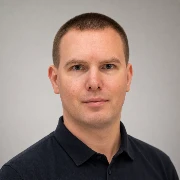
Dr. Roland Somlai
Details
 College: School of Design
 Department: School of Design
 Campus: City Campus Australia
 roland.somlai@rmit.edu.au
 ORCID: 0000-0001-5870-5765
Open to
- Collaborative projects
- Industry Projects
- Media enquiries
- Membership of an advisory committee
- Join a web conference as a panellist or speaker
About
Dr Roland Somlai is an interdisciplinary applied researcher working across evidence, implementation and decision-making. His research examines how organisational processes, routines, incentives, data visibility and analytical tools shape whether sustainability strategies move into practice.
He is currently a Research Fellow at RMIT University’s Centre of Digital Ecosystems (CODE), contributing to the Reshaping Plastics project. His work analyses qualitative and mixed-method project evidence from stakeholder interviews, workshop records, scenario configurations, systems maps, and documented interface states. The research examines how complex knowledge about circular-plastics systems can be organised and translated into decision support.
His doctoral research at RMIT examined organisational implementation of food-waste strategies, drawing on 22 interviews across 20 organisations alongside documentary and critical review research. Two research streams resulted in sole-authored peer-reviewed articles in Business Strategy and the Environment.
Before returning to RMIT, he worked in applied research at Monash University, contributing to climate-transition analysis, evidence synthesis and analytical quality assurance. His broader work connects qualitative and mixed-method research, evidence quality, and decision support with sustainability transitions, the circular economy, and organisational implementation.
Research funding and scholarships
Roland’s postgraduate research has been supported through scholarships and funding awards, including the Fight Food Waste CRC Top-up Scholarship (2019; A$100,000 over four years), the RMIT Research Stipend and International Tuition Fee Offset Scholarships (2019), the Fight Food Waste CRC (B) FOODWASTE Top Up Scholarship (2023), and the Glasgow Caledonian University Climate Justice Scholarship (2016; £4,200 course-fee funding).

Research fields
- 3507 Strategy, management and organisational behaviour
- 3303 Design
- 3304 Urban and regional planning

UN sustainable development goals
- 12 Responsible Consumption and Production
- 13 Climate Action
- 9 Industry, Innovation and Infrastructure

Non-academic positions
- Research Analyst
- Monash University
- Melbourne, Australia
- 13 May 2024 – 12 May 2026
- Senior GIS Technician
- Cyient Europe Ltd
- Glasgow, United Kingdom
- 1 May 2019 – 6 Dec 2019
- Data Investigator
- QC Data
- Glasgow, United Kingdom
- 8 May 2018 – 30 Apr 2019

Research interests
My research focuses on how evidence translates into organisational action and how implementation succeeds, stalls, or changes in practice.
Current research interests include:
• organisational implementation and decision-making
• circular economy and sustainability transitions
• climate-transition analysis
• food-waste prevention and circular food systems
• evidence quality, analytical traceability and decision support
• qualitative and mixed-method research
• interviews, document and content analysis, thematic analysis and evidence synthesis
• interdisciplinary and systems-oriented applied research




